

Most American trades professionals in the Midwest spend over 60 percent of their workdays exposed to unpredictable outdoor moisture. As rain sweeps through Illinois and wind hits Michigan jobsites, the right workwear can make or break your ability to stay productive and comfortable. This guide breaks down the real differences between water-resistant and waterproof clothing, so you can pick gear that’s tough, breathable, and fit for your demanding job.
Table of Contents
- Defining Water Resistant and Waterproof Clothing
- How Performance Ratings and Standards Work
- Key Features: Materials, Construction, Breathability
- Best Uses for Midwest Trades Professionals
- Choosing the Right Option for Your Job
Key Takeaways
| Point | Details |
|---|---|
| Understanding Protection Levels | Water-resistant clothing offers basic protection against light rain, while waterproof clothing is necessary for intense weather conditions and prolonged exposure. |
| Performance Ratings Matter | Look for detailed water resistance ratings expressed in millimeters, which indicate the level of protection and any potential for moisture infiltration. |
| Breathability is Key | Choose workwear that balances both water protection and breathability to maintain comfort during physically demanding tasks. |
| Adapt to Environment | Assess your specific job environment and select clothing that allows for mobility and flexibility under changing weather conditions. |
Defining Water Resistant and Waterproof Clothing
Understanding the difference between water resistant and waterproof clothing is crucial for professionals working in challenging outdoor environments. While these terms might seem similar, they represent distinct levels of protection against moisture. Waterproof fabrics are engineered to completely block water penetration, making them ideal for intense weather conditions and heavy-duty work scenarios.
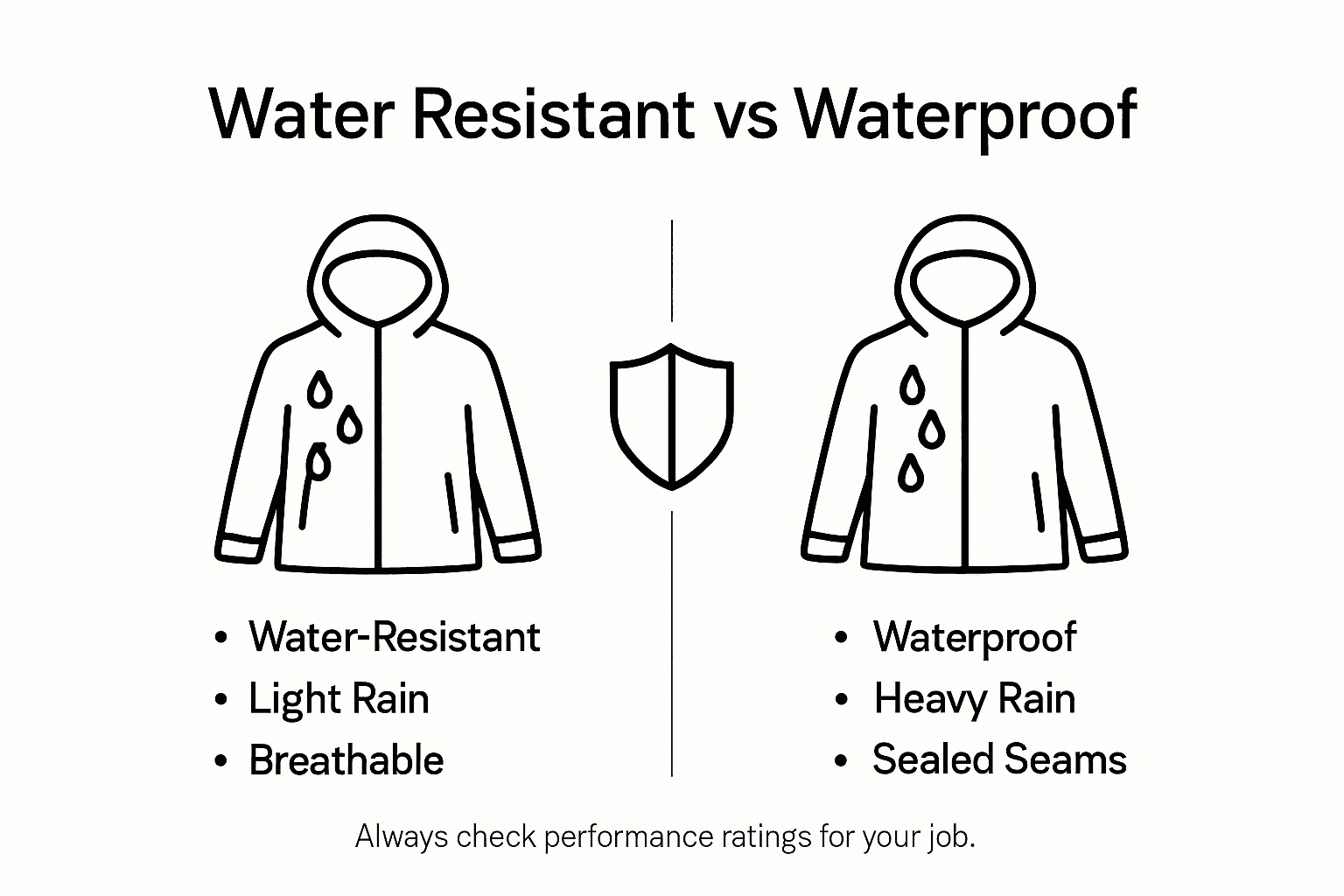
Water resistant clothing provides a basic level of protection, typically repelling light rain and minor water exposure. These garments feature special treatments or tightly woven fabrics that cause water to bead up and roll off the surface. However, during prolonged exposure or heavy rainfall, water will eventually penetrate the material. By contrast, waterproof clothing uses advanced technological treatments like polyurethane coatings or specialized membranes that create an impenetrable barrier against moisture.
The key distinctions between water resistant and waterproof clothing involve several critical factors. Waterproof materials must withstand significant water pressure without allowing liquid to pass through, whereas water resistant fabrics merely slow water absorption. Professional trades workers should consider their specific work environment when selecting appropriate protective gear. Factors like duration of potential water exposure, intensity of moisture, and required breathability will determine whether water resistant or fully waterproof clothing makes the most sense.
Pro tip: Always check the manufacturer’s specific water protection rating before purchasing workwear to ensure it matches your job site requirements.
The table below summarizes the main differences between water-resistant and waterproof clothing for work environments:
| Protection Level | Typical Uses | Pros | Cons |
|---|---|---|---|
| Water-Resistant | Light outdoor work, brief rain | Lightweight, flexible | Limited moisture protection |
| Waterproof | Prolonged outdoor exposure, heavy rain | Maximum dryness, high durability | May reduce breathability |
How Performance Ratings and Standards Work
Professional workwear manufacturers rely on standardized testing to evaluate water resistance and performance. ASTM textile standards provide comprehensive guidelines for assessing fabric properties, ensuring that workwear meets rigorous criteria for durability and protection. These standards help professionals understand exactly what level of water protection they can expect from their clothing.
The primary method for measuring water resistance is the hydrostatic head test, which determines how much water pressure a fabric can withstand before leaking. Ratings are expressed in millimeters, with higher numbers indicating superior water protection. For instance, a fabric rated at 1,000 mm can withstand a water column up to one meter tall before water penetrates the material. Professional-grade workwear typically ranges from 1,000 mm to 5,000 mm, with specialized gear reaching even higher ratings for extreme conditions.
Beyond water resistance, performance ratings also consider breathability, which is crucial for worker comfort. Moisture vapor transmission rate (MVTR) measures how effectively a fabric allows water vapor to escape, preventing internal moisture buildup. This is particularly important for trades professionals working in physically demanding environments. A good workwear garment balances water resistance with breathability, ensuring protection without causing excessive sweating or discomfort.
Pro tip: When selecting workwear, look for garments with detailed performance ratings that match your specific job site conditions and environmental challenges.
Key Features: Materials, Construction, Breathability
Choosing the right workwear involves understanding the complex interplay between materials, construction techniques, and performance capabilities. Waterproof and water-resistant fabrics are categorized by specialized material types, including high-density fabrics, resin-coated materials, and innovative film-laminated technologies. Each material type offers unique advantages for professionals working in challenging outdoor environments.
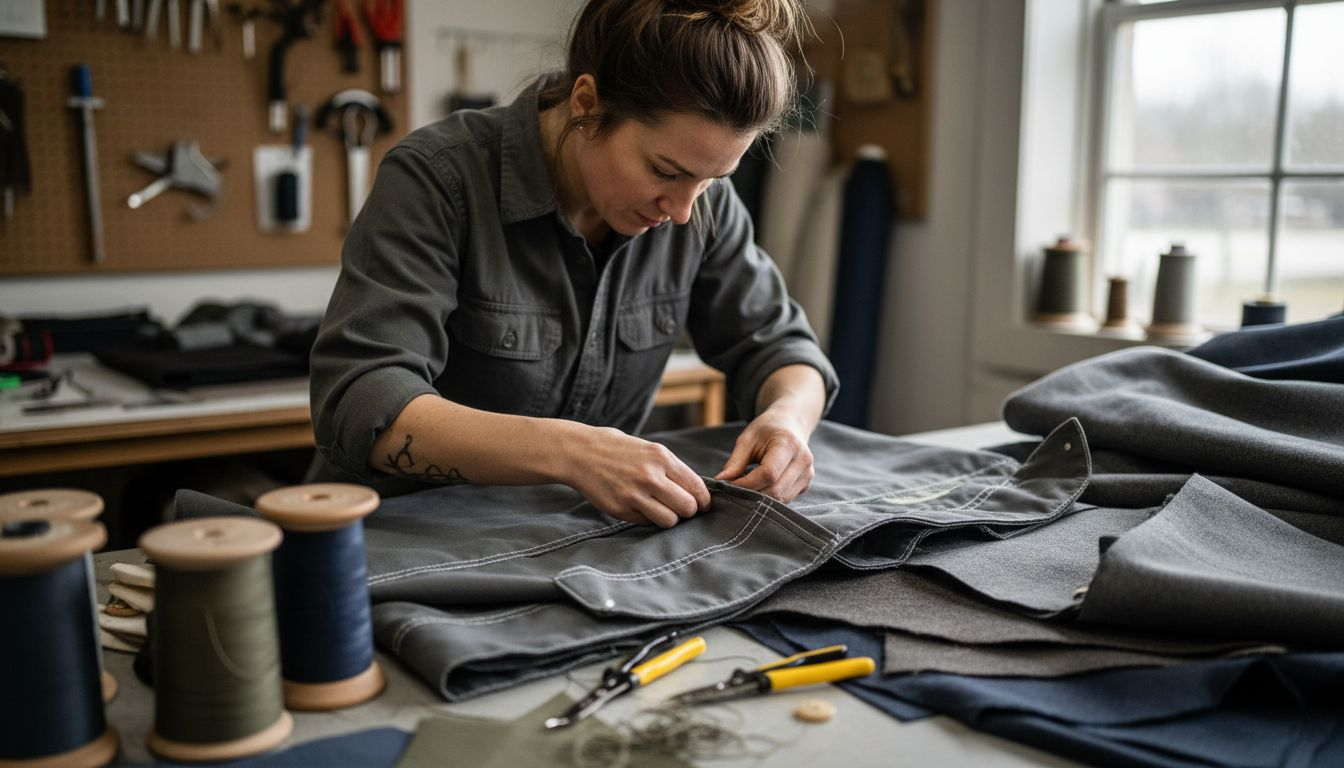
Construction techniques play a critical role in determining a garment’s overall performance. Modern workwear manufacturers use advanced methods like sealed seams, specialized zippers, and strategic layering to enhance water resistance while maintaining breathability. Durable Water Repellent (DWR) coatings provide an additional layer of protection, allowing water to bead and roll off the fabric surface without compromising the material’s ability to transfer moisture vapor.
Breathability remains a fundamental consideration for trades professionals who require clothing that manages internal moisture effectively. Advanced fabrics now incorporate moisture-wicking technologies that transport sweat away from the body, preventing uncomfortable dampness during physically demanding work. The goal is to create a balanced garment that protects against external water while allowing internal moisture to escape, ensuring worker comfort and performance in diverse weather conditions.
Pro tip: Inspect your workwear’s construction details and look for multiple water-resistant technologies rather than relying on a single protective feature.
Here’s a quick reference for fabrics and technologies used in high-performance workwear:
| Material Type | Key Benefit | Common Usage |
|---|---|---|
| High-density fabric | Enhanced durability | Construction, agriculture |
| Film-laminated | Maximum waterproofing | Wet environments |
| Resin-coated | Improved water resistance | Industrial settings |
| Moisture-wicking technology | Reduces sweat accumulation | Physical labor jobs |
Best Uses for Midwest Trades Professionals
Midwest trades professionals face unique environmental challenges that demand specialized workwear solutions. Durable and slip-resistant footwear is crucial for navigating varied and sometimes wet work environments, particularly in construction, agriculture, and manufacturing sectors prevalent across Illinois, Wisconsin, Michigan, and Ohio. The region’s unpredictable weather patterns require clothing that can adapt quickly to changing conditions, from unexpected rain showers to sudden temperature drops.
Water-resistant clothing serves different purposes depending on specific trade requirements. Construction workers might need full waterproof gear for exterior jobs, while electricians or indoor maintenance professionals could rely on water-resistant jackets that provide protection without excessive insulation. Layering becomes a strategic approach, allowing workers to adjust their clothing based on job site conditions and physical activity levels. The key is selecting garments that offer flexibility, durability, and targeted protection against moisture and environmental elements.
Tradespeople working in Midwest agricultural, construction, and industrial settings need workwear that balances protection with mobility. Waterproof and water-resistant clothing should not compromise range of motion or comfort during physically demanding tasks. Advanced fabric technologies now enable manufacturers to create garments that provide robust protection while maintaining breathability, ensuring workers remain dry, comfortable, and able to perform at their highest level across diverse work environments.
Pro tip: Invest in modular workwear systems that allow you to add or remove layers quickly, giving you maximum adaptability in the unpredictable Midwest climate.
Choosing the Right Option for Your Job
Selecting between water-resistant and waterproof workwear requires careful assessment of your specific job environment and exposure risks. Understanding the nuanced differences in water protection levels helps professionals make informed clothing choices, ensuring both safety and comfort throughout challenging work conditions. Different trades demand unique protective strategies, making a one-size-fits-all approach ineffective.
Construction workers handling exterior projects with constant moisture exposure typically require full waterproof gear that maintains robust protection against prolonged water contact. Electricians, maintenance technicians, and indoor professionals might find water-resistant clothing more appropriate, offering lightweight protection without excessive insulation. The critical factors include anticipated water exposure duration, potential safety risks, and the physical demands of specific job tasks.
Water resistance ratings provide essential guidance for selecting appropriate workwear. Hydrostatic head measurements quantify a fabric’s water resistance, with higher ratings indicating superior protection. Professional-grade workwear usually ranges between 1,000 mm to 5,000 mm water resistance, allowing trades workers to match their clothing precisely to environmental challenges. Breathability remains equally important, ensuring that protective gear doesn’t compromise worker comfort or restrict movement during physically demanding tasks.
Pro tip: Always inspect your workwear’s specific water resistance rating and consider your typical work environment before making a final selection.
Find the Perfect Balance Between Water Resistance and Comfort with WorkwearComfort.com
Choosing the right workwear means understanding your unique challenges making the difference between staying dry and comfortable or facing damp, uncomfortable days on the job. This article highlights the crucial distinction between water resistant and waterproof gear along with performance ratings like hydrostatic head and breathability that trades professionals must consider. At WorkwearComfort.com, we recognize how important selecting apparel that offers both durability and the right level of moisture protection is for hardworking tradespeople.
Explore our collection designed for blue-collar workers who demand workwear that stands up to the toughest conditions without compromising mobility or comfort. Whether you need rugged water-resistant jackets for light outdoor tasks or full waterproof options for extended exposure in harsh environments, our selection supports your goals of staying dry while maintaining breathability. Don’t wait until the weather catches you unprepared. Take control of your workwear now by visiting WorkwearComfort.com and select gear that perfectly matches your job demands and the Midwest climate challenges discussed in this article.
Frequently Asked Questions
What is the difference between water resistant and waterproof clothing?
Water resistant clothing repels light rain and minor water exposure, while waterproof clothing completely blocks water penetration, making it suitable for intense weather conditions.
How do I determine the right clothing for my work environment?
Consider factors like duration of water exposure, intensity of moisture, and the required breathability of the garment. Waterproof clothing is ideal for prolonged exposure, whereas water resistant is sufficient for light rain.
What do water resistance ratings mean?
Water resistance ratings, indicated in millimeters, measure how much water pressure a fabric can withstand before leaking, with higher numbers indicating superior protection.
How important is breathability in workwear?
Breathability is crucial for worker comfort, especially in physically demanding jobs. Clothes that allow moisture vapor to escape help prevent internal dampness, making them more comfortable to wear for extended periods.
Recommended
- What Is Workwear? A 2025 Guide for Hardworking Professionals - WorkWear Comfort
- Best Workwear for Hot Weather: Stay Cool & Protected in 2025 - WorkWear Comfort
- 7 Essential Tips for Choosing the Perfect Hoodie Sweatshirt – WorkWearComfort
- Work Wear Construction – Why Quality Matters Most – WorkWearComfort
