

Over 30 million American workers depend on specialized workwear every day to keep them protected in unpredictable environments. The right clothing can make the difference between a safe shift and serious injury, highlighting just how vital work wear construction has become. From high-tech materials to innovative safety features, understanding what sets professional workwear apart will help you choose gear that stands up to tough jobs and supports your well-being.
Table of Contents
- Defining Work Wear Construction and Purpose
- Material Types for Rugged Durability
- Essential Workwear Features and Technologies
- Safety Standards and Regulatory Requirements
- Durability, Care, and Common Pitfalls
Key Takeaways
| Point | Details |
|---|---|
| Workwear Construction is Essential | Workwear serves as a protective barrier against hazards, emphasizing durability, safety, and functionality for manual labor professions. |
| Material Selection is Crucial | Choosing high-performance materials is key for comfort and longevity, with heavy-duty synthetic blends being the top choice for rugged durability. |
| Technological Innovations Enhance Performance | Modern workwear incorporates advanced features such as moisture management and flame resistance, which improve worker safety and comfort. |
| Adherence to Safety Standards is Necessary | Compliance with safety regulations protects workers and fosters a culture of safety, making it vital for employers to prioritize appropriate workwear. |
Defining Work Wear Construction and Purpose
Workwear is far more than just clothing. It represents a critical protective barrier between workers and challenging job site environments. Workwear fundamentally refers to specialized clothing designed for manual labor professions, engineered to provide maximum durability, safety, and functionality in demanding work conditions.
At its core, work wear construction serves multiple essential purposes beyond basic clothing. These garments are meticulously crafted to withstand intense physical demands, protect against potential workplace hazards, and provide workers with the confidence and comfort needed to perform at their highest level. From reinforced fabric in high-stress areas to strategically placed pockets and flexible movement zones, every design element is purposefully integrated to support professional performance.
The primary objectives of work wear construction include:
- Physical protection against environmental risks
- Enhanced durability to withstand repeated stress
- Mobility and flexibility for complex job tasks
- Safety features like flame resistance or high visibility
- Comfort that supports extended work hours
Professional tradespeople understand that quality work wear is not a luxury but a necessity. Whether you’re a construction worker navigating dangerous sites, an electrician managing complex installations, or a farmer working long hours in unpredictable conditions, your clothing is your first line of defense against workplace challenges. Well-constructed work wear doesn’t just protect your body - it protects your ability to work effectively and safely.
Material Types for Rugged Durability
Choosing the right material for work wear construction is a critical decision that directly impacts performance, safety, and longevity. Professional tradespeople require fabrics that can withstand extreme conditions while providing comfort and protection. Top Trades Gear and Apparel for 2025 highlights the evolving landscape of workwear materials designed to meet increasingly demanding workplace requirements.
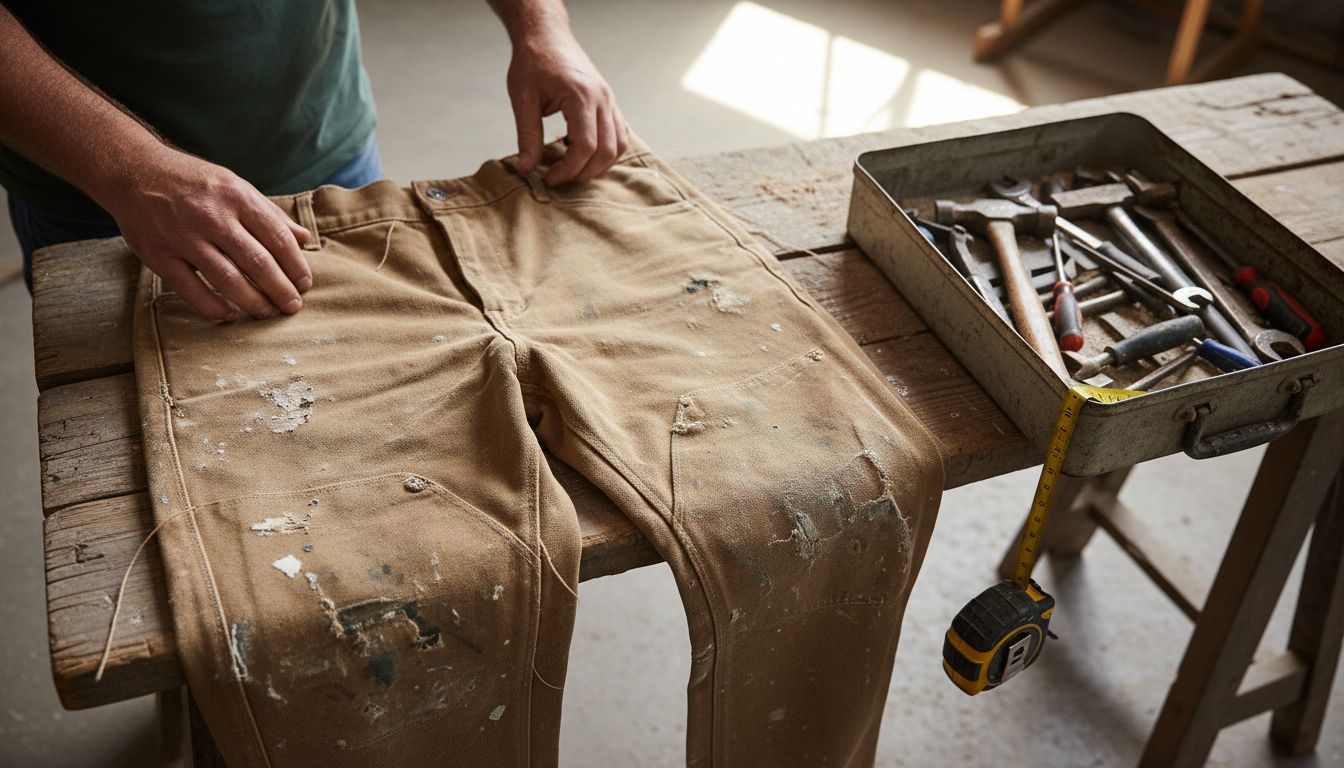
Traditional work wear materials have dramatically transformed, moving beyond simple cotton and denim constructions. Heavy-duty synthetic blends now dominate the market, offering unprecedented durability and functional performance. These advanced materials typically combine synthetic fibers like ripstop polyester, aramid reinforcements, and spandex for flexibility, creating garments that can resist abrasion, repel liquids, and maintain structural integrity under intense physical stress.
Key material characteristics for rugged work wear include:
- High tensile strength to prevent tearing
- Moisture-wicking capabilities
- Resistance to chemical and environmental degradation
- Flame-retardant properties
- Quick-drying performance
- Lightweight yet protective construction
Professional grade work wear materials are engineered with specific industry challenges in mind. Construction workers, mechanics, welders, and agricultural professionals each require unique material properties tailored to their specific environmental and occupational risks. The right material isn’t just about durability - it’s about creating a protective second skin that enables workers to perform at their absolute best, regardless of the challenging conditions they encounter.
Essential Workwear Features and Technologies
Workwear technologies have evolved dramatically, transforming from basic protective clothing to sophisticated performance systems designed to meet the complex demands of modern trades. Best Workwear for Hot Weather highlights the critical importance of advanced fabric technologies that address worker comfort and safety across diverse working environments.
Advanced performance features now represent the cutting edge of workwear design. Modern garments incorporate intelligent technologies like moisture-management systems, temperature-regulating fabrics, and integrated protective elements. These innovations go beyond traditional expectations, providing workers with clothing that actively responds to environmental challenges, reduces physical strain, and enhances overall job site performance.
Key technological features in contemporary workwear include:
- Moisture-wicking fabric technologies
- UPF sun protection capabilities
- Reinforced stress points and abrasion-resistant panels
- Integrated stretch panels for enhanced mobility
- Strategic ventilation zones
- Quick-drying and antimicrobial treatments
- Reflective safety elements for low-light conditions
The technological evolution of workwear represents more than just clothing innovation. It’s a comprehensive approach to worker safety, comfort, and productivity. Each feature is carefully engineered to address specific occupational challenges, whether that means keeping workers cool in extreme heat, protecting against potential workplace hazards, or providing the flexibility needed to perform complex physical tasks with maximum efficiency and minimal fatigue.
Safety Standards and Regulatory Requirements
Safety standards in workwear are not optional recommendations but critical legal and professional requirements that protect workers across various industries. Best Workwear for Electricians underscores the intricate relationship between specialized clothing and occupational safety protocols, highlighting how regulatory compliance can literally save lives.
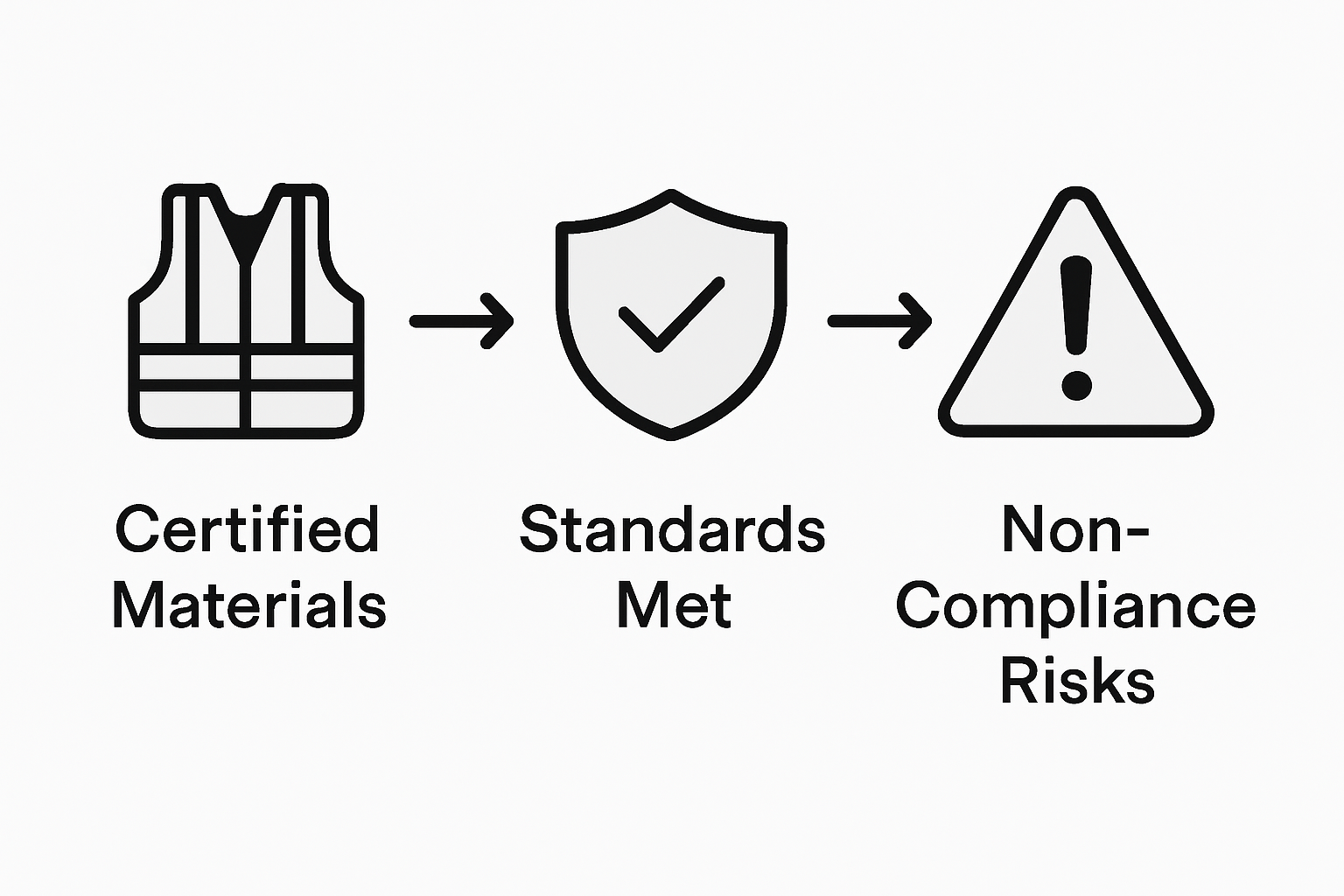
Workplace safety regulations encompass a comprehensive framework of standards that dictate everything from fabric fire resistance to visibility requirements. These standards are meticulously developed by organizations like the Occupational Safety and Health Administration (OSHA), which establishes precise guidelines for protective equipment and workplace attire. Manufacturers must navigate a complex landscape of compliance, ensuring that every garment meets stringent performance criteria designed to mitigate workplace risks.
Key regulatory considerations for work wear include:
- Arc flash protection ratings
- Flame resistance specifications
- High-visibility color requirements
- Impact and puncture resistance standards
- Electrical hazard protection levels
- Thermal performance classifications
- Chemical resistance capabilities
Understanding these standards is crucial for both employers and workers. Compliance isn’t just about avoiding penalties - it’s about creating a safety culture that prioritizes worker protection through intelligent, scientifically designed clothing. From construction sites to industrial workshops, the right workwear serves as a critical barrier against potential workplace hazards, transforming safety regulations from abstract guidelines into tangible, life-saving protection.
Durability, Care, and Common Pitfalls
Materials selection for workwear demands strategic consideration that goes far beyond aesthetic preferences. Professional tradespeople must understand that durability isn’t just about initial quality, but about sustained performance through repeated stress, environmental challenges, and intense daily use.
Workwear maintenance represents a critical but often overlooked aspect of clothing longevity. The most advanced garments can quickly deteriorate without proper care, transforming a significant investment into a rapidly worn-out piece of equipment. Professional-grade clothing requires specific washing techniques, careful storage, and proactive repair strategies that extend far beyond standard clothing maintenance approaches.
Common durability pitfalls for work wear include:
- Improper washing techniques
- Ignoring manufacturer care instructions
- Storing garments in high-humidity environments
- Failing to address minor tears or damage immediately
- Using inappropriate detergents or cleaning agents
- Exposing clothing to direct sunlight when not in use
- Neglecting periodic professional cleaning or maintenance
Understanding workwear durability is about recognizing clothing as a critical tool, not just a fashion statement. Each garment represents an investment in personal safety, professional performance, and long-term economic efficiency. By adopting a proactive approach to selection, care, and maintenance, workers can transform their clothing from a simple protective layer into a reliable, long-lasting professional asset.
Invest in Workwear That Works as Hard as You Do
The article highlights the crucial importance of quality work wear construction designed to protect, endure, and enable mobility in demanding job environments. If you face challenges like fabric wear, limited flexibility, or lack of safety features in your current gear you understand how essential specialized materials, reinforced stitching, and comfort technologies are for your daily performance and safety. Workwear is more than just clothing; it is your trusted barrier against workplace hazards and fatigue.
Experience the confidence of apparel built for the hardworking professional at WorkwearComfort.com. From tough All Hooded Sweatshirts - WorkWear Comfort that combine durability and UPF 50+ protection to options tailored uniquely for women in our Female Hoodie Sweatshirts – WorkWearComfort collection every piece embraces rugged toughness without sacrificing style.
Ready to upgrade your workwear with trusted gear designed for strength and comfort? Visit WorkwearComfort.com now to discover reliable apparel that matches the grit and resilience your job demands. Don’t wait—equip yourself with clothing that protects your performance today.
Frequently Asked Questions
What is work wear construction and why is it important?
Work wear construction refers to specialized clothing designed for manual labor professions, providing durability, safety, and functionality. It’s important because it protects workers from hazards and is designed to withstand challenging job site environments.
What materials are commonly used in high-quality work wear?
High-quality work wear is typically made from heavy-duty synthetic blends, including ripstop polyester and aramid reinforcements, which provide durability, flexibility, and resistance to wear and tear in demanding conditions.
What essential features should I look for in work wear?
Key features to consider include moisture-wicking fabric, reinforced stress points, flame-resistant properties, high visibility elements, and strategic ventilation zones to ensure comfort, mobility, and safety during work tasks.
How can I maintain the durability of my work wear?
Maintaining work wear includes following specific washing techniques, adhering to manufacturer care instructions, storing garments in low-humidity areas, addressing any damage immediately, and avoiding harsh detergents, all of which help extend the lifespan of your clothing.
