

Most American tradesmen know that a cheap jacket never lasts the season. Frigid winds bite harder on a scaffold in Chicago or a roof in Montana, and only rugged construction keeps you warm when the job gets tough. With more than 60 percent of American construction workers exposed to extreme cold every winter, picking the right work jacket is critical for staying protected and getting the job done. This guide breaks down how warmth, durability, and smart materials come together to keep you working strong all season long.
Table of Contents
- What Makes A Work Jacket Warm And Durable
- Popular Types Of Warm Work Jackets
- Essential Features For Blue-Collar Work
- Comparing Warm Work Jackets By Material
- Mistakes To Avoid When Choosing A Jacket
Key Takeaways
| Point | Details |
|---|---|
| Importance of Material | Select work jackets that utilize advanced insulation and moisture-wicking materials for optimal performance in extreme conditions. |
| Essential Features | Prioritize jackets with reinforced stress points, adjustable cuffs, and multiple pockets for enhanced functionality and durability. |
| Common Pitfalls | Avoid jackets that don’t fit well or fail to meet specific workplace environment requirements to ensure comfort and safety. |
| Adaptability | Choose jackets that allow for layering, accommodating different temperatures and activity levels while providing mobility. |
What Makes a Work Jacket Warm and Durable
A high-quality work jacket for men in physically demanding industries isn’t just about fabric - it’s about strategic heat management and resilient construction. Modern work jackets leverage advanced materials and design principles to provide warmth, breathability, and durability in challenging environments. Advanced insulation technologies create a protective barrier against cold, effectively trapping heat while allowing moisture to escape.
The core of warmth in work jackets comes from intelligent insulation strategies. Synthetic fibers and specialized membranes work together to create multiple heat-trapping air layers that prevent thermal loss through conduction and convection. These materials are engineered to maintain consistent temperature regulation, ensuring workers stay comfortable during physically demanding tasks. Material physics in winter clothing reveals that the most effective jackets balance three critical factors: heat retention, moisture management, and wind resistance.
Durability in work jackets depends on robust fabric selection and construction techniques. Industrial-grade textiles like ripstop nylon, reinforced polyester, and specialized synthetic blends provide exceptional wear resistance. Key features that enhance jacket durability include:
- Double-stitched seams for increased structural integrity
- Reinforced elbow and shoulder patches
- Water-resistant exterior coatings
- High-tensile strength synthetic fibers
- Abrasion-resistant fabric technologies
These design elements ensure that work jackets can withstand repeated stress, harsh environmental conditions, and constant movement without compromising thermal performance.
Pro tip: When selecting a work jacket, prioritize versatile materials that offer both thermal protection and mobility, allowing you to adapt quickly to changing job site conditions.
Popular Types of Warm Work Jackets
Work jackets have evolved significantly, offering specialized protection for men in physically demanding industries. Traditional work jacket designs like chore and barn jackets represent foundational styles crafted from heavyweight, durable fabrics such as duck canvas and denim. These classic jackets feature robust construction with practical elements like multiple cargo pockets and reinforced collars, making them ideal for outdoor and manual labor environments.

Modern work jacket categories cater to diverse workplace requirements, with insulated options providing critical thermal protection. Top-rated work jackets include specialized models like the Carhartt Storm Defender, Timberland PRO Dry Shift Max, and Dickies Sherpa-Lined Duck Jacket. Each design offers unique features tailored to specific working conditions, ranging from extreme cold resistance to enhanced waterproofing and mobility.
Key types of warm work jackets include:
- Heavyweight Canvas Jackets: Traditional design with exceptional durability
- Sherpa-Lined Jackets: Maximum warmth with soft interior insulation
- Waterproof Insulated Jackets: Protection against moisture and cold
- Fleece-Lined Work Jackets: Lightweight warmth with flexible movement
- Thermal Shell Jackets: Thin but effective heat retention layers
These jacket types represent modern solutions for workers requiring reliable protection against challenging environmental conditions.
Here’s a breakdown of key work jacket types and their ideal use cases:
| Jacket Type | Best For | Unique Strength |
|---|---|---|
| Heavyweight Canvas | Construction, outdoor labor | Extremely tough fabric |
| Sherpa-Lined | Extreme cold environments | Superior interior warmth |
| Waterproof Insulated | Wet, stormy job sites | Keeps you dry and warm |
| Fleece-Lined | Mild climates, layering | Lightweight, easy to move |
| Thermal Shell | High mobility, variable temps | Thin, effective insulation |
Pro tip: Select a work jacket that matches your specific job site requirements, considering factors like temperature range, physical activity level, and potential moisture exposure.
Essential Features for Blue-Collar Work
Blue-collar workers need work jackets that go far beyond basic clothing - they require performance gear engineered to withstand extreme conditions. Top work jacket features include critical design elements that protect workers while enabling maximum productivity. Water resistance, strategic insulation, and durability form the foundation of effective workwear that can handle demanding physical environments.
For specialized trades like welding and construction, jacket performance becomes even more critical. Performance fabrics for trades must balance safety with comfort, incorporating advanced protective technologies. Flame-resistant materials, reinforced stress points, and heat-protective layers are essential for workers facing potentially hazardous conditions.
Key essential features for blue-collar work jackets include:
- Reinforced Stress Points: Extra fabric strength in high-wear areas
- Multiple Tool Pockets: Convenient storage for essential equipment
- Adjustable Cuffs: Customize fit and prevent cold air entry
- Breathable Fabric: Manage moisture during intense physical work
- Thermal Insulation: Maintain body temperature in cold environments
- Water-Resistant Exterior: Protection against rain and moisture
- Mobility-Focused Design: Allow full range of motion
These features ensure that work jackets are not just protective gear, but critical tools that enhance worker performance and safety.
Pro tip: Invest in a work jacket that provides comprehensive protection while allowing comfortable movement, treating it as a crucial piece of professional equipment rather than just clothing.
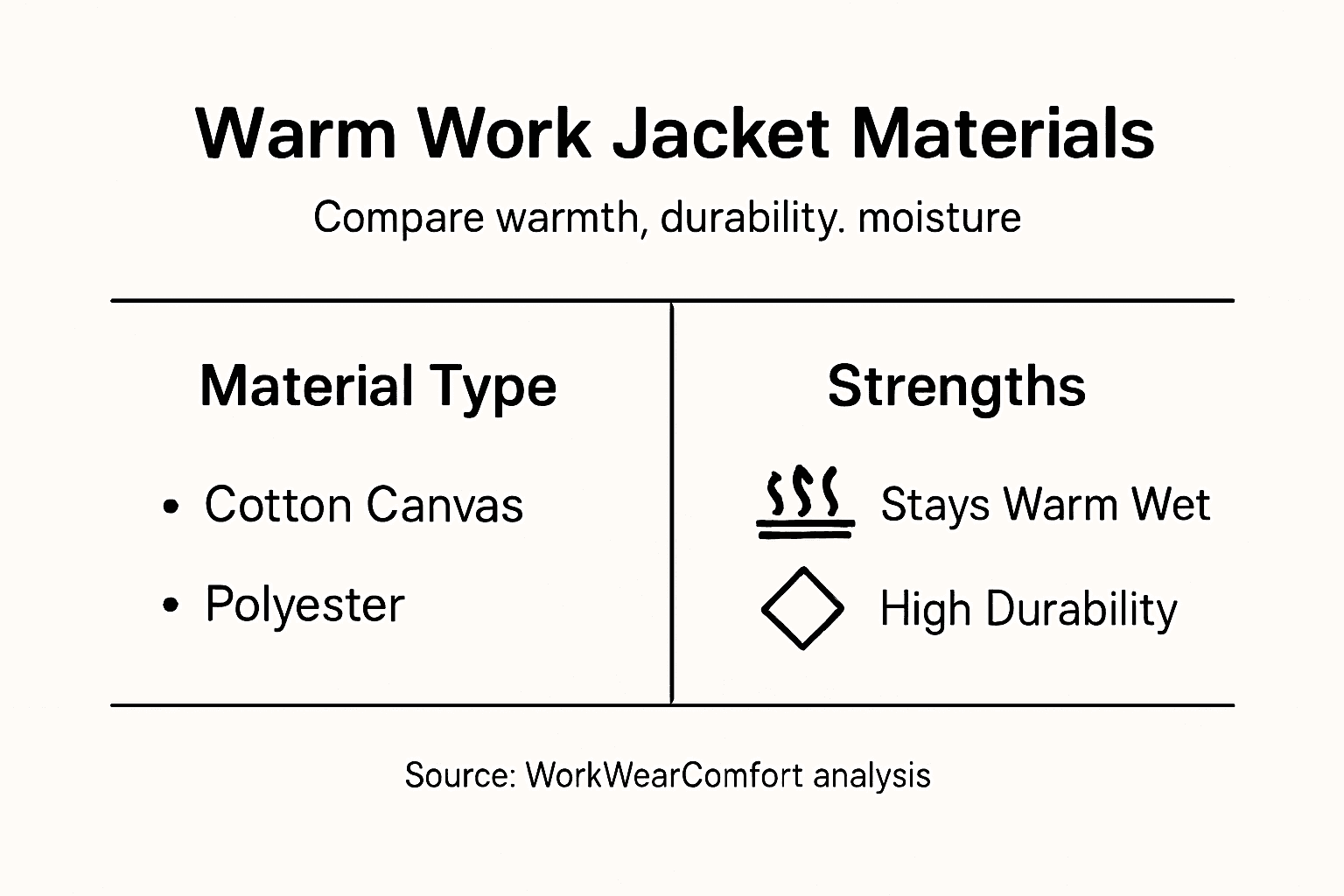
Comparing Warm Work Jackets by Material
Choosing the right work jacket material can make the difference between staying productive or struggling through cold work conditions. Clothing insulation technologies have advanced significantly, offering workers multiple options for thermal protection. Different materials excel in specific environments, with each bringing unique advantages for blue-collar professionals facing challenging weather conditions.
Materials science advances have transformed work jacket insulation, introducing sophisticated synthetic fabrics that dramatically improve performance. Modern work jackets now feature ultra-thin insulation layers, water-repellent treatments, and breathable membranes that provide exceptional warmth without sacrificing mobility or comfort.
Key work jacket material types include:
-
Down: Exceptional warmth-to-weight ratio
- Lightweight
- Highly compressible
- Loses insulation when wet
-
Synthetic Fibers (PrimaLoft, Thinsulate)
- Retains warmth when damp
- Quick-drying
- More affordable
- Consistent performance
-
Fleece: Soft, lightweight insulation
- Excellent moisture management
- Breathable
- Good for layering
-
Wool Blends: Natural temperature regulation
- Moisture-wicking
- Odor-resistant
- Maintains warmth when damp
Each material offers distinct benefits, allowing workers to select jackets tailored to their specific job site requirements and environmental challenges.
The following table summarizes how insulation materials impact work jacket performance:
| Material | Warmth When Wet | Durability | Moisture Management |
|---|---|---|---|
| Down | Poor | Moderately strong | Limited |
| Synthetic | Excellent | Highly durable | Quick-drying |
| Fleece | Good | Fairly durable | Excellent |
| Wool Blend | Very good | Long-lasting | Strong, odor resistant |
Pro tip: Consider your specific work environment when selecting jacket material, prioritizing performance characteristics like moisture resistance and temperature range over aesthetic preferences.
Mistakes to Avoid When Choosing a Jacket
Choosing the wrong work jacket can dramatically reduce workplace comfort and productivity. Blue-collar workers often make critical errors when selecting outerwear, unknowingly compromising their performance and safety. Understanding these common pitfalls is essential for making an informed decision that protects both your body and your work efficiency.
The science of staying warm involves more than simply selecting a thick jacket. Winter clothing performance depends on complex factors like breathability, moisture management, and thermal regulation. Workers frequently overlook these nuanced considerations, resulting in jackets that either restrict movement or fail to provide adequate protection against harsh environmental conditions.
Most significant mistakes include:
-
Poor Fit Selection
- Too tight: Restricts movement
- Too loose: Allows cold air penetration
- Improper sleeve length
-
Ignoring Workplace Conditions
- Choosing non-flame-resistant jackets for welding
- Selecting thin materials for extreme cold
- Overlooking water resistance requirements
-
Neglecting Layering Potential
- Buying jackets without internal space for thermal layers
- Selecting fabrics incompatible with base layer materials
- Failing to consider temperature range variations
-
Compromising Durability
- Prioritizing price over quality
- Selecting fabrics unsuitable for work environment
- Ignoring reinforcement in high-stress areas
These mistakes can lead to frequent jacket replacements, reduced workplace comfort, and potentially compromised worker safety.
Pro tip: Always try on work jackets during active movement, simulating your typical job site activities to ensure genuine comfort and functionality.
Gear Up for Cold Days with Durable Workwear
Staying productive in cold work environments demands more than just any jacket. You need gear designed with thermal insulation, reinforced durability, and mobility in mind. If you have struggled with jackets that restrict your movement or fail to keep you warm when it matters most, now is the time to upgrade to functional work apparel that stands up to the challenge. Discover hooded sweatshirts crafted specifically for hardworking men who face tough conditions, combining warmth and rugged style for true comfort during demanding tasks.
Explore our collection of Blue-Collar Working Man Sweatshirt Hoodies – WorkWearComfort to find reliable layering options that enhance your core warmth while allowing full range of motion. For a wider selection, visit All Hooded Sweatshirts - WorkWear Comfort. Ready to experience apparel that respects the values of strength and resilience? Shop today at WorkwearComfort.com and secure your gear for the cold before the season gets tougher.
Frequently Asked Questions
What features should I look for in a warm work jacket?
When choosing a warm work jacket, prioritize features like reinforced stress points, multiple tool pockets, adjustable cuffs, water-resistant exterior, and breathable fabric to ensure comfort, protection, and functionality in demanding environments.
How do different materials affect the warmth of work jackets?
Work jackets can vary significantly in warmth based on material. Down offers excellent warmth but loses insulation when wet, while synthetic fibers like PrimaLoft maintain warmth even when damp and dry quickly. Fleece provides good moisture management, and wool blends offer natural temperature regulation and odor resistance.
What are the main types of warm work jackets available?
Key types of warm work jackets include heavyweight canvas jackets for durability, sherpa-lined jackets for extreme warmth, waterproof insulated jackets to combat moisture, fleece-lined options for lightweight warmth, and thermal shells for high mobility.
What common mistakes should I avoid when selecting a work jacket?
Avoid poor fit selections, ignoring specific workplace conditions like flame resistance or moisture requirements, neglecting layering potential, and compromising on durability by choosing price over quality.
Recommended
- Complete Guide to Warm Workwear Essentials – WorkWearComfort
- Warm Work Jackets: Comfort, Attitude, Grit – WorkWearComfort
- Understanding Warm Work Jackets for Men: Key Insights – WorkWearComfort
- Work Clothes for Winter: Complete Expert Guide – WorkWearComfort
- Sustainable Work Attire for Men: UK’s Guide to Ethical Clothing – Troop London
- Seasonal Storage: How to Pack Away Winter Gear Efficiently – BLUSHBEES USA
