

Days on an American construction site mean dirty hands, long hours, and real work—so your clothes need to keep up. Choosing the right workwear is about more than style; your gear must meet real ergonomic and safety needs, as research highlights, with essentials like reinforced seams and job-specific protection shaping your confidence and comfort. This guide makes it easier to match clothing features to your actual tasks, whether you are running equipment or hauling materials, so you get gear built for your reality.
Table of Contents
- Step 1: Identify Your Local Construction Workwear Needs
- Step 2: Locate Nearby Stores With Women’s Construction Work Clothes
- Step 3: Compare Features, Fit, and Durability Options
- Step 4: Verify Quality and Test Before Purchasing
Quick Summary
| Main Insight | Detailed Explanation |
|---|---|
| 1. Assess Specific Job Needs | Identify what construction role you have to determine essential workwear features that enhance safety and comfort. |
| 2. Find Local Retailers for Women’s Gear | Research local stores that offer dedicated women’s construction workwear to ensure proper fits and access. |
| 3. Compare Durability and Functionality | Examine different brands and styles, focusing on materials and details that contribute to long-lasting and functional workwear. |
| 4. Thoroughly Inspect Quality Before Purchase | Check seams, closures, and fabric quality meticulously to avoid buying low-quality items that won’t hold up on the job. |
| 5. Test Fit in Realistic Movements | Ensure that workwear fits well by trying it on and moving as you would on the job to prevent discomfort during work. |
Step 1: Identify your local construction workwear needs
Before shopping, you need to understand exactly what you’ll be doing on the job site. Your specific role determines everything about the gear you need, from fit to protective features. This clarity prevents wasting money on clothes that don’t match your actual work.
Start by listing your primary job responsibilities.
- Heavy equipment operation or site management?
- Carpentry, welding, or electrical work?
- Concrete finishing, framing, or demolition?
- Multi-skilled tasks across several areas?
Your role shapes which protective features matter most. Welders need fire-resistant materials. Electricians need conductive-resistant fabrics. Carpenters prioritize durability and pockets for tools. Understanding physical skill requirements and safety demands helps you choose gear that actually protects you.
Here’s a summary showing which workwear features are essential for specific construction roles:
| Role | Critical Feature | Reason |
|---|---|---|
| Welder | Fire-resistant fabric | Prevents burns from sparks |
| Electrician | Non-conductive material | Reduces electric shock risk |
| Carpenter | Extra tool pockets | Keeps essential tools accessible |
| Concrete Finisher | Reinforced knees | Protects from kneeling on hard surfaces |
| Supervisor | High-visibility panels | Enhances safety around machinery |
Next, assess the physical demands of your position.
Do you spend hours climbing, bending, or reaching overhead? Will you be kneeling on concrete or crawling through tight spaces? Are you lifting heavy materials repeatedly? Construction workwear needs to move with your body, not against it. Tight jeans and rigid jackets create injury risks and slow you down.
Consider what workplace rights and safety needs apply in your area. California, for example, has specific guidelines for women in construction roles. Check your state’s labor department website for requirements specific to your job type.
Identify environmental hazards you’ll face regularly.
- Sun exposure all day requires UPF protection.
- Rain and moisture demand water-resistant or waterproof layers.
- Cold temperatures mean insulated options.
- Hot conditions need breathable, quick-dry fabrics.
- Chemical or dust exposure requires specialized barriers.
Your workwear needs to address your actual job site conditions, not just look good on Instagram.
Write down the top three things your current clothes don’t do well. Maybe regular jeans tear too easily. Perhaps your jacket rides up when you reach high. Possibly your pockets don’t hold enough tools. These pain points guide exactly what features to prioritize.
Pro tip: Take photos of yourself working in your current outfit and note where strain shows, where fabric pulls, and where you need pockets or reinforcement, then use those specific observations when evaluating new gear.
Step 2: Locate nearby stores with women’s construction work clothes
Now that you know what you need, it’s time to find actual stores in your area that stock women’s construction gear. Not every retailer carries authentic workwear designed for women, so knowing where to look saves you hours of frustration.
Start with big-box home improvement and construction retailers in your area.
- Home Depot and Lowe’s have expanding women’s workwear sections.
- Menards carries multiple brands in most locations.
- Ace Hardware often stocks quality work clothing.
- Local independent hardware stores frequently have niche brands.
Call ahead before visiting. Ask specifically if they stock women’s construction work clothes, not just men’s sizes. Many stores don’t advertise this clearly online, so a quick phone conversation confirms whether they’re worth the drive.
Explore specialized workwear shops near job sites and trade hubs. Industrial supply stores, safety equipment retailers, and trade-specific shops often understand women’s fit needs better than general retailers. These businesses cater to professionals who spend 8 to 10 hours daily in their gear.
Check online marketplaces and local search options.
- Google Maps: Search “women’s workwear near me” or “women’s construction clothes [your city]”
- Yelp: Filter by workwear and women-focused businesses
- Local Facebook groups for construction professionals often share store recommendations
- Instagram: Search hashtags like #WomensConstructionGear to find local boutiques
Consider community and nonprofit resources for affordable options. Some construction trade organizations, union halls, or women-focused nonprofits maintain clothing closets or partnerships with retailers offering discounts. You can find certified suppliers offering quality workwear through sustainable sourcing networks too.
Visit stores during off-peak hours if possible. Afternoons on weekdays mean fewer crowds and more time for staff to help you find proper fits. Bring your measurements and notes from Step 1 so you stay focused.
Finding the right store matters as much as finding the right gear. Staff who understand women’s construction needs will save you from buying wrong.
Make a list of 3 to 5 nearby options ranked by proximity and selection. This gives you flexibility when your schedule allows shopping time.
Pro tip: Call stores and ask to speak with someone familiar with women’s construction workwear, then ask their honest recommendation for your specific role, since personal experience from staff often reveals which brands actually last through real job site demands.
Step 3: Compare features, fit, and durability options
Not all workwear is created equal. You need to actively compare what different brands and styles offer before making purchases. This step separates gear that lasts from clothes that fall apart after a season.
Start by examining fabric composition and protective features.
- Waterproof membranes like Gore-Tex keep moisture out while letting sweat escape.
- Fire-resistant materials matter if you work near welding or open flames.
- High-visibility panels protect you on busy job sites with heavy equipment.
- Reinforced seams prevent tears at stress points where your body moves most.
- Breathable fabrics prevent sweat buildup that causes skin irritation during long shifts.
Waterproof breathable construction materials directly impact how comfortable you’ll be throughout your workday. Cheap jackets trap heat. Quality jackets let you stay cool while staying dry.
Test the fit on your actual body, not just by looking at measurements. Raise your arms overhead. Bend at the waist. Squat down. Move exactly how you move on a job site. Tight shoulders, bunching at the waist, or pant legs that ride up signal poor fit.
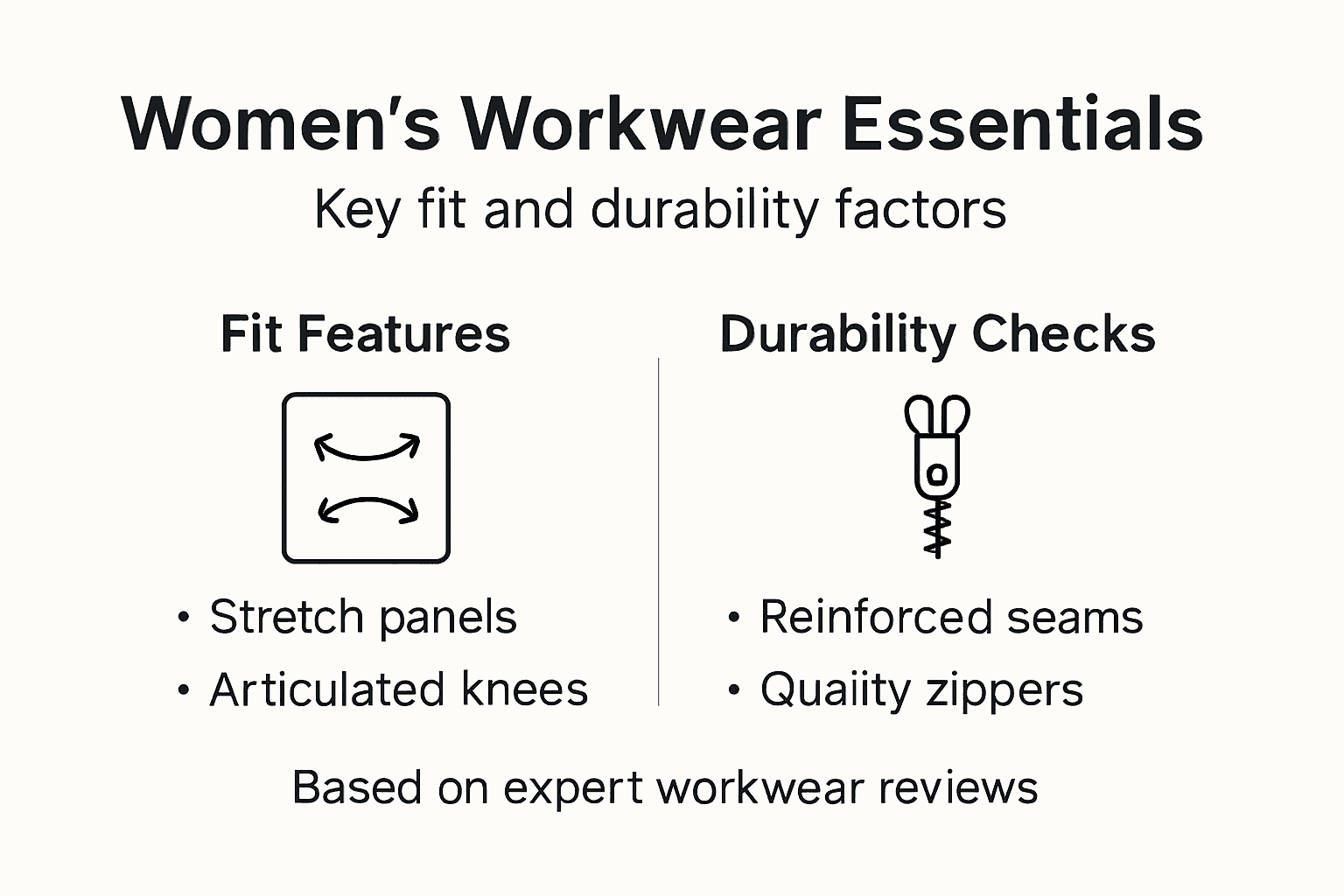
Pay attention to pocket placement and design. Do pockets sit where your tools naturally hang? Are they deep enough to hold a tape measure without it sliding out? Will belt loops hold a heavy tool belt without tearing? Real workwear has pockets designed by people who actually use them.
Evaluate durability through specific details.
- Double-stitched seams instead of single stitching.
- Reinforced crotch and knee areas on pants.
- Quality zippers that glide smoothly (cheap zippers jam constantly).
- Thick fabric weight suitable for your climate.
- Bartacks at stress points like pocket corners.
Ergonomic design in workwear reduces strain on your body during repetitive tasks. Poor fit causes shoulder pain, knee problems, and back issues over time. Good fit prevents these injuries before they start.
Compare price relative to expected lifespan. A $120 jacket lasting two years costs less per wear than a $60 jacket lasting six months. Calculate cost per month of use rather than just upfront price.
The cheapest option is almost never the smartest. Real economy comes from workwear that survives real work.
Take photos of seams, closures, and fabric details when comparing options. Side-by-side photos reveal quality differences your eyes might miss in person.
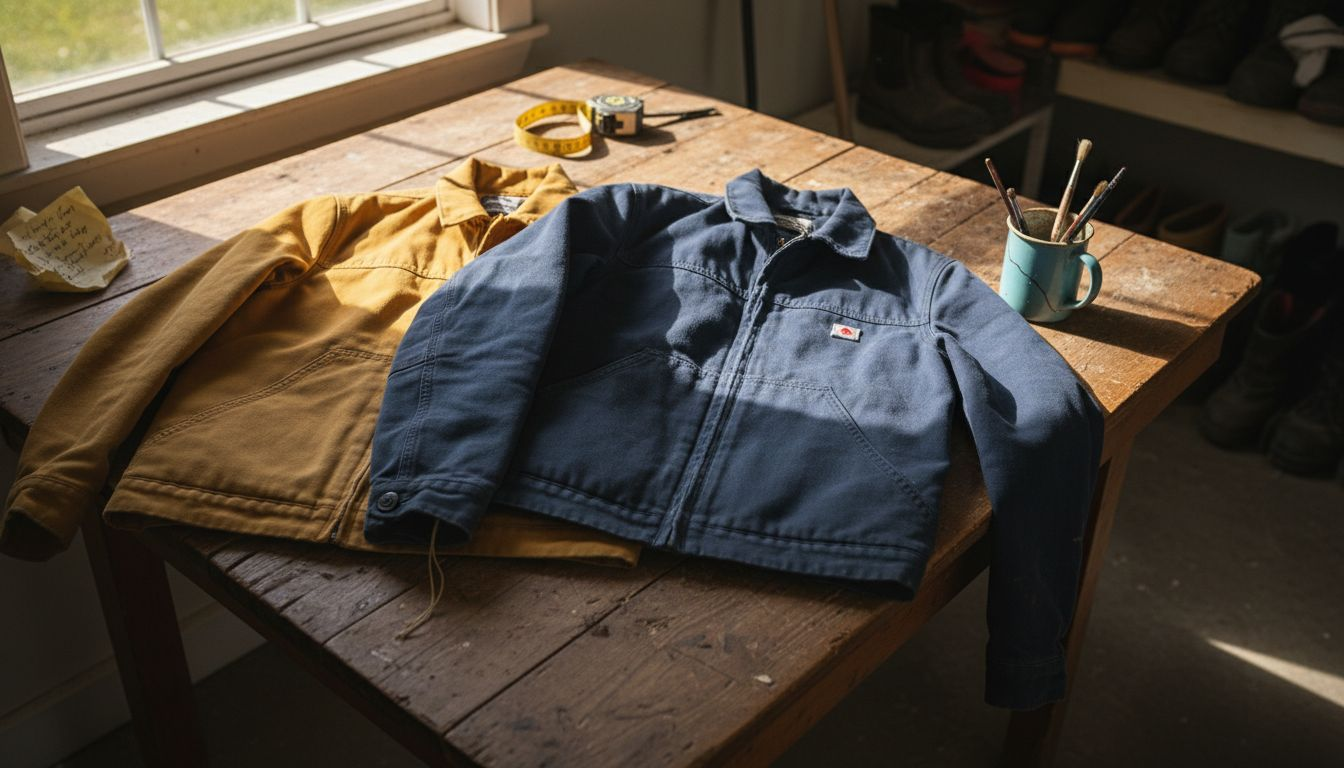
Pro tip: Try items on twice, once immediately and once more after a few minutes of movement, since initial comfort sometimes fades when fabric settles and zippers warm up, revealing fit problems you’d regret after purchase.
Step 4: Verify quality and test before purchasing
Before you commit your money, take time to inspect items thoroughly and test functionality. Quality issues reveal themselves through simple inspection if you know what to look for. Don’t skip this step or you’ll end up with expensive mistakes.
Inspect seams under good lighting.
- Look for loose threads or uneven stitching patterns.
- Run your finger along seams to feel for gaps or weak spots.
- Check that thread color matches the fabric (mismatched thread suggests rushed production).
- Examine stress points like pocket corners, armholes, and crotch areas closely.
- Look for puckering or bunching in the fabric along seams.
Test all closures and moving parts before purchasing. Zip and unzip zippers multiple times. They should glide smoothly without catching or binding. Open and close buttons repeatedly. They should sit flat and feel secure. Velcro should grip firmly without peeling away at edges. Snaps should click definitively when fastened.
Check fabric quality by feeling and examining it. Rub the material between your fingers. Quality fabric has consistent texture and doesn’t pill or ball up. Look for thin spots, discoloration, or areas where the weave looks loose. Hold items up to light to spot thin or weak areas.
Verify that personal protective equipment meets safety standards if your work requires PPE elements like reflective gear or fire resistance. Check tags for certification labels and safety ratings. ANSI certification, NFPA standards, and reflective material ratings matter on job sites.
Test fit one final time before checkout.
- Sit down in the pants or overalls to ensure they don’t restrict movement.
- Reach high, bend low, and twist side to side.
- Move in ways that mimic your actual job tasks.
- Check that pockets don’t bunch or restrict leg movement.
- Verify that straps or closures don’t dig into skin.
Look for manufacturer claims about durability and verify them. Does the label mention reinforced areas? Are those areas actually reinforced when you examine them? Do care instructions make sense for construction work, or do they suggest dry cleaning only?
Use this table to quickly compare indicators of quality when shopping for workwear:
| Inspection Area | Sign of Quality | Sign of Low Quality |
|---|---|---|
| Seams | Even stitching, strong bartacks | Loose threads, gaps |
| Zippers | Smooth, metal, reinforced | Stiff, plastic, jams easily |
| Fabric | Dense weave, no thin spots | Pills, inconsistent texture |
| Closures | Flat buttons, strong snaps | Loose, weak, misaligned |
Real quality shows itself in details. If something feels cheap to the touch, it probably is.
Take photos of the item front, back, and close-ups of seams and closures. Keep these photos for comparison if you need to return items or reference them when shopping for replacements.
Pro tip: Ask store staff about return policies before purchasing, then buy items with the understanding that you can return anything that fails after one work shift, so you’re protected even if problems don’t show up during your in-store inspection.
Find Durable and Functional Women’s Construction Workwear Today
Struggling to find women’s construction work clothes that truly fit the demanding role on your job site is a challenge many face. You need gear that moves with your body, protects you from hazards, and withstands tough conditions without sacrificing comfort or style. At WorkWearComfort, we understand the importance of durable, purpose-built apparel designed to meet specific job requirements while empowering women to feel confident and ready for anything.
Explore our range of rugged and stylish options like the UPF 50+ Sun Protection Work Hoodie that guards you from the sun during long outdoor shifts. Check out Funny Blue Collar Trades Hoodies to add personality without compromising durability. Whether you need layers for protection or practical features like reinforced seams and tool-friendly pockets, we have what you need. Visit WorkWearComfort.com now and equip yourself with gear that works as hard as you do. Don’t settle for anything less than apparel built to support your safety and strength every day on the job.
Frequently Asked Questions
How can I identify my specific women’s construction workwear needs?
Begin by listing your job responsibilities and identifying the key protective features required for your role. For example, if you are a welder, prioritize fire-resistant materials, while electricians should look for non-conductive fabrics.
What should I consider when assessing the physical demands of my job for workwear?
Think about the activities you perform daily, such as climbing, bending, or kneeling. Ensure your workwear allows full mobility and comfort to prevent injuries and improve efficiency on the job site.
How can I find local stores that sell women’s construction work clothes?
Start by searching for big-box home improvement retailers or specialized industrial supply shops in your area. Call ahead to confirm if they stock women’s workwear designed for your needs, saving time and ensuring you find the right fit.
What features should I compare when shopping for women’s construction workwear?
Focus on fabric composition, protective features, pocket placement, and overall durability. Evaluate the fit by testing how the gear moves with your body during regular job tasks to ensure comfort and functionality.
How can I verify the quality of women’s construction work clothes before purchasing?
Inspect items for even seams, smooth closures, and high-quality fabrics. Thoroughly test functionality, such as zippers and pockets, and ensure that the gear aligns with your safety requirements for your specific role.
What steps can I take if my new workwear does not meet my needs after purchase?
Check the return policy before buying, and ensure items can be returned if they fail to perform as expected. If an issue arises after just one work shift, take advantage of the return policy to exchange or return the product.
Recommended
- How to Find Construction Work Clothes Near Me Easily – WorkWearComfort
- How to Find the Best Construction Wear Near Me Fast – WorkWearComfort
- How to Find the Best Construction Clothes Near Me – WorkWearComfort
- Find and Choose Construction Work Wear Near Me Fast – WorkWearComfort
- Residential Construction Guide for Custom Canadian Homes
