

Most American construction professionals face tough choices when it comes to daily workwear. With over 60 percent reporting discomfort or early wear and tear on basic uniforms, the hunt for gear that blends protection, comfort, and style really matters. The right workwear directly affects safety and long term job satisfaction. This guide is packed with practical steps to help you pick durable American workwear that stands up to every challenge your job site throws at you.
Table of Contents
- Step 1: Assess Your Construction Work Wear Needs
- Step 2: Research Reliable Stores Near You
- Step 3: Compare Product Features And Brands
- Step 4: Verify Sizing And Fit For Comfort
- Step 5: Inspect Final Selections Before Purchase
- Step 6: Complete Your Purchase And Confirm Quality
Quick Summary
| Key Insight | Explanation |
|---|---|
| 1. Assess Your Work Wear Needs | Evaluate your work environment and specific hazards to select appropriate protective gear. |
| 2. Research Reliable Suppliers | Identify trustworthy vendors by checking safety standards and product specifications. |
| 3. Compare Product Features | Analyze durability and protective features across brands beyond just price. |
| 4. Verify Sizing and Fit | Take accurate measurements and test fit to ensure safety and comfort in your workwear. |
| 5. Inspect Before Purchase | Thoroughly examine gear for quality and safety compliance before finalizing your order. |
Step 1: Assess your construction work wear needs
Identifying your specific construction workwear requirements is a critical first step in selecting protective equipment that keeps you safe and comfortable throughout challenging work environments. Construction safety standards demand strategic selection based on precise job site conditions and potential hazards.
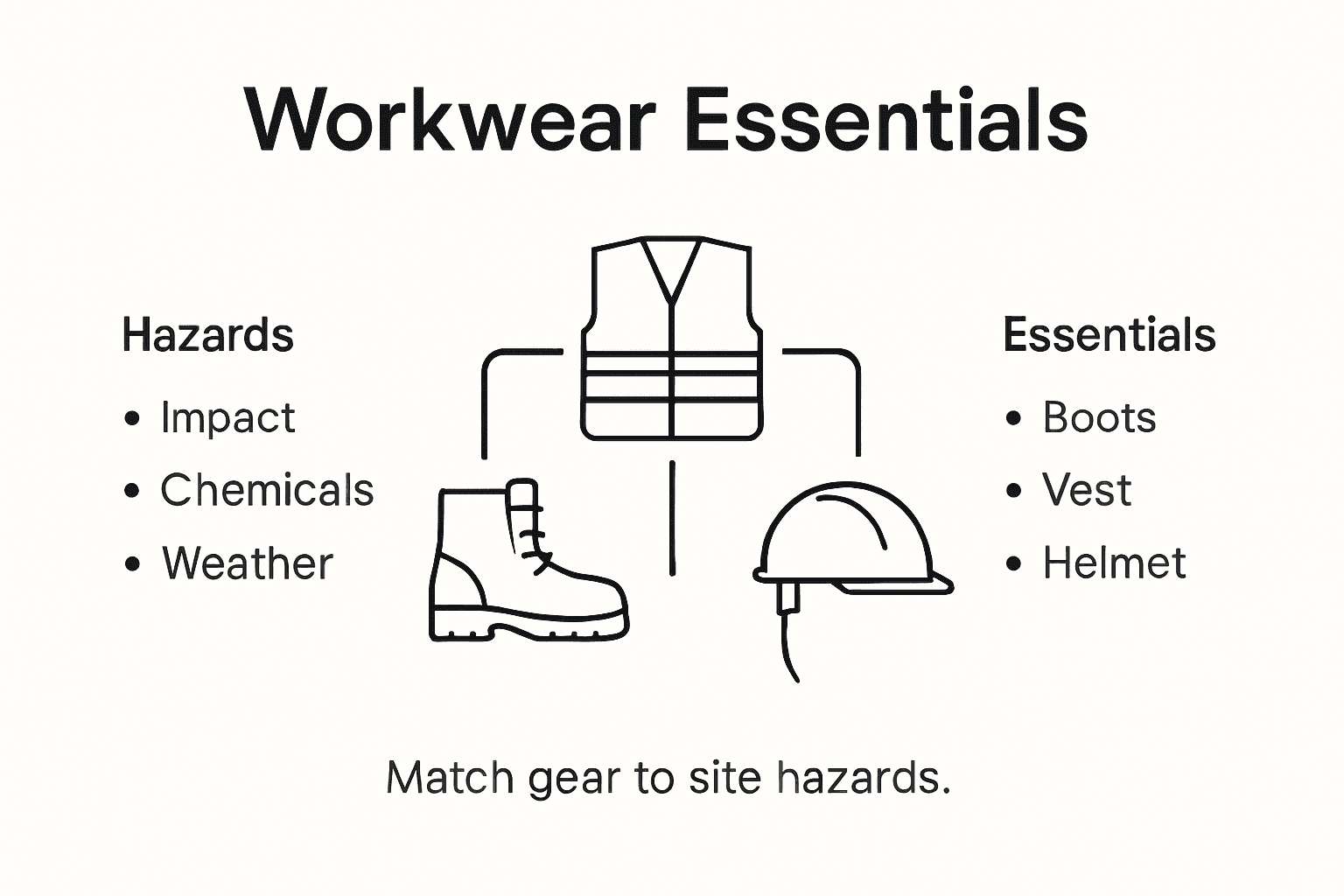
To effectively assess your work wear needs, start by comprehensively evaluating your typical work environment. Consider key factors like physical hazards, temperature variations, potential chemical exposures, and specific task requirements. NIOSH construction safety guidelines recommend conducting a thorough job site risk assessment that examines potential injury mechanisms unique to your specific trade or project type. This means examining everything from potential impact risks and electrical hazards to potential heat stress or cold exposure scenarios.
Your assessment should include analyzing the specific protective gear necessary for your role. Different construction specialties require varied protective elements. Electricians need arc-rated clothing, while concrete workers might require specialized protective layers against caustic materials. Evaluate your typical daily movements, potential equipment interactions, and environmental challenges to determine the most appropriate workwear strategy.
Here’s a summary of common workwear requirements by construction specialty:
| Construction Role | Typical Hazards | Essential Workwear |
|---|---|---|
| Electrician | Arc flash, electrical | Arc-rated clothing |
| Concrete Worker | Chemical exposure | Chemical-resistant gear |
| Roofer | Fall, heat, weather | Non-slip boots, sun hat |
| Welder | Sparks, heat, UV | Flame-resistant jacket |
| Carpenter | Impact, abrasion | Reinforced gloves |
Pro Tip: Keep a detailed log of your job site conditions and protective equipment performance to continuously refine your workwear selection strategy.
Step 2: Research reliable stores near you
Finding trustworthy suppliers for your construction workwear requires strategic research and careful evaluation of potential vendors who can meet your specific safety and quality requirements. Federal purchasing resources like GSA Advantage provide an excellent starting point for identifying verified contractors specializing in construction work wear and personal protective equipment.
Begin your research by exploring multiple channels. Check local construction supply stores, specialty workwear retailers, and online platforms that cater specifically to trade professionals. NIOSH Construction Toolbox Talks recommend developing a comprehensive vendor assessment strategy that goes beyond price considerations. Look for suppliers who demonstrate clear commitment to safety standards, offer detailed product specifications, and provide comprehensive information about material durability and protective capabilities.
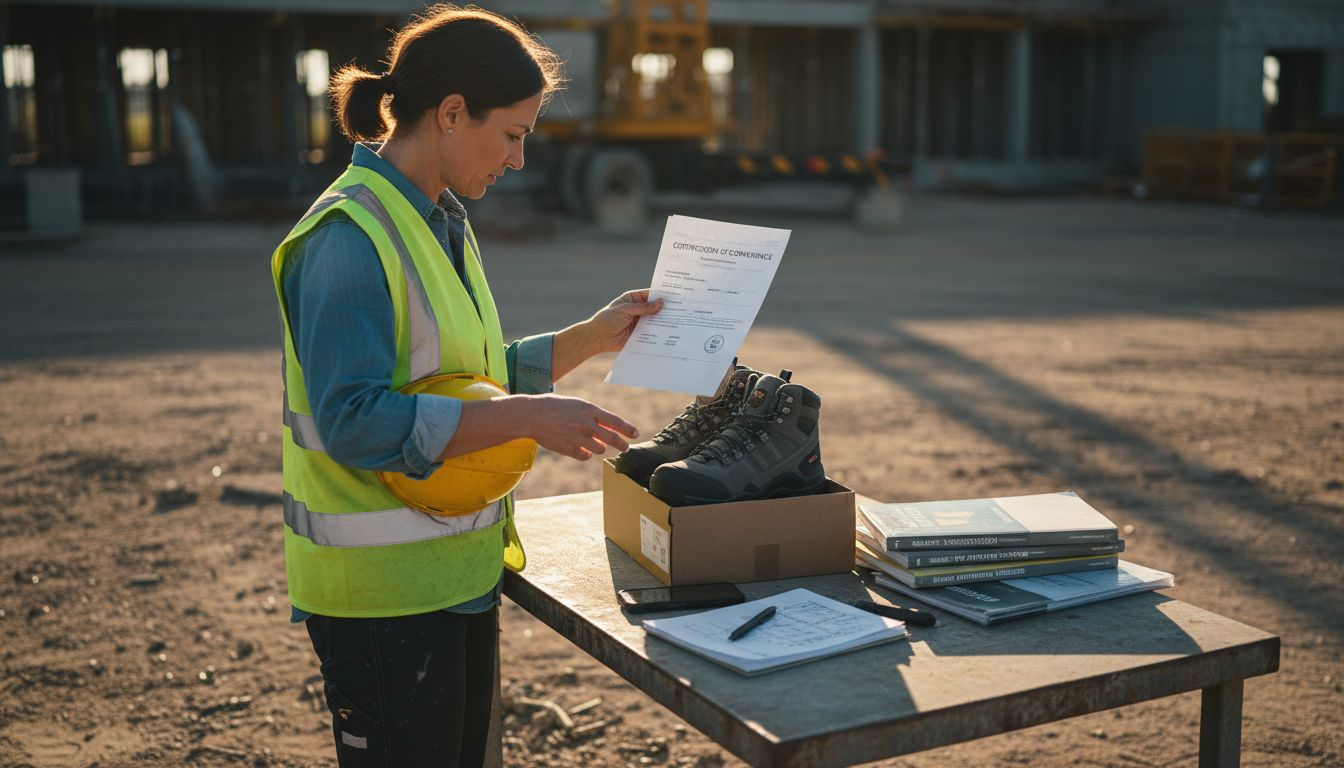
Prioritize vendors who can provide documentation verifying their equipment meets current safety regulations. This means requesting certification details, understanding their quality control processes, and checking customer reviews from professionals in similar construction trades. Pay attention to return policies, warranty information, and the range of sizes and specialized gear they offer to ensure they can accommodate your specific workplace needs.
Pro Tip: Develop relationships with multiple workwear suppliers to create a diverse sourcing network that provides flexibility during supply chain disruptions.
Step 3: Compare product features and brands
Navigating the complex landscape of construction workwear requires a systematic approach to comparing product features and brands that go beyond surface level considerations. Comprehensive reviews of American work clothing brands offer invaluable insights into the nuanced differences between manufacturers that can significantly impact your workplace performance and safety.
When comparing workwear, develop a structured evaluation framework that considers multiple critical factors. Look beyond price and aesthetics to assess material durability, fabric technology, reinforcement points, mobility design, and specific protective features tailored to your construction specialty. Pay close attention to details like stitching quality, fabric weight, moisture wicking capabilities, and resistance to abrasion. Consider how different brands approach specialized needs such as electrical hazard protection, flame resistance, thermal regulation, and impact protection.
Evaluate each brand holistically by examining their reputation for quality, customer service, warranty offerings, and long term performance. Request product samples when possible, read professional reviews from construction workers in similar trades, and don’t hesitate to contact manufacturers directly with specific questions about their gear’s performance characteristics. Consider factors like size range, customization options, and how well the clothing integrates with other personal protective equipment you regularly use.
Pro Tip: Create a detailed comparison spreadsheet tracking specific features across different brands to objectively analyze your workwear options.
Step 4: Verify sizing and fit for comfort
Precise sizing is more than just a matter of comfort it is a critical safety consideration for construction professionals who rely on their workwear to perform under demanding conditions. Work pants sizing guides provide essential technical insights into accurately measuring and selecting clothing that supports your range of motion and workplace requirements.
To ensure optimal fit, start by taking comprehensive personal measurements. Use a flexible measuring tape to accurately record your waist, inseam, hip, and thigh dimensions. Pay special attention to how different brands interpret sizing standards, as manufacturing variations can significantly impact fit. Thermal comfort research from UC Berkeley highlights how proper clothing fit directly influences workplace performance by managing body temperature and allowing unrestricted movement across varying environmental conditions.
When trying on workwear, perform a series of physical tests that simulate your typical job site movements. Squat, bend, reach, and stretch to confirm the clothing provides full range of motion without restricting mobility or creating uncomfortable bunching. Check for key fit indicators like shoulder seam alignment, sleeve length, pants rise, and overall garment mobility. Consider trying on clothing while wearing your standard work boots and base layers to ensure a comprehensive understanding of how the garment will perform in real world conditions.
Pro Tip: Always try on workwear at the end of the day when your body is slightly swollen to ensure comfort during extended work shifts.
Step 5: Inspect final selections before purchase
Before completing your construction workwear purchase, conduct a thorough inspection that goes beyond visual appeal to ensure safety and quality. Legal guidelines from the Uniform Commercial Code protect your rights to carefully evaluate merchandise before finalizing your transaction, emphasizing the importance of a meticulous review.
Perform a comprehensive physical examination of each piece of workwear. Check for consistent stitching quality, fabric integrity, and potential manufacturing defects. Scrutinize seams, stress points, and material durability by gently stretching and manipulating the fabric. OSHA safety standards recommend examining protective gear with particular attention to reinforcement areas, ensuring the clothing meets stringent workplace safety requirements.
Evaluate functional aspects beyond basic appearance. Test zipper smoothness, button durability, pocket functionality, and overall garment flexibility. Consider how the clothing will perform during actual work conditions by mimicking typical job site movements. Verify that reflective elements are securely attached, protective layers maintain their structure, and the overall garment supports your specific work environment needs.
This table outlines key factors to check during your final workwear inspection:
| Inspection Point | Why It Matters | How to Check |
|---|---|---|
| Stitching Quality | Ensures durability | Look for even, tight seams |
| Fabric Integrity | Prevents early tearing | Stretch and examine fabric |
| Reinforcement Areas | Withstands high stress | Focus on knees, elbows |
| Fastener Functionality | Maintains protection & fit | Test zippers and buttons |
| Reflective Elements | Improves visibility | Check attachment security |
Pro Tip: Bring a small measuring tape and wear your typical work boots when trying on workwear to ensure absolute accuracy in fit and functionality.
Step 6: Complete your purchase and confirm quality
Finalizing your construction workwear purchase requires a strategic approach that goes beyond simply selecting the right items and paying for them. Personal protective equipment procurement guidelines emphasize the importance of a comprehensive verification process to ensure your investment meets all necessary safety and performance standards.
Before completing the transaction, review all purchase details carefully. Confirm sizing, verify color and style specifications, and double check return and exchange policies. Workplace safety experts recommend conducting a final fit assessment and understanding the manufacturer’s care instructions. Retain all documentation including receipts, warranty information, and product tags to support potential future claims or replacements.
After purchase, perform an immediate quality review at home. Lay out each piece of workwear in good lighting, checking for any damage that might have occurred during shipping. Examine stitching, fabric integrity, and protective features to ensure they match the original in store inspection. If any discrepancies exist, contact the seller immediately to address potential manufacturing defects or shipping damage.
Pro Tip: Photograph your workwear immediately after purchase to document its initial condition and protect yourself in case of future quality disputes.
Discover Workwear That Matches Your Construction Needs Today
Finding the right construction work wear near you means addressing key pain points like safety, durability, and comfort that the article highlights. You need gear designed to protect against hazards like impact, electrical risks, and chemical exposure while allowing full mobility throughout your day. At WorkWearComfort, we understand these challenges and offer rugged apparel that embraces the blue-collar lifestyle with both functionality and style in mind.
Explore our collection of Blue-Collar Working Man Sweatshirt Hoodies – WorkWearComfort for durable, comfortable layers that work as hard as you do. Whether working on site or off duty, our apparel supports your safety needs and personal style. Don’t wait for gear that falls short. Visit WorkWearComfort.com now and equip yourself with trusted workwear designed for strength, resilience, and confidence on every job.
Frequently Asked Questions
How can I assess my construction work wear needs?
Start by evaluating your typical work environment, considering hazards like physical impacts, temperature changes, and potential chemical exposures. Conduct a risk assessment related to your specific construction trade to identify the protective gear necessary for your role.
What factors should I consider when researching work wear suppliers?
Evaluate suppliers based on safety standards, product specifications, and customer reviews rather than just price. Look for vendors with a solid commitment to quality control and documents verifying that their equipment meets current safety regulations.
How can I compare product features effectively?
Develop a structured evaluation framework that considers material durability, protective features, and the brand’s reputation. Create a detailed comparison spreadsheet to track features, pricing, and reviews across different brands, allowing for an informed choice.
What steps can I take to ensure the right sizing and fit?
Take accurate measurements of your waist, inseam, hips, and thighs before trying on work wear. Test the fit by performing typical job site movements to ensure comfort and flexibility without restriction.
What should I inspect before completing my purchase of work wear?
Conduct a thorough inspection that includes checking stitching quality, fabric integrity, and functionality of fasteners. Look for any visible defects and test the durability of the gear to ensure it meets safety standards before finalizing your purchase.
How do I confirm the quality of my work wear after purchase?
Perform an immediate quality review at home, examining each piece for any damage. Document the condition of your work wear by taking photographs and contact the seller if discrepancies are found.
