

Many blue-collar workers believe the thickest pants provide the best cold weather protection. This misconception leads to poor mobility and discomfort on the job. Modern warm workwear essentials prove that advanced insulation materials can deliver superior warmth while reducing bulk by up to 50%, transforming how tradesmen approach cold weather gear selection.
Table of Contents
- Thermal Insulation Technologies: Balancing Warmth and Bulk
- Durability and Fabric Choices: Long-Lasting Protection Against Abrasion
- Ergonomic Design: Enhancing Comfort and Mobility on the Job
- Water Resistance and Breathability Tradeoffs: Staying Dry Without Overheating
- Common Misconceptions About Warmth and Bulk in Work Pants
- Comparative Overview of Leading Warm Work Pants Brands
- Care, Maintenance, and Longevity of Warm Work Pants
- Explore Our Range of Durable Warm Work Pants
Key Takeaways
| Point | Details |
|---|---|
| Modern insulation cuts bulk | New synthetic materials reduce bulk by 30-50% while maintaining equal warmth compared to traditional options. |
| High denier boosts durability | Fabrics rated 600-1000 denier resist abrasions and tears 25-35% better than lower rated materials. |
| Ergonomic features increase mobility | Articulated knees and gussets improve movement by up to 20%, reducing fatigue during demanding tasks. |
| Water resistance needs balance | DWR coatings protect against moisture but must allow breathability to prevent sweat buildup. |
| Proper care extends lifespan | Gentle washing without fabric softeners preserves insulation loft and fabric integrity for years. |
Thermal Insulation Technologies: Balancing Warmth and Bulk
Understanding how insulation materials function helps you make smarter purchases. The best warm work pants use synthetic fibers that trap air pockets between strands, creating barriers that hold body heat close to your skin. This principle works without requiring massive thickness.
Three primary insulation types dominate the market:
- Thinsulate: Ultra-fine microfibers provide 1.5 times the warmth of down at the same thickness
- PrimaLoft: Water-resistant synthetic clusters maintain insulation even when damp
- Fleece linings: Affordable polyester options offering moderate warmth for milder conditions
Modern modern insulation technology dramatically improves warmth-to-weight ratios. New insulation materials can reduce bulk by 30-50% while maintaining equal warmth, allowing you to move freely without sacrificing protection. This matters when you’re climbing ladders, kneeling to install fixtures, or working in confined spaces where bulky pants restrict motion.
Layering remains essential even with quality insulated pants. Base layers wick moisture away from skin, insulated pants trap warmth, and outer shells block wind and precipitation. This system adapts to varying activity levels throughout your workday.
Pro Tip: Choose insulation weight based on your typical temperature range. 40-60 gram insulation suits moderate cold (30-50°F), while 100+ grams handles extreme conditions below 20°F.
Durability and Fabric Choices: Long-Lasting Protection Against Abrasion
Durability determines whether your pants last one season or five years. Denier measures fabric density, with higher numbers indicating thicker, more abrasion-resistant yarns. 600 to 1000 denier polyester or nylon fabrics resist abrasions and tears 25-35% better than lower denier cotton blends.
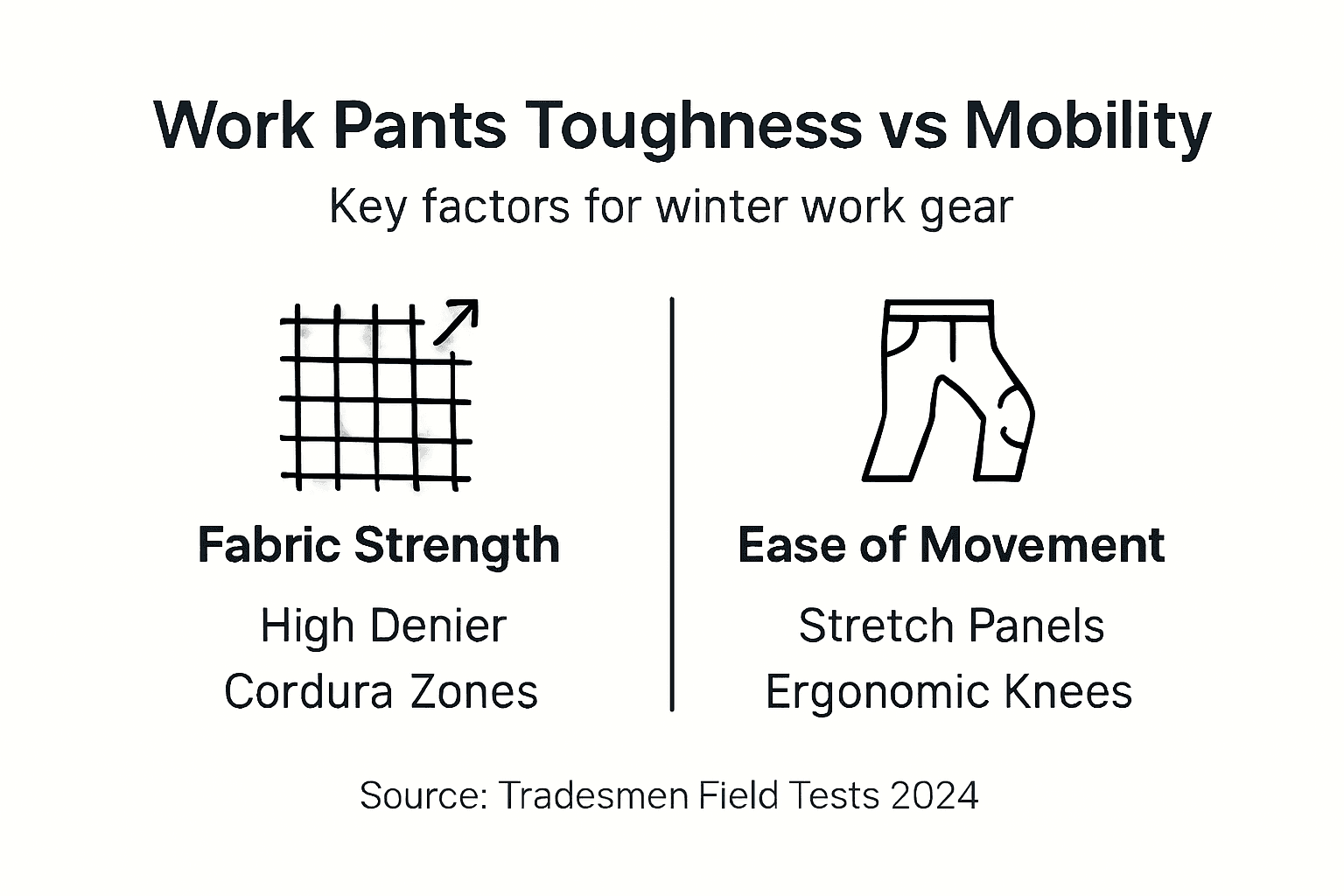
| Fabric Type | Typical Denier | Abrasion Resistance | Best Use |
|---|---|---|---|
| Cotton blend | 200-400 | Moderate | Light duty, indoor/outdoor mix |
| Nylon | 600-1000 | High | Heavy construction, forestry |
| Polyester | 500-900 | Very High | Welding, metalwork |
| Ripstop nylon | 400-600 | High with tear resistance | Roofing, landscaping |
Weave tightness and coatings enhance base fabric durability factors. Tight weaves prevent snags from catching and spreading. Durable Water Repellent (DWR) coatings add a protective layer that sheds moisture and light debris, extending fabric life.
Reinforcements at stress points matter enormously:
- Double-layered knees: Protect against wear from kneeling on concrete, gravel, and rough surfaces
- Reinforced seams: Triple-stitched construction prevents blowouts during sudden movements
- Kick panels: Shield lower legs from repeated contact with tools and materials
- Bar-tacked pockets: Strengthen attachment points that handle heavy loads daily
Matching durable fabrics to your specific trade demands prevents premature failure. Electricians need flame-resistant options, while concrete workers benefit from cement-resistant treatments. Understanding fabric denier details helps you evaluate product specifications accurately.
Pro Tip: Check for Cordura nylon in high-wear zones. This branded material offers exceptional abrasion resistance that outlasts standard nylon by significant margins.
Ergonomic Design: Enhancing Comfort and Mobility on the Job
The best insulation and fabric mean nothing if you can’t move properly. Ergonomic design benefits transform stiff pants into comfortable workwear that supports your body throughout long shifts.
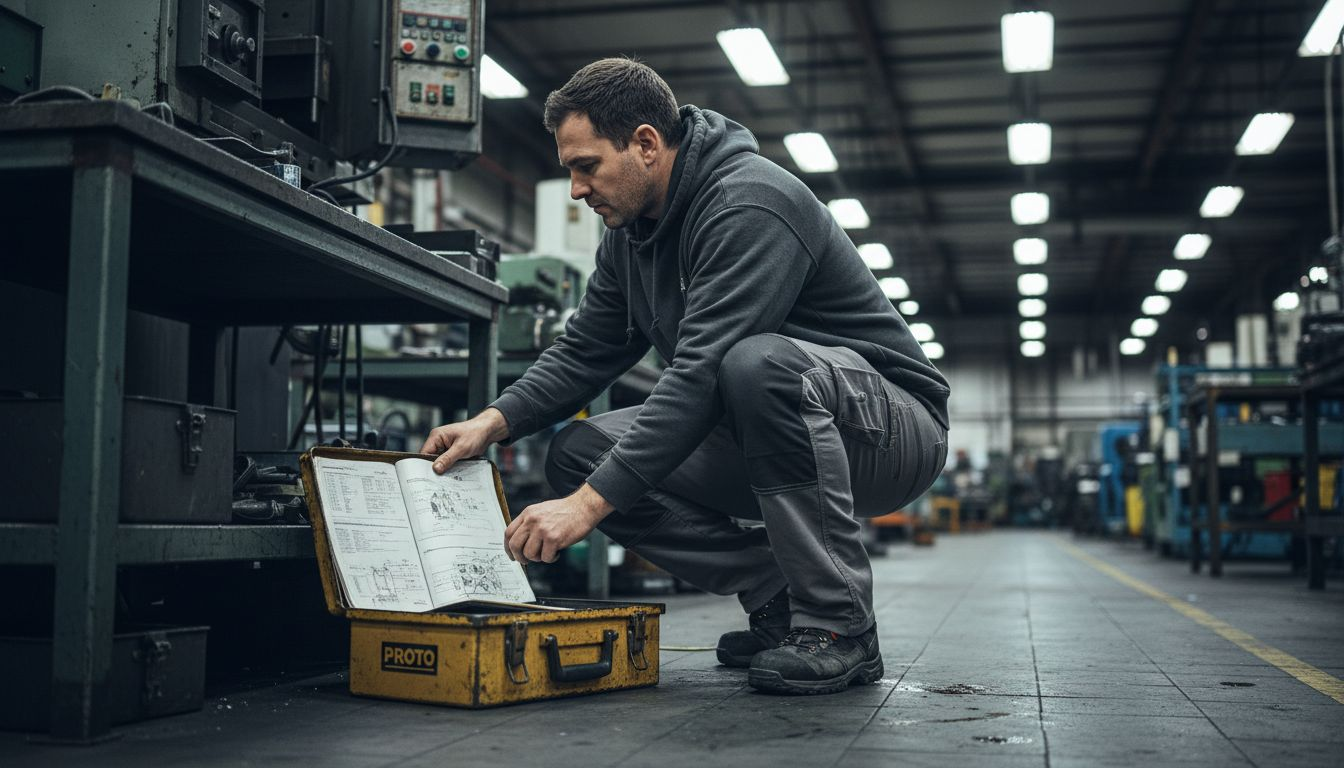
Articulated knees use curved seam lines that match natural leg bend. This prevents fabric from bunching behind your knees when you crouch or kneel. Gusseted crotches add diamond-shaped fabric panels that eliminate pulling and binding during high steps or wide stances.
Ergonomic features in work pants can improve movement by up to 20%, helping workers perform longer and safer. This percentage translates to reduced fatigue, fewer awkward compensatory movements, and lower injury risk during physically demanding tasks.
Key ergonomic elements include:
- Stretch fabric panels: Positioned at knees, seat, and waist for flexibility during dynamic movements
- Adjustable waistbands: Accommodate layers underneath and natural waist size changes throughout the day
- Action backs: Pleated or stretched rear panels prevent shirt pull when reaching overhead
- Low-profile closures: Flat buttons and hook closures avoid pressure points when wearing tool belts
Insulation thickness creates inherent mobility tradeoffs. Extremely thick insulation restricts bend and stretch, while ultra-light options sacrifice warmth. Finding the right balance for your temperature exposure and activity level requires honest assessment of typical work conditions.
“The difference between good and great work pants is how they move with you, not against you. Proper ergonomic design means you forget you’re wearing them.”
Pro Tip: Try the deep squat test when shopping. Quality ergonomic pants allow full squatting motion without pulling at the waist, binding at the knees, or restricting hip flexion.
Water Resistance and Breathability Tradeoffs: Staying Dry Without Overheating
Protecting against external moisture while managing internal perspiration requires careful balance. Water resistance and breathability work as opposing forces that must be optimized for your specific conditions.
DWR coatings provide water resistance but must be balanced with breathability to avoid moisture buildup and overheating. These chemical treatments cause water to bead and roll off fabric surfaces rather than soaking through. DWR performs well against light rain, snow, and splashes but eventually wears away with use and washing.
Three moisture management approaches exist:
- Water-resistant: DWR-coated fabrics that repel light moisture while maintaining good breathability for active work
- Waterproof/breathable membranes: Gore-Tex-style barriers blocking water entry while allowing vapor escape through microscopic pores
- Waterproof/non-breathable: Rubber or PVC coatings providing complete water protection but trapping all moisture inside
Non-breathable waterproof pants create humid microenvironments next to your skin. Sweat accumulates faster than it can escape, leading to damp base layers that conduct heat away from your body. You end up cold and wet from internal moisture despite staying dry from external water.
Breathability ratings measure how much moisture vapor passes through fabric over time. Higher numbers indicate better vapor transmission. Look for ratings above 10,000 g/m²/24hr for moderate activity levels, and 20,000+ for heavy exertion.
Layering strategies help manage the water resistance/breathability tradeoff. Moisture-wicking base layers move sweat to insulated pants, which transfer vapor to breathable outer shells. This system works better than relying on single-layer waterproof pants alone.
Water resistance technology continues advancing with new membrane materials and coating formulations. Evaluating your typical exposure helps determine whether you need full waterproofing or water-resistant treatments suffice.
Common Misconceptions About Warmth and Bulk in Work Pants
Several persistent myths lead workers toward poor purchasing decisions. Understanding the truth helps you invest in genuinely effective cold weather protection.
Myth 1: Thicker automatically means warmer. Quality insulation type matters far more than total thickness. Modern synthetics trap more air per inch than traditional materials, delivering superior warmth in slimmer profiles. Bulk without efficiency just restricts movement.
Myth 2: Cotton keeps you warm when wet. Cotton absorbs up to 27 times its weight in water, loses 90% of insulating value when saturated, and dries extremely slowly. This combination proves dangerous in cold, wet conditions where hypothermia risk increases dramatically.
Myth 3: Waterproof pants eliminate layering needs. Waterproof fabrics block wind and precipitation but don’t generate heat. You still need insulating layers underneath to trap body warmth. Waterproofing and insulation serve different functions that complement rather than replace each other.
Myth 4: All work pants breathe equally. Breathability varies enormously across products. Cheap waterproof coatings trap moisture completely, while premium membranes allow substantial vapor transmission. Reading specifications rather than assuming performance prevents disappointing purchases.
Myth 5: Breaking in stiff pants improves mobility. Poorly designed pants never achieve comfortable flexibility regardless of wear time. Ergonomic features must be built in from the start through articulation, gussets, and stretch panels. Hoping stiff pants soften wastes money and tolerates unnecessary discomfort.
Better materials consistently outperform added bulk. A 100-gram Thinsulate pant provides more warmth than a 200-gram generic polyester option while maintaining superior mobility. Understanding these distinctions separates informed buyers from those relying on outdated assumptions.
Comparative Overview of Leading Warm Work Pants Brands
Two industry leaders dominate the blue-collar workwear market with distinct approaches to warmth, durability, and design. Comparing their flagship insulated pants reveals meaningful differences that influence buying decisions.
Carhartt’s Rugged Flex insulated pants combine quilted-lined nylon with stretch fabric panels. The brand emphasizes extreme durability through triple-stitched seams, reinforced kick panels, and Cordura abrasion zones. Their insulation typically ranges from 60-100 grams, targeting moderate to cold conditions without excessive bulk.
Dickies positions their Sanded Duck insulated pants as value-oriented options blending 8.5 oz polyester/cotton canvas with heavyweight fleece linings. Water-repellent finishes and reinforced knees address durability needs. The slightly heavier fabric weight appeals to workers prioritizing abrasion resistance over maximum flexibility.
| Feature | Carhartt Rugged Flex | Dickies Sanded Duck |
|---|---|---|
| Primary fabric | Nylon/spandex blend | Polyester/cotton canvas |
| Insulation type | Quilted synthetic | Heavyweight fleece |
| Denier rating | 600-800 | 500-700 |
| Articulated knees | Yes | Limited |
| Stretch panels | Multiple zones | Waistband only |
| Price range | $$$ | $$ |
Brand selection depends on specific work demands:
- Carhartt excels for jobs requiring maximum mobility: roofing, HVAC installation, electrical work in tight spaces
- Dickies suits budget-conscious workers in moderate-mobility roles: landscaping, general construction, warehouse operations
- Both perform well for typical outdoor winter construction in temperatures above 20°F
Smaller specialized brands like Blaklader and Snickers offer premium features including integrated knee pad pockets, multiple tool loops, and innovative ventilation systems. These European manufacturers command higher prices but deliver exceptional durability and thoughtful design details.
Evaluating how each brand addresses insulation efficiency, fabric durability, and ergonomic design helps match products to your specific trade requirements and budget constraints.
Care, Maintenance, and Longevity of Warm Work Pants
Extending your investment requires proper maintenance that preserves insulation loft, fabric integrity, and water-repellent treatments. Proper washing techniques and detergent choice critically affect insulation longevity.
Washing recommendations:
- Frequency: Clean after heavy soiling or every 2-3 weeks of regular use to prevent dirt from abrading fibers
- Temperature: Cold or warm water (max 86°F) protects insulation fibers and prevents shrinkage
- Detergent: Mild, liquid formulas without brighteners or fragrances that can damage synthetic insulation
- Cycle: Gentle or permanent press settings reduce mechanical stress on fabric and stitching
- Load size: Wash pants separately or with similar items to prevent tangling and uneven cleaning
Fabric softeners destroy performance. They coat insulation fibers, collapsing air pockets that trap warmth. Softeners also break down DWR treatments, eliminating water resistance. Skip them completely with technical workwear.
Drying practices significantly impact longevity. Air drying preserves insulation better than machine drying, but takes substantially longer. If using a dryer, select low heat and remove pants while slightly damp to finish air drying. High heat melts synthetic fibers, permanently reducing insulation effectiveness.
Ironing insulated pants serves no purpose and causes damage. The heat flattens insulation batting and can melt synthetic fabrics. If wrinkles bother you, hang pants in a steamy bathroom rather than applying direct heat.
Proper storage maintains insulation loft during off-seasons:
- Hang or fold loosely: Avoid compressing insulation for extended periods
- Clean before storing: Residual dirt and oils attract insects and promote mildew
- Dry location: Dampness degrades insulation and encourages mold growth
- Breathable containers: Skip plastic bags that trap moisture; use cloth garment bags instead
DWR treatments require periodic reapplication. Clothing care tips recommend spray-on or wash-in DWR products after every 10-15 washes when water stops beading on fabric surfaces.
Pro Tip: Turn pants inside out before washing to protect exterior fabric and reduce pilling. This simple step extends visible appearance and preserves DWR coating effectiveness.
Explore Our Range of Durable Warm Work Pants
Finding the right warm work pants requires matching insulation, durability, and design to your specific trade demands. WorkWearComfort offers carefully curated selections that meet the demanding needs of blue-collar professionals across diverse industries.
Our tradesmen workwear comparison guides help you evaluate options across brands and price points. We focus on proven performers that deliver genuine warmth without sacrificing mobility. Detailed specifications for denier ratings, insulation types, and ergonomic features take the guesswork out of online shopping.
Explore understanding workwear essentials to learn how different pant styles complement your existing gear. Whether you need heavy-duty options for extreme cold or versatile mid-weight pants for variable conditions, our construction workwear options provide solutions backed by real-world testing and blue-collar expertise.
FAQ
How do I choose the right insulation for my work pants?
Match insulation weight to your typical temperature range and activity level. Sedentary outdoor work in extreme cold requires 100+ gram insulation, while active trades in moderate cold perform better with 40-60 grams. Consider synthetic options like Thinsulate that maintain warmth even when damp, crucial for unpredictable weather.
Can I wear cotton pants for cold outdoor work?
Cotton performs poorly in cold conditions because it absorbs moisture and loses nearly all insulating ability when wet. The fabric dries slowly, creating prolonged cold exposure that increases hypothermia risk. Choose synthetic or wool-blend pants that maintain warmth even when damp and wick moisture away from skin.
How often should I wash my insulated work pants?
Wash after heavy soiling or every 2-3 weeks of regular use to remove dirt that abrades fabric fibers. Use gentle detergent without fabric softeners, which collapse insulation and destroy water-repellent treatments. Cold water and low-heat or air drying preserve insulation loft and extend pant lifespan significantly.
Are waterproof pants warm enough without layering?
Waterproof fabrics block wind and precipitation but don’t generate heat themselves. You still need base layers and insulated mid-layers underneath to trap body warmth effectively. Layering also manages perspiration better than relying on single-layer waterproof pants, preventing the cold-and-clammy feeling that reduces comfort.
Recommended
- Construction Work Pants: Built for Endurance – WorkWearComfort
- Work Pants for Construction – Durability That Matters – WorkWearComfort
- 7 Comfortable Work Outfits for Women in Tough Jobs – WorkWearComfort
- 7 Best Work Pants for Blue-Collar Workers in 2025 – WorkWearComfort
- Marcus Tailored Jogger Trousers for Men – Vellurehomme
