

Nearly 90 percent of American construction workers say that durable work pants make the difference between a safe day and a painful one. On every messy site and under every changing sky, reliable workwear protects more than just your legs. For American men facing long shifts and tough conditions, knowing what truly sets construction pants apart helps you choose gear that stands up to each challenge.
Table of Contents
- Defining Construction Work Pants For Men
- Top Types And Materials For Tough Jobs
- Essential Features That Boost Performance
- Real-World Durability And Comfort Insights
- Comparing Costs And Common Buying Errors
Key Takeaways
| Point | Details |
|---|---|
| Functionality of Construction Work Pants | Designed as protective gear, these pants are built to withstand tough conditions while providing utility and safety for workers. |
| Material Considerations | Popular materials include heavy-duty Denim, Canvas, and specialized fabrics that offer durability and flexibility for work. |
| Key Performance Features | Essential features enhance mobility and protection, such as reinforced knees, moisture-wicking fabric, and articulated designs. |
| Smart Purchasing Strategy | Evaluate work pants based on long-term value and performance, rather than just initial cost, to ensure quality and durability. |
Defining Construction Work Pants for Men
Construction work pants represent more than just clothing - they are specialized protective gear engineered for demanding physical environments. Unlike standard jeans or casual trousers, these specialized pants are designed to withstand extreme conditions while providing functional utility for professional tradesmen. Carpenter jeans exemplify this practical approach, featuring multiple pockets, tool loops, and durable construction specifically tailored for on-site work.
At their core, construction work pants are defined by several critical characteristics that distinguish them from regular apparel. These include reinforced fabric, strategic pocket placement, enhanced durability, and specific design features that accommodate the unique needs of workers in physically intensive trades. The National Park Service Reference Manual underscores that work pants serve as personal protective equipment (PPE), emphasizing their role beyond simple clothing into a critical safety mechanism.
Key features of professional construction work pants typically include:
- Reinforced knee areas for added protection
- Multiple deep pockets for tool storage
- Hammer loops and specialized attachment points
- Heavy-duty fabric like canvas or denim
- Expanded belt loops for supporting tool belts
- Articulated knees for enhanced mobility
- Resilient stitching to prevent rapid wear
These pants are engineered to provide maximum functionality while protecting workers from potential workplace hazards. Manufacturers recognize that construction professionals need clothing that can withstand repetitive movement, exposure to rough surfaces, and potentially dangerous work environments.
Pro tip: When selecting construction work pants, prioritize fabric weight, reinforcement in high-stress areas, and overall mobility over pure aesthetic considerations.
Top Types and Materials for Tough Jobs
Construction work pants are engineered to withstand extreme conditions, requiring specialized materials of construction that balance durability, flexibility, and protection. Professional-grade work pants must endure intense physical stress, repetitive movements, and challenging environmental conditions while providing comfort and functionality for workers.
The most common materials used in high-performance construction work pants include:
- Denim: Heavy-weight, tightly woven cotton fabric with excellent abrasion resistance
- Canvas: Dense, plain-weave fabric known for exceptional durability and tear strength
- Ripstop Fabrics: Synthetic materials with interwoven reinforcement threads that prevent tears from spreading
- Blend Textiles: Combinations of cotton, polyester, and synthetic fibers for enhanced performance
- Flame-Resistant Materials: Specialized fabrics that provide additional safety in high-risk work environments
When evaluating work pants materials, construction professionals must consider multiple performance factors beyond simple fabric composition. Building materials research indicates that the ideal work pants fabric must demonstrate superior tensile strength, resist mechanical wear, and provide adequate flexibility for unrestricted movement. Manufacturers carefully engineer these materials to create work pants that can withstand daily punishment while maintaining worker comfort and safety.
Additionally, modern work pants incorporate advanced textile technologies that enhance traditional fabric properties. Reinforced stress points, articulated knee designs, and moisture-wicking properties transform these garments from simple clothing into sophisticated personal protective equipment designed for the most demanding work environments.
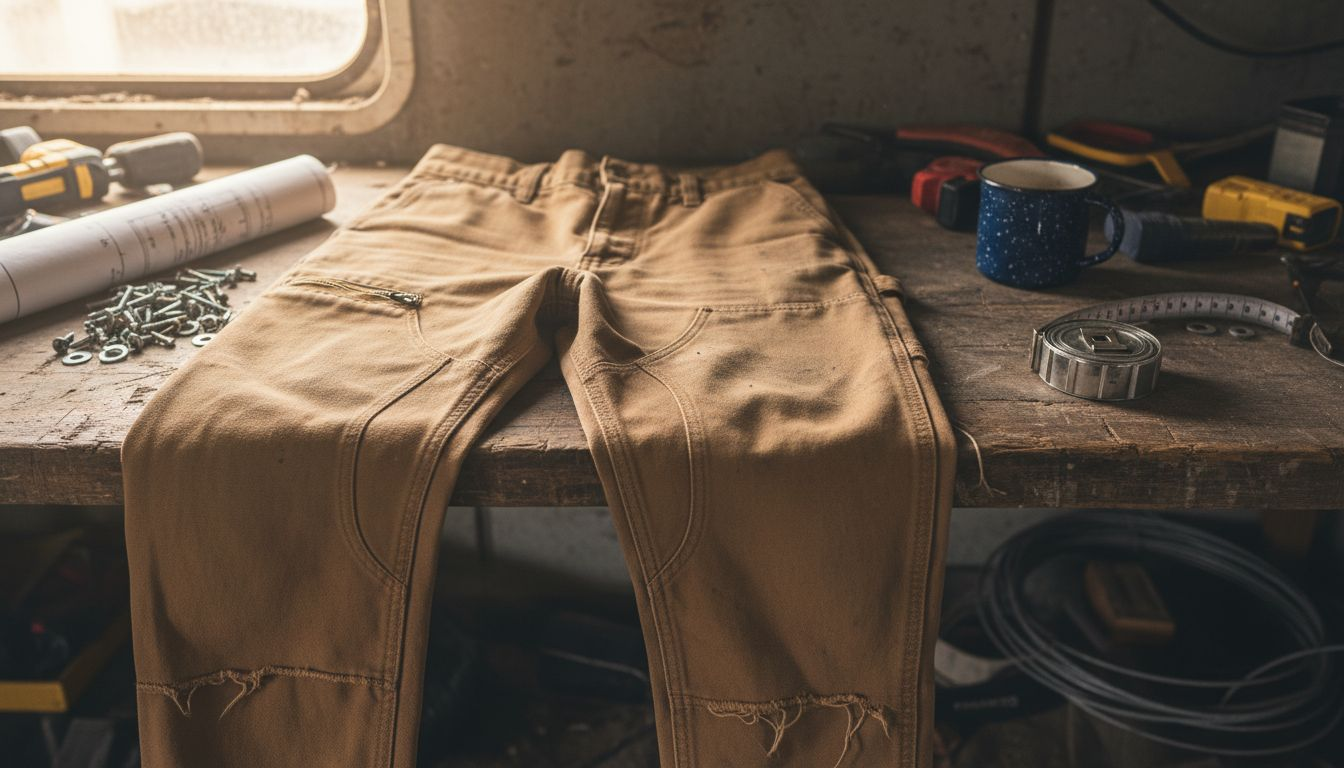
Pro tip: Always inspect work pants materials for reinforced stitching and examine fabric weight before purchasing to ensure maximum durability and performance.
Here’s how core construction work pant fabrics stack up:
| Material Type | Durability Level | Flexibility | Common Use Case |
|---|---|---|---|
| Heavyweight Denim | Very high | Moderate | Abrasion-prone tasks |
| Canvas | Exceptional | Low to moderate | Demolition, masonry work |
| Ripstop Synthetic | High with tear-block | High | Climbing, scaffolding |
| Blend Textiles | Balanced | High | All-day comfort |
| Flame-Resistant Fabric | Specialized | Moderate | Electrical, welding jobs |
Essential Features That Boost Performance
Performance in construction work pants goes far beyond basic fabric selection, focusing on construction productivity improvements that directly impact worker efficiency and comfort. The most critical features are engineered to enhance mobility, protection, and practical utility for professionals working in demanding environments.
Key performance-enhancing features of top-tier construction work pants include:
- Reinforced Knee Panels: Provide extra durability in high-stress areas
- Utility Pockets: Strategic placement for tool storage and easy access
- Moisture-Wicking Fabric: Helps regulate body temperature and reduce fatigue
- Articulated Knees: Allow greater range of motion during physical work
- Gusseted Crotch: Increases mobility and reduces strain during complex movements
- Adjustable Waistbands: Ensure proper fit and comfort throughout long workdays
Lean construction principles emphasize that work pants are not just clothing, but critical equipment that directly influences worker performance. The most advanced designs integrate ergonomic features that reduce physical strain, minimize fatigue, and enable workers to maintain peak productivity throughout demanding shifts. Thoughtful design elements like reinforced stress points, strategic pocket placement, and flexible fabric construction transform work pants from simple garments into performance-enhancing tools.
Modern construction work pants represent a sophisticated blend of material science, ergonomic engineering, and practical design. By focusing on features that support worker comfort, safety, and efficiency, manufacturers have elevated work pants from basic protective gear to essential performance equipment that can significantly impact job site productivity and worker well-being.
Pro tip: Invest in work pants with multiple reinforcement zones and prioritize designs that offer maximum range of motion over pure aesthetic considerations.
Real-World Durability and Comfort Insights
Construction work demands clothing that can withstand extreme conditions, and construction engineering research reveals the critical importance of work pants engineered for real-world performance. These aren’t just garments, but sophisticated protective equipment designed to support workers through grueling physical challenges and unpredictable environmental conditions.
Durability in construction work pants involves multiple critical dimensions:
- Abrasion Resistance: Withstanding constant friction against rough surfaces
- Tensile Strength: Maintaining structural integrity under significant physical stress
- Flexibility: Allowing unrestricted movement during complex tasks
- Moisture Management: Quickly wicking away sweat to maintain worker comfort
- Tear Resistance: Preventing catastrophic fabric failures during intense work
Sustainable building material studies demonstrate that true durability extends beyond simple fabric strength. The most effective work pants balance robust construction with strategic flexibility, ensuring that workers can move freely while remaining protected. This nuanced approach recognizes that comfort and durability are interconnected, not competing priorities.
Professional-grade work pants represent a sophisticated intersection of textile engineering, ergonomic design, and practical functionality. By integrating advanced materials, strategic reinforcement techniques, and thoughtful construction methods, manufacturers create garments that do more than cover a worker - they actively support performance, safety, and long-term comfort in the most demanding work environments.
Pro tip: Inspect work pants regularly for early signs of fabric stress, and replace them proactively before critical structural failures can compromise your safety.
Comparing Costs and Common Buying Errors
Constructing a smart purchasing strategy for work pants requires understanding the complex economics of workwear, where construction procurement challenges extend far beyond initial price tags. Most construction professionals make critical mistakes by focusing solely on upfront costs, overlooking the long-term financial implications of their clothing investments.
Common buying errors in construction work pants include:
- Price-Only Purchasing: Choosing the cheapest option without considering durability
- Ignoring Fabric Quality: Selecting lightweight materials unsuitable for heavy-duty work
- Overlooking Fit: Buying generic sizes that restrict movement
- Neglecting Maintenance Requirements: Purchasing pants that demand expensive or complex care
- Disregarding Worker Feedback: Making decisions without consulting those who actually wear the pants
Construction cost estimation reveals that true workwear economics involve a comprehensive lifecycle analysis. Smart buyers calculate total ownership costs by considering factors like replacement frequency, repair expenses, productivity impact, and potential worker compensation risks associated with inferior clothing. A $30 pair of work pants that wears out in two months represents a far worse investment than a $80 pair that lasts a full year while maintaining worker comfort and safety.
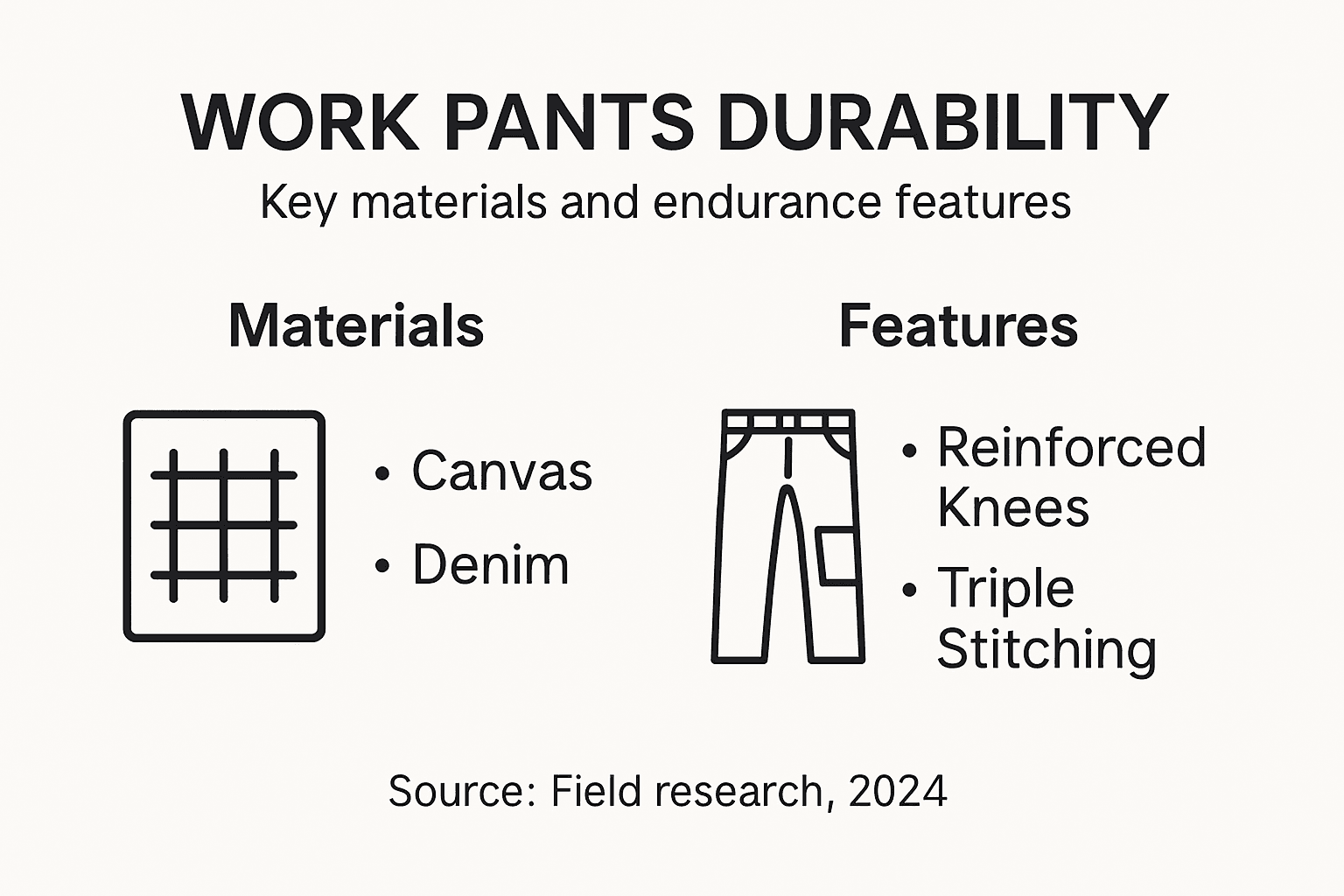
The most effective purchasing strategy integrates multiple evaluation criteria. This means assessing work pants not just as clothing, but as critical personal protective equipment that directly influences worker performance, safety, and overall job site efficiency. Sophisticated buyers understand that investing in high-quality work pants is fundamentally an investment in workforce productivity and risk mitigation.
Pro tip: Calculate your work pants’ total lifecycle cost by tracking replacement frequency, repair expenses, and potential productivity losses, not just the initial purchase price.
Compare total cost approaches for purchasing work pants:
| Buying Strategy | Initial Cost | Long-term Value | Risk of Failure |
|---|---|---|---|
| Lowest Price Only | Low | Poor, frequent replace | High, early wear and tear |
| Quality-Focused | Moderate/High | Extended, less replace | Low, superior durability |
| Worker-Centered | Variable | Optimal, increased comfort | Very low, targeted needs |
Gear Up with Durable Workwear Designed for Endurance
If you demand construction work pants that deliver unmatched durability, reinforced protection, and all-day comfort to power through tough jobs then explore the full range of rugged apparel crafted for hardworking professionals. Discover how quality materials, reinforced stitching, and functional design elevate your workwear to support your endurance on site.
Visit WorkWearComfort.com today and step into clothing that stands up to your hardest days. While you upgrade your pants, don’t miss our selection of All Hooded Sweatshirts engineered for comfort and protection. Complete your gear with Blue-Collar Dad Hats to tackle every challenge with confidence and style.
Act now to invest in durable workwear that matches your work ethic and resilience. Your next level of comfort and protection is just a click away.
Frequently Asked Questions
What are construction work pants made of?
Construction work pants are typically made from heavy-duty materials like denim, canvas, ripstop fabrics, and flame-resistant materials. These fabrics are chosen for their durability, flexibility, and ability to withstand harsh working conditions.
What features should I look for in construction work pants?
Key features to consider include reinforced knee areas, multiple pockets for tool storage, articulated knees for enhanced mobility, gusseted crotches, and moisture-wicking fabric to keep you comfortable throughout the workday.
How do construction work pants differ from regular pants?
Unlike regular pants, construction work pants are designed as personal protective equipment (PPE). They incorporate features such as reinforced stitching, durable materials, and specific designs that aid in mobility and utility for physically demanding tasks in construction environments.
How should I choose the right size for construction work pants?
When selecting construction work pants, it is essential to consider not only the waist size but also the fit in the hips and leg length. Look for adjustable waistbands and ensure that the pants allow for flexibility and movement to accommodate the physical demands of your job.
