

Over 80 percent of American construction workers rely on specialized builders workwear every day to stay safe and productive. Durable, high-performance gear is more than just clothing on a jobsite, it is essential protection against daily hazards and tough conditions. Understanding the real advantages of professional workwear helps American tradespeople choose apparel that not only meets rigorous safety standards but also supports comfort and efficiency through long hours of challenging labor.
Table of Contents
- Defining Builders Workwear And Its Purpose
- Types Of Builders Workwear And Key Differences
- Essential Features For Worksite Performance
- Workwear Safety Standards And Legal Requirements
- Choosing The Right Apparel For Your Trade
Key Takeaways
| Point | Details |
|---|---|
| Purpose of Builders Workwear | Builders workwear is specialized clothing designed for safety, performance, and comfort in physically demanding environments. It combines advanced materials and ergonomic design to support worker safety and efficiency. |
| Types of Builders Workwear | The main categories include heavy-duty jackets, work pants, protective vests, and specialized footwear. Selecting the right type is crucial for meeting the specific demands of various trades and working conditions. |
| Essential Features for Performance | Key features include moisture-wicking fabric, reinforced stress points, impact resistance, and ergonomic design. These elements ensure that workwear maximizes protection and mobility for workers. |
| Legal Safety Standards | Workwear must comply with safety regulations, including the use of personal protective equipment and adherence to industry-specific standards. Legal compliance protects workers and reduces workplace injury risks. |
Defining Builders Workwear and Its Purpose
Builders workwear represents specialized clothing engineered for professionals working in physically demanding environments like construction, trades, and manual labor. Workwear refers to clothing designed and worn for work, especially manual labor, aiming to provide safety and durability while meeting the specific requirements of various professions. Unlike standard clothing, these garments are crafted with robust materials and strategic design features that protect workers while enabling maximum performance and comfort.
The core purpose of builders workwear extends far beyond simple clothing. These specialized garments are technical solutions addressing multiple professional challenges simultaneously. Performance fabrics, strategic reinforcement zones, and ergonomic design transform traditional work attire into essential safety equipment. The workwear aesthetic is defined by functional, rugged items originally designed for professions such as carpenters, fishermen, and construction workers, emphasizing durability and practical utility over fashion trends.
Key characteristics of high-quality builders workwear typically include:
- Advanced fabric technologies providing moisture management
- Reinforced stress points like knees, elbows, and pockets
- Flexibility that allows full range of motion
- Protective elements such as impact resistance and temperature regulation
- Multiple utility pockets for convenient tool storage
Ultimately, builders workwear represents a critical intersection between personal protection, professional performance, and workplace safety. These garments are not mere clothing but sophisticated personal protective equipment designed to support workers through challenging physical environments while minimizing potential workplace risks.
Types of Builders Workwear and Key Differences
Builders workwear encompasses multiple specialized categories designed to meet diverse professional demands across different work environments. Chore coats and military-style jackets represent two common types of work jackets, each offering unique features suited for different work environments. These variations highlight the critical importance of selecting workwear that matches specific job requirements and working conditions.
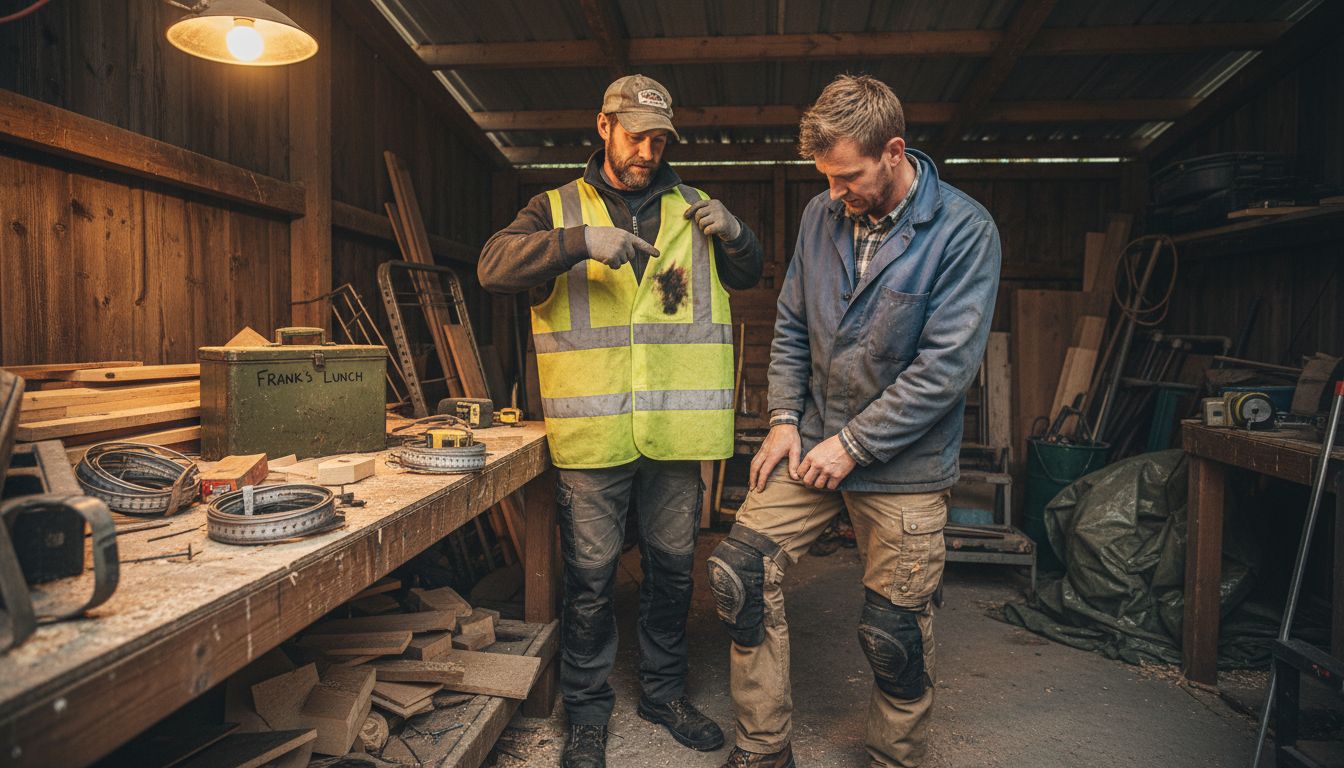
The primary types of builders workwear include heavy-duty jackets, work pants, protective vests, and specialized footwear. Work boots play a particularly crucial role in worker safety and comfort. Work boots vary by material and design, including genuine leather, pleather, and rubber options, each providing distinct advantages for specific work conditions, demonstrating the nuanced approach to protective gear selection.
Key differences among builders workwear types emerge through several critical characteristics:
- Material composition and durability
- Climate and environmental adaptability
- Protective features like reinforced stress points
- Flexibility and range of motion
- Utility and tool storage capabilities
Professional-grade builders workwear goes beyond basic clothing, serving as sophisticated personal protective equipment engineered to enhance worker performance, safety, and comfort across varied industrial environments. From construction sites to manufacturing floors, these garments represent a critical intersection of functional design, advanced materials, and occupational safety requirements.
Essential Features for Worksite Performance
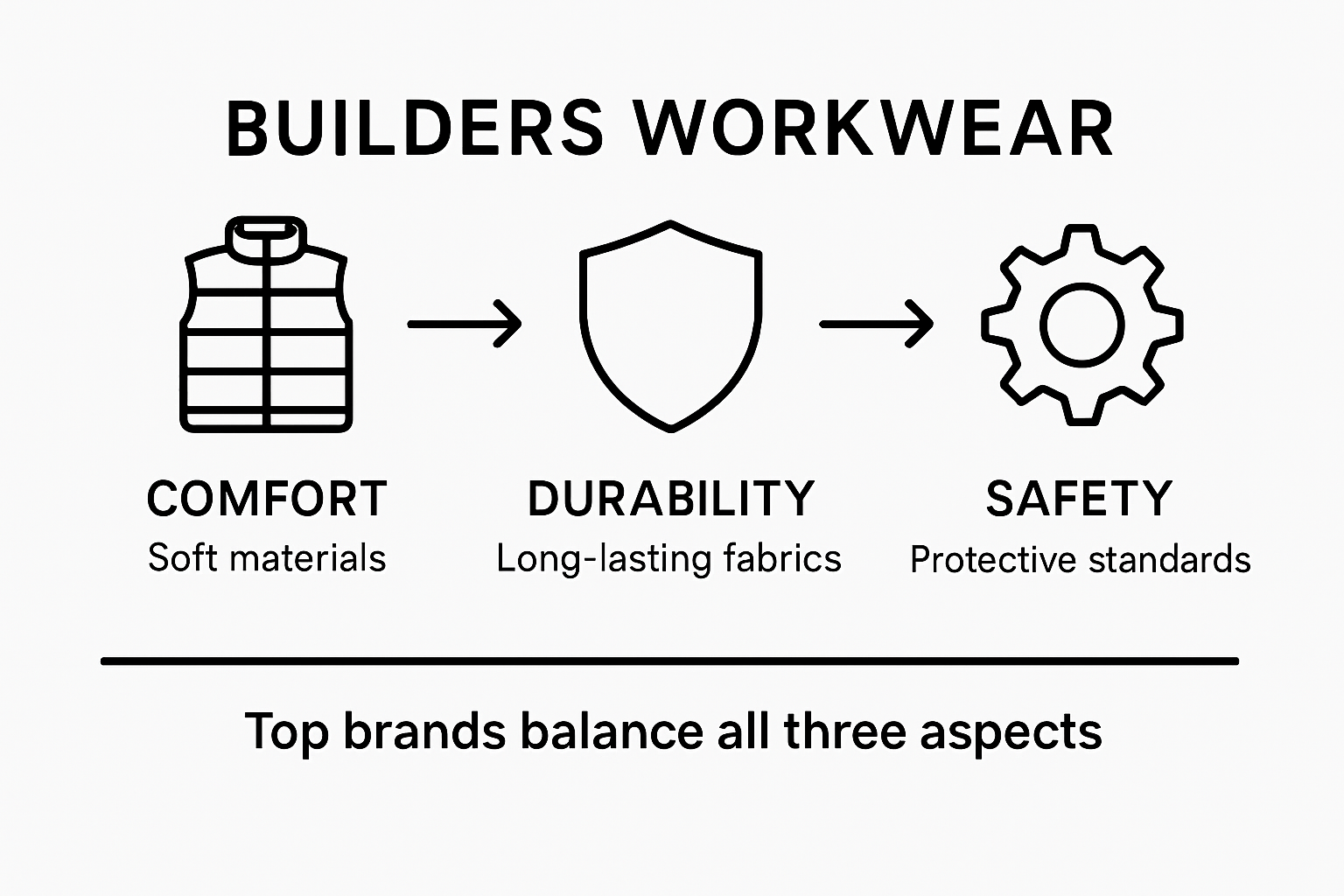
Key features for worksite performance include comfort, fit, design, and build quality, which are crucial for ensuring safety and efficiency on the job. Professional builders require workwear that goes beyond basic protection, integrating advanced technological elements that support peak performance in challenging environments. These features must address the complex demands of physically intensive work, balancing protection, mobility, and comfort in a seamless design.
The most critical performance features for builders workwear encompass multiple strategic elements. Essential workwear features for construction workers include hard hats, safety boots, and other personal protective equipment designed to safeguard against workplace hazards. Performance-driven workwear must provide comprehensive protection while maintaining exceptional functionality through innovative design principles.
Key performance features that define superior workwear include:
- Advanced moisture-wicking fabric technologies
- Strategic reinforcement in high-stress areas
- Impact-resistant material compositions
- Temperature regulation capabilities
- Ergonomic design supporting full range of motion
- Multiple utility pockets for tool accessibility
- Breathable fabric that manages heat and perspiration
Ultimately, high-performance builders workwear represents a sophisticated system of protection, functionality, and comfort. These garments are engineered as dynamic protective solutions that adapt to the worker’s environment, transforming standard clothing into essential performance gear that supports professional excellence across diverse and challenging worksites.
Workwear Safety Standards and Legal Requirements
Dress code policies for construction workers are established to promote safety and professionalism, ensuring compliance with legal and safety requirements. The complex landscape of workplace safety mandates goes far beyond simple clothing choices, representing a comprehensive framework designed to protect workers from potential hazards and legal vulnerabilities. Safety standards are not optional recommendations but legally binding regulations that employers and employees must strictly follow.
Workwear safety requirements typically encompass multiple critical dimensions, including personal protective equipment (PPE), material specifications, visibility standards, and industry-specific protective elements. These regulations are meticulously developed by organizations like the Occupational Safety and Health Administration (OSHA), which establishes precise guidelines for protective clothing across different professional sectors. Each industry segment has unique requirements, ranging from flame-resistant materials for welders to high-visibility jackets for construction workers.
Key legal requirements for workwear safety include:
- Mandatory use of appropriate personal protective equipment
- Compliance with industry-specific protective clothing standards
- Regular inspection and maintenance of safety gear
- Documentation of safety equipment usage and training
- Adherence to material and design specifications
- Specific requirements for visibility and reflective elements
- Precise standards for protective reinforcement zones
Ultimately, workwear safety standards represent a critical intersection of legal compliance, worker protection, and professional responsibility. These comprehensive regulations are not merely bureaucratic requirements but essential mechanisms designed to prevent workplace injuries, protect worker health, and create a culture of safety across diverse industrial environments.
Choosing the Right Apparel for Your Trade
Selecting appropriate workwear involves considering factors such as fabric choice, comfort, fit, and mobility to ensure suitability for specific job roles. Choosing the right trade apparel is not a one-size-fits-all decision but a strategic process that requires careful evaluation of professional requirements, environmental conditions, and personal comfort. Trade-specific workwear must balance protection, functionality, and individual performance needs.
Construction attire varies based on jobsite requirements, with critical considerations for safety gear, functionality, and compliance with industry standards. Different trades demand unique apparel solutions that address specific workplace challenges. Welders require flame-resistant materials, electricians need non-conductive fabrics, and construction workers prioritize high-visibility and impact-resistant clothing.
Key factors to consider when selecting trade-specific workwear include:
- Precise job environment and potential hazards
- Material durability and performance characteristics
- Compliance with safety regulations
- Range of motion and comfort
- Temperature and climate adaptability
- Tool accessibility and storage options
- Long-term wear resistance
Successful workwear selection transcends basic clothing choices. It represents a comprehensive approach to professional preparedness, combining personal protection, performance optimization, and individual professional identity across diverse industrial landscapes.
Discover Builders Workwear That Combines Comfort and Durability for Your Toughest Jobs
Builders workwear plays a vital role in protecting and empowering workers facing demanding physical environments. If you are seeking apparel that delivers advanced durability, ergonomic design, and protection while still providing comfort and freedom of movement, it is time to upgrade your workwear essentials. Clothes designed with reinforced stress points, moisture management, and practical tool storage can make all the difference on the jobsite.
Take advantage of our extensive collection at All Hooded Sweatshirts - WorkWear Comfort that features durable and functional gear with features like UPF 50+ sun protection tailored for blue-collar workers.
Don’t compromise on your safety and performance. Explore Blue-Collar Working Man Sweatshirt Hoodies – WorkWearComfort - WorkWear Comfort for rugged apparel built to withstand the toughest conditions while keeping you comfortable all day. Ready to experience the perfect balance of function and style for your trade? Visit WorkWearComfort.com now to find your next essential piece of builders workwear and build a wardrobe that works as hard as you do.
Frequently Asked Questions
What is builders workwear and why is it important?
Builders workwear refers to specialized clothing designed for professionals in physically demanding environments, such as construction and trades. It provides safety, durability, and comfort, enhancing performance and minimizing workplace risks.
What are the key features to look for in builders workwear?
When choosing builders workwear, look for advanced fabric technologies, reinforced stress points, flexibility for movement, protective elements like impact resistance, and multiple utility pockets for tools and accessories.
How does builders workwear differ from regular clothing?
Builders workwear is engineered with robust materials and design features that address specific job-related challenges, providing safety and performance benefits that typical clothing does not offer.
What should I consider when choosing workwear for my specific trade?
Consider factors such as the job environment, potential hazards, material durability, safety regulations compliance, range of motion, temperature adaptability, and tool accessibility when selecting workwear for your trade.
