

Braving a bitter Minnesota winter or battling freezing rain in the Pacific Northwest pushes your workwear to its limit. Working outdoors means exposure to real risks like frostbite and hypothermia, so your gear needs to be more than just tough. Warm workwear must combine insulation, moisture control, wind resistance, and durability, keeping every part of your body protected on job sites where the cold does not let up. Here you will find what separates true cold defense from gear that will not last through the season.
Table of Contents
- Defining Warm Workwear For Men
- Types Of Insulated Workwear Materials
- Key Features For Extreme Cold Protection
- Layering Systems For Maximum Warmth
- Common Warm Workwear Mistakes To Avoid
Key Takeaways
| Point | Details |
|---|---|
| Essential Features of Warm Workwear | Effective warm workwear includes insulation materials, wind-resistant outer shells, and moisture-wicking layers for optimal performance in cold conditions. |
| Layering System Importance | A proper layering system with a moisture-wicking base layer, insulating mid-layer, and protective outer shell enhances warmth and adaptability throughout the workday. |
| Material Selection | Choose insulation materials—natural fibers like wool for wet conditions and synthetic blends for extreme cold—to optimize warmth and durability in varying climates. |
| Common Pitfalls to Avoid | Prevent cold-related injuries by avoiding wet clothes, damaging gear, and neglecting extremity protection; maintain proper layering for changing conditions. |
Defining Warm Workwear for Men
Warm workwear is clothing engineered to protect workers from cold and harsh weather while maintaining durability and safety on job sites. It goes beyond looking warm—it’s about keeping your body temperature stable when you’re exposed to freezing conditions for hours at a time.
The core purpose of warm workwear is straightforward: prevent cold-related injuries and keep you performing at your best. Cold-related injuries like frostbite and hypothermia are real threats when you’re working outside in winter. Proper gear isn’t optional—it’s a requirement for staying safe.
Effective warm workwear includes layered construction that traps heat while managing moisture. You need materials that insulate your core, resist wind, and shed water without becoming heavy or restrictive. This means balancing protection with mobility—you still need to move freely on a construction site.
Here’s what makes warm workwear actually work:
- Insulation materials that retain body heat even when damp
- Wind-resistant outer shells that block cold air penetration
- Moisture-wicking layers that pull sweat away from skin
- Proper fit that allows layering without restricting movement
- Strategic coverage including headgear, gloves, and insulated boots
Protective equipment like headgear, gloves, and insulated boots work together as a complete system. You can’t just wear a heavy jacket and expect to stay warm if your hands are freezing or your feet are wet. Cold temperatures attack exposed skin, so every vulnerable area needs protection.
Warm workwear also needs to handle the demands of actual job sites. It takes abuse—rubbing against rough surfaces, catching on equipment, getting snagged during work. Quality materials and reinforced seams matter because cheap gear falls apart after a few weeks.
The best warm workwear balances three critical factors: genuine warmth retention, durability that lasts through a full season, and enough flexibility to let you work without feeling like you’re wearing a sleeping bag to the job site.
Warm workwear protects your health and keeps you productive in conditions where your body naturally wants to shut down.
Pro tip: Layer strategically with a moisture-wicking base layer, an insulating mid-layer, and a wind-resistant outer shell—this approach keeps you warm while staying flexible enough to adjust as your activity level changes throughout the day.
Types of Insulated Workwear Materials
Insulation is the core technology separating mediocre workwear from gear that actually keeps you warm. Different materials trap heat in different ways, and your choice determines how effective your gear will be on freezing job sites.
Natural fiber insulation starts with wool, the heavyweight champion of temperature regulation. Wool absorbs moisture without losing its insulating power, resists odors, and performs even when damp—critical when you’re working hard and sweating under layers. It’s been protecting workers for centuries because it simply works.
Synthetic insulation offers a modern alternative that performs well in different conditions. Polyester fiberfill and polyolefin fibers provide excellent warmth while often resisting water better than natural options. Synthetic materials are engineered to trap air pockets, creating thermal barriers that keep cold from reaching your skin.
Here’s how different materials compare on the job site:
Here’s a quick comparison of common workwear insulation materials based on key performance attributes:
| Material Type | Best For | Water Resistance | Odor Control |
|---|---|---|---|
| Wool | Wet, variable climates | Moderate | Excellent |
| Polyester Fiberfill | Extreme cold, durability | High | Fair |
| Polyolefin Blends | Lightweight insulation | High | Limited |
| Wool-Synthetic Blend | Balanced conditions | Moderate to High | Good |
- Wool retains warmth when wet, resists odor, naturally breathable
- Polyester blends offer water resistance, durability, and consistent performance
- Polyolefin fibers provide lightweight insulation with strong thermal resistance
- Layered combinations maximize warmth while managing moisture and wind penetration
Material selection depends on your work environment and what conditions you’ll face most often. Working in wet snow demands different material choices than dry, extreme cold. Heavy labor that generates sweat requires moisture management that lighter, less intense work doesn’t need.
Weave and construction matter as much as the base material itself. Woven fabrics in outer shells block wind effectively, while nonwoven insulation layers trap heat without adding bulk. Quality workwear combines these technologies strategically to balance warmth, breathability, and freedom of movement.
Durability in workwear materials means they survive repeated washing, heavy use, and rough treatment. Cheap synthetic materials pill and degrade after a few weeks. Quality polyester blends and reinforced wool maintain their insulating properties through an entire work season.
The best insulation material for you depends on whether you prioritize staying dry, staying warm in extreme cold, or managing sweat during heavy physical work.
Pro tip: Choose wool-rich blends for wet conditions and synthetic blends for extreme cold and durability—layering different materials lets you customize warmth without overheating during active work.
Key Features for Extreme Cold Protection
When temperatures drop below freezing, your workwear needs specific features that go beyond basic warmth. Generic jackets won’t cut it on a frozen job site—you need gear engineered for survival.
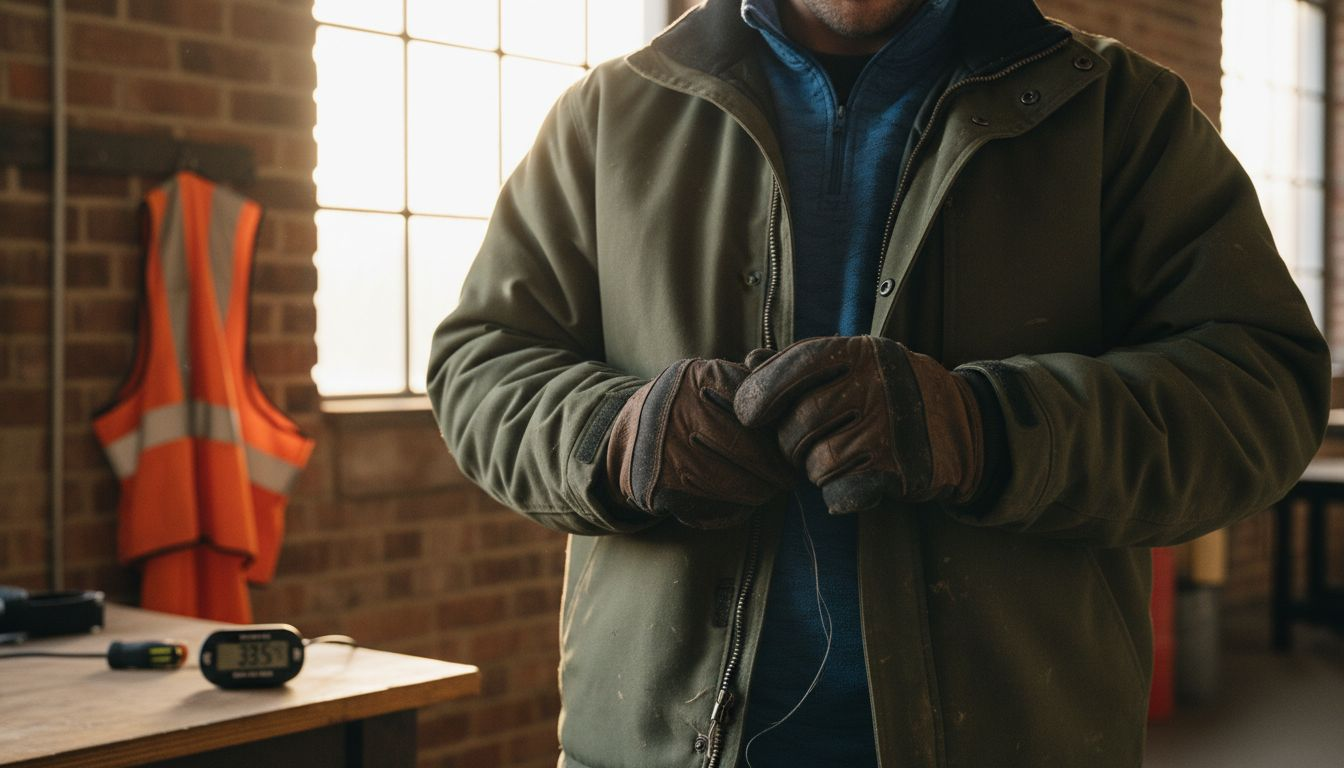
The foundation of extreme cold protection starts with insulation layers that trap air and maintain your core temperature. Multiple layers work better than one thick layer because they create pockets of still air, the most effective insulator. Adding a moisture-wicking base layer pulls sweat away from your skin, preventing the deadly combination of wetness and cold.
Your outer shell must be both waterproof and windproof. Wind strips away heat 25 times faster than still air, so blocking it is non-negotiable. Waterproofing prevents snow melt and rain from soaking through to your insulation, destroying its effectiveness instantly.
Here are the critical features that separate adequate gear from survival gear:
- Insulation layers that trap air and maintain warmth even when compressed
- Windproof outer shells that block air penetration and heat loss
- Waterproof barriers that shed snow and rain without trapping moisture inside
- Extremity protection with insulated gloves, socks, and coverage for head and neck
- Thermal reflective linings that bounce your body heat back toward your core
- Adjustable closures that seal out cold and prevent heat escape
Protecting extremities like hands, feet, and head is crucial because frostbite strikes these areas first. Cold-stiffened fingers can’t grip tools, and numb feet affect balance and safety. Insulated gloves and headgear aren’t accessories—they’re essential survival equipment on extreme cold job sites.
Breathability matters more than people realize. If your gear traps moisture from sweat, you’re actually creating a cooling effect that makes you colder. Quality workwear maintains breathability while staying dry through engineered fabric construction that allows vapor to escape.
Fit and adjustability determine whether heat escapes around gaps. Loose waistbands, open cuffs, and gaps at the neck all allow cold air to rush in and steal your warmth. Your gear needs tight, adjustable closures that you can tighten or loosen as activity levels change throughout the workday.
Durability under extreme cold means materials stay flexible instead of cracking and stiffening. Cheap synthetic materials become brittle in subzero temperatures. Quality gear stays pliable and functional when it’s brutally cold.
Extreme cold protection isn’t about looking warm—it’s about engineering that keeps your core temperature stable and prevents frostbite and hypothermia.
Pro tip: Layer your base, insulation, and shell with adjustable closures at wrists, neck, and waist—this setup lets you vent heat during heavy work and seal everything tight during breaks when you’re standing still in brutal cold.
Layering Systems for Maximum Warmth
Layering isn’t just about throwing on multiple jackets. A proper layering system works like a coordinated team where each layer has a specific job, and together they keep you warm when single pieces fail.
The base layer sits against your skin and does one critical thing: move moisture away. Sweat kills warmth faster than anything else. Cotton absorbs sweat and holds it against your skin, making you colder. Synthetic or merino wool base layers wick that moisture outward, keeping your skin dry.
Your insulating mid-layer traps heat in the space between base and shell. This is where layered clothing systems truly shine—the trapped air becomes your insulation. Wool, synthetic fiberfill, or fleece all work by creating dead air space that your body heat can’t escape through.
The outer shell blocks wind and water from reaching your insulation. Without it, wind blasts straight through, stealing all your body heat. Rain or snow soaking into insulation destroys its effectiveness completely.
Here’s how the three-layer system protects you:
The table below summarizes how each clothing layer functions in an effective workwear system:
| Layer | Primary Role | Typical Materials |
|---|---|---|
| Base Layer | Wicks away sweat | Merino wool, synthetics |
| Mid-Layer | Traps body heat | Fleece, wool, fiberfill |
| Outer Shell | Blocks wind and moisture | Treated nylon, polyester |
- Base layer wicks moisture away from skin and keeps you dry
- Mid-layer traps air and creates insulation where heat can’t escape
- Outer shell blocks wind penetration and sheds water completely
- Combined system adapts to changing conditions by adding or removing layers
Flexibility is the real power of layering. On a cold morning, you need all three layers. Once you start working hard and generating heat, you can remove the mid-layer without losing protection. During breaks when you’re standing still in freezing wind, you layer everything back on. One jacket can’t adjust—layering can.
Proper layering techniques require correct fit so layers can move together without bunching or creating air gaps. Tight fitting base layers matter. Mid-layers need enough room to layer over the base without restricting movement. Your shell needs enough space that you’re not compressing insulation when you move.
Moisture management ties everything together. If your base layer doesn’t wick properly, moisture gets trapped. If your mid-layer becomes damp, it loses insulating power. If your shell traps vapor inside, moisture builds up and you get cold from the inside out.
Temperature regulation through layering beats any single jacket. Construction work generates heat through physical activity, but you’ll stand still during breaks in brutal cold. Layering lets you adapt in seconds.
The three-layer system works because each layer handles one job perfectly—no single layer can manage moisture management, insulation, and wind protection simultaneously.
Pro tip: Start your day with all three layers, then remove your mid-layer once you’re actively working and generating heat—put it back on immediately during breaks before cold penetrates your core.
Common Warm Workwear Mistakes to Avoid
Good workwear loses its protective power when you make basic mistakes. Understanding what kills warmth and safety helps you avoid expensive failures that could cost you your health on the job site.
Wearing wet or dirty clothing destroys insulation instantly. Sweat-soaked shirts and pants conduct cold directly into your body. Dirt and grime trap moisture against fabric and skin, eliminating the breathability that keeps you dry. Once gear is wet, it needs to come off and dry out immediately.
Damaged gear with missing buttons, tears, or broken zippers creates gaps where cold air rushes in. A small tear in your outer shell lets wind strip away all your insulation. Missing buttons mean you can’t seal closures against your neck or wrists. Worn zippers jam when you need them most. Inspect gear before the season starts and repair problems immediately.
Clothing construction details like pant cuffs matter more than you’d think. Cuffs that catch on equipment can tear and snag, creating hazards during critical work moments. Loose-fitting clothes might feel comfortable, but they snag on tools and machinery, creating safety risks beyond just warmth.
Here are the critical mistakes that undermine your protection:
- Wearing wet clothes that conduct cold and eliminate insulation
- Ignoring damaged gear with tears, missing buttons, or broken closures
- Choosing loose fits that snag on equipment and allow heat loss
- Skipping extremity protection for hands, feet, and head
- Failing to layer properly for changing activity levels
- Not adjusting for conditions as weather or work intensity changes
Working in wet clothing dramatically increases cold injury risk because moisture steals body heat 25 times faster than dry clothing. Sweat from heavy work becomes a liability during breaks when you’re standing still in freezing temperatures.
Inadequate layering leaves you either overheating during work or freezing during breaks. One heavy jacket can’t adapt to changing conditions. Many workers skip the base layer entirely, thinking it’s an unnecessary extra step. That mistake costs them in comfort and safety.
Neglecting extremity protection—hands, feet, and head—is dangerous. These areas get frostbite first because blood vessels constrict in cold. Fingers too numb to grip tools become a safety hazard for you and your crew.
Ignoring your body’s cold stress signals is life-threatening. Shivering, numbness, and confusion are warnings that you need to get warm immediately. These symptoms progress quickly to hypothermia if ignored.
Workwear failures usually come from neglect, not the gear itself—damaged equipment and wet clothing kill protection faster than extreme cold.
Pro tip: Check your gear daily for damage, change out of wet clothes immediately, and layer strategically so you can adjust within seconds as your activity level changes throughout the workday.
Gear Up for Cold Weather Work with Durable Warm Workwear
Staying protected from extreme cold on job sites is more than just a necessity it is a matter of health and productivity. This article clearly shows the importance of layering systems, moisture management, and choosing insulation that keeps you warm and dry despite the harsh conditions. At WorkWearComfort.com, we understand these challenges and focus on providing rugged, comfortable workwear that meets the real demands of blue collar workers.
Funny Blue Collar Trades Hoodies offer versatile warmth with a touch of humor that resonates with hardworking professionals.
Don’t settle for ordinary clothing that fails in extreme cold. Prepare your wardrobe with gear designed for durability, flexibility, and all-day comfort. Visit WorkWearComfort.com now and find the perfect balance of warmth and style that helps you push through tough days on site. Stay safe stay warm and keep working strong.
Frequently Asked Questions
What is warm workwear for men?
Warm workwear is specially designed clothing to protect workers from cold and harsh weather while ensuring durability and safety. It helps maintain body temperature in freezing conditions, preventing cold-related injuries like frostbite and hypothermia.
How do I choose the right insulation material for workwear?
Selecting the right insulation material depends on your work environment. Wool is excellent for wet climates, while synthetic materials like polyester fiberfill and polyolefin fibers perform well in extreme cold and for durability. Consider factors like moisture management and breathability when making your choice.
What are the key features of extreme cold protection in workwear?
Key features for extreme cold protection include insulation layers that trap air, windproof outer shells, waterproof barriers, extremity protection with insulated gloves and headgear, thermal reflective linings, and adjustable closures to seal out cold air effectively.
Why is layering important in warm workwear?
Layering is crucial because each layer serves a specific function: the base layer wicks moisture away, the mid-layer traps heat, and the outer shell blocks wind and moisture. This system allows you to adapt to changing activity levels and weather conditions efficiently.
Recommended
- Warm Work Jackets for Men: Durability Meets Comfort – WorkWearComfort
- Complete Guide to Men’s Winter Workwear Essentials – WorkWearComfort
- Winter Work Wear: Staying Safe On The Job – WorkWearComfort
- Complete Guide to Warm Workwear Essentials – WorkWearComfort
- Read - 20 Best Men’s Travel Clothing Brands: Comfort & Style 2025. SLY Collective Underwear
- Warehouse Safety Best Practices for Accident Prevention - ORNER
