

Over half of American workers in construction, agriculture, and other physically demanding jobs say staying dry is their biggest comfort challenge on the job. When sweat accumulates, discomfort and skin issues follow, impacting both productivity and health. Moisture wicking fabric offers a solution that truly changes the experience of tough workdays by pulling sweat away and speeding up evaporation. Understanding this technology helps American professionals choose gear that delivers real comfort where it matters most.
Table of Contents
- Moisture Wicking Fabric Defined and Debunked
- How Moisture Wicking Technology Works
- Different Types of Wicking Materials Compared
- Impact on Comfort and Skin Health
- Comparing Wicking Fabric to Cotton Alternatives
Key Takeaways
| Point | Details |
|---|---|
| Moisture Wicking Technology Enhances Comfort | These fabrics pull moisture away from the skin, keeping blue-collar workers dry during physically demanding tasks. |
| Performance Characteristics Matter | Selecting the right moisture-wicking material, such as polyester for high-intensity jobs, is crucial for optimal performance. |
| Health Benefits Are Significant | Moisture wicking fabrics reduce skin irritation and the risk of microbial growth, promoting better skin health during prolonged use. |
| Cotton vs. Synthetic Fabrics | Unlike cotton, moisture-wicking fabrics dry quickly and prevent discomfort from retained moisture, making them superior for active work environments. |
Moisture Wicking Fabric Defined and Debunked
Moisture wicking fabric represents a technological breakthrough in workwear design, engineered to solve one of the most persistent challenges for blue-collar professionals: staying dry during intense physical labor. Moisture-wicking fabrics are designed to move sweat away from the skin to the fabric’s outer surface, where it can evaporate quickly, creating a cooling effect that keeps workers comfortable in demanding environments.
The science behind moisture wicking is straightforward yet ingenious. Unlike traditional cotton materials that absorb and retain sweat, these advanced textiles utilize specialized synthetic fibers with capillary-like structures that literally pull moisture away from your skin. When you’re working hard in construction, welding, or agricultural settings, these fabrics actively transport perspiration through microscopic channels, spreading it across a larger surface area for rapid evaporation.
What sets moisture wicking fabrics apart is their performance across different work scenarios. These fabrics draw moisture away from the skin and facilitate its evaporation, keeping the wearer dry and comfortable in everything from scorching construction sites to chilly outdoor maintenance jobs. The technology works through three primary mechanisms:
- Rapid Moisture Transportation: Fibers quickly move sweat away from the body
- Quick Drying: Fabric surface enables faster evaporation compared to traditional materials
- Temperature Regulation: Prevents excessive heat buildup and reduces skin dampness
Workers in physically demanding professions need clothing that works as hard as they do. Moisture wicking fabrics represent more than just a comfort feature they’re a critical performance enhancement for professionals who can’t afford to be slowed down by wet, uncomfortable clothing.
Pro Tip: Performance Check: Always test moisture wicking clothing by doing a quick water droplet test. If water beads and rolls off instead of soaking in, you’ve got a high-quality moisture wicking garment ready for tough work conditions.
How Moisture Wicking Technology Works
Moisture wicking technology represents a sophisticated approach to textile engineering that transforms how professionals manage body temperature and comfort during demanding work. Moisture management in textiles involves the controlled transport of moisture vapor and liquid away from the body, utilizing advanced fiber technologies that go far beyond traditional fabric capabilities.
At its core, moisture wicking technology operates through a complex system of microscopic channels and specialized synthetic fibers. These engineered materials create a dynamic transportation network that actively pulls sweat away from the skin through capillary action. Imagine tiny, interconnected pathways within the fabric that work like a sophisticated plumbing system, efficiently moving moisture from the inner layer to the outer surface where it can quickly evaporate.
The process involves several critical mechanisms that make moisture wicking fabrics superior to traditional materials:
- Fiber Composition: Synthetic materials like polyester and nylon with specialized cross-sections
- Surface Area Maximization: Increased fabric surface area for faster moisture dispersion
- Hydrophobic Treatments: Chemical treatments that repel water and accelerate drying
- Microscopic Channels: Engineered fiber structures that facilitate rapid moisture movement
These advanced textiles are particularly crucial for professionals working in high-intensity environments. Construction workers, welders, farmers, and other blue-collar workers benefit directly from technologies that keep them dry and comfortable during physically demanding tasks. Performance workwear with 7 tips for choosing breathable workwear can further enhance understanding of these innovative fabric technologies.
Pro Tip: Fabric Performance Test: Conduct a quick moisture wicking test by dropping water on the fabric surface. Quality moisture wicking materials will cause water to bead up and roll off, demonstrating their superior moisture management capabilities.
Different Types of Wicking Materials Compared
Moisture wicking materials have evolved dramatically, offering blue-collar workers and outdoor professionals a range of advanced fabric technologies designed to keep them dry and comfortable. Coolmax, a specialized polyester fabric, represents a cutting-edge approach to moisture management with its unique non-round fiber design, engineered to dramatically enhance sweat transportation and body temperature regulation.
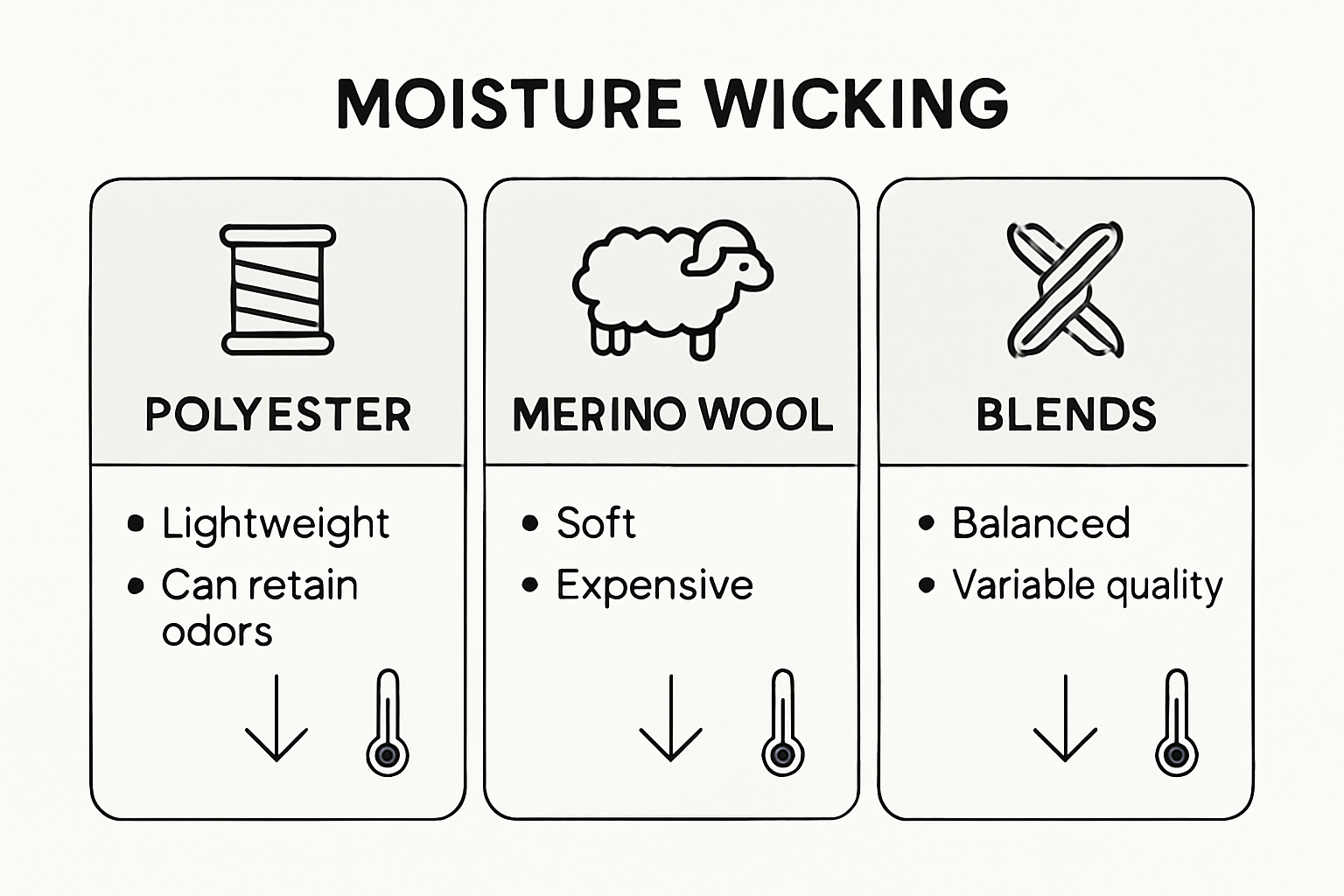
Synthetic and semi-synthetic materials dominate the moisture wicking landscape, each with distinct performance characteristics. Polyester stands out as the primary moisture-wicking champion, featuring hydrophobic properties that rapidly move moisture away from the skin. Nylon follows closely, offering similar performance with enhanced durability. Lyocell, a form of rayon, provides an interesting alternative with its exceptional moisture absorption capabilities, being 50% more absorbent than traditional cotton, making it an attractive option for workers seeking both comfort and performance.
The primary moisture wicking materials can be categorized based on their unique characteristics:
- Polyester: Lightweight, quick-drying, and excellent moisture transportation
- Nylon: Durable, abrasion-resistant with good moisture management
- Lyocell: Soft, highly absorbent, and environmentally friendly
- Merino Wool: Natural fiber with excellent temperature regulation
- Synthetic Blends: Combination materials offering balanced performance
Performance workwear selections demonstrate the importance of choosing the right moisture management fabric for specific work environments. Construction workers, agricultural professionals, and outdoor laborers each require slightly different moisture management properties based on their unique working conditions.
Here’s a concise comparison of popular moisture wicking materials and their key attributes:
| Material | Typical Use Case | Notable Strength | Limitations |
|---|---|---|---|
| Polyester | High-intensity work sites | Excellent sweat movement | May retain odors |
| Nylon | Rugged outdoor environments | Superior durability | Less soft than alternatives |
| Lyocell | Comfort-focused roles | Highly absorbent | Lower abrasion resistance |
| Merino Wool | Cold/changing climates | Great temperature control | Costlier than synthetics |
| Synthetic Blend | Versatile everyday workwear | Balanced performance | Quality varies by blend |
Pro Tip: Material Matching: Select your moisture wicking material based on your specific work environment - polyester for high-intensity jobs, lyocell for comfort-focused roles, and synthetic blends for versatile performance.
Impact on Comfort and Skin Health
Moisture wicking technology goes far beyond simple comfort, representing a critical advancement in protecting workers’ skin health during demanding physical activities. Advanced textile designs like the ‘i-Cool’ integrate sophisticated heat conduction and sweat transportation mechanisms, dramatically improving personal perspiration management and reducing the risks associated with prolonged moisture exposure.
The physiological implications of moisture management are profound for blue-collar workers who spend hours in challenging environmental conditions. Comparative assessments of moisture-wicking fabrics demonstrate their effectiveness in managing moisture-associated skin disorders by reducing skin-to-skin friction and minimizing microbial colonization. This protective mechanism is particularly crucial for professionals working in high-humidity environments like construction sites, agricultural fields, and industrial workshops.
Key health benefits of moisture wicking fabrics include:
- Reduced Bacterial Growth: Minimizes environment for microorganism proliferation
- Friction Prevention: Decreases skin irritation and potential wound development
- Temperature Regulation: Helps maintain optimal body temperature
- Sweat Evaporation: Accelerates moisture removal from skin surface
- Skin Barrier Protection: Prevents prolonged moisture contact
Performance considerations for workwear demonstrate the critical role of advanced fabric technologies in maintaining worker comfort and health. Different professional environments demand specialized moisture management strategies to prevent skin-related complications.
Pro Tip: Skin Defense Strategy: Rotate moisture wicking garments during long shifts and choose fabrics with antimicrobial treatments for additional skin protection in high-sweat work environments.
Comparing Wicking Fabric to Cotton Alternatives
Moisture management represents a critical performance factor for workwear, with significant differences emerging between traditional cotton and modern synthetic fabrics. Research comparing moisture-wicking polyester shirts to cotton shirts during exercise in heat revealed that while core temperature and sweat rates remained similar, participants consistently reported feeling drier and more comfortable in moisture-wicking garments, highlighting the practical advantages of advanced textile technologies.
Synthetic fibers like polyester are fundamentally different from natural fibers, being hydrophobic and facilitating rapid moisture transport away from the body, whereas cotton remains hydrophilic and tends to absorb moisture. This critical distinction means that cotton workwear can become heavy, uncomfortable, and potentially create environments conducive to skin irritation during prolonged physical activity.
Key differences between cotton and moisture-wicking fabrics include:
-
Moisture Absorption
- Cotton: Retains up to 7x its weight in water
- Moisture-Wicking Fabrics: Rapidly moves moisture to fabric surface
-
Drying Speed
- Cotton: Slow to dry, remains damp for extended periods
- Moisture-Wicking Fabrics: Quick-drying properties reduce discomfort
-
Thermal Regulation
- Cotton: Traps moisture, can cause temperature fluctuations
- Moisture-Wicking Fabrics: Maintains more consistent body temperature
Workwear selections for hot environments demonstrate the importance of choosing advanced moisture management technologies for professionals working in demanding conditions. The performance difference becomes especially pronounced during high-intensity labor or extended outdoor work.
For quick reference, here’s how moisture-wicking fabrics compare to traditional cotton in workwear performance:
| Factor | Moisture Wicking Fabric | Cotton Workwear |
|---|---|---|
| Dryness Level | Keeps wearer drier | Becomes damp and heavy |
| Weight When Wet | Stays lightweight | Retains significant water weight |
| Odor Management | Often resists odor build-up | Prone to lingering odors |
| Skin Health | Reduces chafing and friction | Increases risk of irritation |
| Comfort in Heat | Regulates heat more effectively | Less effective cooling |
Pro Tip: Fabric Selection Strategy: When choosing workwear, prioritize moisture-wicking materials for jobs involving physical exertion, and reserve cotton for less demanding, cooler environments where rapid moisture transport is less critical.
Stay Dry and Comfortable with Workwear Designed for Hardworking Professionals
Struggling with wet, heavy clothing that slows you down during tough jobs is a common challenge for blue-collar workers. This article highlights how moisture wicking fabric technology pulls sweat away from your skin, keeps you dry, and reduces discomfort and skin irritation. At WorkwearComfort.com, we understand these pain points and provide durable, moisture-wicking workwear engineered to perform in demanding environments. Our apparel lets you focus on the job without distractions from soaked, uncomfortable gear.
Experience the difference of advanced moisture management with our selection of rugged yet stylish workwear. Whether you need hoodies with built-in sun protection or women’s workwear made for confidence and durability, now is the time to upgrade your gear. Visit WorkwearComfort.com today and find workwear that works as hard as you do. Don’t wait to feel the comfort that comes from clothing designed with your needs in mind.
Frequently Asked Questions
What is moisture wicking fabric and how does it work?
Moisture wicking fabric is designed to move sweat away from the skin to the outer surface, allowing it to evaporate quickly. This is accomplished through specialized synthetic fibers that create capillary-like structures, pulling moisture from the skin and spreading it for rapid evaporation.
What are the benefits of wearing moisture wicking fabrics in workwear?
Wearing moisture wicking fabrics helps keep workers dry and comfortable during intense physical activities. The fabrics regulate temperature, reduce skin dampness, and minimize discomfort associated with sweat, making them ideal for demanding environments.
How do moisture wicking fabrics compare to traditional cotton?
Moisture wicking fabrics are more effective than cotton because they rapidly transfer moisture away from the skin, dry quickly, and maintain a more consistent body temperature. In contrast, cotton absorbs moisture, can become heavy, and may cause chafing and irritation.
Are there different types of moisture wicking materials?
Yes, there are various types of moisture wicking materials, including polyester, nylon, lyocell, and merino wool. Each has distinct characteristics that make them suitable for specific work environments, such as lightweight performance, durability, or comfort.
