

Long days on a busy American jobsite demand more than just tough skin – they call for work pants built to resist harsh environments and keep up with constant motion. When every tool needs to be within arm’s reach, and protective gear must fit comfortably, finding the right work pants is more than a style choice. Discover how durability, reinforced design, and smart functionality define the best construction work pants for professionals seeking reliability and comfort without compromise.
Table of Contents
- What Defines Construction Work Pants
- Main Types And Key Design Variations
- Essential Features For Jobsite Durability
- Cost, Value, And Buying Mistakes
- Caring For And Replacing Your Pants
Key Takeaways
| Point | Details |
|---|---|
| Focus on Durability | Construction work pants should feature reinforced areas, heavy-duty fabric, and triple-stitched seams to withstand harsh working conditions. |
| Choose the Right Type | Select the appropriate pant type to suit specific job requirements, such as carpenter, utility, or painter’s pants for optimal functionality. |
| Evaluate Total Lifecycle Cost | Consider the total lifecycle cost of pants rather than just the purchase price; investing in quality leads to long-term savings. |
| Prioritize Maintenance | Regularly inspect and properly care for work pants to extend their lifespan and maintain safety and performance standards. |
What Defines Construction Work Pants
Constructing a reliable pair of work pants isn’t just about fabric and stitching. These specialized garments represent a complex intersection of durability, functionality, and worker safety designed specifically for demanding jobsites. Construction work environments require apparel that can withstand extreme conditions while protecting workers from potential hazards.
Traditional construction work pants are distinguished by several critical design features that set them apart from standard workwear:
- Multiple reinforced tool pockets for easy equipment access
- Durable fabric like heavyweight denim or canvas
- Additional rivets and stress-point reinforcements
- Built-in knee pad compartments
- Loose leg cuts to accommodate movement and tool attachments
- Abrasion-resistant materials in high-wear areas
Unlike regular jeans, carpenter jeans represent a specialized subcategory engineered with distinctive characteristics. These pants typically feature extra loops, hammer holders, and strategic pocket placements that allow construction professionals to keep essential tools within immediate reach without compromising mobility.
The ideal construction work pant isn’t just clothing - it’s a mobile workstation designed to enhance productivity and worker safety. Materials must resist tears, repel dirt and moisture, and provide flexibility during physically demanding tasks. Professional-grade work pants integrate protective elements like double-layered knees, gusseted crotches for increased range of motion, and strategic reinforcements at stress points.
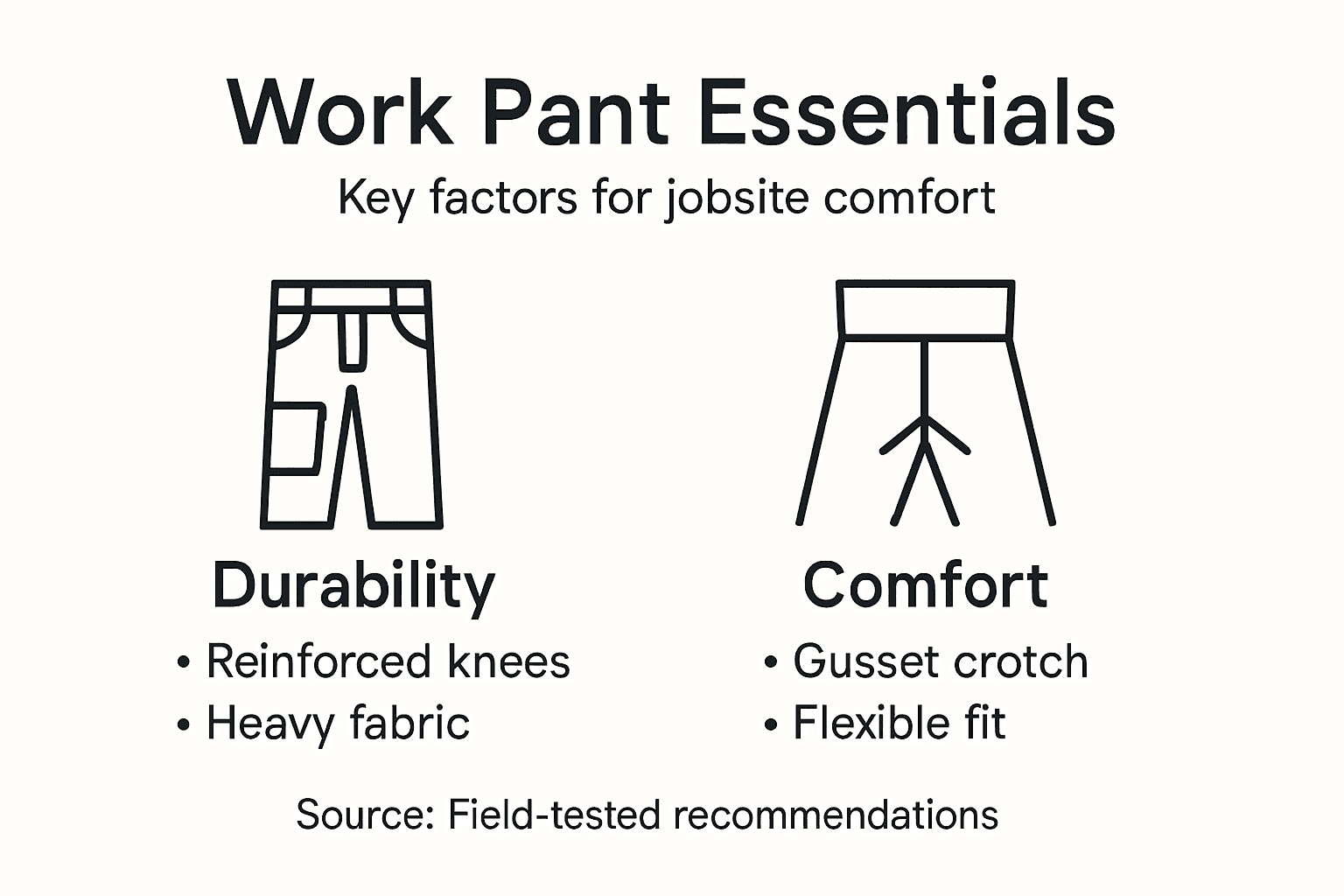
Pro tip: When selecting construction work pants, prioritize function over fashion and invest in pants with genuine industrial-strength construction.
Main Types and Key Design Variations
Construction work pants are far from one-size-fits-all, with specialized designs tailored to meet the unique demands of different jobsites and construction disciplines. Construction work environments require nuanced apparel that adapts to specific workplace challenges and safety requirements.
The primary types of construction work pants include:
- Carpenter Pants: Featuring multiple tool pockets, hammer loops, and extra reinforcements
- Utility Pants: Designed with removable knee pads and extensive cargo storage
- Painter’s Pants: Lighter weight with specialized paint-resistant fabric and multiple brush/tool holders
- Denim Work Pants: Heavy-duty traditional style with added durability for rough environments
- Cargo-Style Work Pants: Maximum storage with multiple large pockets for extensive tool carrying
Carpenter jeans represent a quintessential work pant subcategory, characterized by strategic design elements that prioritize functionality. These specialized pants typically feature wider belt loops to support heavy tool belts, additional rivets for enhanced durability, and loose-fitting cuts that allow maximum mobility while maintaining structural integrity.
Design variations are heavily influenced by specific construction sector requirements. Residential construction workers might prefer lighter, more flexible pants, while industrial or commercial construction professionals often opt for heavier, more robust materials with enhanced protective features. Key design considerations include fabric weight, pocket configuration, reinforcement placement, and integrated safety elements like built-in knee pad compartments.
Here’s a comparison of major construction work pant types and their ideal jobsite uses:
| Pant Type | Notable Design Strengths | Best For |
|---|---|---|
| Carpenter Pants | Extra tool loops, durable build | Carpentry, light framing |
| Utility Pants | Removable knee pads, cargo storage | Electrical, plumbing, heavy use |
| Painter’s Pants | Paint-repellent, brush holders | Painting, finishing work |
| Denim Work Pants | Classic look, tough fabric | General labor, demolition |
| Cargo-Style Pants | Multiple large pockets, loose fit | Masonry, landscaping, utility |
Pro tip: Select work pants that match your specific job requirements, prioritizing functionality and comfort over aesthetic preferences.
Essential Features for Jobsite Durability
Construction work pants must withstand brutal conditions that would destroy ordinary clothing. Construction site environments demand specialized apparel engineered to protect workers while ensuring maximum functionality and comfort.
The critical durability features include:
- Reinforced Knee Areas: Extra fabric layers to prevent wear and tear
- Heavy-Duty Fabric Weight: Typically 10-12 oz denim or canvas materials
- Triple-Stitched Seams: Prevent ripping under extreme physical stress
- Gusseted Crotch Design: Provides enhanced mobility and reduces fabric strain
- Riveted Stress Points: Additional metal reinforcements at high-wear locations
- Water-Resistant Treatments: Protect against moisture and environmental contaminants
Construction jobsite requirements necessitate work pants that can handle multiple environmental challenges. Professional-grade pants integrate strategic design elements that go beyond simple fabric strength. These include articulated knees for increased flexibility, strategic pocket placements that distribute weight effectively, and materials that resist abrasion, dirt, and potential chemical exposures.
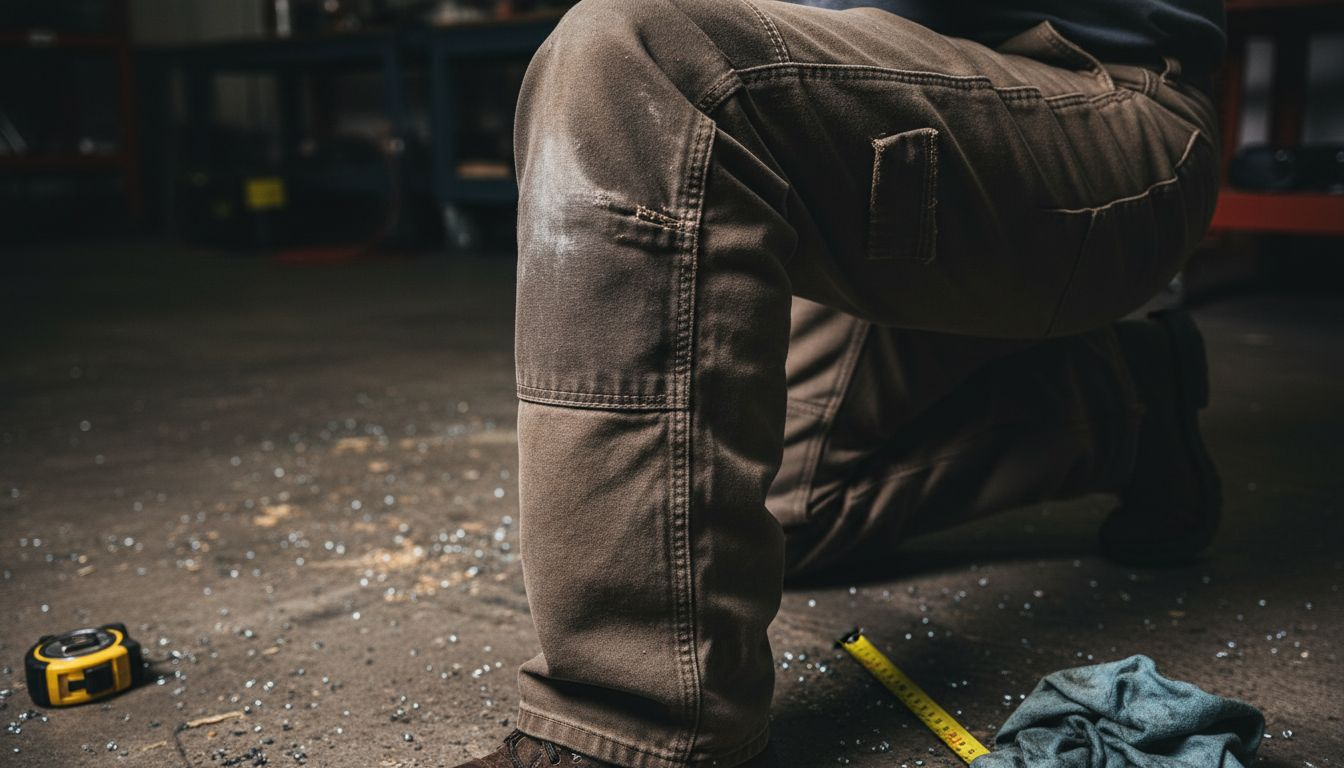
Durability isn’t just about surviving a single workday - it’s about maintaining performance through hundreds of demanding work shifts. The best construction work pants utilize advanced fabric technologies that combine tear resistance, flexibility, and protective features. Moisture-wicking capabilities, reinforced tool pockets, and intelligent design elements transform these pants from simple clothing into essential job site equipment.
Pro tip: Invest in work pants with reinforced stress points and inspect them regularly for early signs of wear to maximize their operational lifespan.
Cost, Value, and Buying Mistakes
Understanding the true value of construction work pants goes far beyond their initial price tag. Construction work gear purchasing requires a strategic approach that evaluates long-term durability and performance rather than focusing solely on upfront expenses.
Common buying mistakes construction workers frequently make include:
- Prioritizing Low Price: Selecting cheapest options that wear out quickly
- Ignoring Fit: Choosing pants without considering individual body mechanics
- Overlooking Material Quality: Focusing on appearance instead of durability
- Neglecting Job-Specific Requirements: Using generic work pants across different environments
- Skipping Comprehensive Fabric Evaluation: Not checking fabric weight and construction
Purchasing construction work pants demands careful consideration of multiple factors beyond simple cost calculations. Smart buyers understand that investing $120 in high-quality pants that last three years is significantly more economical than repeatedly purchasing $50 pants that require replacement every six months. The total lifecycle cost becomes the critical metric for intelligent purchasing decisions.
Professional construction workers recognize that work pants are not just clothing, but essential equipment that directly impacts safety, comfort, and job performance. Quality work pants with reinforced stress points, advanced fabric technologies, and precise construction can prevent workplace injuries, reduce fatigue, and ultimately save money through decreased replacement frequency and enhanced worker productivity.
See how construction work pants compare by lifecycle cost:
| Price Per Pair | Expected Use (Months) | Cost Per Month | Suitability for Demanding Jobs |
|---|---|---|---|
| $50 | 6 | $8.33 | Low; frequent replacement |
| $80 | 12 | $6.67 | Moderate; moderate durability |
| $120 | 36 | $3.33 | High; engineered for longevity |
Pro tip: Calculate the total lifecycle cost of work pants by dividing the purchase price by expected months of use, not just comparing initial prices.
Caring for and Replacing Your Pants
Construction work pants require strategic maintenance to maximize their operational lifespan and protective capabilities. Construction safety guidelines emphasize the critical role of proper clothing care in maintaining worker protection and equipment performance.
Key maintenance practices include:
- Separate Washing: Clean work pants separately from other clothing
- Cold Water Cleaning: Use cold water to prevent fabric shrinkage and color fading
- Gentle Cycle: Minimize mechanical stress during washing
- Avoid Harsh Chemicals: Use mild detergents without bleach or fabric softeners
- Air Dry: Hang dry to preserve fabric integrity and reinforcement stitching
- Regular Inspection: Check for wear, tears, and compromised protective features
Work clothing maintenance is more than cosmetic - it’s a safety imperative. Construction workers should replace pants when they exhibit signs of significant wear, including:
- Holes larger than 1 inch in critical areas
- Compromised fabric strength
- Torn or fraying reinforcement stitching
- Degraded protective knee pad functionality
- Loss of water-resistant treatments
Professional-grade work pants are an investment in personal safety and job performance. Proper care extends their useful life, maintains their protective qualities, and ensures consistent comfort during demanding work conditions. Routine maintenance isn’t just about appearance - it’s about preserving the technical performance of your essential work gear.
Pro tip: Keep a backup pair of work pants and rotate them to distribute wear and extend overall clothing lifecycle.
Experience Durable Comfort with Men’s Construction Work Pants Today
If you are tired of work pants that wear out too quickly or do not provide the comfort and durability you need on the jobsite it is time to upgrade to apparel designed specifically for hardworking professionals. The article highlights key features like reinforced knee areas, heavy-duty fabric, and multiple tool pockets that maximize productivity and safety. At WorkWearComfort.com you will find rugged workwear that embraces blue-collar values and matches your demand for long-lasting gear.
Don’t settle for less than functional work pants that stand up to tough conditions and keep you comfortable all day long. Explore our collection of high-quality apparel including the Heavy Equipment Operator Hoodie Sweatshirt - WorkWear Comfort and Blue-Collar Dad Hats - WorkWear Comfort for a complete rugged look that empowers your workday. Visit WorkWearComfort.com now and invest in workwear built for strength resilience and your lifestyle.
Frequently Asked Questions
What are the key features to look for in men’s construction work pants?
Look for reinforced knee areas, heavy-duty fabric, triple-stitched seams, gusseted crotch design, riveted stress points, and water-resistant treatments to ensure durability and comfort on the jobsite.
How do I properly care for my construction work pants to ensure longevity?
To maximize their lifespan, wash work pants separately in cold water on a gentle cycle, avoid harsh chemicals, air dry them, and regularly inspect for signs of wear or damage.
What differentiates carpenter pants from other types of construction work pants?
Carpenter pants feature extra tool pockets, hammer loops, and wider belt loops for tool belts, prioritizing functionality and convenience for carpentry and related tasks.
Why is it important to invest in high-quality construction work pants?
High-quality pants are designed for durability and safety, which can prevent workplace injuries, reduce fatigue, and prove more cost-effective over time compared to lower-quality options.
Recommended
- Work Wear Construction – Why Quality Matters Most – WorkWearComfort
- Find the Best Construction Workwear Near Me Easily – WorkWearComfort
- The Essential Guide to Women’s Construction Work Clothes – WorkWearComfort
- Builders Workwear: Elevating Comfort and Durability – WorkWearComfort
- Pourquoi Choisir des Matériaux Anciens pour Vos Projets de Construction ?
