

Just because you spend your day on a jobsite doesn’t mean you have to sacrifice style or confidence. Blue-collar work has a rich history rooted in skill, strength, and resilience that shapes every American city and town. When you step into your boots, you are continuing a tradition of skilled labor and technical expertise—choosing workwear that matches your pride and purpose shows the world that durability and self-expression go hand in hand.
Table of Contents
- Blue Collar Meaning And Common Misconceptions
- Origins And Evolution Of Blue Collar Work
- Modern Jobs And Skills In Blue Collar Fields
- Values, Identity, And Community Mindset
- Impact Of Blue Collar Work On America
- Wearing Blue Collar With Pride And Purpose
Key Takeaways
| Point | Details |
|---|---|
| Understanding Blue-Collar Work | Blue-collar jobs encompass complex technical skills, requiring training and expertise beyond mere physical labor. |
| Cultural Significance | The blue-collar identity reflects a culture of resilience and commitment, showcasing the pride associated with skilled trades. |
| Economic Impact | Blue-collar workers are essential to America’s infrastructure and economy, driving growth and innovation in various sectors. |
| Professional Development | Continuous learning and skill development are vital for blue-collar professionals to adapt to evolving technological demands. |
Blue Collar Meaning and Common Misconceptions
When people hear the term “blue-collar,” images of hard hats, work boots, and physical labor often spring to mind. But the reality of blue-collar work is far more nuanced and complex than stereotypical representations suggest. Manual labor with specialized skills encompasses a wide range of professions that are fundamental to our economic infrastructure.
Contrary to popular belief, blue-collar jobs aren’t just about brute strength or unskilled labor. Many trades require extensive technical training, apprenticeships, and sophisticated technical knowledge. Welders, electricians, mechanics, and construction workers often complete rigorous certification programs that demand significant intellectual and physical expertise. These professionals solve complex problems, operate advanced machinery, and maintain critical infrastructure that keeps our cities and industries running smoothly.
The origin of the term “blue-collar” itself reveals fascinating cultural insights. Workers traditionally wore durable blue denim or chambray shirts that could withstand dirt and wear, distinguishing them from white-collar office workers in pristine shirts. Today, the distinction is less about clothing and more about the nature of work. Physical jobs involving strength and skill continue to be the backbone of our economic system, challenging misconceptions about their value and complexity.
Pro tip: Respect the skilled trades and recognize that technical expertise, not just physical labor, defines blue-collar professional excellence.
Origins and Evolution of Blue Collar Work
The story of blue-collar work is deeply intertwined with America’s industrial transformation. Blue-collar terminology emerged in 1924, reflecting a pivotal moment in labor history when manual workers began to define their professional identity through distinctive workwear. Blue denim and chambray shirts became more than just clothing - they symbolized resilience, hard work, and a growing working-class culture.
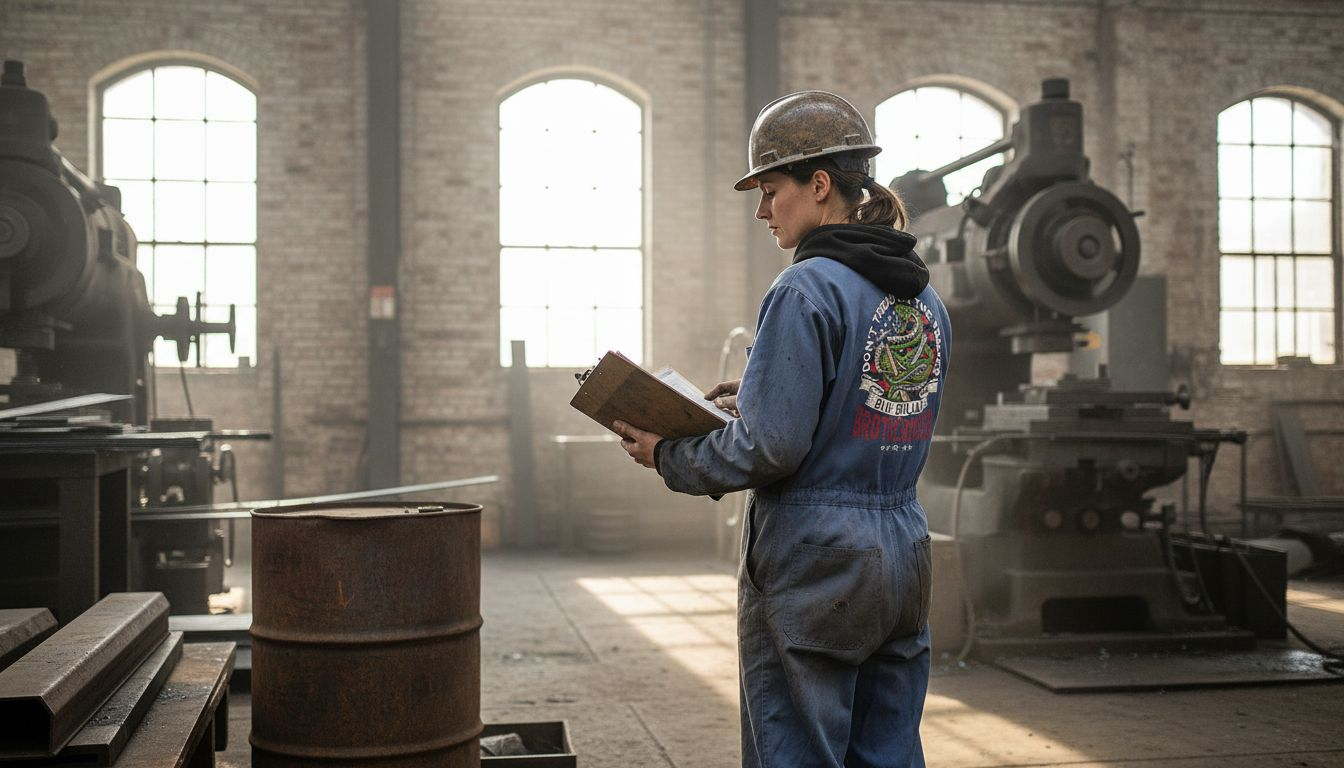
As industrialization swept across the United States post-Civil War, blue-collar roles expanded dramatically. Manufacturing, construction, mining, and agricultural sectors became the primary engines of economic growth, creating unprecedented opportunities for workers willing to engage in physical labor. The blue-collar workforce represented the backbone of American economic expansion, with workers developing sophisticated skills that went far beyond simple manual labor. These professionals weren’t just laborers - they were technical experts, craftsmen, and essential contributors to national infrastructure.
Worker classification distinctions originally highlighted socioeconomic differences between manual and office workers. Blue-collar jobs were traditionally associated with working-class backgrounds, lower formal education, and physical skill sets. However, technological advances and economic shifts have dramatically transformed these early perceptions. Modern blue-collar work now encompasses complex technical training, advanced machinery operation, and specialized certifications that demand significant intellectual capability alongside physical prowess.
Pro tip: Recognize that blue-collar work represents sophisticated expertise, not just physical labor - continuous learning and skill development are key to professional success.
Here’s a summary highlighting how blue-collar work has evolved over time:
| Era | Job Characteristics | Required Skills | Societal Perception |
|---|---|---|---|
| Early Industrial | Manual labor, repetitive tasks | Basic physical ability | Often undervalued, seen as low-status jobs |
| Mid 20th Century | Increased specialization, union influence | Apprenticeships, technical knowledge | Growing respect, crucial economic role |
| Modern Day | Complex, technology-driven work | Certification, digital and mechanical expertise | Recognized for technical proficiency and essential impact |
Modern Jobs and Skills in Blue Collar Fields
Blue-collar careers have dramatically transformed in recent years, evolving far beyond traditional manual labor. Technical skills now define modern trades, with emerging industries like renewable energy creating sophisticated career pathways for skilled workers. Wind turbine technicians, solar panel installers, and advanced manufacturing specialists now represent the cutting edge of blue-collar professional development.
Today’s blue-collar workforce spans multiple industries including manufacturing, construction, transportation, agriculture, and emerging green technologies. These roles demand a complex blend of physical capability and technical expertise. Electricians now work with advanced digital systems, mechanics operate computerized diagnostic equipment, and construction workers utilize precision technologies that require extensive training and continuous skill upgrades. The modern blue-collar professional is essentially a technical specialist with hands-on problem-solving skills that cannot be easily replaced by automation.
Blue-collar job opportunities continue to expand in sectors requiring specialized skills and adaptability. Vocational training programs have become increasingly sophisticated, offering certifications that provide competitive wages and career stability. Many trade schools now partner directly with industries to create targeted educational pathways, ensuring workers are prepared for the most current technological demands. These programs represent a strategic alternative to traditional four-year college degrees, offering faster entry into well-paying professional tracks.
Pro tip: Invest continuously in your technical skills and certifications - the most successful blue-collar professionals are lifelong learners who stay ahead of technological changes.
The following table compares technical and physical aspects of key modern blue-collar jobs:
| Occupation | Technical Expertise | Physical Demands | Emerging Trends |
|---|---|---|---|
| Electrician | Advanced digital systems, troubleshooting | Moderate lifting, manual dexterity | Smart home and automated systems |
| Mechanic | Computer diagnostics, repair technology | Heavy lifting, tool handling | Electric vehicles and advanced electronics |
| Construction Worker | Precision tools, architectural knowledge | High stamina, working at heights | Green building, eco-friendly materials |
| Wind Turbine Technician | Electrical systems, mechanical repairs | Climbing towers, outdoor work | Expansion in renewable energy sector |
Values, Identity, and Community Mindset
Blue-collar identity runs deeper than a simple job description - it’s a profound culture of resilience, mutual support, and unwavering pride. Blue-collar workers challenge social hierarchies by demonstrating that skilled labor demands extraordinary expertise, strength, and commitment. Unlike stereotypical perceptions, these professionals view their work not just as employment, but as a calling that requires technical mastery, physical endurance, and personal integrity.
The blue-collar community operates on a foundational understanding of collective strength. Trade workers develop tight social networks built on shared experiences, mutual respect, and an unspoken code of loyalty. Apprentices learn not just technical skills but also critical life lessons from seasoned professionals who view mentorship as a sacred responsibility. These bonds transcend workplace boundaries, creating support systems that help workers navigate professional challenges, personal hardships, and economic uncertainties.
Blue-collar workers maintain complex workplace perspectives that balance pragmatic career views with deep personal pride. While job satisfaction might fluctuate, their commitment to craft remains unwavering. Many professionals view their work as a critical contribution to society’s infrastructure, understanding that their skills quite literally build and maintain the physical world around us. This perspective transforms manual labor from a job into a source of profound personal dignity and social significance.
Pro tip: Honor your trade’s legacy by continuously learning, supporting your fellow workers, and recognizing the profound value of your specialized skills.
Impact of Blue Collar Work on America
Blue-collar workers are the fundamental driving force behind America’s economic engine, representing far more than just labor - they are the critical infrastructure that sustains national prosperity. Essential economic contributors power manufacturing, construction, transportation, and agricultural sectors, delivering the tangible products and services that keep the country moving. These professionals build bridges, maintain power grids, construct homes, produce goods, and ensure the complex machinery of modern society continues to function smoothly.
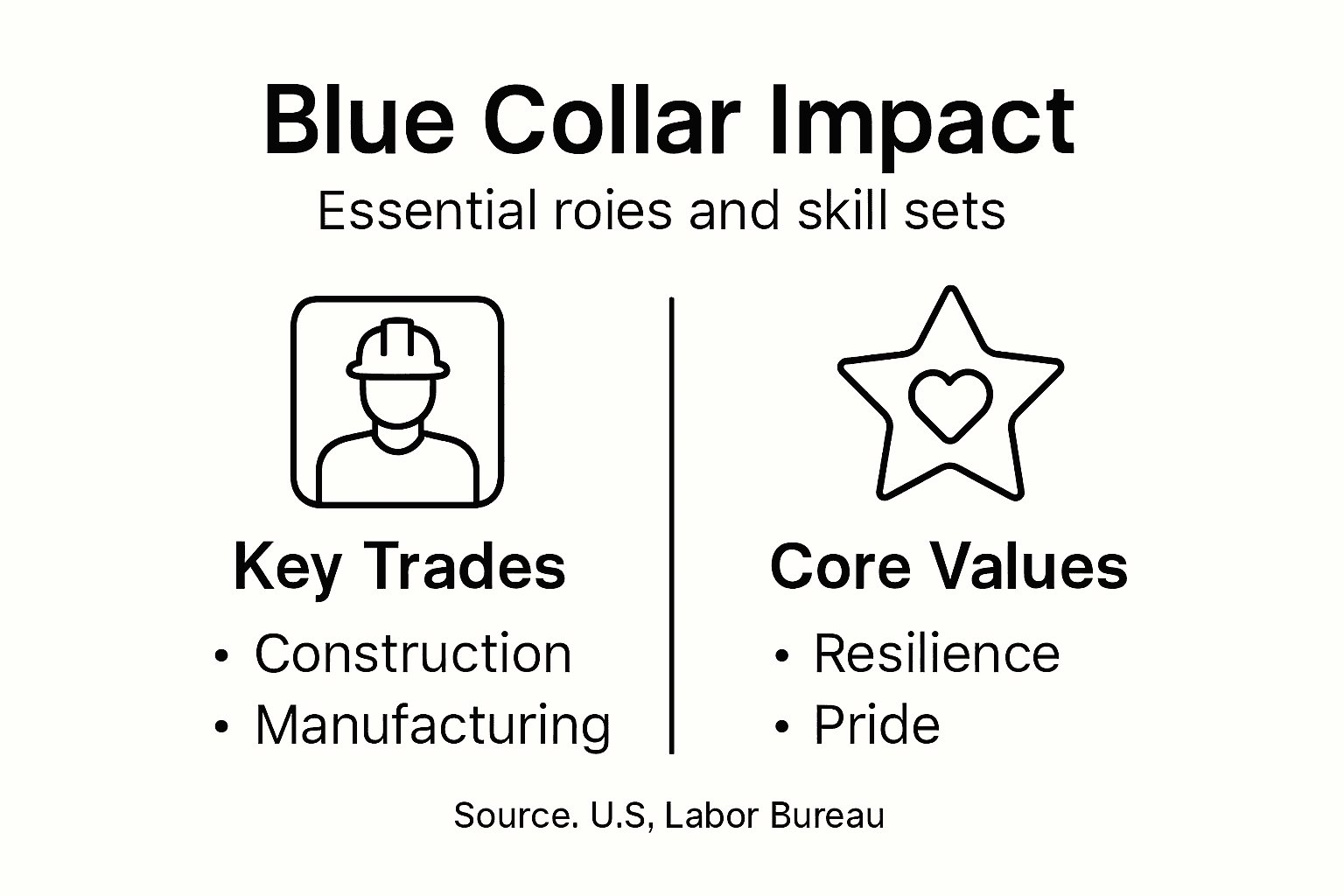
The economic landscape of the United States fundamentally depends on the resilience and skill of blue-collar workers. Rising wages and job security in skilled trades demonstrate the increasing value of these critical roles. As automation transforms traditional white-collar jobs, blue-collar professionals remain indispensable - their technical expertise, physical capabilities, and adaptability make them essential to maintaining America’s competitive edge in a rapidly changing global economy. From renewable energy installations to advanced manufacturing, these workers are not just maintaining existing infrastructure but actively innovating and reshaping industrial capabilities.
Beyond economic metrics, blue-collar work represents a profound cultural narrative of American resilience, innovation, and collective progress. These workers embody the spirit of hard work, technical mastery, and community contribution that has historically defined the nation’s character. They are the hands that build, repair, and sustain the physical and economic foundations of communities across the country, transforming abstract economic concepts into tangible reality through skill, dedication, and unwavering commitment.
Pro tip: Recognize and celebrate the essential contributions of blue-collar workers - they are the backbone of American economic and social infrastructure.
Wearing Blue Collar With Pride and Purpose
Blue-collar work transcends mere employment - it represents a profound commitment to craftsmanship, community, and national progress. Blue-collar workers challenge societal stereotypes by demonstrating that manual labor demands extraordinary intellectual and physical skill. These professionals aren’t just workers - they’re artisans who transform raw materials, maintain critical infrastructure, and solve complex technical challenges with precision and dedication.
The pride associated with blue-collar work stems from tangible achievements and a deep understanding of craft. Welders, electricians, mechanics, and construction workers develop expertise that goes far beyond surface-level perception. Their skills require intricate knowledge of systems, materials, and techniques that demand continuous learning and adaptation. Skilled trades represent meaningful societal contributions, challenging misconceptions about manual labor by showcasing the intellectual rigor and technical mastery inherent in their professions.
Wearing blue-collar identity means embracing a rich cultural narrative of resilience, innovation, and collective progress. It’s about recognizing that true expertise isn’t defined by an office environment, but by the ability to solve real-world problems with skill, creativity, and unwavering commitment. Blue-collar professionals are the backbone of American infrastructure - building, maintaining, and advancing the physical systems that keep society functioning. Their work represents a powerful testament to human capability, technical innovation, and the profound dignity of skilled labor.
Pro tip: Embrace your trade’s unique skills and continue learning - your expertise is a powerful form of personal and professional empowerment.
Gear Up With Apparel That Matches Your Blue-Collar Pride and Resilience
The article highlights the critical role of skilled tradespeople who combine physical strength with technical expertise and a deep sense of pride in their work. If you value durability, function, and the culture of hard work, the challenge is finding apparel that supports you through long shifts while reflecting your dedication and identity. Whether you face tough conditions, need reliable sun protection, or want clothing that makes a statement about your profession, your workwear should empower you every step of the way.
Discover tough, comfortable options for every trade at WorkWearComfort.com. From our full selection in All Hooded Sweatshirts - WorkWear Comfort that offer durability and practical features to specialized gear designed for strong, confident blue-collar workers like those found in Female Hoodie Sweatshirts – WorkWearComfort, your apparel will honor your craft and commitment.
Ready to wear clothing that matches your skill, resilience, and pride Join thousands of hardworking professionals who trust WorkWearComfort.com for rugged quality and style Stay protected and comfortable today with gear designed for those who build and maintain America’s foundation. Explore our collections now and take the next step toward workwear that works as hard as you do.
Frequently Asked Questions
What does blue-collar work mean?
Blue-collar work refers to manual labor jobs that often require specialized skills in trades such as construction, manufacturing, and repair. These roles involve physical tasks and technical expertise, challenging the stereotype of blue-collar jobs as merely unskilled labor.
How has the perception of blue-collar work changed over time?
The perception of blue-collar work has evolved from being seen as low-status, manual labor to a recognition of the sophisticated skills and training required in modern trades. Increasingly, blue-collar jobs are valued for their technical expertise and vital contributions to the economy.
What skills are essential for modern blue-collar jobs?
Modern blue-collar jobs require a blend of technical skills, such as proficiency with advanced machinery and digital systems, alongside physical ability. Continuous learning and certifications in specific trades are crucial for career advancement.
Why is blue-collar work considered important to the economy?
Blue-collar work is essential to the economy as it supports critical infrastructure, manufacturing, and services that maintain and advance society. These workers play a key role in innovation, economic stability, and the overall functioning of daily life.
Recommended
- Best Workwear for Tradesmen – Expert Comparison 2025 – WorkWearComfort
- Make America Great Again: Blue-Collar Impact – WorkWearComfort
- Understanding Blue Collar Work and Its Impact – WorkWearComfort
- Understanding Blue Collar Worker Definition in Today’s World – WorkWearComfort
- Philosophy - Sparkly HR
