

Nearly half of American tradeswomen say finding work clothes that truly last under tough construction conditions remains a constant challenge. For women building careers in carpentry and other trades, clothing needs to do more than simply fit. It should withstand jobsite hazards and display their professionalism and individuality. This guide breaks down what makes durable, protective carpentry apparel essential, shares the latest regulatory updates, and helps American tradeswomen choose gear that supports safety and style at work.
Table of Contents
- Defining Carpentry Work Clothes And Purpose
- Types And Features For Jobsite Demands
- How OSHA’s New PPE Rules Influence Fit
- Choosing Durable And Comfortable Apparel
- Common Mistakes And How To Avoid Them
Key Takeaways
| Point | Details |
|---|---|
| Importance of Fit | Proper fit of personal protective equipment is essential for safety; employers must consider individual body types and select appropriately sized gear. |
| Durable Materials | Selecting work clothes made from advanced performance fabrics enhances protection and comfort, allowing for free movement in demanding environments. |
| Regular Assessments | Annual reviews of work clothing are critical to ensure protective capabilities are maintained, focusing on wear conditions and alignment with safety standards. |
| Hazard-Specific Selection | Choose workwear based on specific jobsite hazards rather than generic options, as tailored garments provide the necessary protection against unique risks. |
Defining Carpentry Work Clothes and Purpose
Carpentry work clothes represent more than just fabric and thread - they are essential protective gear designed to shield professionals from workplace hazards while enabling peak performance. Workwear historically evolved to balance protection, utility, and professionalism for manual laborers facing challenging physical environments.
These specialized garments serve multiple critical functions beyond basic clothing. They provide physical protection against potential injuries, incorporate durability features to withstand rigorous construction conditions, and offer practical utility through strategic design elements like reinforced pockets, flexible fabric, and strategic padding. Carpentry work clothes must simultaneously protect workers from potential dangers like sharp objects, splinters, heavy materials, and environmental conditions while allowing unrestricted movement.
The core purpose of carpentry work clothes centers on three fundamental principles: safety, functionality, and professional appearance. Safety involves materials that resist punctures, tears, and chemical exposures. Functionality means clothing engineered with multiple tool pockets, reinforced stress points, and breathable fabrics that manage temperature and moisture. Professional appearance communicates competence and signals a worker’s commitment to their craft.
Pro Tip - Gear Selection Strategy: Always prioritize work clothes that offer a balance between protection, comfort, and mobility, ensuring you can perform complex carpentry tasks without feeling restricted by your clothing.
Key protective features to consider include:
- Reinforced knee areas for extended kneeling
- Strategic tool pockets for efficient equipment access
- Moisture-wicking fabrics to manage sweat
- Reflective elements for increased visibility
- Durable fabric with high tensile strength
Types and Features for Jobsite Demands
Carpentry work clothes encompass a diverse range of specialized garment types designed to meet the extreme demands of construction environments. Professional organizations highlight the critical importance of clothing that supports varied tasks while providing comprehensive protection, from measuring and cutting to heavy material handling.
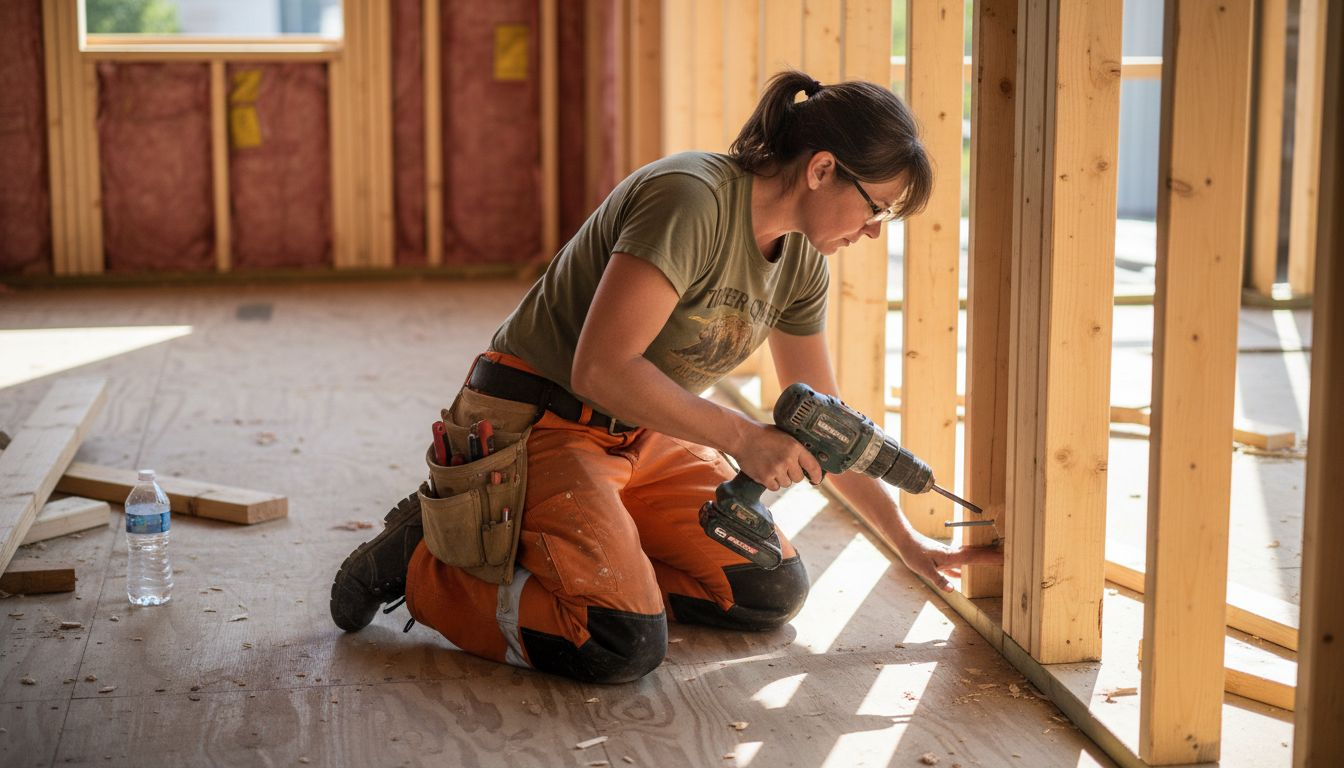
These work clothes typically include several essential categories tailored for specific jobsite requirements. Utility pants form the foundation, featuring reinforced knee areas, multiple tool pockets, and durable fabric resistant to tears and abrasions. Work shirts complement these pants, often constructed with moisture-wicking materials and strategic ventilation to manage physical exertion and temperature variations. Outerwear like heavyweight jackets and vests provide additional protection against harsh weather conditions while maintaining professional mobility.
Here’s a summary of essential categories of carpentry work clothes and their main benefits:
| Garment Type | Primary Benefit | Ideal Usage Scenario |
|---|---|---|
| Utility Pants | Knee protection, storage | Heavy lifting, kneeling |
| Work Shirts | Breathability, mobility | High-exertion tasks |
| Outerwear | Weather resistance | Cold or wet environments |
| Vests | Added visibility, pocket access | Site supervision, tool carrying |
Key clothing features are strategically engineered to address carpentry’s unique challenges. WorldSkills Occupational Standards emphasize the necessity of clothing that supports complex physical tasks through intelligent design elements. These include articulated knees for flexibility, heavy-duty fabric with high tensile strength, integrated tool loops, and reinforced stress points that withstand constant movement and potential material contact.
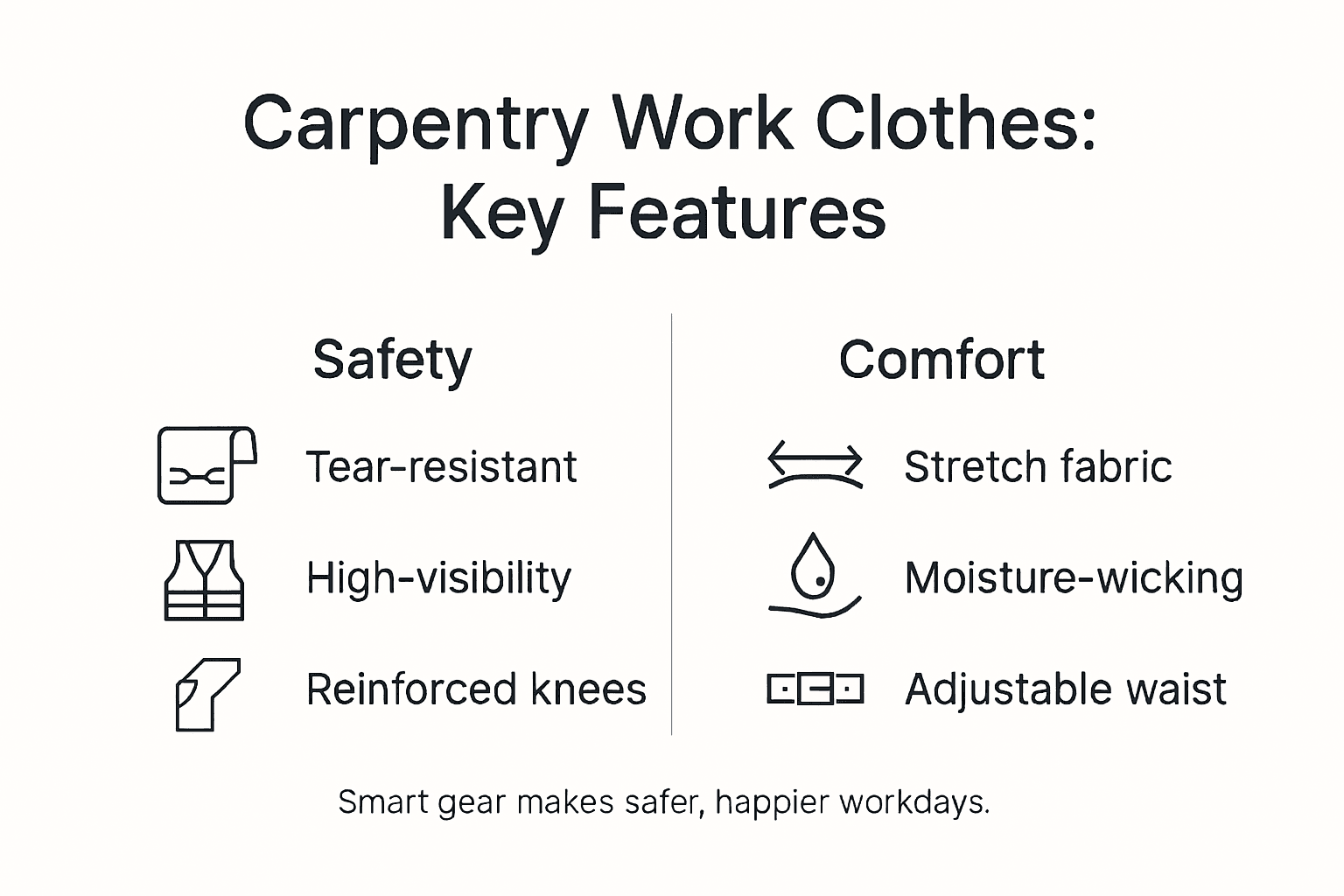
Compare the impact of advanced workwear features on carpenter safety and performance:
| Feature | Safety Impact | Performance Benefit |
|---|---|---|
| Articulated knees | Lowers injury risk | Improves freedom of movement |
| Tool loops | Keeps tools secure | Speeds up equipment access |
| Moisture-wicking fabric | Reduces heat stress | Improves comfort, productivity |
| Reinforced stress points | Prevents fabric failure | Extends gear lifespan |
Pro Tip - Performance Layering Strategy: Select work clothes that allow strategic layering, enabling you to adapt quickly to changing jobsite temperatures and physical demands while maintaining maximum comfort and protection.
Critical clothing features for carpentry professionals include:
- High-visibility safety elements
- Breathable, quick-drying fabrics
- Reinforced pocket designs
- Flexible movement panels
- Durable water-resistant exteriors
- Impact-resistant material in high-stress zones
How OSHA’s New PPE Rules Influence Fit
The Department of Labor’s recent regulatory changes have fundamentally transformed how personal protective equipment (PPE) is selected and implemented in construction workplaces. These new OSHA rules represent a critical shift towards ensuring that protective clothing is not just available, but genuinely functional and appropriately sized for every worker.
The updated regulations mandate that employers must provide PPE that fits properly, addressing longstanding safety gaps that previously left workers vulnerable. Proper fit now means more than just having safety gear on hand - it requires a comprehensive approach that considers individual body types, work requirements, and potential safety risks. This means employers must now invest time in measuring workers, understanding diverse body shapes, and selecting gear that provides genuine protection without restricting movement.
CDC guidance highlights the critical importance of equitable PPE sizing, especially for workers who traditionally have been overlooked in safety gear design. The new rules specifically address previous inequities by requiring manufacturers and employers to consider diverse body types, ensuring that safety equipment protects all workers effectively, regardless of gender, size, or physical characteristics.
Pro Tip - Fit Assessment Strategy: Schedule annual PPE fit assessments for your entire team, treating them as essential safety checkups that verify each worker’s protective equipment remains appropriate and functional.
Key considerations under the new OSHA fit requirements include:
- Multiple size options for all protective gear
- Adjustable features in safety clothing
- Comprehensive fit testing procedures
- Documentation of individual worker measurements
- Regular reassessment of PPE effectiveness
Choosing Durable and Comfortable Apparel
High-visibility safety standards now play a pivotal role in selecting carpentry workwear, transforming how professionals approach clothing selection. Modern apparel must balance protection, durability, and comfort in ways that support both safety requirements and professional performance.
Durable carpentry apparel requires strategic material selection that withstands intense physical demands. Performance fabrics have revolutionized workwear, incorporating advanced synthetic blends that offer superior tear resistance, moisture management, and flexibility. These materials must endure repeated stress from climbing, lifting, measuring, and working in challenging environmental conditions while maintaining structural integrity and professional appearance.
CDC ergonomic guidelines emphasize the critical connection between work clothing design and worker comfort, highlighting how proper apparel can directly impact productivity and injury prevention. Carpentry professionals need clothing that moves with their body, reduces muscular strain, and provides targeted support in high-stress areas like shoulders, knees, and lower back.
Pro Tip - Material Intelligence: Always inspect fabric composition and construction details before purchasing, prioritizing garments with reinforced stress points, articulated joints, and advanced performance technologies.
Critical apparel selection factors include:
- Tear-resistant fabric weight and density
- Moisture-wicking and quick-drying capabilities
- Strategic reinforcement in high-wear areas
- Breathability and temperature regulation
- Flexibility without compromising structural integrity
- Compliance with safety visibility standards
Common Mistakes and How to Avoid Them
OSHA’s construction safety resources consistently highlight critical errors that carpenters frequently make when selecting and maintaining work clothes. Understanding these pitfalls is crucial for maintaining workplace safety and professional performance.
One of the most significant mistakes is assuming that all work clothing provides equal protection. Hazard-specific selection requires careful evaluation of jobsite conditions, material composition, and individual task requirements. Many carpenters mistakenly purchase generic workwear without considering unique workplace risks, such as chemical exposure, mechanical stress, or environmental challenges that demand specialized protective features.
CDC research reveals that workers often underestimate the importance of proper PPE fit, leading to increased injury risks. Common errors include selecting clothing based solely on price, ignoring size variations, and failing to regularly assess gear condition. Professional carpenters must recognize that ill-fitting work clothes can compromise safety as significantly as using no protection at all.
Pro Tip - Safety Assessment Strategy: Conduct a comprehensive annual review of your work clothing, evaluating each garment’s protective capabilities, wear condition, and alignment with current jobsite safety standards.
Critical mistakes to avoid include:
- Purchasing based on price instead of protection
- Ignoring manufacturer sizing guidelines
- Failing to replace worn or damaged clothing
- Using generic gear for specialized tasks
- Overlooking fabric technology and performance ratings
- Neglecting regular safety gear inspections
Upgrade Your Carpentry Work Clothes for Safety and Confidence
The challenge of finding carpentry work clothes that combine safety, perfect fit, and comfort is real. You need gear that protects against jobsite hazards while allowing freedom of movement every day. The article highlights how important proper fit, durable materials, and functional design features are to keep you safe and confident throughout your work. Many carpenters face common pitfalls such as ill-fitting gear or generic apparel that fails to meet OSHA requirements or workplace demands.
WorkwearComfort.com understands these struggles by offering a rugged, stylish selection of apparel designed for hardworking professionals. Whether you are seeking warm layers or durable outerwear, explore our All Hooded Sweatshirts - WorkWear Comfort collection crafted to provide comfort without restricting your movements.
Gear up with workwear that respects your craft and lifestyle. Visit WorkWearComfort.com today to find clothing that perfectly fits your unique body shape, keeps you safe with quality fabrics, and stands up to tough jobsite conditions. If you want options crafted specifically with blue-collar men in mind, be sure to browse Blue-Collar Working Man Sweatshirt Hoodies – WorkWearComfort for gear that delivers durability and confidence. Start upgrading your work clothes now to perform at your best every day.
Frequently Asked Questions
What are the primary purposes of carpentry work clothes?
Carpentry work clothes serve three main purposes: safety, functionality, and professional appearance. They are designed to protect workers from hazards, provide utility features for tool access, and convey a sense of competence in the trade.
How can I ensure that my carpentry work clothes fit properly?
To ensure a proper fit, consider scheduling annual PPE fit assessments and choosing garments with adjustable features. Also, take accurate body measurements to select sizes that accommodate your specific body shape and work requirements.
What features should I look for in durable carpentry work clothing?
Key features to consider include tear-resistant fabrics, moisture-wicking capabilities, reinforced stress points, flexible movement panels, and compliance with high-visibility safety standards. These elements enhance both durability and comfort during work.
What common mistakes should carpenters avoid when selecting work clothes?
Common mistakes include purchasing based on price rather than protection, ignoring proper fit, failing to replace worn or damaged clothing, and using generic gear for specific tasks. It’s essential to evaluate each garment’s protective capabilities and maintain an annual review of work clothing.
