

Harsh winter wind biting through your jacket or wet snow soaking your sleeves can cut your shift short and risk your safety. For American construction workers and trade pros, a quality winter work jacket is more than just clothing, it is critical personal protective equipment when facing long hours outdoors. This guide walks you through smart steps to choose gear that fits your job, stands up to the elements, and works as hard as you do from dawn to dusk.
Table of Contents
- Step 1: Assess Your Work Conditions And Requirements
- Step 2: Select Materials For Maximum Insulation And Durability
- Step 3: Determine The Right Fit And Sizing For Comfort
- Step 4: Test Features For Functionality And Practicality
- Step 5: Maintain Your Winter Work Jacket For Long-Term Use
Quick Summary
| Key Point | Explanation |
|---|---|
| 1. Assess your work conditions | Understand temperature, wind, and moisture conditions before selecting a jacket. This ensures appropriate protection against the elements. |
| 2. Choose high-quality materials | Opt for a multi-layered jacket using synthetic fills and durable outer shells for optimal insulation and resistance to harsh weather. |
| 3. Ensure proper fit and comfort | Select a jacket that allows full movement and provides space for layering without restriction for enhanced comfort during work. |
| 4. Test practical features | Evaluate pockets, mobility, and ventilation to ensure the jacket supports the carrying of tools and adaptability to work demands. |
| 5. Maintain your jacket regularly | Implement a cleaning and inspection schedule to preserve the jacket’s protective qualities and extend its lifespan. |
Step 1: Assess Your Work Conditions and Requirements
Choosing the right winter work jacket starts with understanding the unique environmental challenges and safety requirements of your specific outdoor job. Workplace safety guidelines emphasize the critical importance of matching protective gear to your work environment.
To effectively assess your work conditions, break down your requirements into key components:
- Temperature Range: Determine the typical cold temperatures you’ll be working in
- Wind Exposure: Evaluate how much direct wind and windchill you’ll encounter
- Physical Activity Level: Consider whether you’ll be stationary or actively moving
- Moisture Conditions: Assess potential exposure to rain, snow, or wet environments
Occupational safety research highlights that cold exposure risks vary significantly across different job settings. Workers with chronic health conditions or those in consistently cold environments need extra protection and careful gear selection.
Your jacket must provide more than just warmth - it needs to support your mobility, protect against environmental hazards, and allow you to perform your job effectively. Consider features like wind resistance, water repellency, and insulation that match your specific work demands.
Pro tip: Keep a detailed log of your daily work conditions for at least one week to get the most accurate assessment of your jacket requirements.
Step 2: Select Materials for Maximum Insulation and Durability
Selecting the right materials for your winter work jacket is crucial to ensuring protection, comfort, and performance in harsh outdoor conditions. Winter workwear relies on strategic material selection that balances insulation, moisture management, and durability.
The ideal winter work jacket incorporates a multi-layered approach with specialized materials:
- Base Layer: Moisture-wicking synthetic fabrics that draw sweat away from skin
- Insulation Layer: Materials like synthetic fill, wool, or down that trap heat effectively
- Outer Shell: Durable, water-resistant fabrics that block wind and repel moisture
Choose materials that perform dynamically - adapting to your body’s changing temperature and activity levels.
Workwear experts recommend focusing on materials that offer both thermal protection and resilience. Synthetic insulations like polyester fills provide consistent warmth even when wet, while advanced polyester blends in outer shells resist wear and maintain structural integrity in challenging environments.
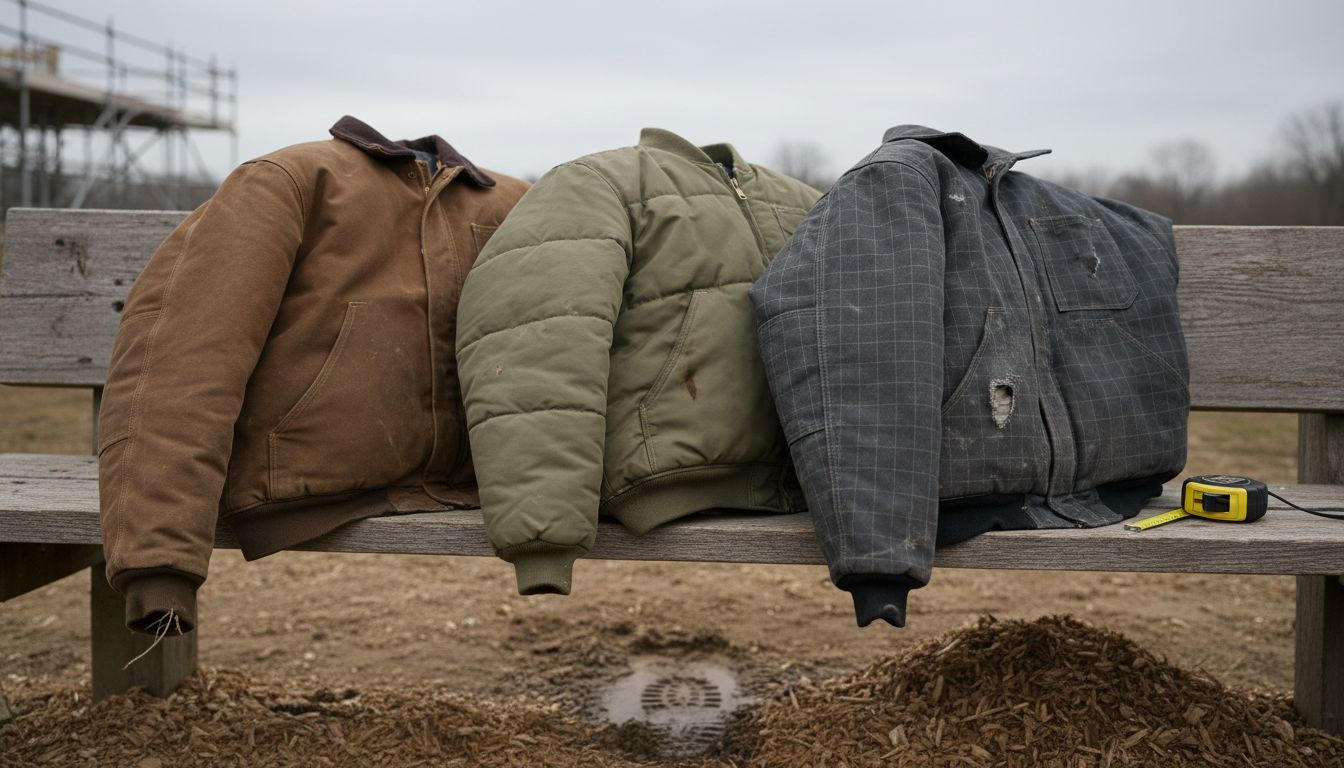
Consider the specific demands of your work environment when selecting jacket materials. Heavy-duty duck canvas, reinforced polyester, and specialized technical fabrics can provide the durability and protection needed for demanding outdoor jobs.
Here’s a quick comparison of popular winter work jacket materials and their properties:
| Material Type | Insulation Performance | Water Resistance | Durability Level |
|---|---|---|---|
| Synthetic Fill | Retains warmth when wet | Moderate to high | Long-lasting, resilient |
| Wool | High warmth, natural fiber | Low | Vulnerable to abrasion |
| Down | Exceptional heat retention | Low if not treated | Lightweight but delicate |
| Duck Canvas | Minimal insulation | High with treatment | Extremely tough |
| Reinforced Polyester | Good in all conditions | High | Resists wear and tear |
Pro tip: Invest in a jacket with removable layers to maximize versatility across different temperature ranges and work conditions.
Step 3: Determine the Right Fit and Sizing for Comfort
Finding the perfect winter work jacket is about more than just picking a size off the rack. Workplace safety regulations mandate proper protective equipment fitting to ensure maximum protection and worker comfort.
When determining the right fit, consider these critical sizing factors:
- Range of Motion: Jacket should allow full arm and shoulder movement
- Layering Space: Enough room to wear thermal base and mid-layers underneath
-
Adjustability: Look for features like:
- Cinch waists
- Elastic or hook-and-loop cuff closures
- Drawstring hems
A well-fitted jacket is your first line of defense against cold and potential workplace hazards.
Winter safety guidance emphasizes selecting jackets that balance comfort with functionality. Your jacket should feel comfortable without restricting movement, allowing you to perform physical tasks efficiently while maintaining core body temperature.
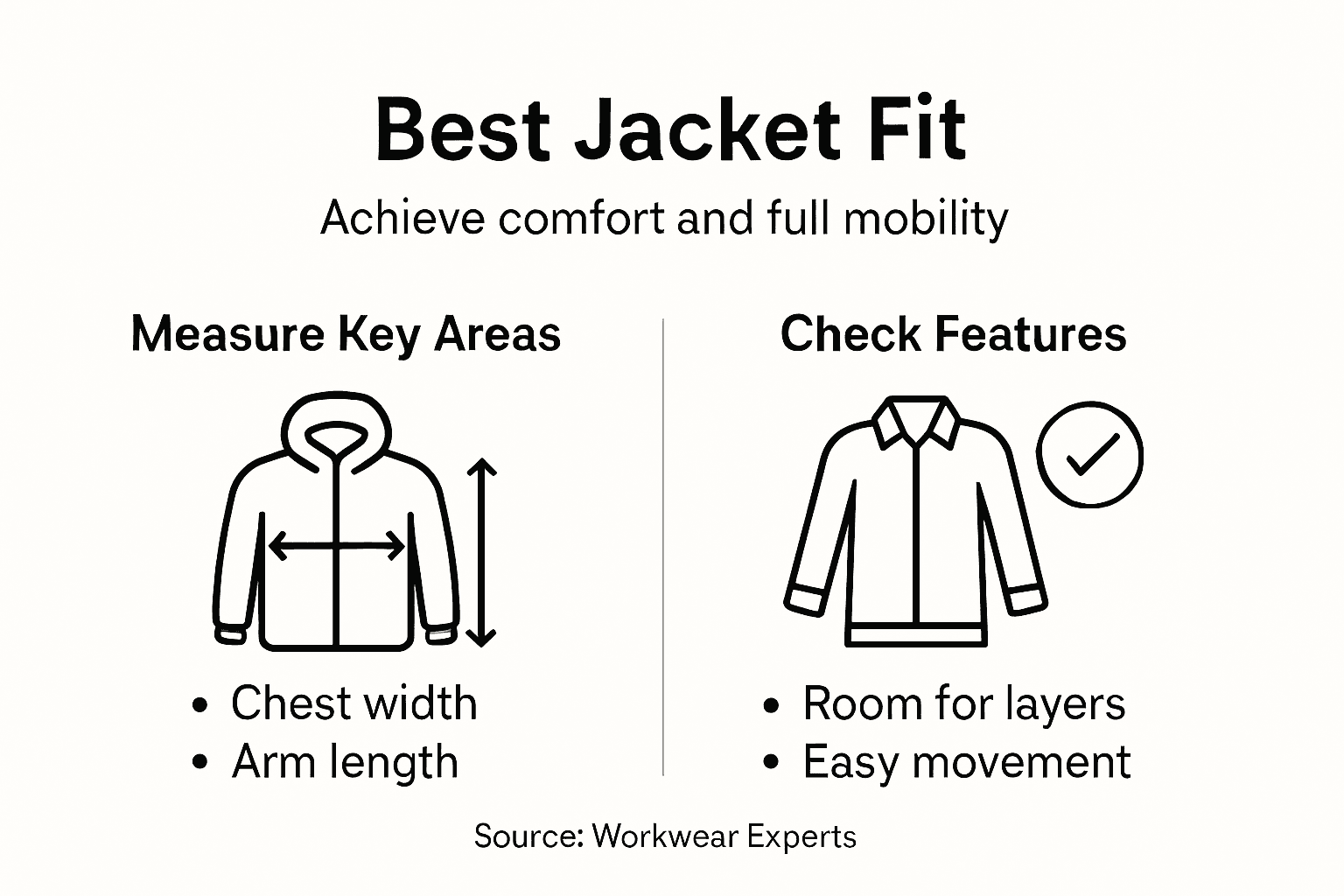
Pro tip for accurate sizing: Always try on jackets wearing the same type of layers you’ll use during work. Measure your chest, shoulders, and arm length, and compare these to the manufacturer’s sizing chart to ensure the best possible fit.
Pro tip: Bring a friend or coworker when jacket shopping to help assess how the jacket looks and moves from different angles.
Step 4: Test Features for Functionality and Practicality
Selecting the right winter work jacket goes beyond appearance - it’s about finding a piece of gear that works as hard as you do. Workwear design standards emphasize practical functionality that supports your daily work demands.
Key functional features to thoroughly test include:
-
Pocket Configuration
- Tool accessibility
- Secure closures
- Interior and exterior storage options
- Movement Range: Full arm and shoulder mobility
- Temperature Regulation: Ventilation and layering options
A truly functional jacket adapts to your work environment, not the other way around.
Personal protective equipment standards require jackets that support safe and efficient work performance. When testing a jacket, simulate your actual work movements - reach, bend, lift, and twist to ensure the jacket moves with you without restricting your range of motion.
Pay close attention to details like reinforced stress points, weather-resistant zippers, and adjustable features that can enhance your jacket’s performance in challenging outdoor conditions. Remember that comfort and functionality are equally important in maintaining your productivity and safety.
Pro tip: Wear work gloves while testing jacket features to ensure all closures and pockets are truly usable in real-world conditions.
Step 5: Maintain Your Winter Work Jacket for Long-Term Use
Protecting your investment means understanding how to care for your winter work jacket properly. Winter work jacket maintenance requires systematic care to preserve its protective qualities and extend its functional lifespan.
Key maintenance steps include:
-
Cleaning Practices
- Use mild, specialized detergents
- Avoid fabric softeners
- Follow manufacturer’s washing instructions
- Drying Techniques: Air dry or use low heat settings
- Storage Methods: Hang in dry, well-ventilated area
Proper maintenance is cheaper than constant replacement.
Workwear experts recommend routine inspection for signs of wear and damage. Check critical areas like zipper integrity, seam strength, and insulation consistency. Repair small tears immediately to prevent further deterioration and maintain the jacket’s protective capabilities.
Consider creating a maintenance schedule that includes regular cleaning, thorough drying, and careful storage. This approach not only preserves your jacket’s performance but also ensures you’re always protected in challenging winter work conditions.
For at-a-glance maintenance planning, here’s a summary of winter work jacket care tasks and their impact:
| Maintenance Task | Frequency | Benefit to Jacket |
|---|---|---|
| Cleaning | Monthly/Seasonal | Removes dirt, preserves fabric |
| Drying | After each wash | Maintains insulation, prevents odor |
| Storage | Daily/Off-season | Retains shape, avoids mildew |
| Inspection/Repair | Monthly or as needed | Extends lifespan, ensures protection |
Pro tip: Store your winter work jacket on a wide, padded hanger to maintain its shape and prevent unnecessary stress on the fabric.
Gear Up for Winter Workdays with Confidence
Struggling to find a winter work jacket that truly meets your outdoor job demands can be frustrating. This article highlights the importance of selecting gear that offers insulation, durability, and proper fit to keep you safe and comfortable through harsh conditions. At WorkWearComfort.com, we understand the challenges of balancing protection with mobility and style. Our collection, including All Hooded Sweatshirts - WorkWear Comfort, is designed to support hardworking professionals like you with rugged, reliable apparel.
Don’t wait until the cold slows you down. Explore our durable options now at WorkWearComfort.com and find gear that adapts to your work environment. For those seeking additional comfort and style, check out our specially tailored Female Hoodie Sweatshirts – WorkWearComfort and Mens Work T-shirts – WorkWearComfort. Stay protected, stay comfortable, and get back to work with confidence today.
Frequently Asked Questions
How do I assess my work conditions to choose the right winter work jacket?
Assess your work conditions by evaluating the temperature range, wind exposure, physical activity level, and moisture conditions you’ll face. Keep a detailed log of your daily work conditions for at least one week to gather accurate data on what features your jacket should have.
What materials should I look for in a winter work jacket?
Look for a jacket with a multi-layered approach, including a moisture-wicking base layer, an insulating layer with materials like synthetic fill or wool, and a durable outer shell that is water-resistant. Choose materials that perform dynamically to keep you warm and comfortable while allowing for movement during your work tasks.
How can I ensure the right fit for my winter work jacket?
To ensure the right fit, make sure the jacket allows full range of motion in your arms and shoulders while providing enough space for layering underneath. Always try on jackets with the same type of layers you’ll use during work, and measure your body dimensions against the manufacturer’s sizing chart for the best fit.
What functional features should I test in a winter work jacket?
Test features like pocket configuration for tool accessibility, movement range for full mobility, and temperature regulation options like ventilation. Simulate your actual work movements while wearing the jacket to confirm that it moves with you without restrictions.
How can I maintain my winter work jacket for long-term use?
Maintain your jacket by regularly cleaning it with specialized detergents, air drying or using low heat settings, and storing it in a dry, well-ventilated area. Create a maintenance schedule that includes routine inspections for wear and damage to extend the lifespan of your jacket.
