

Long workdays on a busy American jobsite demand clothes that move with you, not against you. For plus-size women in construction and skilled trades, finding truly comfortable and durable workwear is about more than size – it means discovering garments that fit right, protect, and last. Drawing from ergonomic design and recent workplace comfort research, this article highlights what really makes work clothes both reliable and confidence-boosting, so you can focus on getting the job done.
Table of Contents
- What Makes Work Clothes Comfortable and Durable
- Popular Plus-Size Workwear Options for Women
- Essential Features for Fit and Functionality
- Finding the Right Styles and Sizing Advice
- Care, Maintenance, and Avoiding Common Issues
Key Takeaways
| Point | Details |
|---|---|
| Comfort and Durability | Comfortable work clothes prioritize ergonomic design, high-performance fabrics, and protective features to enhance worker well-being and productivity. |
| Plus-Size Considerations | Plus-size workwear must combine functionality, comfort, and style, addressing the specific needs of workers for both mobility and fit. |
| Care and Maintenance | Proper washing, fabric-specific care, and early repairs are essential for extending the lifespan and functionality of work clothing. |
| Fit Evaluation | Accurate measurements and a focus on range of motion are crucial for selecting workwear that supports professional efficacy and self-confidence. |
What Makes Work Clothes Comfortable and Durable
Comfortable and durable work clothes aren’t just about fabric - they’re about understanding human physiological needs and workplace demands. When it comes to plus-size workwear, the intersection of style, function, and comfort becomes even more critical. Ergonomic design principles reveal that truly effective work clothing must optimize movement, protection, and worker well-being.
The key components that make work clothes genuinely comfortable and durable include:
-
Fabric Selection: High-performance materials that offer:
- Moisture-wicking properties
- Stretch and flexibility
- Resistance to wear and tear
- Breathability in various work environments
-
Ergonomic Construction: Garment designs that:
- Allow full range of motion
- Reduce friction points
- Distribute weight evenly
- Minimize physical strain during work activities
-
Protection Features: Integrated elements that safeguard the wearer:
- Reinforced stress points
- UV protection
- Temperature regulation
- Chemical and abrasion resistance
Moreover, workplace clothing studies demonstrate that well-designed work clothes significantly impact worker psychology. When individuals feel comfortable and confident in their attire, their self-esteem and productivity increase. This psychological boost is particularly important for plus-size workers who deserve clothing that celebrates their body while meeting rigorous functional requirements.
The ultimate goal of comfortable work clothes is creating a garment that feels like a second skin - moving with you, protecting you, and empowering you to perform at your best. It’s not just about looking good, but feeling good and working efficiently.
Pro tip: Always prioritize functional comfort over temporary aesthetic trends when selecting work clothing.
Popular Plus-Size Workwear Options for Women
Plus-size women in trades and manual labor industries deserve workwear that combines functionality, comfort, and style. Plus-size clothing options have dramatically evolved to provide professional, well-fitted garments that empower women in challenging work environments. Gone are the days of limited, ill-fitting work clothing - modern brands now recognize the diverse needs of plus-size workers.
The most popular plus-size workwear options for women typically include:
-
Cargo Pants and Work Trousers:
- Reinforced knee areas
- Multiple utility pockets
- Stretch fabric for maximum mobility
- Durable materials like canvas and ripstop
-
Coveralls and Jumpsuits:
- Full-body protection
- Adjustable waist and sleeve lengths
- Breathable, moisture-wicking fabrics
- Designed for various industrial environments
-
Work Jackets and Outerwear:
- Thermal insulation
- Water-resistant materials
- Reflective safety elements
- Removable inner layers
Specialized brands like Gamine Workwear have pioneered inclusive sizing strategies, creating garments that truly understand the anatomical needs of plus-size women in physically demanding professions. These brands focus on proportional sizing, ergonomic design, and aesthetic appeal, ensuring workers feel confident and comfortable.
Modern plus-size workwear isn’t just about size - it’s about creating clothing that moves with the body, protects against workplace hazards, and celebrates the diversity of women in trades. The right work clothing can transform how a worker feels about themselves and their professional capabilities.

Here’s a summary comparing key plus-size workwear categories for women:
| Workwear Type | Primary Benefit | Typical Materials | Ideal Workplace |
|---|---|---|---|
| Cargo Pants | Enhanced mobility | Canvas, ripstop | Construction, trades |
| Coveralls | Full-body protection | Breathable blends | Industrial settings |
| Work Jackets | Weather resistance | Insulated poly, nylon | Outdoor sites |
Pro tip: Always prioritize functional fit and comfort over strict aesthetic trends when selecting professional workwear.
Essential Features for Fit and Functionality
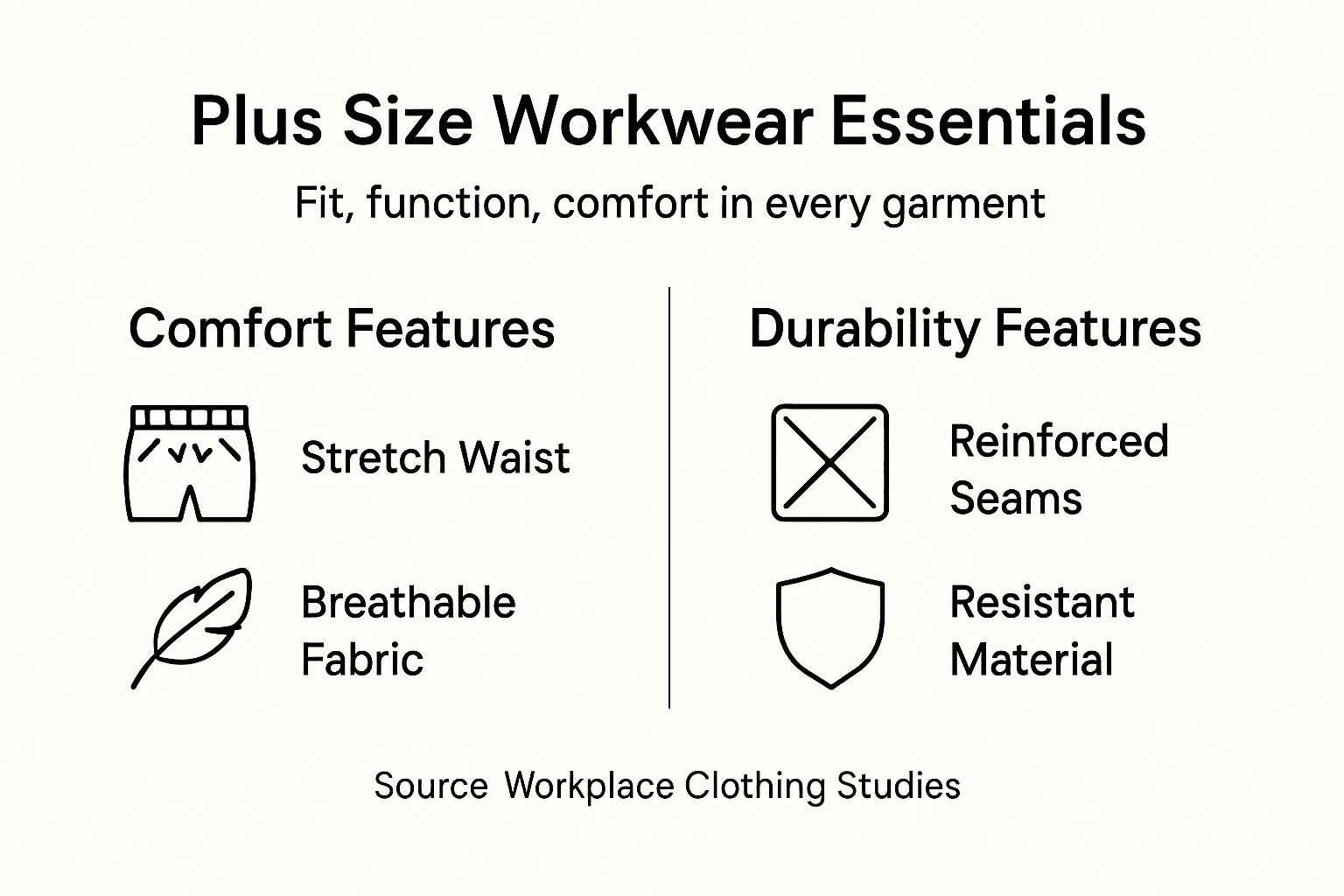
For plus-size women in physically demanding professions, work clothing’s functional design goes far beyond simple fabric selection. Proper fit and functionality are critical elements that directly impact worker comfort, confidence, and performance. Understanding the nuanced requirements of plus-size workwear means recognizing that one-size-fits-all approaches fail to meet the diverse needs of professional women.
The essential features for exceptional fit and functionality include:
-
Anatomical Considerations:
- Proportional sizing across different body zones
- Strategic fabric placement for enhanced mobility
- Expanded range of motion accommodations
- Contoured seaming that follows natural body curves
-
Performance Design Elements:
- Moisture-wicking fabric technologies
- Flexible stretch panels in high-movement areas
- Reinforced stress points for durability
- Lightweight materials that don’t restrict movement
-
Ergonomic Protection Features:
- Adjustable waistbands and closure systems
- Articulated knees and elbows
- Temperature-regulating fabric compositions
- Impact-absorbing padding in critical areas
Workplace ergonomic principles emphasize that clothing should adapt to the worker, not force the worker to adapt to the clothing. This philosophy becomes especially crucial for plus-size women, who require garments that celebrate their body’s unique shape while providing maximum functional support.
The ultimate goal of well-designed workwear is creating a second skin - clothing that moves seamlessly with the body, provides protection, and boosts the wearer’s professional confidence. It’s about engineering garments that understand and respect the complexity of human movement and workplace demands.
Pro tip: Always try on workwear and perform sample movements to ensure complete range of motion before purchasing.
Finding the Right Styles and Sizing Advice
Navigating plus-size workwear requires more than just selecting a larger size - it demands a strategic approach to understanding clothing sizing complexities. Plus-size women in trades and manual labor professions need clothing that combines precise measurements, comfort, and functional design. The right fit isn’t just about looking good - it’s about feeling confident and performing effectively in demanding work environments.
Critical sizing and style selection strategies include:
-
Measurement Techniques:
- Take accurate body measurements at multiple points
- Use flexible measuring tape
- Measure while wearing typical work undergarments
- Record measurements in both inches and centimeters
-
Brand Comparison Tactics:
- Check detailed size charts for each brand
- Compare measurement specifications, not just numeric sizes
- Look for brands specializing in trade and industrial workwear
- Read customer reviews focusing on fit and comfort
-
Fit Evaluation Principles:
- Test range of motion before purchasing
- Ensure no restrictive areas around shoulders, arms, and waist
- Check fabric stretch and recovery properties
- Verify comfort during simulated work movements
Work clothing trends demonstrate that professional attire is increasingly about personal expression and functional comfort. For plus-size women in physically demanding careers, this means selecting garments that are not just larger, but intelligently designed to support their unique body shapes and professional needs.
Successful workwear selection goes beyond aesthetics - it’s about finding clothing that becomes an extension of your professional identity. The right garments should make you feel powerful, comfortable, and ready to tackle any workplace challenge.
Pro tip: Invest in at least one comprehensive professional fitting to understand your true body measurements and ideal clothing proportions.
Care, Maintenance, and Avoiding Common Issues
Professional plus-size workwear requires strategic maintenance to preserve its functionality and appearance. Proper clothing care techniques are essential for extending the lifespan of your work attire, ensuring that your investment continues to perform under demanding workplace conditions. Understanding the nuanced care requirements for specialized workwear can significantly reduce wear and tear while maintaining garment integrity.
Key maintenance strategies include:
-
Washing Protocols:
- Sort garments by color and fabric type
- Use cold water for most work clothing
- Select gentle cycle for delicate materials
- Turn garments inside out before washing
-
Fabric-Specific Care:
- Check manufacturer’s specific care labels
- Use specialized detergents for technical fabrics
- Avoid fabric softeners that degrade performance materials
- Air dry performance workwear when possible
-
Repair and Prevention:
- Inspect garments regularly for stress points
- Reinforce high-wear areas before significant damage occurs
- Keep basic sewing kit for emergency repairs
- Replace garments showing substantial structural weakness
Eco-friendly clothing maintenance goes beyond simple cleaning - it’s about preserving fabric performance while minimizing environmental impact. For plus-size women in physically demanding professions, this means selecting care methods that protect both the garment’s functionality and the wearer’s comfort.
Maintaining work clothing isn’t just about appearance - it’s a critical investment in your professional performance and personal confidence. Each careful maintenance step extends not just the garment’s life, but your ability to work comfortably and effectively.
To help you preserve plus-size workwear, here’s a comparison of maintenance approaches:
| Maintenance Approach | Impact on Garment | Environmental Benefit | Time Commitment |
|---|---|---|---|
| Gentle washing | Reduces fabric stress | Low water usage | Minimal |
| Air drying | Maintains material shape | No energy consumption | Moderate |
| Early repairs | Prevents major damage | Minimizes waste | Quick interventions |
Pro tip: Create a dedicated wash routine for your work clothes, separating them from casual clothing to prevent unnecessary wear and potential cross-contamination.
Discover Plus-Size Workwear That Combines Style, Comfort, and Durability
Finding work clothes that truly fit plus-size women can be a major challenge. The article highlights the need for ergonomic design, proportional sizing, and high-performance fabrics that move with your body and provide lasting protection. At the same time, feeling confident and comfortable in your workwear is essential for productivity and well-being on the job. That is why you deserve apparel designed to meet these exact needs without compromise.
Explore our selection of Female Hoodie Sweatshirts – WorkWear Comfort made specifically to offer flexible fit, durable materials, and style that makes a statement. Whether you need garments with protective UPF 50+ features like our UPF 50+ Sun Protection Hoodie - WorkWear Comfort or versatile options from our full All Hooded Sweatshirts - WorkWear Comfort collection, you will find clothing tailored for strength, comfort, and the realities of physically demanding professions.
Take control of your workwear now and experience the confidence that comes from gear built for your body and your work. Visit WorkWearComfort.com to shop plus-size, durable, and functional apparel today. Don’t settle for less when your performance depends on what you wear.
Frequently Asked Questions
What are key features to look for in comfortable plus-size work clothes?
When selecting comfortable plus-size work clothes, look for high-performance fabrics that are moisture-wicking, breathable, and flexible. Ensure ergonomic construction for a full range of motion and consider protection features such as reinforced stress points and temperature regulation.
How can I ensure the fit and functionality of plus-size workwear?
To ensure proper fit and functionality, take accurate body measurements, compare detailed size charts, and test the range of motion in the garments before purchasing. Focus on areas such as shoulders, arms, and waist to avoid restrictive areas.
What maintenance tips can help extend the life of my work clothes?
To extend the life of your work clothes, wash them in cold water on a gentle cycle, air dry when possible, and conduct regular inspections for stress points. Reinforce high-wear areas proactively and repair any damage promptly to prevent further issues.
Why is ergonomic design important for plus-size work clothing?
Ergonomic design is crucial as it allows clothing to adapt to the wearer’s body rather than forcing the body to adapt to the clothing. This promotes comfort, enhances mobility, and reduces physical strain during demanding work activities.
Recommended
- 7 Comfortable Work Outfits for Women in Tough Jobs – WorkWearComfort
- Women’s Trade Clothing: Empowering Durability and Style – WorkWearComfort
- The Essential Guide to Women’s Construction Work Clothes – WorkWearComfort
- 7 Ways Comfy Work Wear Gives Blue-Collar Pros the Edge – WorkWearComfort
- Kobiece sesje biznesowe – elegancja, siła i autentyczność - Coolheads - Fotografia biznesowa
