

Work on a construction site often means facing unpredictable weather, tough physical tasks, and constant safety risks. For American foremen and general contractors, choosing durable, high-visibility jackets isn’t just about style—it is vital protection against cold, rain, and hazards found on United States job sites. This guide highlights how advanced materials, reflective designs, and rugged construction combine to keep you safe, comfortable, and visible while working in demanding environments.
Table of Contents
- Construction Site Jackets Defined And Debunked
- Key Types And Material Differences Explained
- Critical Features For Jobsite Performance
- Safety Standards And Compliance Requirements
- Avoiding Common Mistakes When Selecting Jackets
Key Takeaways
| Point | Details |
|---|---|
| Construction Site Jackets Are Essential | They serve as critical safety equipment that protects workers in hazardous environments. |
| Understanding Performance Classifications Is Key | Workers must be aware of visibility levels and protective capabilities to select the right gear. |
| Material Selection Impacts Safety and Comfort | Choosing the appropriate jacket material is vital for meeting specific job requirements and enhancing worker mobility. |
| Regular Inspections Are Necessary | Workers should consistently check their jackets for any wear or damage to ensure maximum protection and compliance with safety standards. |
Construction Site Jackets Defined and Debunked
Construction site jackets are more than just clothing - they’re critical safety equipment designed to protect workers in hazardous environments. Safety jackets enhance worker protection through strategic design and specialized materials that go far beyond standard outerwear.
These specialized jackets serve multiple essential functions for construction professionals:
- High-Visibility Design: Bright colors and reflective strips prevent workplace accidents
- Environmental Protection: Guard against cold, rain, wind, and potential fire hazards
- Role-Specific Features: Tailored designs for different construction tasks and working conditions
- Durability: Constructed with rugged materials to withstand intense physical work
The evolution of construction jackets reflects an increasing commitment to worker safety. Modern safety jackets incorporate advanced technologies like flame-resistant fabrics, advanced insulation, and ergonomic designs that prioritize both protection and comfort. Safety jackets now offer comprehensive protection beyond simple visibility - they’re engineered to support workers in challenging environments.
Performance Classifications matter significantly in construction site jackets. Safety standards typically categorize jackets based on visibility levels, weather resistance, and protective capabilities. Workers must understand these classifications to select appropriate gear for their specific job requirements.
Construction site jackets are not fashion statements - they’re life-saving equipment that directly impact worker safety and operational efficiency.
Pro tip: Always inspect your safety jacket before each shift, checking for tears, compromised reflective strips, or material degradation that could reduce protective capabilities.
Key Types and Material Differences Explained
Construction site jackets represent a complex ecosystem of specialized protective gear, with multiple material types designed for specific work environments. Understanding these variations is crucial for selecting the right jacket that balances safety, comfort, and functionality.
The primary jacket types for construction professionals include:
- Flannel Jackets: Ideal for mild temperatures, offering basic warmth and comfort
- Denim Work Jackets: Providing durability and moderate protection in standard conditions
- Insulated Jackets: Essential for cold climate work, with thermal protection layers
- Waterproof Jackets: Designed to repel moisture in wet working environments
- High-Visibility Jackets: Critical for safety in low-light or high-traffic areas
- Flame-Resistant Jackets: Specialized protection for high-risk work zones
Material selection plays a pivotal role in jacket performance. Construction safety jackets use specialized fabrics that prioritize worker protection through strategic material choices. Durable, tear-resistant materials with advanced weatherproofing technologies ensure longevity and consistent performance across challenging work environments.
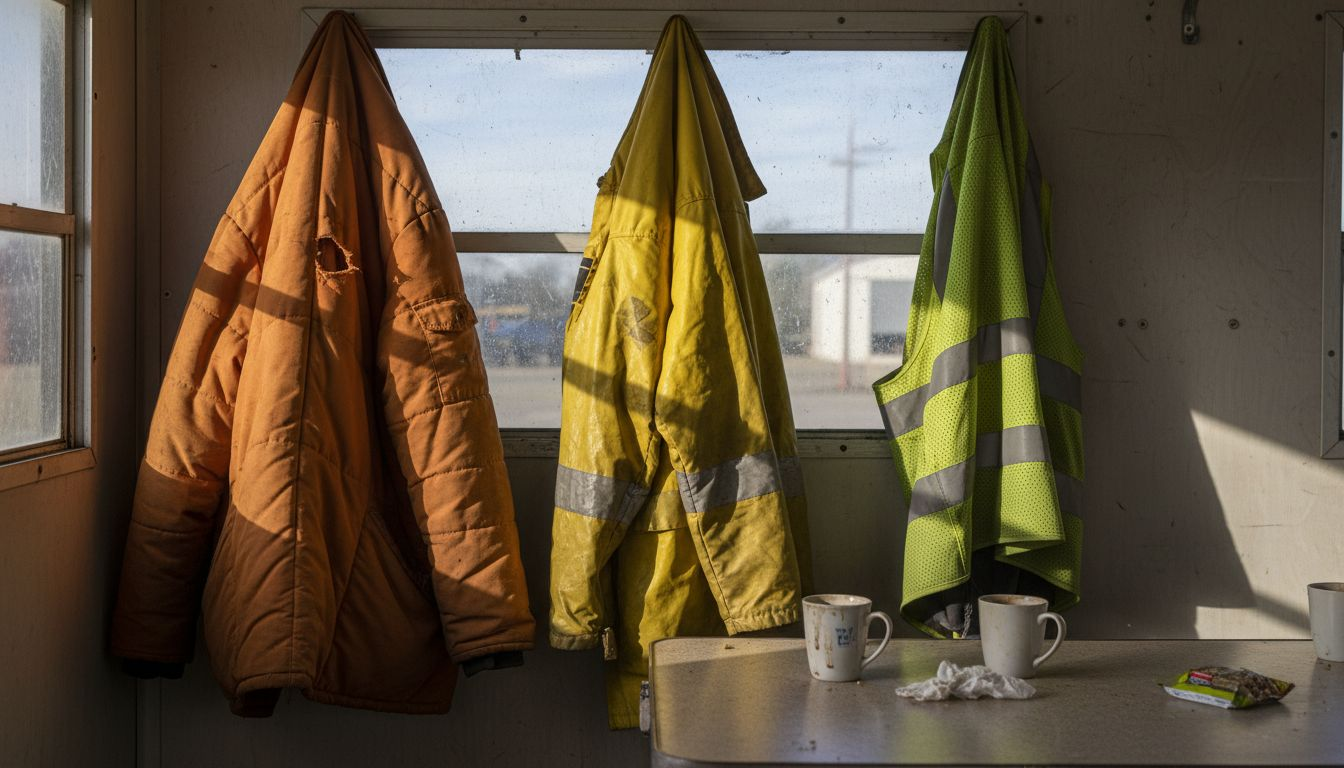
Modern construction jackets increasingly incorporate multi-functional design principles. Manufacturers now integrate features like multiple tool pockets, reinforced stress points, and adjustable ventilation systems to enhance worker comfort and productivity. These innovations transform safety jackets from simple protective gear into sophisticated workplace equipment.
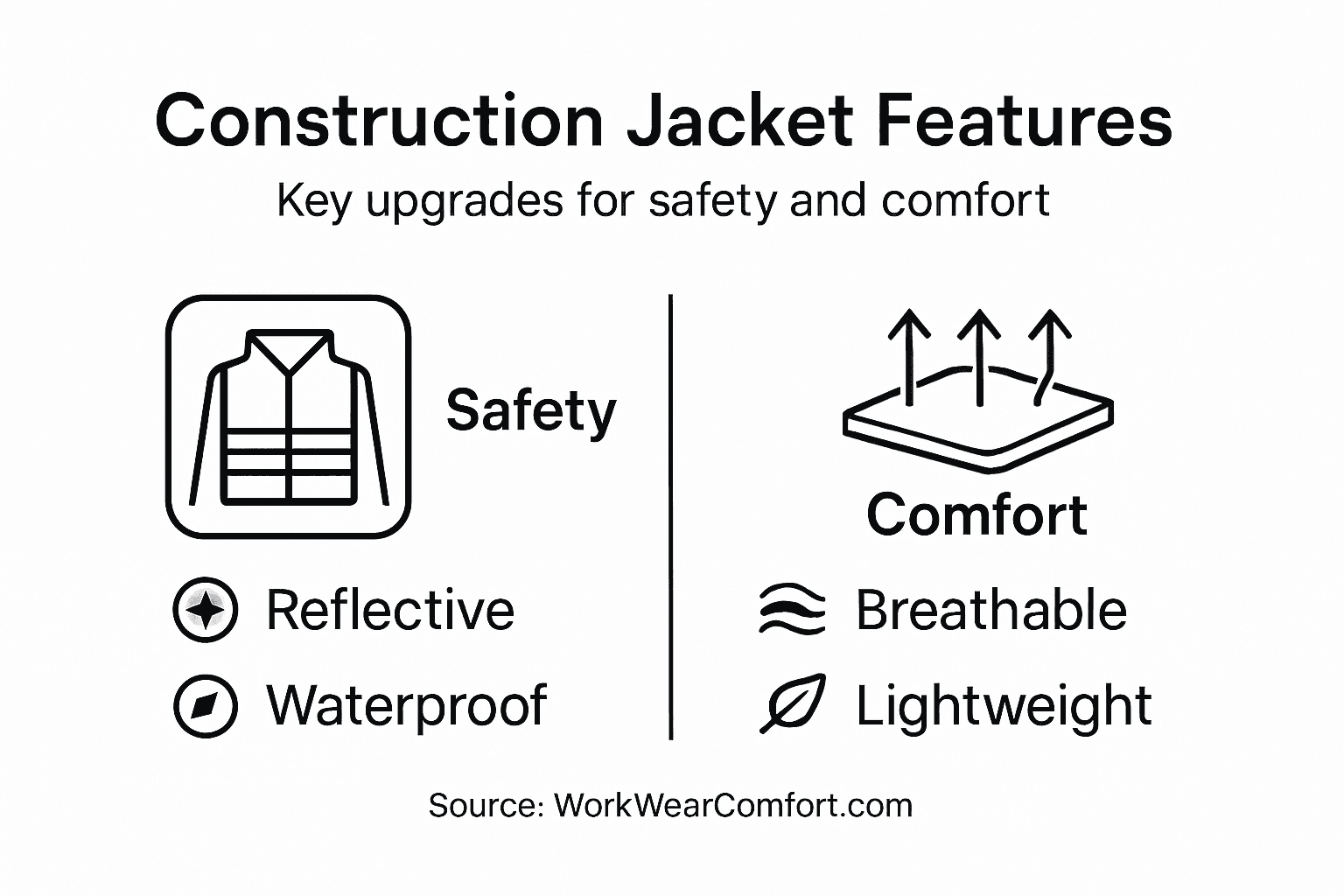
Here’s how common construction site jacket types compare across key performance areas:
| Jacket Type | Best Use Case | Material Strength | Unique Advantage |
|---|---|---|---|
| Flannel Jacket | Mild weather | Moderate durability | Comfortable for layering |
| Denim Work Jacket | General sites | High abrasion resistance | Versatile everyday protection |
| Insulated Jacket | Cold environments | Thick insulation | Superior thermal retention |
| Waterproof Jacket | Rainy conditions | Full waterproofing | Keeps worker dry |
| High-Visibility Jacket | Traffic/excavation | Enhanced visibility | Reduces accident risk |
| Flame-Resistant Jacket | Dangerous worksites | Heat/fire resistance | Limits burn injuries |
Not all construction jackets are created equal - the right material can mean the difference between comfort and compromise.
Pro tip: Always match your jacket material to your specific work environment, considering temperature, potential hazards, and required mobility.
Critical Features for Jobsite Performance
Construction professionals demand jackets that go beyond basic protection, requiring gear that performs under extreme conditions. Hi-visibility jackets represent the pinnacle of safety engineering, integrating advanced technologies to protect workers in challenging environments.
Key performance features for construction site jackets include:
- 360-Degree Visibility: Fluorescent colors and reflective tape ensuring worker detection
- Abrasion Resistance: Polyester fabrics that withstand intense physical work
- Weather Protection: Waterproof coatings and breathable membranes
- Mobility Design: Ergonomic cuts allowing full range of motion
- Durability: Reinforced stress points and sealed seams
- Functional Storage: Multiple tool pockets for convenient equipment access
Modern construction jackets are engineered as comprehensive workplace systems. Beyond basic protection, they now incorporate advanced materials that regulate temperature, manage moisture, and provide strategic protection against environmental hazards. Manufacturers continuously refine jacket designs to balance safety, comfort, and functionality.
Standardization plays a crucial role in jacket performance. Industry standards like ANSI/ISEA 107 provide clear guidelines for visibility, material quality, and protective capabilities. These regulations ensure that construction jackets meet rigorous safety benchmarks, giving workers confidence in their protective equipment.
A high-performance construction jacket is not a luxury - it’s a critical investment in worker safety and productivity.
Pro tip: Inspect your jacket’s reflective elements and protective features regularly, replacing gear that shows signs of wear or damage.
Safety Standards and Compliance Requirements
Construction site safety is a critical concern, with precise regulatory frameworks governing protective equipment. OSHA standards establish comprehensive guidelines for personal protective equipment (PPE) that directly impact jacket selection and workplace safety protocols.
Key compliance requirements include:
- PPE Fit and Design: Mandatory proper fitting for maximum protection
- Visibility Standards: ANSI/ISEA 107 classification requirements
- Material Performance: Specific durability and protective material specifications
- Risk Environment Classification: Different safety standards for varied work zones
- Employer Responsibility: Legal obligations for providing appropriate protective gear
Visibility Classification represents a crucial element of safety jacket compliance. Safety jackets are categorized into distinct visibility classes based on their fluorescent material coverage and reflective strip configurations. These classes - ranging from Class 1 to Class 3 - determine the jacket’s suitability for specific work environments, from low-risk parking lot scenarios to high-traffic highway construction sites.
Regulatory compliance extends beyond simple visual standards. Employers must ensure that construction jackets meet specific performance criteria under 29 CFR 1926 standards, which mandate comprehensive protection against physical hazards. This includes evaluating jacket materials for tear resistance, thermal protection, and overall structural integrity.
For quick reference, here are visibility classes and their recommended worksite scenarios:
| Visibility Class | Coverage Requirements | Ideal Environment | Example Role |
|---|---|---|---|
| Class 1 | Minimal reflective areas | Parking lots, low traffic | Delivery personnel |
| Class 2 | Moderate fluorescent & tape | Roadside, medium traffic | Surveyors, utility workers |
| Class 3 | Maximum visibility | Highway, heavy machinery | Flaggers, highway workers |
Safety standards are not bureaucratic checklist items - they are life-saving protocols designed to protect workers in high-risk environments.
Pro tip: Regularly review your safety jacket against current OSHA standards, replacing equipment that no longer meets minimum compliance requirements.
Avoiding Common Mistakes When Selecting Jackets
Choosing the right construction site jacket requires more than just picking a stylish option - it demands strategic decision-making. Common safety apparel selection errors can compromise worker protection, making a careful approach critical for workplace safety.
Frequent mistakes construction professionals make include:
- Ignoring Job-Specific Requirements: Selecting jackets without assessing unique work environment hazards
- Overlooking Proper Fit: Choosing jackets that restrict movement or don’t accommodate additional PPE
- Neglecting Material Quality: Failing to verify durability and safety certification standards
- Disregarding Comfort Features: Prioritizing appearance over long-shift wearability
- Skipping Mobility Assessments: Not testing jacket’s range of motion capabilities
Weather Resilience represents another critical factor often misunderstood by workers. Jacket selection demands comprehensive performance evaluation, including waterproofing, thermal protection, and adaptability to changing environmental conditions. Professionals must consider not just immediate comfort, but long-term protection and functionality.
Successful jacket selection requires a holistic approach that balances safety standards, personal comfort, and job-specific demands. This means conducting thorough hazard assessments, gathering worker input, and prioritizing jackets with adjustable features that accommodate diverse working conditions.
Cutting corners on jacket selection isn’t just a fashion mistake - it’s a potential safety risk.
Pro tip: Always conduct a comprehensive mobility test before purchasing, ensuring the jacket allows full range of motion while wearing additional personal protective equipment.
Equip Yourself With Durable and Functional Workwear Built for Construction Challenges
Choosing the right construction site jacket means prioritizing safety, comfort, and durability to meet demanding jobsite conditions. The article highlights critical features such as high-visibility materials, weather protection, and ergonomic design that keep workers safe and productive. At WorkWearComfort.com, we understand these challenges and offer apparel designed with blue-collar workers in mind. While our focus is on durable, stylish clothing including the Heavy Equipment Operator Hoodie Sweatshirt - WorkWear Comfort, our collection reflects the toughness and resilience needed on any site.
Ready to upgrade your workwear with gear that supports your hard work? Visit WorkWearComfort.com today to explore apparel engineered for strength, comfort, and style. Protect yourself from the elements while expressing the blue-collar spirit with our reliable selections. Act now to experience workwear that keeps pace with your demanding construction environment.
Frequently Asked Questions
What are construction site jackets designed for?
Construction site jackets are specialized safety gear designed to protect workers in hazardous environments, offering features like high visibility, weather protection, and durability to enhance safety and comfort while on the job.
What are the different types of construction site jackets?
Common types of construction site jackets include flannel jackets, denim work jackets, insulated jackets, waterproof jackets, high-visibility jackets, and flame-resistant jackets, each tailored for specific work conditions and hazards.
How do I choose the right construction site jacket?
When choosing a construction site jacket, consider factors such as your specific work environment, required visibility, weather conditions, material durability, and comfort features to ensure optimal protection and functionality.
What are safety standards for construction site jackets?
Construction site jackets must meet safety standards such as ANSI/ISEA 107 for visibility and OSHA regulations for personal protective equipment, ensuring they provide adequate protection and safety features required for different job sites.
Recommended
- Construction Safety Wear – Keys to Protection on Site – WorkWearComfort
- Blue Collar Worker Jacket: Durability and Sun Protection – WorkWearComfort
- Work Wear Construction – Why Quality Matters Most – WorkWearComfort
- Understanding Safety Regulations in Construction – WorkWearComfort
- Tech T Shirts Style Guide (2025): Fashion Trends and Design Ideas – Code Culture
