

Long hours on icy job sites or out in the fields mean your jacket needs to do more than just keep you warm. Midwest winters bring cold winds, slippery surfaces, and unpredictable weather, making the right winter jacket a critical part of your workday. This guide breaks down how to pick a jacket that offers the perfect combination of insulation, durability, and weather resistance so you stay comfortable and protected through any shift.
Table of Contents
- Step 1: Assess Your Winter Work Needs
- Step 2: Select The Right Mens Winter Work Jacket
- Step 3: Check Fit And Layering Compatibility
- Step 4: Test Weather Resistance And Durability
- Step 5: Maintain And Store Jackets Properly
Quick Summary
| Key Point | Explanation |
|---|---|
| 1. Assess your winter work needs | Understand job-specific factors like temperature, mobility, and hazards to select the right jacket. |
| 2. Choose jackets based on job demands | Prioritize features like insulation, mobility, and weather resistance suitable for your specific work environment. |
| 3. Ensure proper fit and layering capability | The jacket should allow for base layer use while ensuring comfort and freedom of movement. |
| 4. Test weather resistance and durability | Evaluate the jacket’s ability to withstand wind and moisture to ensure reliable protection in harsh conditions. |
| 5. Maintain and store jackets properly | Regular cleaning and appropriate storage help preserve jacket functionality and longevity for ongoing safety. |
Step 1: Assess Your Winter Work Needs
Choosing the right winter work jacket starts with understanding the unique environmental challenges and physical demands of your specific outdoor job. Every work environment presents different requirements, and selecting the wrong clothing can compromise both your safety and productivity.
To effectively assess your winter work needs, consider these critical factors:
- Temperature range you typically encounter
- Physical intensity of your work tasks
- Specific winter work hazards like slippery surfaces or wind exposure
- Duration of outdoor work per day
- Level of mobility required for your job
Professional tradesmen working in construction, farming, or maintenance need jackets that provide more than just warmth. Your winter work jacket must balance insulation, moisture management, and freedom of movement. Understanding the environmental risks is crucial - cold stress conditions like hypothermia and frostbite are real dangers for outdoor workers.
Here’s a side-by-side look at winter work jacket needs by profession:
| Profession | Typical Work Conditions | Jacket Priority Feature | Common Weather Risk |
|---|---|---|---|
| Construction Worker | Outdoor sites, heavy labor | High durability, mobility | Wind, falling temps |
| Farmer | Long hours, exposure to dirt | Easy cleaning, insulation | Moisture, mud, cold stress |
| Maintenance Worker | Frequent movement, machinery | Flexibility, reinforcement | Slippery surfaces, wind |
Proper winter work gear isn’t just about comfort - it’s about maintaining your safety and performance in challenging conditions.
Be prepared to layer strategically, selecting a jacket that allows you to add or remove insulation as your activity level changes throughout the workday. Look for materials that wick moisture, provide wind resistance, and offer durability for your specific work environment.
Pro tip: Always test your winter work jacket’s mobility by performing sample work movements before committing to a purchase.
Step 2: Select the Right Mens Winter Work Jacket
Picking the perfect winter work jacket requires careful consideration of your specific job demands and environmental challenges. The right jacket isn’t just about staying warm - it’s about maintaining performance and safety in harsh working conditions.
When selecting your winter work jacket, focus on these critical features:
- Insulation type appropriate for your work environment
- Waterproofing and durability for long-lasting protection
- Reinforcement in high-wear areas
- Mobility and comfort for active work tasks
- Adjustable features like hoods and cuffs
Professional tradesmen need jackets that offer more than basic warmth. Look for breathable waterproof materials that provide thermal protection without restricting movement. Lightweight jackets work well for milder conditions, while heavily insulated options are crucial for extreme cold environments.
The best winter work jacket is the one that adapts to your specific job requirements and keeps you comfortable throughout your workday.
Consider the physical intensity of your work when choosing insulation. Construction workers, farmers, and maintenance professionals need different jacket characteristics based on their daily activities. Pay attention to material weight, wind resistance, and moisture-wicking capabilities to ensure maximum comfort and protection.
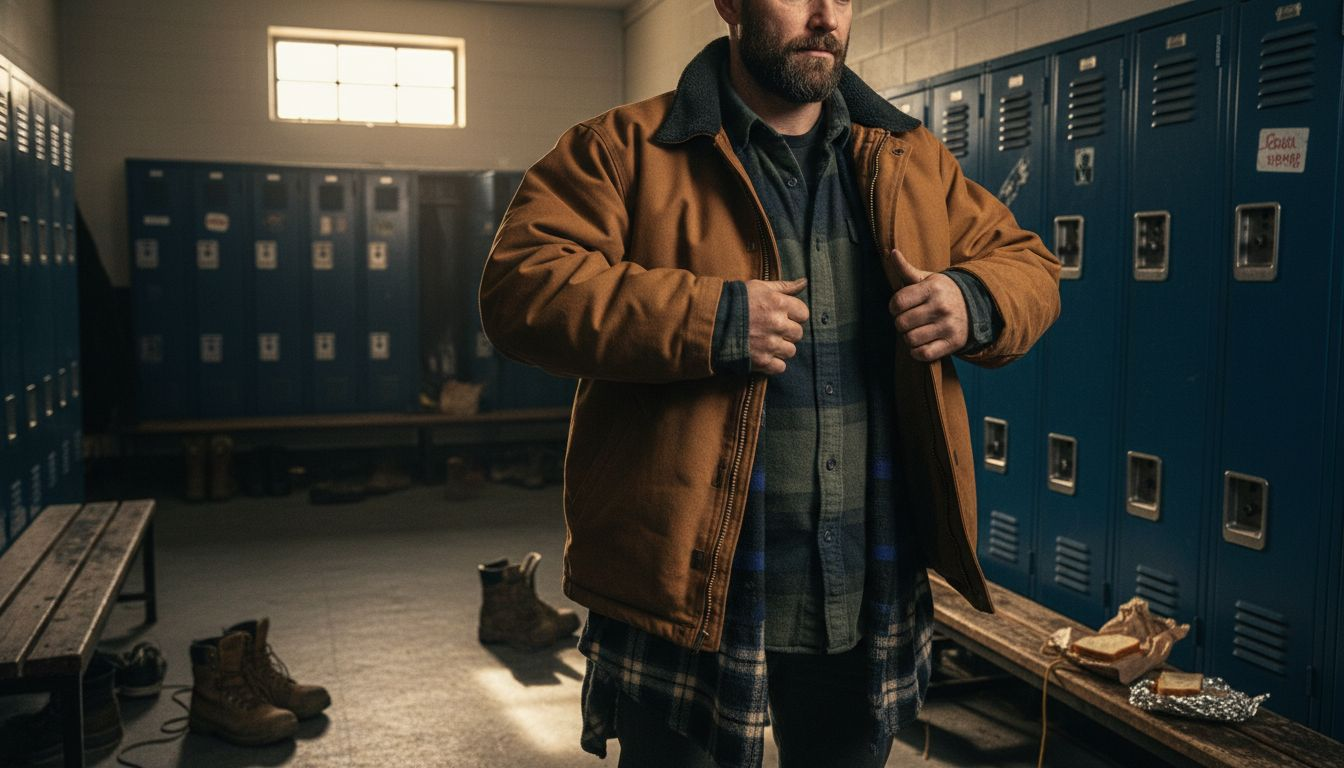
Pro tip: Always try on your work jacket while wearing your typical work layers to ensure proper fit and range of motion.
Step 3: Check Fit and Layering Compatibility
Ensuring your winter work jacket provides the right fit and flexibility is crucial for maintaining comfort and mobility during long, cold workdays. A jacket that restricts movement or fails to accommodate proper layering can compromise both your performance and protection.
When checking fit and layering compatibility, focus on these key aspects:
- Room for base layers without creating bulk
- Proper layering strategies for temperature regulation
- Unrestricted arm and shoulder movement
- Adjustable features like cinch waists and cuff closures
- Ability to add or remove layers easily
Professional tradesmen need jackets that adapt to changing work conditions. Your jacket should comfortably accommodate moisture-wicking base layers, insulating mid-layers, and protective outer shells without feeling tight or restrictive. This means selecting a size that allows for freedom of movement while providing enough space for strategic layering.
A well-fitted winter work jacket is your first line of defense against cold and discomfort on the job.
Consider how different layers interact with your jacket. Construction workers, farmers, and maintenance professionals require jackets that maintain flexibility during physical tasks. Test your jacket’s range of motion by mimicking work movements - reaching, bending, and lifting - to ensure your clothing won’t limit your ability to work effectively.
Pro tip: When trying on your jacket, wear the exact layers you typically use at work to guarantee a perfect, functional fit.
Step 4: Test Weather Resistance and Durability
Ensuring your winter work jacket can withstand harsh outdoor conditions is critical for maintaining comfort, safety, and performance during challenging work environments. A truly dependable jacket goes beyond basic warmth to provide comprehensive protection against wind, moisture, and physical wear.
When testing weather resistance and durability, evaluate these critical aspects:
- Waterproof material quality
- Comprehensive weather protection techniques for harsh conditions
- Reinforced stitching in high-stress areas
- Wind resistance capabilities
- Abrasion resistance on shoulders and elbows
Professional tradesmen need jackets that can handle real-world challenges. Look for features like watertight zippers, storm flaps, and robust fabric that can resist punctures and tears. Your jacket should maintain its protective properties even after repeated use, washing, and exposure to tough work environments.
A jacket’s true value is measured by its ability to protect you when conditions are at their worst.
Construction workers, farmers, and maintenance professionals require gear that performs consistently under extreme conditions. Test your jacket’s weather resistance by simulating work movements in challenging environments. Check how well the jacket sheds water, blocks wind, and maintains insulation when wet.
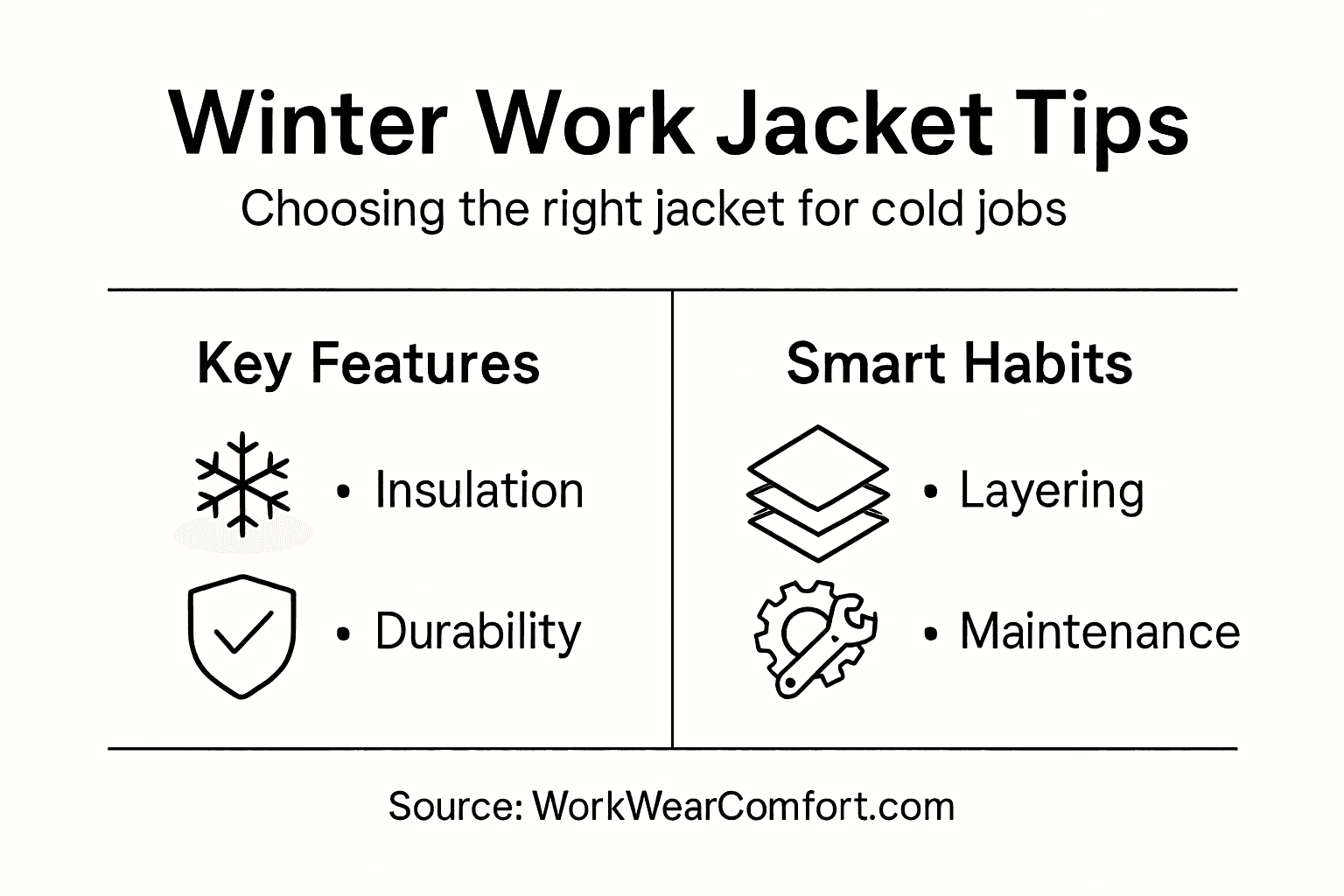
Pro tip: Perform a quick water-resistance test by lightly spraying the jacket with a garden hose to verify its protective capabilities.
Step 5: Maintain and Store Jackets Properly
Preserving the functionality and longevity of your winter work jacket requires careful maintenance and strategic storage. Professional tradesmen invest significant money in quality workwear, making proper care essential to protect that investment and ensure continued performance in harsh conditions.
Follow these critical maintenance and storage practices:
- Clean jackets according to manufacturer instructions
- Prevent material degradation through proper care
- Inspect for damage regularly
- Use appropriate storage techniques
- Maintain waterproof and insulation properties
Careful cleaning is crucial for maintaining your jacket’s protective capabilities. Remove dirt and sweat build-up that can compromise insulation and water-resistant treatments. Always follow the specific washing instructions for your jacket to avoid damaging specialized fabrics or protective coatings.
Proper jacket maintenance is not just about appearance - it’s about preserving your safety and comfort in challenging work environments.
Storage plays a critical role in jacket preservation. Choose a cool, dry location away from direct sunlight, using wide hangers that maintain the jacket’s shape and prevent insulation compression. Avoid damp areas that can promote mold growth and material breakdown. Hang your jacket loosely to allow air circulation and prevent permanent creasing.
This table highlights jacket care actions and their main benefits:
| Care Action | Purpose | Benefit for Tradesmen |
|---|---|---|
| Clean regularly | Remove dirt and sweat | Preserves insulation and comfort |
| Store properly | Prevent material damage | Maintains jacket longevity |
| Inspect for wear | Find early signs of damage | Enhances protection and safety |
Pro tip: Invest in a breathable garment bag for off-season storage to protect your jacket from dust and potential moisture damage.
Gear Up for Winter Work with Confidence and Comfort
Finding the right mens winter work jacket can be challenging when you need warmth, durability, and mobility all in one. This article highlights the importance of choosing jackets that manage insulation, weather resistance, and flexibility to protect you during tough conditions on construction sites or outdoor jobs. At WorkWearComfort.com we understand these crucial needs and offer apparel that reflects your hardworking lifestyle.
For dependable layering options and durable sweatshirts designed specifically for blue-collar professionals, explore our Blue-Collar Working Man Sweatshirt Hoodies – WorkWearComfort.
Don’t compromise on safety or comfort this winter. Visit WorkWearComfort.com today to find rugged, functional jackets and hoodies that match the demands of your trade. Equip yourself with gear made for long days outside and take on every work challenge with confidence.
Frequently Asked Questions
How do I assess my winter work jacket needs?
To assess your winter work jacket needs, consider factors like the temperature range, the physical intensity of your job tasks, and specific winter hazards you may encounter. Make a list of your daily work conditions and identify which features your jacket must have to keep you safe and productive in the cold.
What features should I look for in a men’s winter work jacket?
Look for features such as appropriate insulation type, waterproofing, durability, and flexibility. Prioritize jackets that allow comfortable movement while offering protection against moisture and wind, tailored to your specific work environment.
How do I ensure my winter work jacket fits properly?
To ensure a good fit, try on your jacket with your typical work layers and assess the range of motion. The jacket should allow room for base layers without being too tight, and provide unrestricted arm and shoulder movement for maximum comfort on the job.
What steps can I take to maintain my winter work jacket?
Maintain your winter work jacket by cleaning it according to the manufacturer’s instructions, inspecting it for damage regularly, and storing it properly in a cool, dry place. Establish a routine to check for wear and tear, and address any issues immediately to extend the life of your jacket.
How can I test the weather resistance of my winter work jacket?
Test the weather resistance of your jacket by performing a water-resistance test, like lightly spraying it with a garden hose to observe how well it repels water. If the fabric beads up instead of soaking through, your jacket is likely well-suited for harsh conditions.
What should I consider when layering with my winter work jacket?
When layering, choose moisture-wicking base layers and insulating mid-layers that fit comfortably under your jacket without adding bulk. Ensure your jacket has adjustable features, like cinched waists and cuffs, to maintain warmth and flexibility while working.
Recommended
- Choose the Best Winter Work Jacket for Outdoor Jobs – WorkWearComfort
- Warm Work Jackets for Men: Durability Meets Comfort – WorkWearComfort
- Complete Guide to Warm Workwear Essentials – WorkWearComfort
- Warm Work Jackets: Comfort, Attitude, Grit – WorkWearComfort
- 7 Essentials for the Ultimate Streetwear Fashion Checklist – BlackWisp.Studio
