

Long days on an American construction site mean your workwear has to do more than just look good—it needs to stand up to tough conditions and keep you protected. Blue-collar jobs cover everything from pouring concrete to rewiring buildings, so reliable clothing is essential for safety and comfort. If you want gear that works as hard as you do, focus on durable and functional workwear designed for demanding environments and real American trades.
Table of Contents
- Defining Blue Collar Work In America
- Major Types And Industry Sectors
- Key Traits Of Blue Collar Jobs
- Legal Rights Under U.S. Labor Laws
- Risks, Pay Structure, And Workplace Safety
- Comparing Blue Collar And White Collar Roles
Key Takeaways
| Point | Details |
|---|---|
| Blue-Collar Work Definition | Blue-collar jobs involve manual labor or skilled trades crucial for American infrastructure, focusing on hands-on skills and tangible results. |
| Industry Sectors | Major sectors for blue-collar workers include construction, manufacturing, transportation, and utilities, each offering diverse career opportunities and specialized skills. |
| Legal Rights | Blue-collar workers are protected under laws like the Fair Labor Standards Act, ensuring fair wages, overtime pay, and safe working conditions. |
| Safety and Risks | Blue-collar work carries occupational risks, making safety training and protective equipment essential for injury prevention and compliance with regulations. |
Defining Blue Collar Work in America
Blue-collar work refers to manual labor or skilled trades that form the backbone of American infrastructure and production. The term itself comes from the traditional denim and chambray shirts historically worn by workers in these fields. When people talk about blue-collar jobs, they’re referring to occupations where physical work, hands-on skills, and technical expertise matter more than a suit and tie. According to the Bureau of Labor Statistics, blue-collar workers include carpenters, electricians, plumbers, construction workers, welders, and countless others who build, maintain, and repair the physical world around us.
The scope of blue-collar work in America is genuinely broad. You’ll find blue-collar workers in construction sites hammering nails and operating heavy equipment, in manufacturing plants assembling products, in mines extracting resources, in warehouses shipping goods, in custodial roles maintaining buildings, and in agricultural settings growing food that feeds the nation. These roles typically require less formal education than white-collar office jobs, though many demand years of apprenticeships, trade certifications, and on-the-job training. A skilled electrician or HVAC technician learns their craft through hands-on experience and specialized training programs, not necessarily a four-year college degree. The distinction between blue-collar and white-collar work has historically been socioeconomic as well. Blue-collar workers were traditionally viewed as working class, though the gap between these categories has blurred considerably in modern labor markets where skilled trades often pay competitive wages and offer strong job stability.
What makes blue-collar work fundamentally different is the direct connection between effort and tangible results. When you’re hanging drywall, pouring concrete, or rewiring an electrical system, you can literally see what you’ve accomplished at the end of the day. This type of work demands reliability, precision, attention to detail, and the physical stamina to perform in all weather conditions and challenging environments. Construction workers, for instance, need to understand safety protocols, read blueprints, operate specialized equipment, and troubleshoot problems in real time. This isn’t unskilled labor—it requires specialized knowledge and consistent performance.
Pro tip: If you’re entering or already in the construction trades, invest in quality workwear that protects you from the elements and lasts through long job sites—durable clothing designed for blue-collar work shows respect for your profession and keeps you safe while you’re building America.
Major Types and Industry Sectors
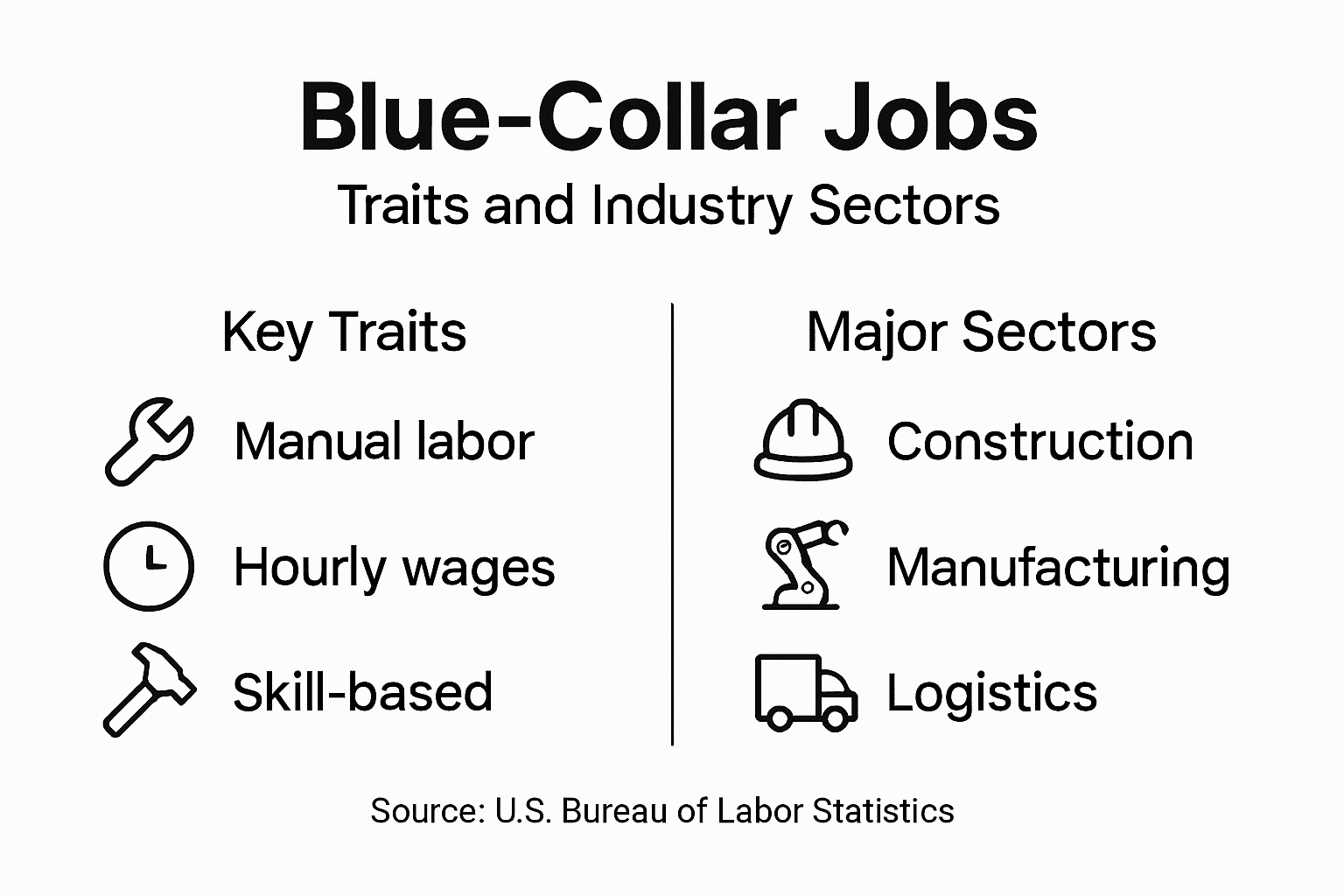
Blue-collar work spans multiple industries, each with its own demands and specializations. The major sectors where you’ll find blue-collar workers include construction, manufacturing, mining, transportation, utilities, and agriculture. These industries form the economic foundation that keeps America running. Construction workers build homes, office buildings, and infrastructure. Manufacturing workers produce everything from automobiles to consumer goods. Transportation workers move goods across the country. Maintenance and installation technicians keep buildings, equipment, and systems functioning properly. Understanding these different sectors helps you recognize the breadth of blue-collar careers available and the variety of skills required across the economy.
Within each sector, there are dozens of specialized trades and positions. In construction, you have electricians, plumbers, carpenters, heavy equipment operators, and project managers working together on job sites. Manufacturing employs machine operators, assembly line workers, quality inspectors, and maintenance technicians in facilities across the country. The goods-producing industries including natural resources, mining, and construction are where most blue-collar employment concentrates. Agricultural work includes crop production, livestock management, and food processing. Transportation covers truck drivers, warehouse workers, and logistics coordinators moving products from factories to stores. Utilities employ workers who maintain power grids, water systems, and natural gas infrastructure. Each of these fields demands different technical skills, physical capabilities, and certifications. A skilled welder has entirely different training than a commercial electrician, yet both are essential blue-collar professionals earning solid wages.
What ties all these sectors together is the hands-on nature of the work. Unlike office-based roles where productivity sometimes feels abstract, blue-collar workers in these industries produce measurable results. They create physical products, maintain critical infrastructure, or provide direct services that people depend on daily. The job security in these sectors tends to be strong because the work cannot be outsourced or automated away as easily as some other professions. There will always be construction projects that need skilled crews. Factories will always require experienced machine operators. Pipes will always break and need plumbers to fix them. This reality makes blue-collar careers in these major sectors attractive for workers seeking stable employment with genuine earning potential.
Pro tip: Research which industry sector aligns with your strengths and interests before pursuing training or apprenticeships, as each sector offers different work environments, physical demands, and long-term career growth opportunities.
Here’s a quick reference comparing major blue-collar industry sectors:
| Industry Sector | Common Roles | Typical Work Environment | Required Training |
|---|---|---|---|
| Construction | Electricians, Carpenters | Outdoor job sites, indoors | Apprenticeships, licenses |
| Manufacturing | Machine Operators | Factories, plants | Technical courses, safety |
| Transportation | Truck Drivers, Warehouse | On the road, warehouses | CDL, on-the-job training |
| Utilities | Lineworkers, Technicians | Outdoors, installations | Certifications, safety |
| Agriculture | Farm Workers, Operators | Fields, processing plants | Hands-on, seasonal skills |
Key Traits of Blue Collar Jobs
Blue-collar jobs share distinctive characteristics that set them apart from office-based work. The most obvious trait is the physical and hands-on nature of the work itself. You’re not sitting at a desk typing emails or attending meetings. Instead, you’re actively building, maintaining, repairing, or operating equipment. Whether you’re framing walls, welding steel, fixing machinery, or installing electrical systems, the work demands direct engagement with materials and tools. Blue-collar work environments range from construction sites and factories to utility installations and agricultural settings, and these settings often expose workers to weather, dirt, noise, and potentially hazardous conditions. The physical demands mean you need strength, endurance, and the ability to work safely in challenging environments for extended hours.
Another defining trait is the hourly wage structure and tangible output of blue-collar jobs. Most blue-collar positions pay you for hours worked rather than a fixed salary, and your compensation directly reflects the time and effort you invest. You can see and measure what you’ve accomplished. Built that deck? It’s there. Fixed that electrical system? It’s working. This measurable productivity differs sharply from many white-collar roles where output feels abstract. Blue-collar jobs typically require less formal education than professional careers, though this absolutely does not mean they’re unskilled. Many blue-collar trades demand extensive apprenticeships, certifications, and specialized training. An electrician, plumber, or heavy equipment operator possesses genuine technical expertise developed through years of hands-on practice and study. The path to mastery in blue-collar trades often involves apprenticeship programs where experienced workers train newcomers directly on the job site.
The work attire and tools represent another key trait. Blue-collar workers wear practical clothing designed for the job, not business casual. You need durable work pants, steel-toed boots, hard hats, safety vests, gloves, and weather-appropriate layers. Your tools are essential to your livelihood, whether they’re hand tools like wrenches and hammers or heavy equipment like excavators and forklifts. The investment in quality workwear and equipment is significant because your safety and efficiency depend on it. Blue-collar workers also commonly pursue specialized certifications and apprenticeships rather than four-year degrees, though many combine trade training with ongoing professional development to advance their careers and expertise.

Pro tip: Invest in high-quality workwear that matches the specific demands of your trade since durability, protection, and comfort directly impact your safety and productivity on every job site.
Legal Rights Under U.S. Labor Laws
As a blue-collar worker in America, you have specific legal protections that apply to your employment regardless of the industry or company size. The Fair Labor Standards Act (FLSA) is one of the most important protections you have. This federal law sets the minimum wage you must be paid, establishes overtime pay requirements (typically time and a half for hours over 40 per week), and includes child labor protections. These protections apply whether you work in construction, manufacturing, mining, or any other blue-collar field. The FLSA means your employer cannot simply pay you whatever they want or force you to work unlimited hours without overtime compensation. If you’re working extra hours on a job site or in a factory, those hours over 40 per week must be compensated at the overtime rate. This applies regardless of whether you’re classified as hourly or salaried, and it applies regardless of your immigration status.
Beyond wage protections, federal labor laws cover workplace safety, discrimination, and family leave. The Occupational Safety and Health Administration (OSHA) ensures that your workplace meets safety standards to protect you from hazards. Your employer must provide safety equipment, proper training, and a workplace free from recognized hazards. The Family and Medical Leave Act (FMLA) allows you to take unpaid, job-protected leave for serious health conditions, family medical situations, or other qualifying reasons without fear of losing your job. Anti-discrimination laws protect you from being treated unfairly based on race, color, religion, sex, or national origin. If you experience discrimination or retaliation for reporting unsafe conditions, you have legal recourse. Additionally, blue-collar workers have the right to join labor unions and engage in collective bargaining to negotiate wages, benefits, and working conditions.
Understanding your rights is critical because many blue-collar workers don’t realize they’re being shortchanged on overtime pay, denied required breaks, or working in unsafe conditions. If you believe your employer is violating labor laws, you can file a complaint with the Department of Labor’s Wage and Hour Division without fear of retaliation. Keep records of your hours worked, any safety incidents, and communications with management. Know that these protections exist specifically because blue-collar workers fought hard for them over decades. Your right to fair pay, safe working conditions, and reasonable hours is not a privilege—it’s a legal guarantee under American law.
Pro tip: Document your work hours, safety issues, and any disputes with your employer, and don’t hesitate to contact the Department of Labor if you believe your rights are being violated.
Risks, Pay Structure, and Workplace Safety
Blue-collar work carries inherent occupational risks that distinguish it from many other career paths. Construction workers face falls from heights, electrical hazards, and equipment-related injuries. Manufacturing workers encounter machinery hazards, repetitive strain injuries, and exposure to chemicals or extreme temperatures. Mining operations present cave-in risks, equipment failures, and exposure to harmful dust and gases. These aren’t theoretical dangers—they’re real hazards that can cause serious injuries or worse. The physical nature of blue-collar work means your body is constantly exposed to potential harm, whether from heavy equipment, sharp tools, electrical current, or environmental conditions. This is why workplace safety management focuses on identifying hazards before they cause injuries and implementing systematic controls to protect workers. Employers are required to conduct hazard assessments, provide proper safety training, and maintain equipment in safe working condition. Your right to a safe workplace isn’t negotiable—it’s federally mandated.
The pay structure for blue-collar work differs significantly from salaried positions. Most blue-collar workers earn hourly wages rather than fixed salaries, meaning your income directly correlates to hours worked. This structure has both advantages and disadvantages. On the positive side, overtime pay provides significant earning potential during busy seasons or on large projects. A construction worker pulling in 50 to 60 hours per week during peak season can earn substantially more than a white-collar worker on a fixed salary. However, during slow periods, your hours may drop, reducing income. Additionally, many blue-collar jobs are seasonal or project-based, creating income variability throughout the year. Benefits like health insurance, retirement plans, and paid time off vary widely depending on your employer and whether you’re in a unionized position. Union workers typically negotiate better benefits packages and job security. The hourly pay model means you should track your hours carefully, ensure overtime is properly compensated, and understand your benefits structure to maximize your earning potential.
Workers’ compensation insurance provides critical protection when injuries occur. This system covers your medical expenses and lost wages if you’re injured on the job, regardless of fault. Unlike lawsuits, workers’ compensation is a no-fault system designed to get you benefits quickly. However, the coverage amount and benefits vary by state and employer. Understanding your workers’ compensation rights is essential because you need to report injuries immediately and follow proper procedures to receive benefits. Beyond workers’ compensation, preventing workplace injuries requires proactive measures including proper safety equipment, training, hazard awareness, and compliance with safety regulations. Wearing appropriate protective equipment—hard hats, steel-toed boots, safety glasses, gloves, and high-visibility clothing—significantly reduces injury risk. Taking shortcuts on safety isn’t worth the potential consequences to your health and livelihood.
Pro tip: Always report injuries immediately to your employer, even minor ones, and keep detailed documentation of the incident, photos, and any medical treatment received to protect your workers’ compensation claim.
Comparing Blue Collar and White Collar Roles
The distinction between blue-collar and white-collar work goes far beyond the color of your shirt. White-collar workers typically perform knowledge-based, managerial, or administrative tasks in office environments, while blue-collar workers engage in manual or skilled labor in physical settings. A white-collar accountant sits at a desk analyzing spreadsheets and managing financial records. A blue-collar electrician works on construction sites installing wiring systems and troubleshooting electrical problems. The nature of the work itself is fundamentally different. White-collar roles emphasize mental tasks, professional expertise, and decision-making based on information analysis. Blue-collar roles emphasize hands-on execution, technical skills, and producing tangible physical results. White-collar work environments typically involve office buildings with controlled climates, fluorescent lighting, and ergonomic workstations. Blue-collar environments range from construction sites exposed to weather, to factories with machinery and noise, to outdoor utility work in all conditions.
Educational requirements and compensation structures differ significantly between these roles. White-collar positions typically require four-year college degrees or advanced credentials, with entry-level positions starting after years of formal education. Blue-collar trades often require high school diplomas plus apprenticeships or vocational training that can be completed in two to four years, allowing workers to earn income while learning. White-collar workers usually receive salaries with fixed annual compensation, while blue-collar workers earn hourly wages with the potential for overtime pay during busy periods. Here’s the reality: a skilled construction worker pulling 60-hour weeks during peak season can earn more annually than many white-collar workers on fixed salaries. However, white-collar roles often offer more consistent income year-round without seasonal fluctuations. White-collar benefits packages typically include more comprehensive health insurance, retirement plans, and paid time off, though union blue-collar positions often negotiate competitive benefits as well.
Job satisfaction factors also differ between these categories. Blue-collar workers often report high satisfaction from seeing immediate, tangible results from their work. You build a house, install an electrical system, or repair equipment, and the accomplishment is visible and measurable. White-collar workers tend to evaluate job satisfaction through multiple dimensions including career advancement opportunities, salary growth potential, intellectual engagement, and workplace relationships. Blue-collar workers prioritize job security, fair pay, safe conditions, and respectful treatment from management. Both career paths offer genuine value and opportunity. The key differences lie in work environment, compensation structure, required education, and daily job duties. Neither is inherently better—they simply serve different individuals with different strengths, preferences, and life circumstances. Some people thrive in office environments using analytical skills. Others excel in hands-on roles using technical expertise and physical capability.
The following table outlines key differences between blue-collar and white-collar work:
| Aspect | Blue-Collar Work | White-Collar Work |
|---|---|---|
| Main Focus | Manual skills, physical output | Analytical, office tasks |
| Education Path | Trade school, apprenticeship | College or university |
| Compensation Model | Hourly wage, overtime possible | Salary, set annual pay |
| Worksite | Factories, outdoors, varied | Offices, climate-controlled |
Pro tip: Choose your career path based on your strengths, preferences for work environment, and learning style rather than outdated perceptions about prestige or value—blue-collar skills are in high demand and offer strong earning potential with less educational debt.
Gear Up for the Demands of Blue-Collar Work with Durable Apparel
Blue-collar work demands strength, resilience, and reliable gear that stands up to tough environments whether you are on a construction site or managing equipment. This article highlights the physical effort, specialized skills, and workplace risks you face every day. Protecting yourself with rugged, functional clothing designed specifically for blue-collar professionals is not just smart—it is essential for your safety and comfort. Investing in quality workwear shows respect for your trade and helps you power through challenging conditions with confidence.
Discover a wide selection of hooded sweatshirts tailored for the hardworking trades at All Hooded Sweatshirts - WorkWear Comfort. Whether you want protective sun-blocking fabrics or styles that speak to your blue-collar pride, you will find gear built for your lifestyle. For a touch of humor and camaraderie, explore our Funny Blue Collar Trades Hoodies – WorkWearComfort. Ready to take control of your workday gear and embrace apparel made for the hands-on workforce Visit WorkWearComfort.com now and get outfitted to work hard and stay comfortable. Don’t wait because durable, functional clothing designed with your needs in mind can make all the difference.
Frequently Asked Questions
What is considered a blue-collar job?
Blue-collar jobs refer to manual labor or skilled trades, including positions like electricians, carpenters, plumbers, and construction workers, which often require hands-on skills and technical expertise.
What are the main characteristics of blue-collar work?
Blue-collar work is characterized by its physical nature, hourly wage structure, and the need for specialized training or apprenticeships. Workers typically engage directly with materials and tools in various environments.
How do blue-collar wages compare to white-collar wages?
Blue-collar workers usually earn hourly wages, which can lead to higher pay during peak seasons due to overtime. In contrast, white-collar workers often receive a fixed annual salary but may not experience the same income variability.
What legal protections do blue-collar workers have under U.S. labor laws?
Blue-collar workers in the U.S. are protected by laws such as the Fair Labor Standards Act (FLSA), which covers minimum wage and overtime pay, as well as Occupational Safety and Health Administration (OSHA) regulations for workplace safety.
Recommended
- Best Workwear for Tradesmen – Expert Comparison 2025 – WorkWearComfort
- What Is a Blue Collar Worker and Why It Matters – WorkWearComfort
- Blue Collar Meaning: Value, Mindset, and Real Rewards – WorkWearComfort
- Make America Great Again: Blue-Collar Impact – WorkWearComfort
- 7 Hallmarks of American Craftsman Design for Enthusiasts -
