

A long shift on a construction site or in a factory means your workwear has to do more than just look good. For American electricians, plumbers, and skilled tradespeople, the right gear is about more than style – it is about protection, comfort, and standing up to real job site demands. Durable clothing has always been a key part of blue collar tradition, helping you tackle tough work with confidence and pride in every stitch.
Table of Contents
- Defining Blue Collar Workers In America
- Common Work Environments And Job Examples
- Essential Skills, Training, And Apprenticeships
- How Blue Collar Jobs Are Officially Classified
- The Vital Role Of Blue Collar Workers
Key Takeaways
| Point | Details |
|---|---|
| Understanding Blue Collar Work | Blue collar workers engage in skilled manual labor, forming the backbone of industries like construction and manufacturing, providing essential services that keep society functioning. |
| Training and Apprenticeships | Many blue collar careers offer paid apprenticeships, allowing individuals to earn while they learn, minimizing education-related debt and directly linking skills to job opportunities. |
| Job Security and Demand | There is a consistent demand for skilled tradespeople, with opportunities for stable employment and competitive wages in multiple sectors, despite fluctuations in manufacturing. |
| Contribution to Economy | Blue collar workers play a vital role in economic stability and community growth, producing goods, maintaining infrastructure, and generating local employment through their trades. |
Defining Blue Collar Workers in America
A blue collar worker is someone who performs skilled manual labor or hands-on trade work rather than sitting behind a desk. The term originated from the practical work attire these professionals wear: blue jumpsuits or denim shirts that show the nature of their trade. These workers form the backbone of American infrastructure, manufacturing, and skilled services. Unlike white collar office workers or pink collar service roles, blue collar professionals tackle the physical and technical work that keeps homes, businesses, and industries running.
Blue collar occupations span multiple industries and require different levels of training. Mechanics, factory workers, and construction laborers represent just a few examples, but the category also includes electricians, plumbers, welders, HVAC technicians, carpenters, and equipment operators. What ties these diverse roles together is that they demand hands-on problem-solving, technical expertise, and physical capability. Many blue collar positions require specialized skills learned through apprenticeships, vocational training programs, or years of on-the-job experience rather than traditional four-year college degrees. The skills are real, measurable, and directly applicable from day one on the job site.
The path to a blue collar career often looks different from traditional office work routes. Instead of investing four years in college before earning anything, many blue collar workers enter apprenticeships combining paid work with classroom instruction. This structure means you earn money while learning, building your skills in real-world conditions, and establishing yourself in your trade. The U.S. Department of Labor’s Office of Apprenticeship helps connect aspiring workers with registered programs across industries like construction, electrical work, plumbing, and manufacturing. These apprenticeships typically last two to six years depending on the trade, and upon completion, you emerge with credentials that employers actively seek and are willing to pay well for.
Understanding the scope and value of blue collar work matters because these professions have historically supported families and built strong middle-class careers. While manufacturing has declined in some sectors, demand for skilled tradespeople remains consistently high. Homeowners need reliable electricians and plumbers. Construction projects need experienced framers and equipment operators. Facilities need maintenance technicians. The work is essential, and employers struggle to fill positions with qualified candidates. If you’re considering blue collar work, know that you’re entering fields where your skills directly translate to job security, competitive wages, and the tangible satisfaction of building or fixing something that matters.
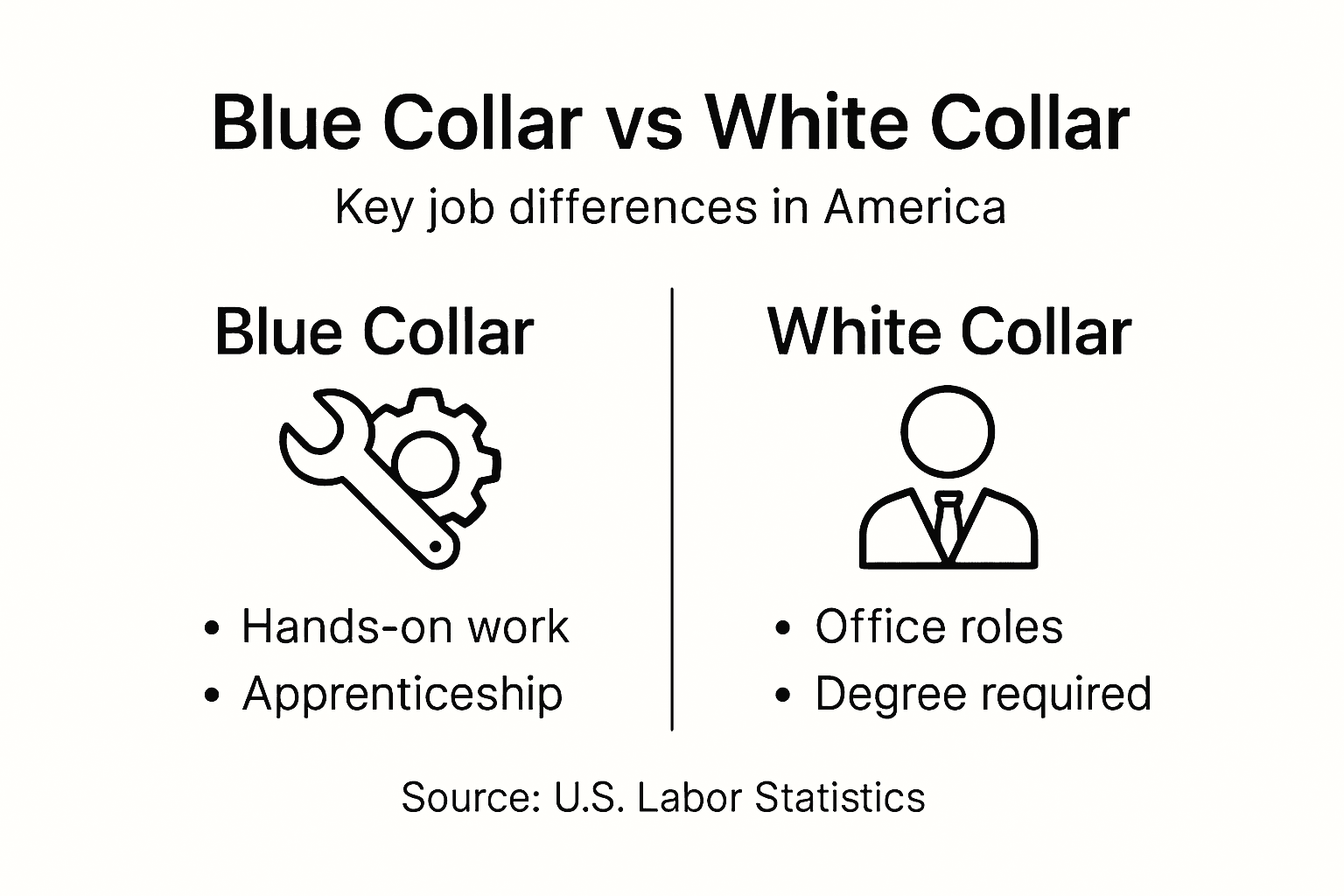
This table outlines blue collar vs. white collar career paths:
| Factor | Blue Collar Careers | White Collar Careers |
|---|---|---|
| Entry Requirements | Apprenticeship or trade school | Four-year college degree |
| Learning Style | Paid, hands-on training | Classroom and internship |
| Earnings During Training | Earn while learning | Little or no earnings in school |
| Job Security | High demand, essential services | Varies by industry and economic cycle |
| Advancement | Skills-based, certifications | Typically degree or promotion-based |
Pro tip: If you’re interested in blue collar trades, research registered apprenticeship programs through Apprenticeship.gov to compare training options, earning potential, and job placement rates in your region before committing to a specific trade.
Common Work Environments and Job Examples
Blue collar work happens everywhere, in environments most people drive past or use daily without thinking much about it. Construction sites stand as the most visible blue collar workplace, where carpenters, electricians, plumbers, and equipment operators coordinate complex projects. You might see cranes lifting steel beams, crews framing new residential developments, or teams running underground utilities. But construction is just one piece. Manufacturing and assembly work happens inside factories where precision matters and safety protocols run tight. Automotive technicians work in service bays diagnosing engine problems. Welders bend metal in fabrication shops. Machine operators run CNC equipment or hydraulic presses. Warehouses buzz with activity as logistics specialists, forklift operators, and inventory managers keep supply chains moving. Agricultural work continues in farming operations across rural America. Transportation and utilities round out the landscape, with truck drivers, electricians maintaining power grids, and water treatment technicians ensuring essential services reach homes and businesses.
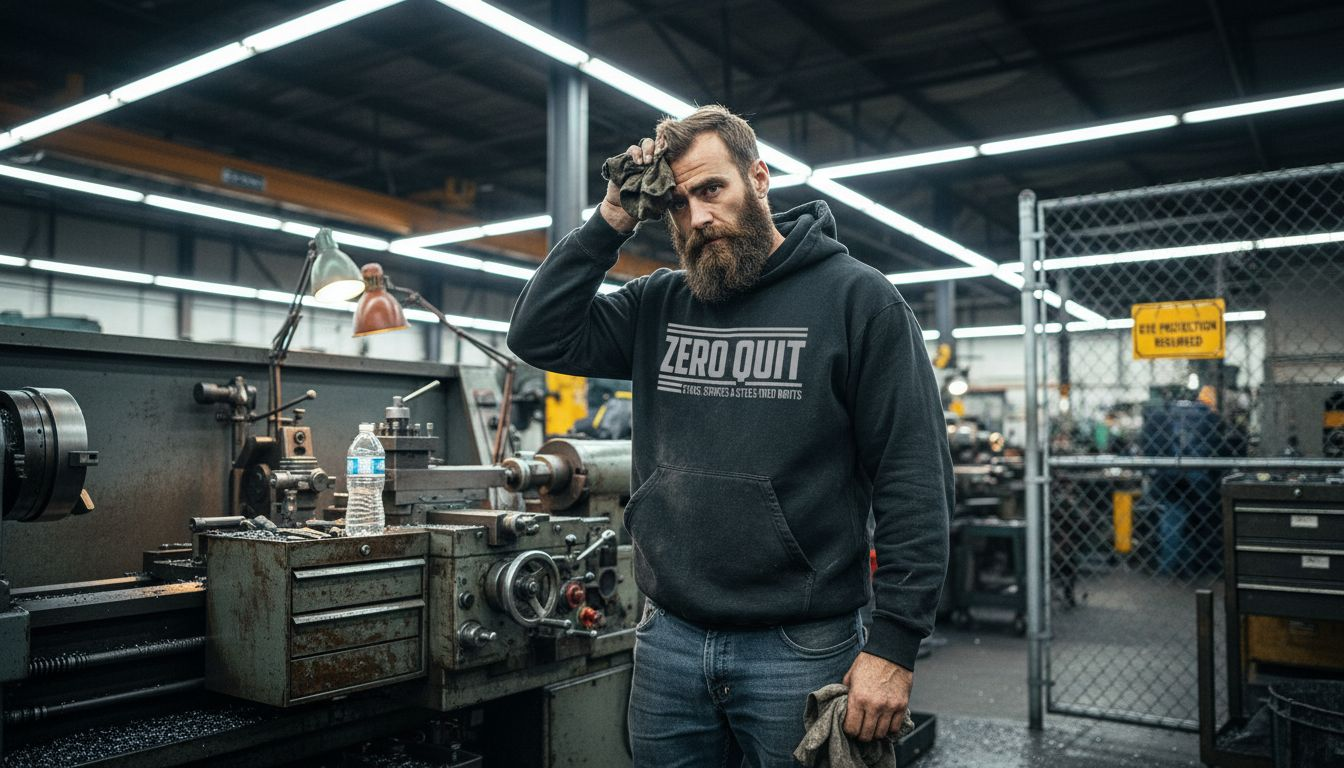
Each environment brings its own demands and challenges. A construction site requires you to work outdoors in variable weather, often at heights or in confined spaces, managing weather delays and safety hazards. A manufacturing facility means you’re indoors but potentially exposed to loud machinery, heat, or repetitive motions day after day. Warehouses demand physical stamina, constant movement, and attention to detail when moving inventory. What unites all these environments is the hands-on reality: you’re solving real problems, working with actual materials and machinery, and seeing tangible results. Mechanics and skilled tradespeople often work in multiple environments within the same career, moving between job sites or customer locations. A plumber might start at a commercial building renovation in the morning and finish at a residential emergency call by evening. An electrician transitions from new construction to maintenance work to troubleshooting commercial systems.
The variety across blue collar work means you can find roles matching different personality types and preferences. Some workers thrive on movement and variety, switching between different job sites or customers. Others prefer the stability of factory work or a permanent position with one employer. Some want the independence of running their own trade business. Administrative roles exist too, managing schedules and crews on larger projects. The common thread is that all these positions require real skills, hands-on capability, and accountability for quality work. Your mistakes matter. A structural error affects building integrity. An electrical mistake creates fire hazards. A plumbing leak damages property. This responsibility breeds a work culture where craft, precision, and reliability genuinely matter, and where experienced workers earn respect from colleagues and clients.
Here’s how common blue collar work environments compare:
| Environment Type | Typical Roles | Main Work Conditions | Key Safety Challenges |
|---|---|---|---|
| Construction Sites | Carpenters, electricians, plumbers | Outdoor, variable weather | Heights, heavy machinery, falls |
| Factories | Machine operators, welders | Indoor, loud, repetitive tasks | Moving parts, noise, burns |
| Warehouses | Logistics, forklift operators | High-traffic, lifting required | Slips, vehicle accidents |
| Transportation | Truck drivers, mechanics | On the road, variable hours | Fatigue, accidents, weather |
| Service Calls | Plumbers, HVAC, electricians | Multiple locations, customer sites | Time pressure, confined spaces |
Pro tip: Visit job sites in your area to observe different trades in action before committing to apprenticeship programs, and speak with workers about their daily environments, physical demands, and actual job satisfaction beyond just wages.
Essential Skills, Training, and Apprenticeships
Blue collar work demands skills that go beyond what any classroom can teach in isolation. A carpenter needs to understand building codes, read blueprints, calculate measurements, operate power tools safely, and troubleshoot problems on the job site. An electrician must grasp circuit theory, follow safety regulations, work with precision, and communicate with clients about their electrical needs. A plumber combines mechanical knowledge with problem-solving ability, working in tight spaces and managing customer relationships. These skills develop through a combination of hands-on experience, classroom instruction, and mentorship. Unlike many office careers that require a four-year degree before you contribute meaningfully, blue collar trades let you start earning and learning simultaneously. You build real competency from day one, with your growing skill level directly reflected in the quality of your work and your earning potential.
Apprenticeships provide paid on-the-job training combined with classroom instruction, creating a structured pathway that benefits both workers and employers. Programs typically last from one to six years depending on the trade, covering fields like HVAC, automotive repair, manufacturing, plumbing, and electrical work. During your apprenticeship, you earn a salary while learning, which means you graduate debt-free with credentials in hand and work experience already documented. The classroom portion covers theory, safety regulations, and technical knowledge you need to understand the “why” behind your hands-on work. Your mentor on the job teaches you the practical application, showing you how experienced professionals approach problems efficiently and safely. This combination creates workers who not only know how to do the job but understand the principles underlying their trade. By the time you complete your apprenticeship, you’re not just trained, you’re experienced.
Vocational and trade schools offer another avenue for developing blue collar skills, running shorter, more concentrated programs than traditional apprenticeships. These programs typically run six months to two years and provide intensive classroom and lab instruction in specific trades. They work well if you prefer learning in a classroom environment before jumping into full-time employment, or if you need to complete your training quickly. Community colleges across the country offer affordable trade programs with excellent placement rates, connecting students directly to employers. Some blue collar workers pursue certifications in specialized areas, earning credentials like EPA certification for refrigerant handling or welding certifications that boost their marketability. The key advantage across all these training paths is affordability. You’re not spending $40,000 to $100,000 on a four-year degree with no guarantee of employment. Instead, you invest in skills directly tied to available jobs, often while earning money during your training.
Once you’re established in your trade, continuous skill development keeps you competitive and increases your earning potential. New technologies emerge constantly. Construction uses digital measurement tools and Building Information Modeling. Automotive technicians work with increasingly complex electrical and computer systems. HVAC professionals install high-efficiency systems requiring advanced knowledge. Manufacturing adapts to automation and new machinery. Experienced workers who stay current with industry changes earn higher wages and command respect from employers and colleagues. Many trades offer advanced certifications or specializations. An electrician might become a master electrician or specialize in solar installation. A plumber might focus on commercial systems or green plumbing technologies. A carpenter might specialize in custom cabinetry or restoration work. Your initial apprenticeship opens a door, but your career trajectory depends on your willingness to keep learning and adapting as your industry evolves.
Pro tip: Research apprenticeship programs in your desired trade through Apprenticeship.gov or your state’s Department of Labor, comparing program length, wage progression during training, and post-completion job placement rates before applying.
How Blue Collar Jobs Are Officially Classified
Government agencies classify occupations using systematic frameworks that organize thousands of different jobs into logical categories. The Standard Occupational Classification system managed by the U.S. Bureau of Labor Statistics provides the official structure for grouping blue collar work. This system sorts occupations by similarity of duties, skills, education, and training requirements, allowing statisticians, economists, and policymakers to track labor trends, analyze wage data, and predict workforce demand. When you look at government labor statistics or unemployment reports, they rely on this classification system to report information accurately. Blue collar jobs fall primarily into five major groups: construction and extraction occupations like carpenters and electricians; installation, maintenance, and repair roles such as mechanics and HVAC technicians; production occupations including machine operators and assembly workers; transportation and material moving jobs like truck drivers and warehouse workers; and farming, fishing, and forestry positions. Within each category, jobs are further subdivided based on specific skills and responsibilities, creating a detailed map of the American workforce.
Understanding how these classifications work matters because they directly affect you. When you search for apprenticeships or training programs, government agencies use SOC codes to match workers with available positions and opportunities. Wage data published by the Bureau of Labor Statistics breaks down salaries and growth projections by occupation classification, so if you want to know what electricians earn in your state or whether construction work is growing or shrinking, these classifications organize that information. Researchers studying workforce trends, employers planning hiring strategies, and schools designing training programs all depend on these standardized occupational categories. The classifications also serve regulatory functions. Under the Fair Labor Standards Act, blue collar workers are defined as manual laborers performing repetitive physical work requiring skill and physical energy, typically acquired through apprenticeships and hands-on training. This regulatory definition distinguishes you from white collar exempt employees, which matters significantly because it determines whether you’re entitled to minimum wage and overtime pay protections. Most blue collar workers are nonexempt, meaning employers must pay you at least minimum wage and overtime rates when you work more than 40 hours per week.
The classification system also reveals important patterns in the labor market. Blue collar jobs traditionally supported families and built the American middle class, but manufacturing positions have declined significantly over recent decades. However, skilled trades remain in high demand. Construction continues to grow as infrastructure ages and needs replacement. HVAC work increases as heating and cooling systems require installation and maintenance. Plumbing demand stays constant because water systems never stop needing professional attention. Electricians are needed everywhere from new buildings to grid modernization. These classifications help identify where job growth exists and where shortages are emerging. Schools and workforce development programs use this data to guide what training programs they offer. If the data shows that plumbers are in short supply and well compensated, more schools launch plumbing apprenticeships. If automation is eliminating certain manufacturing positions, training programs shift away from those occupations.
When you’re evaluating a career in blue collar work, paying attention to how your potential occupation is classified provides valuable context. Look up your trade on the Bureau of Labor Statistics website to find wage data for your region, growth projections for the next decade, and what skills employers list as essential. These official classifications remove guesswork from career planning. You can see actual demand, real earning potential, and honest assessments of job prospects. The classification system also shows which blue collar trades are expanding rapidly, which might influence your training choice. Understanding that your work fits into an officially recognized occupational category with tracked statistics and regulatory protections should reinforce that blue collar careers are legitimate, valued professions, not fallback options for people who couldn’t do something else.
Pro tip: Visit the Bureau of Labor Statistics Occupational Outlook Handbook online to research your intended trade’s SOC code, compare regional wage data, and review 10-year job growth projections before committing to apprenticeship training.
The Vital Role of Blue Collar Workers
Blue collar workers form the backbone of the U.S. economy by enabling manufacturing, construction, and transportation to function smoothly. Without them, there would be no homes built, no roads maintained, no power delivered to your house, no plumbing systems working, no vehicles repaired. Every single person in America benefits from blue collar work daily, often without realizing it. When you flip a light switch, a blue collar electrician built that infrastructure. When you turn on a faucet, a plumber installed and maintains those systems. When you drive on a road or cross a bridge, construction workers made that possible. These jobs create the physical foundation that allows every other profession to operate. Office workers, doctors, lawyers, teachers, all of them depend on the work blue collar professionals do to have functioning buildings, transportation, utilities, and manufactured goods. This isn’t invisible work or lesser work. This is essential work that literally keeps civilization running.
The value blue collar workers create goes far beyond basic infrastructure. Their skilled craftsmanship produces high-quality products, builds homes that shelter families, and creates communities where people live and work. Manufacturing workers produce goods that American businesses sell domestically and internationally. Construction workers build not just houses but commercial buildings, hospitals, schools, and public facilities. Their work directly contributes to economic growth and innovation. When new building technologies emerge, blue collar workers master them and apply them. When electrical systems become more complex, electricians learn and install them. When plumbing codes change to improve safety, plumbers adapt and implement those standards. The economic impact extends to individual workers as well. Blue collar careers have historically provided stable employment, middle-class wages, and the ability to support families without requiring expensive college degrees. For many Americans, blue collar work remains one of the most reliable paths to economic security and homeownership. That economic stability ripples through communities as skilled tradespeople spend wages locally, support local businesses, and invest in their neighborhoods.
The COVID-19 pandemic starkly illustrated just how essential blue collar workers are to society. Essential workers, many of whom are blue collar professionals, proved crucial for maintaining public health, safety, and economic stability during lockdowns and disruptions. Construction continued because infrastructure projects couldn’t stop. Electricians and plumbers responded to residential and commercial emergencies. Manufacturing pivoted to produce medical supplies and protective equipment. Warehouse and transportation workers kept supply chains functioning. These workers faced higher health risks, worked through uncertainty, and kept society functioning when so much else shut down. That reality exposed something important: blue collar workers are not backup options or fallback careers. They are essential professionals whose contributions are literally vital to national stability and public welfare. The pandemic also highlighted inequities. Blue collar workers, disproportionately women, people of color, and immigrants, often earned lower wages and faced higher risks than other professionals. That gap between their essential contributions and their compensation became impossible to ignore.
Recognizing the vital role blue collar workers play means understanding their contributions as skilled professional work deserving of respect, adequate compensation, and workplace protections. It means acknowledging that building a functioning society requires people willing to work with their hands, solve problems in real time, and take responsibility for quality and safety. It means understanding that electricians, plumbers, carpenters, welders, mechanics, and all other blue collar professionals are not just performing jobs. They are applying expertise, managing complex systems, and ensuring that everything from your home to your workplace functions safely and effectively. For anyone considering a blue collar career, that recognition should be empowering. You would not just be getting a job. You would be entering a profession that society genuinely needs, that offers solid earning potential, and that provides the tangible satisfaction of building and fixing things that matter to real people.
Pro tip: When evaluating your career prospects in blue collar trades, remember that your future stability depends not just on immediate job availability but on how essential your specific trade is to the economy, so prioritize trades showing consistent long-term demand.
Gear Up for the Blue Collar Life With Apparel That Works as Hard as You Do
Blue collar workers face physical demands, variable environments, and the need for durable, reliable gear every day. If you are building skills through apprenticeships or tackling construction sites, factories, or service calls, your workwear needs to match your resilience and professionalism. Whether you need hooded sweatshirts that protect you with UPF 50+ sun protection or apparel designed specifically for women trade professionals, you want clothing that supports your craft and lifestyle.
Discover All Hooded Sweatshirts - WorkWear Comfort and explore Female Hoodie Sweatshirts – WorkWearComfort created to balance durability, comfort, and style for hardworking individuals. Visit WorkWearComfort.com now to find gear that keeps pace with your hands-on expertise and offers the rugged dependability your job demands. Take the next step to outfit yourself in apparel made to honor the vital role you play every day. Act today to feel the difference that quality workwear can make in your daily performance and confidence.
Frequently Asked Questions
What defines a blue collar worker?
A blue collar worker is someone who performs skilled manual labor or hands-on trade work, typically wearing practical work attire such as blue jumpsuits or denim shirts. They are essential to industries like manufacturing, construction, and transportation.
What types of jobs fall under blue collar work?
Blue collar occupations include roles such as mechanics, electricians, plumbers, welders, construction laborers, HVAC technicians, machine operators, and factory workers, among others. These jobs require hands-on skills and technical expertise.
How do blue collar jobs compare to white collar jobs?
Blue collar careers typically involve apprenticeships or trade school education, whereas white collar jobs often require a four-year college degree. Blue collar workers can earn while they learn, while white collar employees may go without income during their training.
Why are blue collar workers important to the economy?
Blue collar workers form the backbone of the U.S. economy by enabling the functioning of essential services such as construction, manufacturing, and transportation. Their skilled labor supports infrastructure and contributes to overall economic growth.
Recommended
- Best Workwear for Tradesmen – Expert Comparison 2025 – WorkWearComfort
- Understanding Blue Collar Worker Definition in Today’s World – WorkWearComfort
- Blue Collar Meaning: Value, Mindset, and Real Rewards – WorkWearComfort
- Understanding What Does Blue Collar Mean in Today’s World – WorkWearComfort
- Blue Carbon Steel vs Carbon Steel – Performance Decoded – Brass & Steel
