

Over eighty percent of American construction workers prefer work pants built for serious protection and rugged performance. A long day on a busy job site means constant exposure to rough surfaces, unpredictable weather, and heavy tools. Choosing work pants that combine durability with comfort is vital for handling tough tasks and still looking sharp on site. If you need gear that can take a beating and keep you moving freely, discover how the right pair of pants can make every shift safer and easier.
Table of Contents
- Defining Blue Collar Work Pants
- Major Types And Job-Specific Designs
- Essential Features For Comfort And Safety
- Common Materials And Their Benefits
- Choosing Pants For Job Site Hazards
- Mistakes To Avoid When Selecting Pants
Key Takeaways
| Point | Details |
|---|---|
| Importance of Durability | Blue collar work pants must be made of heavy-duty fabric to withstand tough working conditions and ensure worker safety. |
| Job-Specific Designs | Different professions require specialized pant designs that enhance functionality and protection, such as reinforced knees and tool storage. |
| Material Considerations | The choice of materials impacts comfort and safety, with features like moisture-wicking and tear resistance being essential. |
| Avoiding Common Mistakes | Selecting pants without considering proper fit, job-specific hazards, or fabric durability can compromise safety and effectiveness. |
Defining Blue Collar Work Pants
Blue collar work pants are more than just clothing - they represent a critical protective layer for professionals working in physically demanding industrial environments. Blue collar workers have traditionally worn durable clothing designed to withstand tough workplace conditions while providing essential functionality.
The origins of these specialized work pants trace back to early industrial workplaces where durability and practicality were paramount. Initially characterized by blue-dyed fabrics like denim and chambray, these garments were engineered to resist stains, tears, and extreme working conditions. Modern blue collar work pants continue this legacy, featuring reinforced stitching, multiple utility pockets, and advanced fabric technologies that offer superior protection and comfort.
Key characteristics of high-quality blue collar work pants include:
- Heavy-duty fabric construction
- Reinforced knees and seat areas
- Multiple tool and equipment pockets
- Flexibility for unrestricted movement
- Resistance to abrasion, chemicals, and environmental hazards
Pro tip: When selecting work pants, prioritize pants with triple-stitched seams and ripstop fabric for maximum durability and long-term performance.
Major Types and Job-Specific Designs
Blue collar work pants are engineered with precise design variations to meet the unique challenges of different industrial professions. Work pants come in specialized types tailored for specific job demands, ensuring professionals have the right protective and functional gear for their specific work environment.
The most prominent work pant designs include carpenter pants, cargo pants, double-knee pants, and specialized utility pants. Carpenter pants feature distinctive hammer loops and extra pockets for tools, while cargo pants offer multiple compartments for carrying equipment. Double-knee pants provide critical protection for professionals who frequently kneel, such as flooring installers and construction workers. Each design addresses specific functional needs across different blue collar professions, incorporating reinforced fabric, strategic pocket placements, and enhanced mobility features.
Key specialized work pant designs include:
- Carpenter Pants: Extra tool loops, wider pockets
- Cargo Pants: Multiple storage compartments
- Double-Knee Pants: Reinforced knee areas
- Utility Pants: Integrated tool holders
- Painter’s Pants: Extra side pockets, paint-resistant fabrics
Professional trades require specific design considerations, with fabric weight, pocket configuration, and durability being critical factors in selecting appropriate work pants. Construction workers need different features compared to electricians or plumbers, highlighting the importance of job-specific design.
Here’s how major work pant types support specific trades:
| Work Pant Type | Ideal For | Key Functional Benefit |
|---|---|---|
| Carpenter Pants | Carpenters, Contractors | Easy tool access and storage |
| Cargo Pants | Delivery, Utility Workers | Ample equipment organization |
| Double-Knee Pants | Flooring, Construction | Superior knee protection |
| Utility Pants | Plumbers, HVAC Technicians | Integrated tool management |
| Painter’s Pants | Painters, Remodelers | Stain resistance, storage |
Pro tip: Always match your work pants to your specific job requirements, considering the materials, potential hazards, and movement demands of your particular profession.
Essential Features for Comfort and Safety
Blue collar work pants are engineered with sophisticated design elements that prioritize both worker protection and physical comfort. Comfort and safety are achieved through carefully selected materials and strategic design features, creating a crucial barrier between workers and potential workplace hazards.
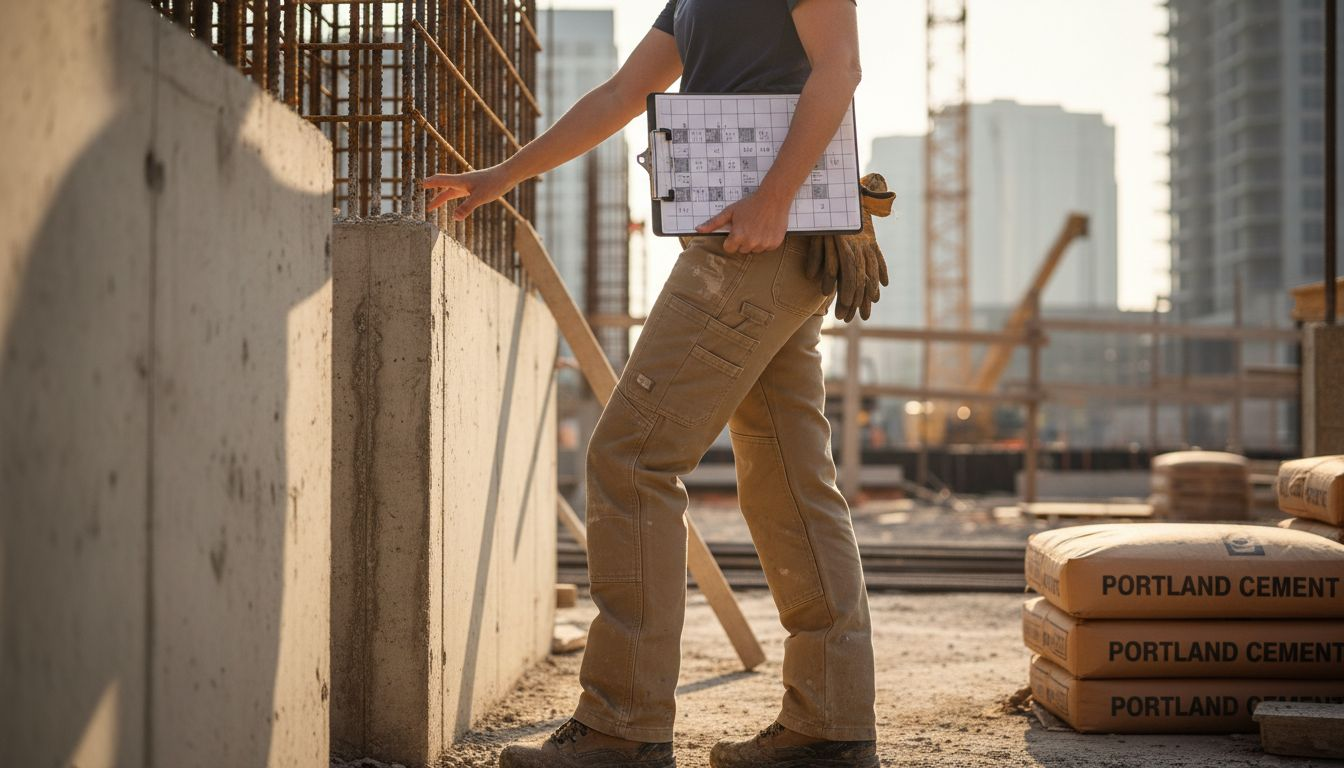
Key safety features in modern work pants include reinforced knee patches, multiple utility pockets for tool organization, and durable fabric that resists tears, punctures, and chemical exposure. The fabric composition plays a critical role, with advanced materials providing flexibility, breathability, and protection against environmental challenges. Stretch panels in critical areas like knees and waistbands ensure maximum mobility, reducing physical strain during long work hours.
Critical comfort and safety elements include:
- Moisture-wicking fabric to regulate body temperature
- Reinforced stress points to prevent premature wear
- Adjustable waistbands for personalized fit
- Reflective safety elements for low-light visibility
- Gusseted crotch design for enhanced movement range
Professional work pants must balance protection with practicality, considering specific job requirements like potential chemical exposure, physical impact risks, and environmental conditions. Different trades demand unique protective features, from flame-resistant materials for welders to high-visibility fabrics for road construction workers.
Pro tip: Invest in work pants that offer a combination of comfort, durability, and specific safety features tailored to your unique professional environment.
Common Materials and Their Benefits
Blue collar work pants are crafted from sophisticated materials engineered to withstand extreme workplace conditions while providing maximum comfort and protection. Understanding workwear materials reveals a complex world of fabric technologies designed specifically for demanding professional environments.
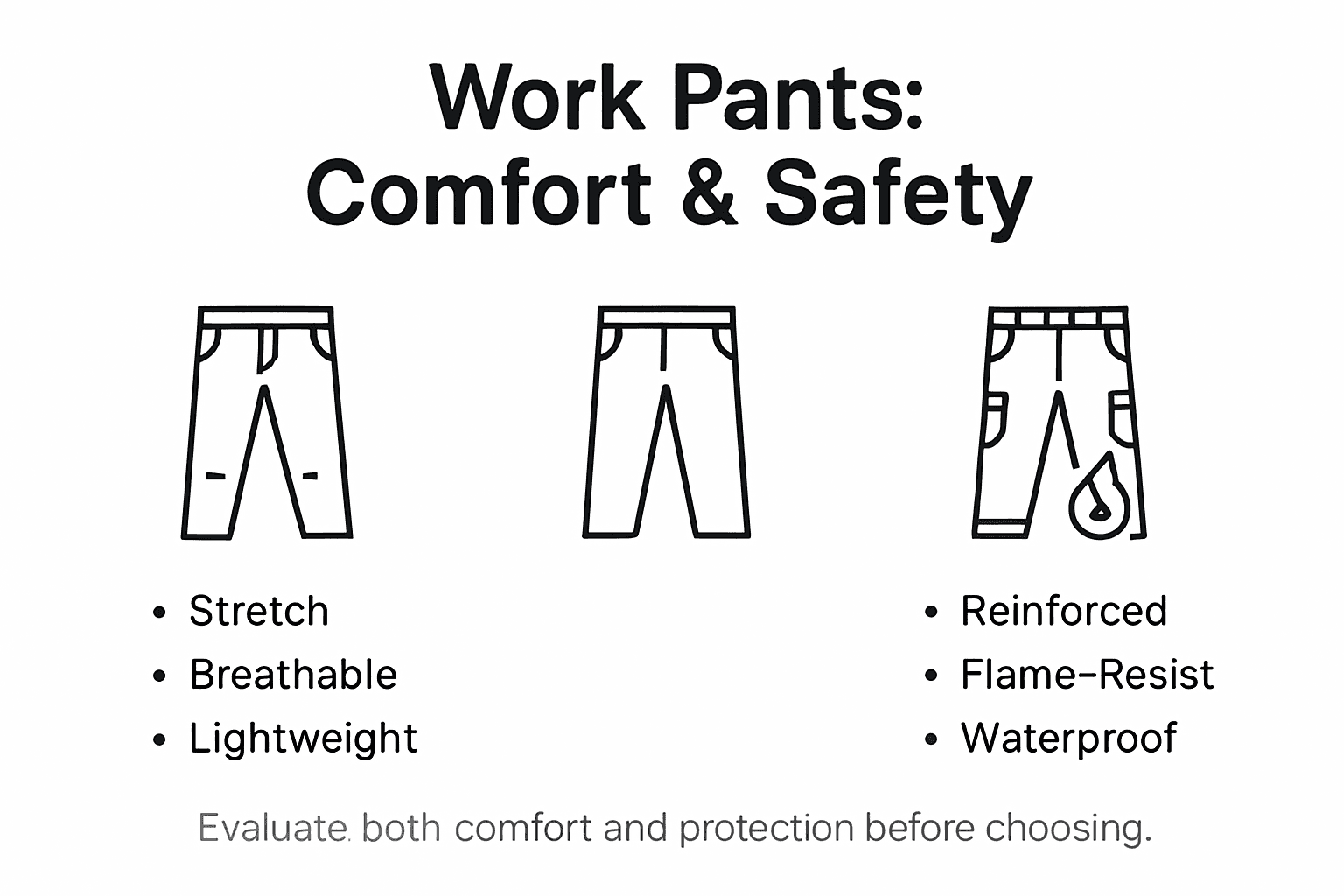
The most prevalent materials in work pants include durable cotton blends, heavyweight canvas, ripstop fabrics, and advanced synthetic composites. Cotton-polyester blends offer breathability and durability, while canvas materials provide superior abrasion resistance. Ripstop fabrics feature interwoven reinforcement threads that prevent small tears from expanding, making them ideal for high-stress work environments. Advanced synthetic materials like nylon and spandex blends introduce incredible stretch and flexibility, allowing workers unprecedented range of motion.
Key material characteristics for blue collar work pants include:
- Durability to withstand repeated wear
- Flexibility for unrestricted movement
- Moisture-wicking properties
- Tear resistance
- Quick-drying capabilities
Different professional trades require specialized material compositions. Construction workers might prioritize heavy-duty canvas with reinforced stress points, while electricians need materials with arc-flash resistance. The selection of work pant materials directly impacts worker safety, comfort, and overall job performance.
The following table summarizes how material choices affect pants’ performance:
| Material Type | Comfort Level | Protective Strength |
|---|---|---|
| Cotton-Poly Blend | Breathable, soft | Moderate abrasion & tear |
| Heavyweight Canvas | Moderate comfort | High abrasion resistance |
| Ripstop Fabric | Flexible fit | Prevents spreading tears |
| Synthetic Blends | Excellent stretch | Moisture & chemical guard |
Pro tip: Always inspect your work pants’ material composition and choose fabrics specifically engineered for your professional environment and potential workplace hazards.
Choosing Pants for Job Site Hazards
Selecting the right work pants for specific job site hazards requires a comprehensive understanding of potential workplace risks and the corresponding protective features needed to mitigate those dangers. Different professional environments present unique challenges that demand specialized protective clothing designed to shield workers from mechanical, thermal, chemical, and environmental threats.
Construction, manufacturing, electrical, and industrial sites each require distinct protective characteristics in work pants. Mechanical hazards like sharp edges, potential punctures, and abrasive surfaces necessitate pants with reinforced fabric panels and heavy-duty materials. Electricians need pants with arc-flash resistant fabrics, while chemical workers require pants made from specialized materials that provide chemical splash protection. Thermal environments demand pants with heat-resistant properties and moisture-wicking capabilities to regulate body temperature.
Key considerations when choosing job site work pants include:
- Impact resistance for mechanical protection
- Chemical barrier properties
- Flame retardant capabilities
- Visibility enhancements for low-light environments
- Temperature regulation features
Safety standards and industry-specific regulations play a crucial role in work pant selection. Some jobs require pants that meet specific certification levels, such as NFPA standards for fire resistance or ASTM ratings for mechanical protection. Workers must carefully evaluate their specific job site conditions, potential hazards, and required safety certifications when selecting appropriate work pants.
Pro tip: Always consult your industry’s safety guidelines and perform a thorough job site hazard assessment before selecting protective work pants.
Mistakes to Avoid When Selecting Pants
Common mistakes in selecting work pants can significantly compromise worker safety, comfort, and long-term performance. Blue collar professionals must be strategic and informed when choosing their protective workwear to avoid costly errors that could impact their job effectiveness and personal protection.
One of the most critical errors is selecting pants with inadequate fabric strength and durability. Lightweight or flimsy materials quickly deteriorate in demanding work environments, leaving workers vulnerable to potential injuries. Professionals should prioritize heavy-duty fabrics with reinforced stress points, particularly in high-wear areas like knees, seat, and crotch. Neglecting proper fit is another significant mistake that directly impacts mobility, comfort, and overall work performance.
Key mistakes blue collar workers must avoid include:
- Choosing thin, low-quality fabrics
- Ignoring proper fit and sizing
- Overlooking job-specific hazard protection
- Neglecting reinforcement in high-stress areas
- Failing to consider mobility requirements
Each professional trade requires unique protective features, and a one-size-fits-all approach can lead to dangerous compromises. Electricians need arc-resistant materials, construction workers require impact-resistant fabrics, and chemical workers demand specialized splash protection. Understanding these nuanced requirements is crucial for selecting appropriate work pants that provide genuine protection.
Pro tip: Always invest time in trying on work pants and performing mobility tests that simulate your actual work movements before making a final purchase.
Find Your Perfect Balance of Comfort and Protection with WorkWearComfort
Blue collar work pants demand more than just durability. They must deliver comfort, safety, and job-specific functionality to keep you moving efficiently while protecting you against the toughest job site hazards. If you have ever struggled with pants that wear out too fast or restrict your movement, it is time to upgrade your workwear to gear designed specifically for your trade.
All Hooded Sweatshirts - WorkWear Comfort are crafted with blue collar values in mind, focusing on rugged durability and practical features that support your workday.
Don’t settle for less when it comes to your work pants and apparel. Visit WorkWearComfort.com now to explore durable and functional clothing options that match your hard-working lifestyle. Pair your pants with our Snapback and Dad Hats - Blue Collar Collection - WorkWear Comfort for a complete outfit built on strength and resilience. Take the step today to outfit yourself with gear that works as hard as you do.
Frequently Asked Questions
What are blue collar work pants?
Blue collar work pants are specially designed clothing for professionals in physically demanding industrial environments, offering durability, protection, and functionality to withstand tough workplace conditions.
What are the key features to look for in work pants?
When selecting work pants, prioritize heavy-duty fabric, reinforced knees and seat areas, multiple utility pockets, flexibility for movement, and resistance to abrasion and environmental hazards.
How do different types of work pants benefit specific trades?
Different work pant designs, like carpenter, cargo, double-knee, and utility pants, cater to specific needs of trades. For example, carpenter pants offer easy tool access, while double-knee pants provide critical knee protection for those who kneel regularly.
What materials are commonly used in blue collar work pants?
Common materials include cotton blends for breathability, heavyweight canvas for abrasion resistance, ripstop fabrics for preventing tears, and advanced synthetics for flexibility and moisture-wicking capabilities.
Recommended
- The Essential Guide to Blue Collar Apparel – WorkWearComfort
- Complete Guide to Mechanic Work Wear Essentials – WorkWearComfort
- 7 Ways Comfy Work Wear Gives Blue-Collar Pros the Edge – WorkWearComfort
- 7 Best Work Pants for Blue-Collar Workers in 2025 – WorkWearComfort
- Adrian Tailored Cotton Linen Pants for Men – Slim Fit Trousers – Vellure Homme
