

Sweltering job sites leave many American tradespeople searching for relief from the heat, and more than 50% say that uncomfortable workwear hurts productivity. For construction crews and skilled workers, comfort is not a luxury but a necessity when long hours outdoors test both endurance and gear. This guide breaks down what makes a work jacket truly breathable and helps you spot features that keep you cool, dry, and focused on the job in punishing conditions.
Table of Contents
- Defining Breathable Work Jackets For Trades
- Types Of Breathable Jackets And Materials
- Essential Features For Comfort And Safety
- Top Brands And Popular Jacket Models
- Comparing Alternatives And Common Pitfalls
Key Takeaways
| Point | Details |
|---|---|
| Breathability is Key | Breathable work jackets manage moisture and heat, preventing overheating and fatigue for tradespeople in high-heat environments. |
| Material Matters | Jackets made from synthetic blends or performance fabrics provide better moisture-wicking and durability compared to natural fibers. |
| Safety Features are Essential | Jackets should incorporate reinforced areas, reflective details, and adjustable designs to ensure both comfort and protection on the job. |
| Tailor Selections to Job | Choose jackets that fit specific job requirements, considering factors like weather conditions, physical activity, and potential hazards. |
Defining Breathable Work Jackets for Trades
For construction workers and skilled tradespeople battling intense heat, a breathable work jacket isn’t just clothing - it’s essential job site equipment. Understanding how these specialized garments function requires examining their core design principle: moisture management. Breathability in fabrics fundamentally involves enabling sweat and heat to escape while preventing liquid water from penetrating the material.
Breathable work jackets for trades are engineered with specific fabric technologies that create micro-ventilation channels. These innovative designs allow air circulation and moisture vapor transmission, which means workers stay cooler and drier during physically demanding tasks. Key features typically include lightweight materials, strategic mesh panels, and moisture-wicking properties that actively transport perspiration away from the body.
The science behind breathable workwear involves complex fabric engineering. Different materials like performance polyesters, treated cotton blends, and advanced synthetic weaves create microscopic pathways that enable heat and moisture to escape. By maintaining a consistent microclimate next to the skin, these jackets help prevent overheating and reduce the risk of heat-related workplace fatigue. Trades professionals working in construction, landscaping, roofing, and other high-temperature environments benefit significantly from this advanced textile technology.
Pro Tip: When selecting a breathable work jacket, prioritize jackets with mesh-lined interiors and underarm ventilation zones for maximum cooling performance.
Types of Breathable Jackets and Materials
Trades professionals require diverse breathable jacket options that match specific job site conditions and personal comfort needs. Waterproof breathable fabrics have evolved to provide sophisticated moisture management solutions, utilizing advanced technologies like microporous membranes and hydrophilic coatings that balance protection with comfort.
Natural and synthetic materials each offer unique advantages for breathable work jackets. Breathable fabric selections range from natural fibers like cotton, linen, and merino wool to high-performance synthetic materials. Cotton provides softness and basic breathability, while performance synthetics like nylon offer superior moisture-wicking and durability. Merino wool stands out for its exceptional temperature regulation and natural odor resistance, making it ideal for workers experiencing variable environmental conditions.
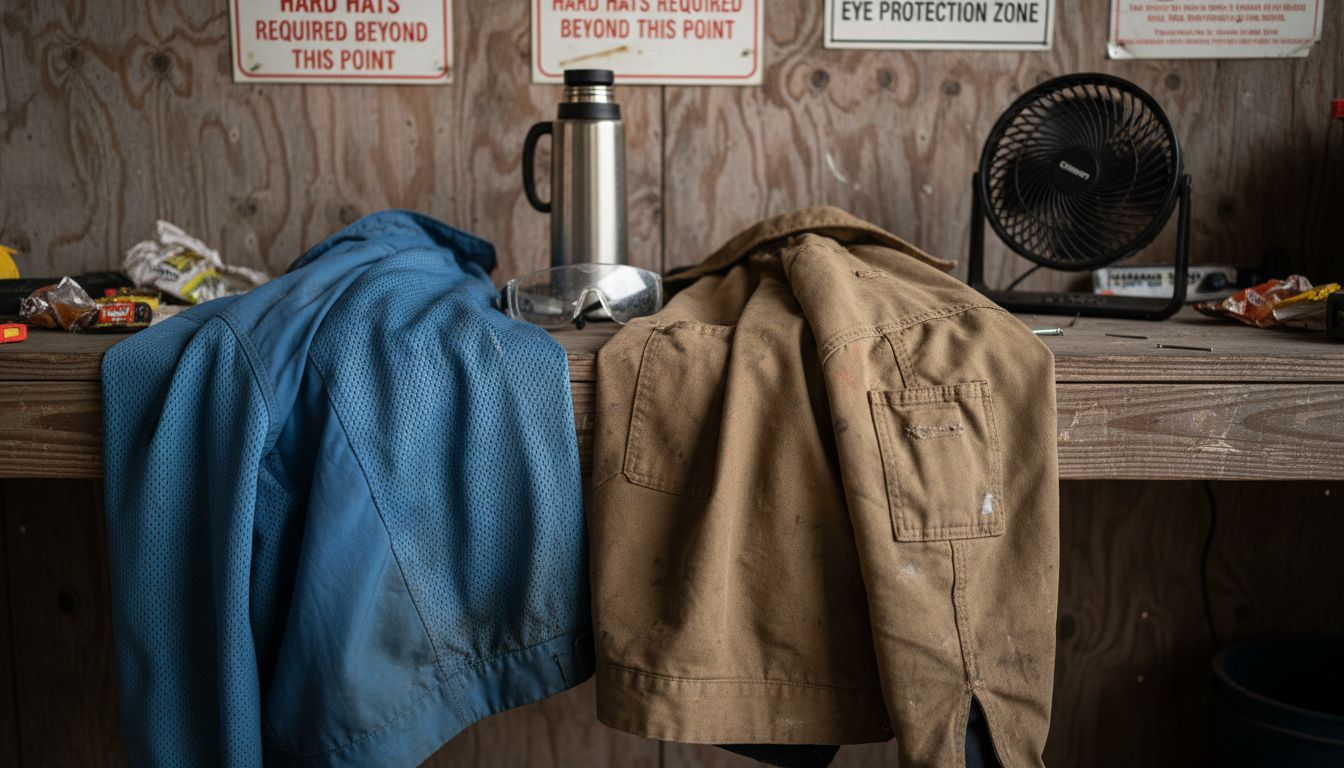
Specialized breathable jacket types cater to different trade environments. Lightweight mesh-lined jackets work best for high-heat construction sites, while insulated breathable jackets with strategic ventilation zones suit cooler but physically demanding jobs like roofing or landscaping. Softshell jackets with stretch panels provide mobility, while hardshell breathable jackets offer enhanced water resistance for outdoor trades. The key is matching jacket technology to specific workplace demands, ensuring workers remain comfortable and protected.
Below is a summary comparing the primary jacket types and their key workplace advantages:
| Jacket Type | Best For | Key Material | Workplace Benefit |
|---|---|---|---|
| Mesh-Lined | High-heat jobsites | Lightweight polyester | Maximizes air flow and cooling |
| Insulated Breathable | Cool conditions | Treated cotton blend | Maintains warmth and ventilation |
| Softshell | High mobility tasks | Stretch synthetic | Enhances movement and comfort |
| Hardshell Breathable | Wet environments | Hybrid waterproof | Offers water resistance and breathability |
Pro Tip: When choosing a breathable work jacket, consider your specific job site environment and prioritize jackets with targeted ventilation and moisture-management features.
Essential Features for Comfort and Safety
Breathable work jackets for trades professionals must combine multiple critical features to ensure both worker comfort and jobsite safety. Construction safety wear fundamentally requires protective elements that go beyond basic moisture management, integrating strategic design elements that protect workers in demanding environments.
Key safety features include reinforced fabric in high-wear areas, reflective accents for visibility, and robust design elements that prevent snagging or catching on machinery. Comfort-focused design aspects like articulated sleeves, gusseted underarms, and adjustable cuffs allow unrestricted movement while maintaining protective coverage. Breathable jackets should incorporate multiple ventilation zones that enable temperature regulation without compromising the jacket’s structural integrity or protective capabilities.
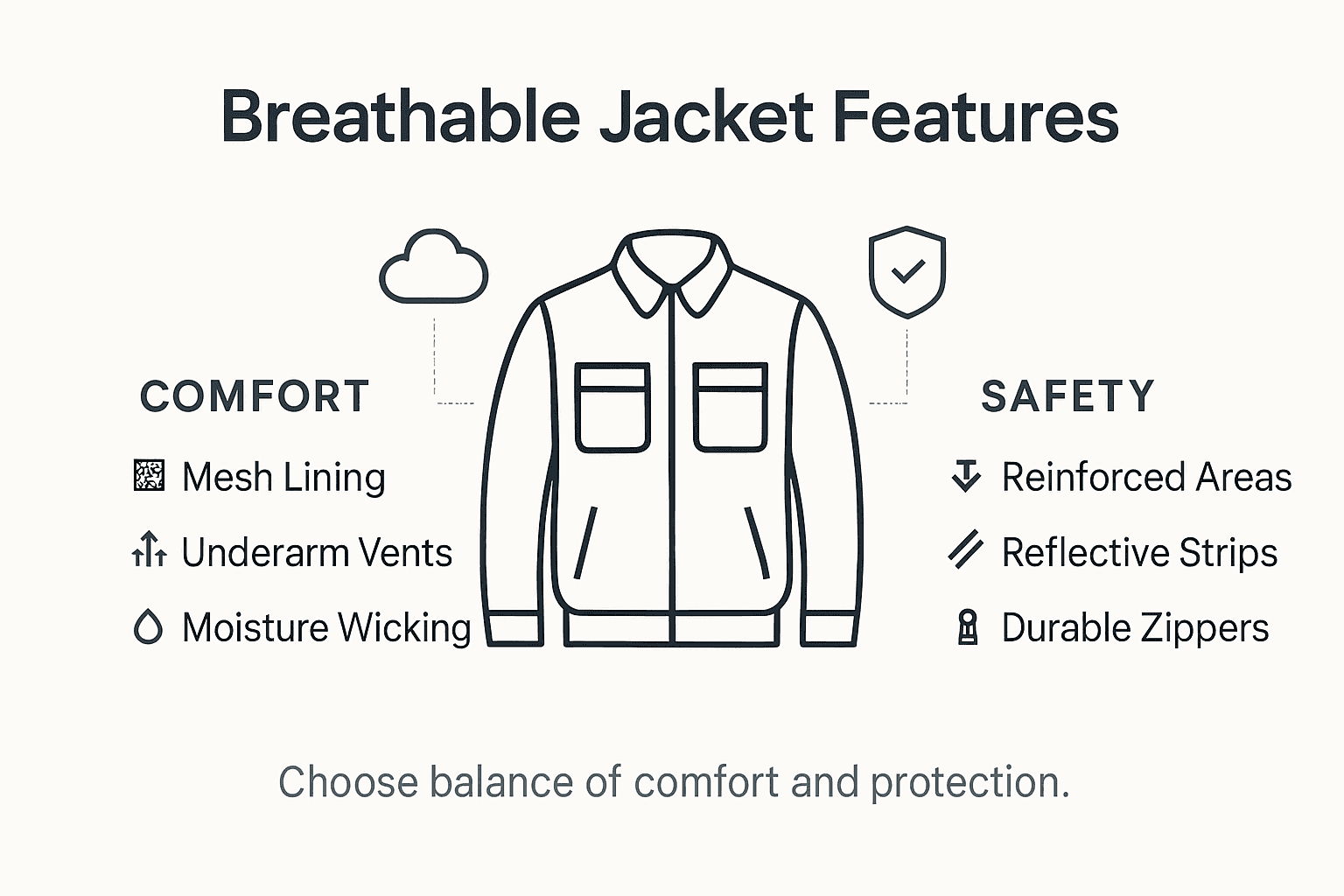
Material selection plays a crucial role in balancing safety and comfort. Jackets must withstand abrasion, resist minor chemical splashes, and provide some level of thermal protection while remaining lightweight and flexible. Advanced fabric technologies now enable materials that can wick moisture, resist minor impacts, and provide UV protection, transforming work jackets from simple clothing into sophisticated personal protective equipment designed for modern trade professionals.
Pro Tip: Always inspect your work jacket’s safety features before each shift, checking for wear, tear, or damage that could compromise its protective capabilities.
Top Brands and Popular Jacket Models
When selecting breathable work jackets, trades professionals seek brands that understand the unique demands of challenging job environments. Affordable workwear brands have evolved to meet the complex needs of workers who require durable, functional, and comfortable protective gear that can withstand intense workplace conditions.
Breathable work jacket models typically feature specialized designs tailored for specific trade requirements. Construction workers often prefer lightweight jackets with multiple ventilation zones, while industrial technicians might select models with additional reinforcement in high-stress areas. Jacket models range from mesh-lined lightweight options perfect for summer jobsites to insulated breathable jackets designed for cooler weather transitions. Key considerations include mobility, durability, moisture management, and integrated safety features like reflective accents and robust zipper designs.
Trades professionals should evaluate jacket models based on specific workplace demands, understanding that one size does not fit all job requirements. Factors like temperature range, physical activity level, potential chemical exposure, and personal comfort preferences all play crucial roles in selecting the right breathable work jacket. Advanced fabric technologies now enable jackets that can regulate body temperature, resist minor abrasions, and provide strategic ventilation without compromising protective capabilities.
Pro Tip: Always try on work jackets with your typical work layers to ensure proper fit and unrestricted movement before making a final purchase.
Comparing Alternatives and Common Pitfalls
Breathable waterproof jackets present complex considerations for trades professionals seeking optimal work apparel. While these jackets promise superior comfort and protection, understanding their limitations is crucial for making informed purchasing decisions that align with specific workplace demands.
Trades workers often encounter several common pitfalls when selecting breathable work jackets. Misconceptions about absolute waterproofing can lead to unrealistic expectations, with many professionals assuming complete protection in all environmental conditions. In reality, breathable jackets offer varying levels of moisture management, and their effectiveness depends on factors like fabric technology, environmental humidity, and physical activity intensity. Some jackets may experience reduced breathability when vents are closed or when subjected to prolonged exposure to dirt and abrasive environments.
Alternative options like traditional non-breathable work wear and specialized trade-specific jackets each present unique advantages and drawbacks. Non-breathable jackets might offer superior water resistance but compromise worker comfort through reduced moisture management. Hybrid jacket designs combining breathable panels with reinforced protective zones represent an emerging solution for trades professionals seeking a balanced approach to workplace apparel. Critical evaluation should focus on matching jacket capabilities with specific job site requirements, considering factors like temperature range, potential chemical exposure, and expected physical activity levels.
This table highlights common pitfalls and alternatives when selecting breathable work jackets:
| Potential Pitfall | Why It Matters | Alternative Solution |
|---|---|---|
| Overestimating waterproofing | Leads to soaked clothes | Choose hybrid or hardshell jackets |
| Ignoring vent maintenance | Reduces breathability | Regularly clean and inspect vents |
| One-size-fits-all thinking | Poor comfort and protection | Tailor choice to job specifics |
Pro Tip: Always conduct a comprehensive field test of your work jacket, assessing its performance across different work conditions and physical demands before committing to long-term use.
Stay Cool and Comfortable with Workwear Designed for Tough Jobs
Working in hot jobsites demands gear that manages moisture and heat without sacrificing durability or style. The article highlights the importance of breathable work jackets that keep you dry and prevent overheating through advanced ventilation and moisture-wicking fabrics. If you face the daily challenge of intense heat, sweat management, and safety on the job, your workwear needs to work as hard as you do.
Discover durable and functional options that match your needs at WorkWearComfort.com. Our collection includes gear engineered for blue-collar workers demanding comfort and protection. Explore Blue-Collar Working Man Sweatshirt Hoodies – WorkWearComfort for rugged, breathable layering options and check out our All Hooded Sweatshirts - WorkWear Comfort for versatile styles built to keep you comfortable in every season.
Don’t wait until the heat slows you down. Upgrade your workwear today with breathable, durable clothing from WorkWearComfort.com. Feel the difference in comfort and stay protected during your toughest shifts. Shop now and equip yourself with apparel that honors your hard work and resilience.
Frequently Asked Questions
What are breathable work jackets?
Breathable work jackets are specialized garments designed for trades professionals that allow sweat and heat to escape while preventing water penetration, keeping workers cool and dry in hot environments.
How do I choose the right breathable work jacket for my job?
To select the right breathable work jacket, consider factors such as your job environment, the temperature range, required mobility, and specific features like moisture-wicking, ventilation zones, and safety elements. Choose a jacket that suits your comfort and protection needs.
What materials are commonly used in breathable work jackets?
Breathable work jackets are typically made from materials like performance polyesters, treated cotton blends, and high-performance synthetics. Each offers different advantages, such as moisture-wicking, temperature regulation, and durability.
What features should I look for in a breathable work jacket for maximum comfort?
Look for features such as mesh-lined interiors, underarm ventilation zones, articulated sleeves, and adjustable cuffs. These elements ensure better air circulation, unrestricted movement, and overall comfort during physically demanding tasks.
Recommended
- Best Workwear for Hot Weather: Stay Cool & Protected in 2025 - WorkWear Comfort
- 7 Essential Tips for Choosing Breathable Workwear - WorkWear Comfort
- Understanding Breathable Long Sleeve Work Shirts for Professionals – WorkWearComfort
- 7 Essential Tips for Choosing Workwear in Hot Weather – WorkWearComfort
