

Long days in sweltering job sites or cramped crawl spaces push every American electrician to the limit, especially when unreliable gear gets in the way. Choosing work shorts is not just about beating the heat but also about meeting strict safety standards and avoiding distractions that derail your focus. The right pair combines breathable fabric and arc-rated protection to help you stay cool, comfortable, and compliant while handling demanding electrical tasks with confidence.
Table of Contents
- What Makes Electrician Work Shorts Essential
- Different Types Of Work Shorts For Electricians
- Key Features: Materials, Pockets, And Design
- Choosing The Right Fit And Safety Standards
- Avoiding Common Pitfalls When Selecting Shorts
Key Takeaways
| Point | Details |
|---|---|
| Safety Focus | Electrician work shorts are designed for safety, offering arc flash protection and flame-resistant materials. |
| Specific Features | Choose work shorts based on their specific features, such as static electricity control and reinforced tool pockets for practicality. |
| Correct Fit | Proper fit is essential to ensure comfort and mobility while reducing potential hazards during work activities. |
| Compliance Verification | Always verify the safety compliance and arc rating of shorts before purchase to ensure adequate protection against electrical hazards. |
What Makes Electrician Work Shorts Essential
Electrician work shorts are not just about comfort—they’re a safety requirement. You face hazards daily, from arc flash scenarios to tight spaces where regular shorts create safety risks. Work-specific shorts address these challenges directly.
Work shorts for electrical work provide compatibility with arc-rated protective equipment and flame-resistant materials designed specifically for electrical environments. This isn’t generic workwear; these shorts are engineered for your job.
Here’s what sets quality electrician shorts apart:
- Arc flash protection prevents severe burns if you encounter unexpected electrical discharge
- Static electricity control eliminates the risk of static buildup in sensitive areas
- Flame-resistant materials meet industry standards for heat exposure
- Reinforced tool pockets handle the weight of your equipment without tearing
- Durable fabric withstands repeated bending, stretching, and contact with rough surfaces
- Moisture-wicking capability keeps you dry during physical work and heat exposure
Traditional shorts don’t account for the unique demands of electrical work. Regular cotton breaks down faster, offers zero protection against arc flash, and doesn’t provide the structural support needed for all-day wear. Your work shorts must work as hard as you do.
Quality electrician work shorts let you focus on the job, not on gear that’s failing you or exposing you to unnecessary risk.
Understanding understanding electrician overalls can also help you choose the right protective gear for different job conditions. Sometimes shorts work best; sometimes you need full coverage—knowing when to use each is key to staying safe.
You’ll notice the difference immediately. Better shorts mean fewer distractions from discomfort, better mobility in tight spaces, and genuine peace of mind about safety. That’s what makes them essential, not optional.
Pro tip: Check your shorts for proper arc rating certification before starting any job involving potential arc flash exposure—this single step could prevent catastrophic injury.
Different Types Of Work Shorts For Electricians
Not all work shorts are created equal. Your job demands specific features, and different scenarios call for different styles. Understanding what each type offers helps you build a wardrobe that covers all your electrical work conditions.
Flame-Resistant Cotton Shorts
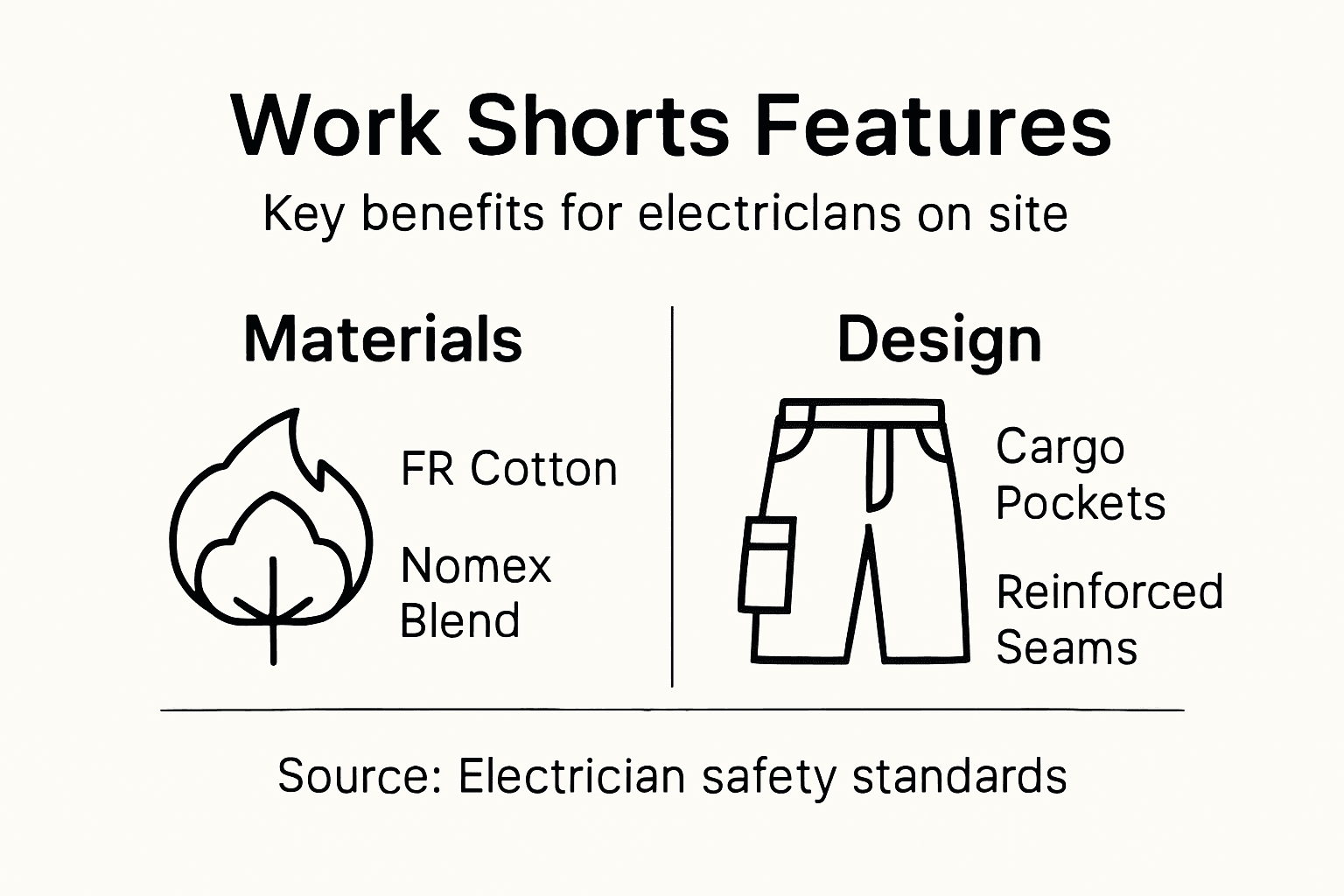
These are your go-to for general electrical work. Flame-resistant cotton provides comfort for long hours while offering protection against arc flash. The fabric naturally resists ignition and slows flame spread if contact occurs.
They work well for:
- Indoor residential wiring installations
- Maintenance work on established systems
- Situations where moderate heat exposure is possible
- All-day wear without excessive sweating concerns
Nomex Blend Shorts
Nomex fabric offers superior heat resistance compared to cotton alone. This synthetic blend handles higher temperature exposure better and maintains durability through repeated washing. You’ll find Nomex blends in higher-end electrician shorts.
Choose Nomex blends when:
- Working near high-temperature equipment
- Operating in industrial settings
- Performing commercial electrical work with greater arc flash risk
- You need maximum durability for frequent use
Hybrid Work Shorts
These combine protective panels in high-risk areas with breathable panels elsewhere. You get targeted protection where you need it most, with enhanced comfort in less hazardous zones. Best workwear for electricians often feature hybrid construction for this balance.
Choose your shorts based on the actual hazards you face daily, not just what feels comfortable in the store.
Cargo-Style Work Shorts
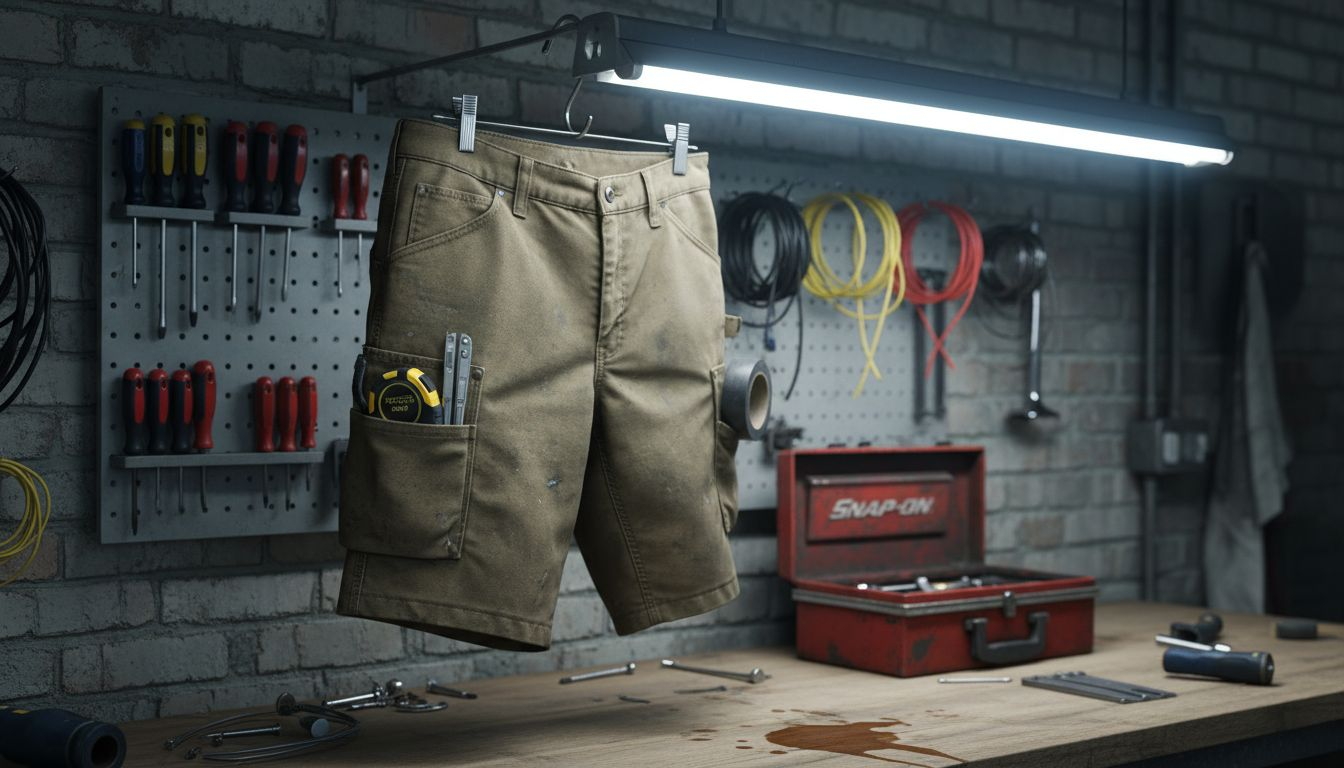
These add multiple tool pockets without sacrificing protection. If you carry meters, cutters, or other gear, cargo shorts keep tools organized and accessible. The extra pockets reduce strain on your main pockets.
Athletic-Cut Work Shorts
Designed for maximum mobility, these shorts feature articulated seams and stretch panels. They work best when you’re climbing, bending in tight spaces, or doing physically demanding tasks. The athletic cut doesn’t compromise on safety features.
Consider these when working in:
- Attics or crawl spaces
- Panel installations requiring extended bending
- Jobs demanding high mobility
- Warm weather conditions where lighter weight matters
Pro tip: Own at least two different short types—one for general work and one specifically for high-heat or industrial environments—so you’re always wearing the right protection for the job.
Here’s a side-by-side comparison of popular electrician work short types and when each excels:
| Short Type | Best Use Environment | Durability Level | Comfort Notes |
|---|---|---|---|
| Flame-Resistant Cotton | Indoor & light outdoor work | Moderate | Soft, ideal for long hours |
| Nomex Blend | High-heat, industrial | High | Synthetic feel, less sweat |
| Hybrid | Mixed-risk environments | High | Breathable, flexible design |
| Cargo-Style | Tool-heavy jobs | Moderate to high | Extra pockets, bulkier fit |
| Athletic-Cut | Tight spaces, high mobility | Moderate | Maximum movement, light feel |
Key Features: Materials, Pockets, And Design
The right work shorts combine three critical elements: the fabric itself, practical pocket placement, and thoughtful design. Each component directly impacts how well your shorts perform on the job.
Materials That Matter
Cotton duck and denim are industry standards for electrician workwear because they balance durability with comfort. Cotton duck is thicker and more abrasion-resistant, while denim offers flexibility without sacrificing strength.
Quality materials deliver:
- Durability that withstands months of heavy use and washing
- Breathability so you stay comfortable during long shifts
- Colorfastness that resists fading under sun exposure
- Arc-rated capability when paired with protective treatments
- Easy maintenance without special washing requirements
Look for double-stitched seams throughout the shorts. Single-stitched seams fail faster when you’re carrying tools and moving constantly.
Pocket Design That Works
Pockets aren’t just convenience—they’re functional safety features. Poor pocket design forces you to carry tools awkwardly, creating strain and safety risks.
Essential pocket configurations include:
- Front pockets deep enough for meters and small tools
- Cargo pockets on thighs for larger items like flashlights
- Back pockets with reinforced corners for wallets or notebooks
- Tool loops on waistband for hanging equipment
- Reinforced stitching at all pocket stress points
Pockets with reinforced corners prevent tearing when loaded, saving you from losing tools and protecting your shorts’ longevity.
Cargo pockets should sit high enough that you can bend without everything spilling. Test pocket depth before buying—your meter should fit completely inside without bulging.
Design Features That Support Your Work
Tapered waistbands reduce sagging when you’re bending in electrical panels. Articulated seams at the crotch allow unrestricted movement when climbing or reaching overhead.
Look for:
- Gusseted crotch for maximum mobility without stress
- Articulated leg seams that follow your natural movement
- Adjustable waistband options for consistent fit all day
- Flat-front or comfort waistband depending on your preference
- Inseam reinforcement in high-friction areas
Some shorts add knee reinforcements. If you’re working on floors or ladders frequently, reinforced knees extend the life of your shorts significantly.
Pro tip: Try on shorts while standing and bending forward to test if pockets stay accessible and if the waistband stays put—these real-world movements reveal design flaws that sizing alone won’t catch.
Reference this checklist when inspecting new electrician work shorts:
| Inspection Point | What to Check | What It Prevents |
|---|---|---|
| Arc rating label | Official ATPV and standard cite | Ensures compliance, safety |
| Pocket depth | Meters/tools fit securely | Prevents tool loss |
| Seam construction | Double-stitching throughout | Avoids premature tearing |
| Waistband fit | No pinching or gaping | Maintains focus, comfort |
| Fabric feel | Breathes and moves with body | Reduces heat, sweat buildup |
Choosing The Right Fit And Safety Standards
Fitting work shorts properly means balancing three priorities: safety compliance, comfort that lasts all day, and movement freedom. Get any one wrong, and your shorts fail you on the job.
Understanding Safety Requirements
Flame-resistant materials must comply with OSHA and NFPA guidelines for arc flash protection. These standards exist because arc flash burns happen in seconds, and the right fabric makes the difference between minor injury and life-altering damage.
Safety standards require:
- NFPA 70E compliance for electrical work environments
- Arc rating (ATPV) measured in calories per square centimeter
- Flame resistance that doesn’t wash out after a few cycles
- Integration capability with other PPE like arc-rated jackets
- Documentation showing fabric testing and certification
Never buy shorts just because they look professional. Check for certification labels inside the waistband confirming arc rating and flame resistance standards.
Getting The Fit Right
Too-tight shorts restrict movement and create safety hazards. Too-loose shorts catch on equipment or snag during climbing. The right fit feels almost invisible.
Test fit by:
- Standing normally and bending forward 90 degrees
- Reaching overhead as if pulling wire through a conduit
- Sitting and standing to check waistband comfort
- Walking to ensure no riding up or sliding down
- Checking pocket accessibility in all positions
The correct fit lets you move freely through eight hours of work without thinking about your shorts—that’s when they’re actually protecting you effectively.
Inseam matters more than you think. If shorts are too long, fabric bunches at your ankles and catches on ladder rungs. Too short, and you lose coverage during bending. Measure from your crotch to your ankle, then subtract half an inch for the right inseam length.
Waistband sizing requires honesty. Shorts that pinch your waist all day become safety hazards because you’ll adjust them constantly, creating distractions on the job. Size up slightly if needed—comfort prevents accidents.
Verifying Safety Compliance
Before purchasing, confirm your shorts meet requirements for your specific work environment. Residential wiring demands different protection than commercial panel work or industrial settings.
Look for:
- Care label instructions ensuring durability through repeated washing
- Arc rating information printed on tags or documentation
- Manufacturer warranty covering protection standards
- Return policy allowing verification before commitment
Pro tip: Request documentation of arc rating and flame-resistance certification before buying, then keep it with your workwear records—this proves compliance if OSHA ever inspects your site.
Avoiding Common Pitfalls When Selecting Shorts
Most electricians make the same mistakes when buying work shorts. Understanding what to avoid saves you money, keeps you safer, and prevents frustration on the job.
Safety Compliance Mistakes
The biggest pitfall is choosing shorts without verifying electrical safety standards. Regular shorts lack flame resistance and static control, leaving you exposed to arc flash risks. Shorts lacking flame resistance or static control create preventable hazards that can cause severe burns.
Avoid these safety errors:
- No arc rating documentation means no proof of protection
- Metal fasteners or zippers that conduct electricity instead of preventing it
- Synthetic blends without certification that melt instead of resist heat
- Shorts meeting general workwear standards but not electrical standards
- “Flame-resistant treated” fabrics that wash out after a few cycles
Always ask manufacturers for third-party testing documentation. If they can’t provide it, the shorts aren’t actually arc-rated.
Design And Functionality Errors
Low-quality materials wear out quickly, forcing expensive replacements. Poor pocket design forces awkward tool carrying that strains your back and creates safety risks. Inadequate ventilation leaves you overheated and unfocused during critical tasks.
Common design pitfalls:
- Insufficient tool pockets requiring you to carry equipment awkwardly
- Non-breathable fabrics that trap heat even in moderate temperatures
- Single-stitched seams that tear when loaded with tools
- Shallow front pockets where meters constantly slip out
- Stiff, non-articulated design that restricts movement during bending
Cheap shorts cost you more in the long run through constant replacement, lost productivity, and potential safety incidents from poor design.
Inspect stitching before buying. Run your finger along seams—they should feel smooth and even. Jagged or loose stitching signals low-quality construction that won’t survive real work.
Sizing And Fit Problems
Choosing the wrong size creates safety hazards. Tight shorts restrict movement when you need to reach or climb. Loose shorts catch on equipment or slide down during bending, exposing you unnecessarily.
Test before committing:
- Bend forward and reach overhead in the fitting room
- Squat down to simulate working in tight spaces
- Check that pockets stay accessible in all positions
- Ensure waistband doesn’t pinch or gape
- Verify inseam length leaves half an inch at ankles
Never assume your usual size applies to work shorts. Different manufacturers cut differently, and workwear typically runs smaller than casual clothing.
Pro tip: Try on shorts with the belt and boots you actually wear on the job site—this reveals fit issues that sizing alone won’t catch, preventing uncomfortable surprises during your first full shift.
Experience Unmatched Comfort and Safety with Electrician Work Shorts
Facing the demands of electrical work means you cannot compromise on your gear. The article highlights the crucial need for flame-resistant, arc-rated shorts that protect you from hazards like arc flash while delivering all-day comfort and freedom of movement. Your shorts must feature durable fabrics, reinforced pockets, and designs that move with you during tight spaces and long hours. If you find yourself tired of ill-fitting or unsafe shorts that distract you from your work and put your safety at risk it is time for a smarter choice.
Discover a range of electrician work shorts crafted with your toughest on-site challenges in mind at WorkwearComfort.com. Our collection focuses on durable, functional apparel designed to meet safety standards without sacrificing comfort or style. Whether you need flame-resistant cotton blends, hybrid designs, or shorts with reinforced tool pockets we have your back with gear built to last and keep you safe. Take control of your workday wear now and select shorts that reflect the strength and resilience you bring to every job.
Frequently Asked Questions
What features should I look for in electrician work shorts?
Look for features such as arc flash protection, flame-resistant materials, reinforced tool pockets, moisture-wicking capability, and durable fabric that withstands wear and tear. These elements ensure safety, comfort, and functionality on the job site.
How do flame-resistant cotton shorts compare to Nomex blend shorts?
Flame-resistant cotton shorts are ideal for general electrical work, providing comfort and moderate protection against arc flash. Nomex blend shorts offer superior heat resistance and durability, making them suitable for high-temperature and industrial environments.
Are hybrid work shorts suitable for all types of electrical work?
Hybrid work shorts are designed with protective panels in high-risk areas and breathable fabric in less hazardous zones. They are versatile and can be suitable for mixed-risk environments, providing both comfort and safety during various electrical tasks.
How important is the fit of my work shorts?
The fit of your work shorts is crucial for safety and comfort. Shorts that are too tight can restrict movement, while those that are too loose may catch on equipment. Ensure that you test the fit by bending, reaching, and moving to find a pair that allows for unrestricted movement while still fitting securely.
