

Finding carpentry work pants that truly fit the way you move can feel like a constant struggle for skilled tradeswomen on American job sites. Standard men’s styles often leave you wrestling with excess fabric or awkward waistbands, putting safety and comfort on the line. Carpentry pants engineered just for women offer tailored fits, strategic reinforcement, and smart features that help you stay focused and protected through every demanding shift. This guide breaks down what makes these pants different and how to choose the pair that matches your work.
Table of Contents
- What Makes Carpentry Work Pants Unique
- Essential Features For Skilled Tradeswomen
- Popular Women’s Carpentry Pant Styles
- Caring For And Maintaining Your Work Pants
- Common Mistakes When Choosing Work Pants
Key Takeaways
| Point | Details |
|---|---|
| Fit Matters | Women’s carpentry pants are specifically designed for female anatomy, enhancing movement while reducing safety hazards. |
| Functional Features | Quality work pants include strategically placed pockets and reinforced stress points to ensure durability and tool accessibility. |
| Avoid Ill-Fitting Options | Oversized or unisex pants can hinder performance and safety; choose styles specifically tailored for women. |
| Proper Care Extends Lifespan | Regular cleaning and prompt repairs significantly increase the longevity and effectiveness of work pants. |
What Makes Carpentry Work Pants Unique
Carpentry work pants for tradeswomen aren’t just smaller versions of men’s pants. They’re engineered specifically for your body, your job site, and your safety. Standard construction wear simply doesn’t account for the way women move, reach, and work in carpentry trades.
The difference starts with fit. Ill-fitting garments pose serious safety risks, especially when excess fabric gets caught in machinery or tools. Women’s-specific carpentry pants feature curves where you need them, narrower waists, and tapered legs that move with you without bunching.
Why Standard Sizing Fails Tradeswomen
Most “women’s” work pants on the market are simply scaled-down men’s styles. They don’t account for hip placement, thigh width, or the angle of your stride. This creates real problems on site.
When pants don’t fit properly:
- Excess fabric catches on power tools or nails
- Restricted leg movement limits climbing and bending ability
- Waistbands slip down or bind across your hips
- Pocket placement misses your actual pocket needs
- Inseams bunch or drag, creating tripping hazards
Tradeswomen face challenges with standard equipment and apparel designed for men, creating both discomfort and genuine safety hazards on the job site. The solution isn’t buying larger sizes and hoping they fit—it’s wearing pants engineered for women carpenters.
Built-In Features for Your Work
Quality carpentry work pants for women include practical design elements that matter when you’re framing, finishing, or measuring all day.
Look for:
- Multiple pockets positioned for your body and tool access
- Knee pad compartments for kneeling without bulk
- Reinforced stress points at crotch seams and pocket corners
- Breathable, durable fabrics that handle sawdust and moisture
- Flame-resistant materials meeting industry safety standards
- Separate jacket-trouser connections at the waist for quick removal if needed
These features exist because tradeswomen designed them, testing what actually works during eight-hour shifts on commercial sites.
Proper fit and safety features aren’t luxuries—they’re the difference between going home whole and spending it in a clinic.
The durability factor matters too. Carpentry work tears pants faster than most trades. You’re kneeling, crawling under framing, scraping surfaces. You need fabrics that hold up to repeated stress, not tear at seams after three months.
Pro tip: Check the seam construction closely—double or triple stitching at stress points (crotch, pocket corners, belt loops) means your pants last seasons, not weeks.
Essential Features for Skilled Tradeswomen
When you’re measuring, cutting, and assembling all day, your pants need to work as hard as you do. The difference between good carpentry work pants and great ones comes down to specific features engineered for the precision and physical demands of the trade.
Skilled tradeswomen know that precise measuring, cutting, and assembly work requires pants that don’t get in the way. Every feature should serve a purpose. Nothing should distract you from the job.
Pocket Placement and Tool Access
Standard pockets aren’t enough. You need multiple functional pockets positioned where you actually reach and grab tools.
Look for:
- Front pockets deep enough for tape measures and pencils without them sliding out
- Cargo pockets on thighs sized for nail pouches or phone access
- Back pockets reinforced for wallets and folding rules
- Hidden zippered pockets for keys or small valuables
- Tool loops or attachment points for suspenders and belts
Pocket placement matters because reaching across your body for a tool kills your rhythm and wastes time. Good carpentry work pants put pockets where your hands naturally move.
Durability That Outlasts the Job
Carpentry destroys pants. You’re kneeling on concrete, dragging materials, crawling through framing. Your pants need to survive this punishment without falling apart.
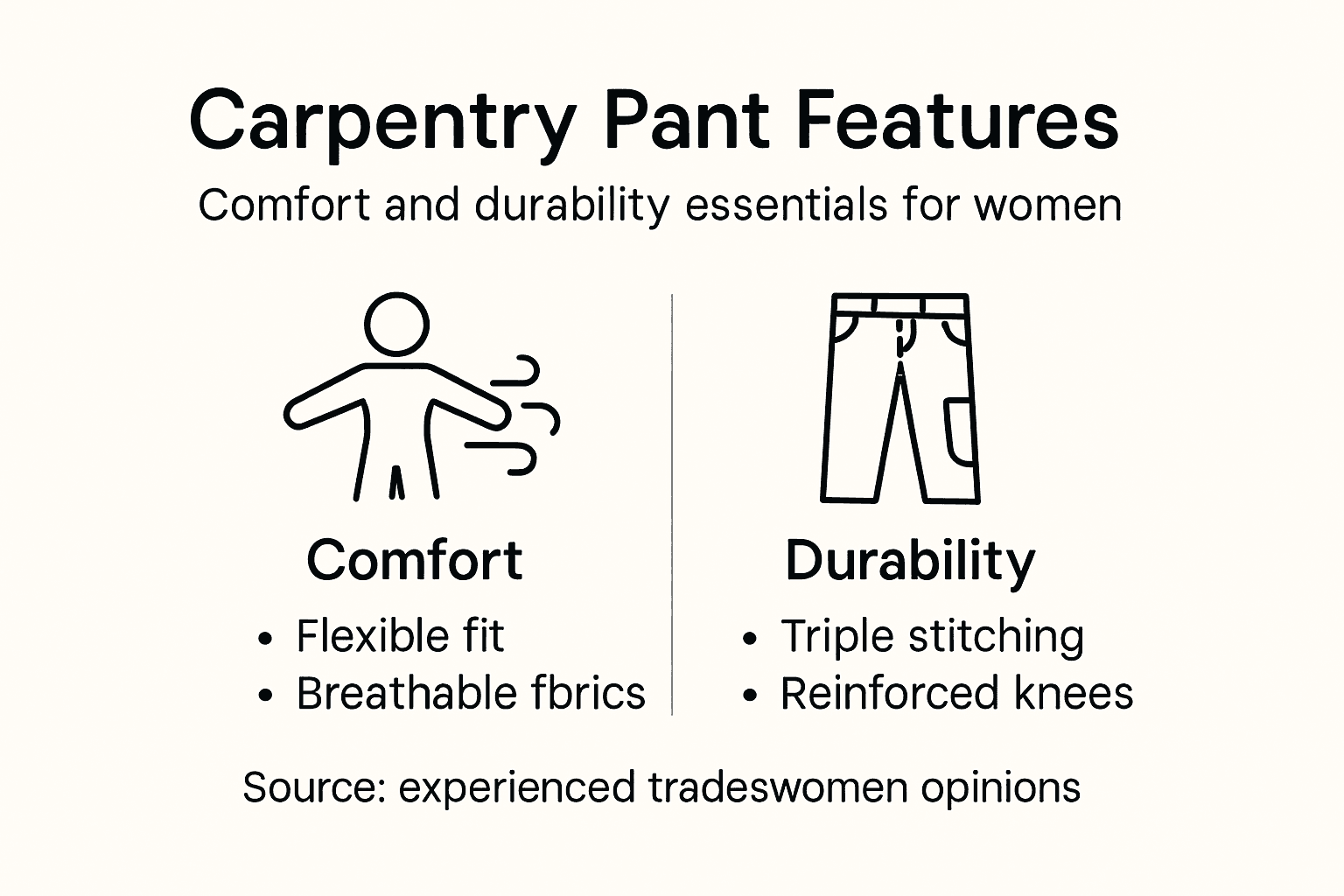
Reinforced stitching at stress points prevents seam failure where it matters most. Double or triple stitching at the crotch seam, pocket corners, and belt loops adds months to your pants’ lifespan.
Material quality matters too. Heavy-duty canvas or blended fabrics resist cuts, tears, and abrasion. Look for fabrics that breathe—you’re moving constantly, and moisture buildup causes chafing during long shifts.
The best pants are the ones you forget you’re wearing because they move with you and last through the toughest projects.
Knee Protection Without Bulk
You spend time on your knees in carpentry. Integrated knee pad compartments let you add protection where you need it without making your pants feel oversized or restrictive.
Quality work pants have:
- Pre-shaped knee pad slots that align with your knee when kneeling
- Reinforced fabric around the knees for durability
- Options to remove knee pads when you’re not on your knees all day
This design keeps you mobile while protecting you from concrete, nails, and splinters.
Comfortable Fit That Stays Put
Ill-fitting pants distract you constantly. A comfortable fit optimized for female anatomy prevents shifting, binding, and the constant need to adjust. You should move without thinking about your pants.
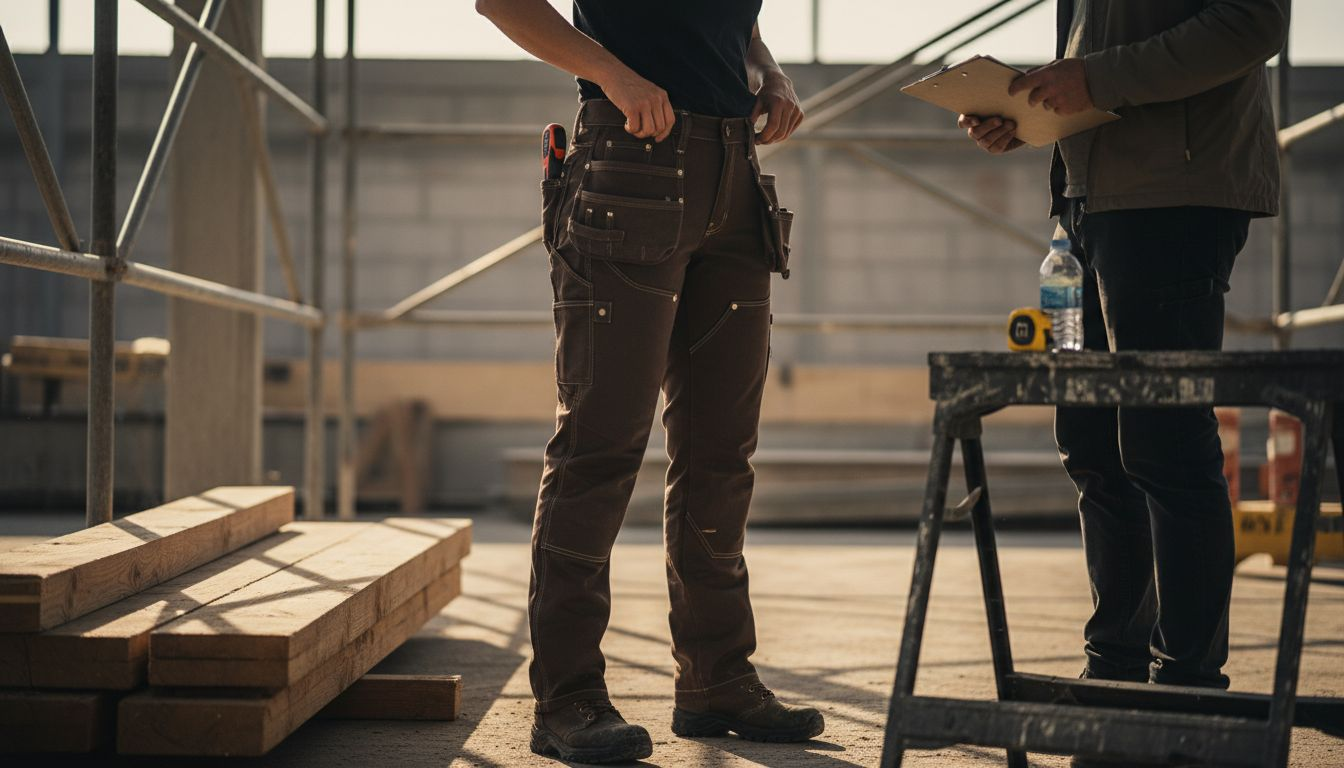
Pro tip: Buy pants with enough room in the thighs and seat for your actual body shape, then look for tapered legs that don’t drag or bunch—you want comfort without baggy fabric that catches on tools.
Popular Women’s Carpentry Pant Styles
Carpentry work pants for women come in several distinct styles, each designed for different job site conditions and personal preferences. The key is finding the cut and fit that works with your body and your work.
The most common styles blend function with comfort, offering features like hammer loops, multiple pockets for tools, and wider belt loops to accommodate the gear you carry daily. What started as male-dominated carpenter jeans has evolved into tailored options that actually fit women.
Carpenter Jeans and Denim Options
Carpenter jeans remain the industry standard. They’re built tough and designed to handle abuse from concrete, nails, and constant movement.
Denim carpenter jeans offer:
- Heavy-weight denim that resists cuts and tears
- Traditional hammer loops on the right side
- Double stitching at all stress points
- Deep front pockets sized for tape measures
- Reinforced crotch seams
Modern versions for women use softer denim than the original workwear, making them more comfortable for all-day wear without sacrificing durability. The cut is wider through the hips and thighs, giving you real movement.
Canvas options provide lighter weight and better breathability. Canvas carpenter pants work well in warmer climates or when you’re moving constantly and generating heat.
Relaxed Fit vs. Tapered Cuts
Women’s carpentry pants now come in straight leg, relaxed fit, and tapered cuts that combine functionality with comfort for different body shapes and work styles.
Relaxed fit pants offer maximum freedom of movement. You get room through the hips, thighs, and legs without excess bulk. These work best if you’re constantly climbing, bending, or squatting.
Tapered cuts taper down from the knee to the ankle. They’re sleeker and less likely to catch on tools or drag through sawdust. Tapered pants work well if you prefer a more fitted look without sacrificing mobility.
Straight leg pants maintain consistent width from hip to ankle. They’re versatile and work for most body types and job site conditions.
Here’s a quick comparison of women’s carpentry pant styles and their ideal uses:
| Pant Style | Best For | Typical Features |
|---|---|---|
| Carpenter Jeans | Heavy-duty tasks, durability | Hammer loop, reinforced seams |
| Canvas Pants | Warm weather, breathability | Lighter fabric, flexible fit |
| Relaxed Fit | Maximum mobility | Roomy hips, loose legs |
| Tapered Cut | Sleek look, safety | Narrow ankles, reduced snagging |
| Straight Leg | All-purpose use | Consistent width, versatile fit |
Color and Material Choices
Work pants come in practical colors and durable materials engineered for construction.
Traditional options include:
- Brown duck canvas for classic workwear look
- Blue denim for durability and professionalism
- Tan or khaki blends for lighter weight and heat management
- Black blends for versatility and hiding dirt
Fabric blends matter. Cotton-polyester blends add stretch without sacrificing durability. Some modern pants include nylon reinforcements at high-stress areas.
The best pant style is the one you’ll actually wear every day because it feels right and keeps you protected through your entire shift.
Finding Your Perfect Fit
Your ideal style depends on your body, the work you do, and personal preference. No single “best” style exists.
Consider your priorities:
- How much climbing and bending do you do?
- Do you work in heat or cooler conditions?
- Do you prefer a fitted or roomier silhouette?
- What tool access matters most for your jobs?
Pro tip: Try on multiple styles and cuts before committing—sit, squat, and reach in the dressing room to test mobility, then choose the style that disappears once you’re working.
Caring for and Maintaining Your Work Pants
Your carpentry work pants are an investment in your comfort and safety. Proper maintenance extends their life significantly and keeps them performing at their best through countless job sites.
Good care starts with understanding that frequent cleaning removes dirt and debris that can embed in fabric and accelerate wear. Beyond washing, routine inspection catches problems before they become major damage.
Regular Cleaning and Inspection
You need a cleaning routine that works with your schedule and your pants’ durability.
Start with these steps:
- Shake out loose dirt and sawdust after each shift
- Brush off dried mud and dust before washing
- Check pockets and seams for hidden debris
- Inspect knees, crotch seams, and pocket corners for tears
- Look for loose threads or separating stitching
Cleaning frequency depends on your work. Heavy carpentry and demolition require weekly washing. Finishing work or lighter tasks might allow every two weeks. The goal is removing material that damages fabric while not over-washing, which stresses seams.
Washing and Care Best Practices
Washing method matters as much as frequency. Cold water preserves dye and fabric strength better than hot water. Turn pants inside out to reduce fading and protect hardware like zippers and rivets.
Use these washing guidelines:
- Wash in cold water with mild detergent
- Avoid bleach or harsh chemicals
- Skip fabric softener, which coats fibers
- Zip zippers completely before washing
- Turn pockets inside out periodically to fully clean them
Manufacturer-recommended cleaning procedures and proper storage contribute to longer life and maintain water resistance if your pants include treated fabrics. Check care tags for specific guidance on your particular pants.
Prompt Repairs Save Money
Small damage becomes big problems fast in carpentry work. A tiny tear at a seam grows into a ripped inseam. A loose rivet becomes a missing pocket attachment.
Repair immediately when you notice:
- Seams starting to separate
- Torn fabric, especially at knees or crotch
- Loose or missing rivets
- Zipper problems
- Worn belt loops
Simple repairs like restitching a seam or replacing a rivet add months to your pants’ life. Patching small tears prevents them from spreading.
Taking thirty minutes to repair small damage now saves you from buying replacement pants in three months.
Storage and Long-Term Care
How you store work pants between shifts matters. Keeping them clean and dry prevents mildew and odors that become permanent.
Store properly by:
- Hanging pants on a sturdy hanger or fold flat
- Keeping them in a cool, dry space
- Avoiding damp basements or hot vehicle interiors
- Letting them fully dry before storing
- Keeping them separate from harsh chemicals or oils
Pro tip: Keep a small sewing kit in your truck with thread, needles, and a patch kit—fixing a small seam or tear immediately prevents it from becoming a safety problem on the job site.
Common Mistakes When Choosing Work Pants
Many tradeswomen end up with work pants that don’t serve them well. The mistakes happen early, often before you even realize what you’re looking for. Knowing what to avoid saves money and keeps you safer on site.
The biggest mistake is settling for pants not designed for women. Ill-fitting garments designed for men compromise both safety and comfort, creating problems that follow you through every shift.
Buying Oversized or Unisex Pants
This seems like an easy fix. Just buy larger men’s sizes and hope they fit. This almost never works, and the consequences go beyond discomfort.
Problems with oversized pants include:
- Excess fabric bunching at your hips and thighs
- Inseams dragging on the ground, creating tripping hazards
- Loose waistbands that slip down during work
- Pockets positioned at wrong angles for your body
- Fabric catching on tools or machinery
Excess bulk restricts movement when you need mobility most. You can’t climb, squat, or reach effectively when your pants don’t fit your frame. This kills productivity and increases frustration.
Choosing Pants Based on Price Alone
Cheaper pants often lack reinforced stitching, proper pocket construction, and durable fabrics. You save forty dollars upfront and replace them in two months. That’s expensive in the long run.
Investing in quality work pants designed for women means fewer replacements and better protection. Calculate cost per wear, not just initial price.
Ignoring Functional Features You Actually Need
Neglecting pockets or functional features needed for tools reduces productivity and increases frustration on job sites. You need pants that work with your specific carpentry tasks, not generic construction pants.
Consider these questions before buying:
- How many tool pockets do you actually use daily?
- Do you need knee pad compartments for your work?
- Will you use hammer loops or other attachment points?
- Do you need multiple sizes of pockets for different items?
Missing features force you to carry gear in other ways, burning energy and creating safety risks.
Making Permanent Alterations
Using makeshift adjustments like cutting or altering pants voids safety certifications and can increase injury risk. When pants don’t fit, the answer isn’t to cut them shorter or take them in.
Alterations compromise:
- Seam strength at stress points
- Water resistance or flame-resistant treatments
- The structural integrity that prevents fabric from catching
- Warranty or safety certifications
If pants need alterations to fit, they’re the wrong pants. Find ones that fit properly from the start.
Spending time finding pants that fit right eliminates problems that cost time and safety every single workday.
Overlooking Fit Optimization for Female Bodies
Women’s bodies are shaped differently from men’s. Hip placement, thigh width, and waist positioning require different pant geometry. Ignoring this creates constant discomfort and distraction.
Test fit by doing what you actually do on site: squat, climb, reach overhead, bend. Pants should move with you without pulling, bunching, or exposing skin at the waist.
Pro tip: Try on multiple brands and styles before committing—your body is unique, and what fits your coworker perfectly might not fit you the same way.
Below is a summary of common mistakes when choosing women’s work pants and their consequences:
| Mistake | Resulting Issue | Long-Term Impact |
|---|---|---|
| Buying oversized/unisex pants | Material bunching, poor movement | Increased safety hazards |
| Focusing only on price | Low durability, few features | Frequent replacements |
| Ignoring functional features | Inadequate tool access | Decreased productivity |
| Making permanent alterations | Lost safety certification | Greater injury risk |
| Overlooking gender-specific fit | Constant discomfort, distraction | Reduced efficiency at work |
Discover Workwear That Matches Your Strength and Style
Finding carpentry work pants that truly fit and last through tough jobsite conditions is essential for every tradeswoman. Whether you struggle with ill-fitting men’s pants or need durable, functional gear that supports your unique movements and safety, you deserve apparel designed specifically for your body and your trade. At WorkWearComfort.com, we understand the pain points you face: from fabric bunching to missing pockets, and the constant need for gear that works as hard as you do.
Explore our range of rugged, comfortable women’s workwear and gear that embraces blue-collar values and durability. Complement your pants with our selection of Blue-Collar Working Man Sweatshirt Hoodies built for protection and lasting comfort on site. Now is the perfect time to upgrade your work apparel to gear that stays put during the hardest shifts and keeps you safe. Visit WorkWearComfort.com and take control of your workday with the fit and toughness you deserve.
Frequently Asked Questions
What makes carpentry work pants for tradeswomen different from standard work pants?
Carpentry work pants for tradeswomen are specifically engineered for women’s bodies, taking into account their movement, reach, and job site needs. They offer a tailored fit with features like narrower waists and tapered legs to enhance safety and comfort.
Why is proper fit important in carpentry work pants?
Proper fit is crucial as ill-fitting pants can pose serious safety risks, such as excess fabric getting caught in machinery or limiting movement. Women’s-specific pants are designed to fit female anatomy, allowing for freedom of movement and reducing the risk of accidents.
What essential features should I look for in women’s carpentry work pants?
Look for features such as multiple pockets for tool access, knee pad compartments, reinforced stress points, breathable fabrics, and flame-resistant materials. These elements enhance functionality, comfort, and safety on the job site.
How do I care for and maintain my carpentry work pants to ensure their durability?
To extend the life of your work pants, regularly remove dirt and debris, wash them in cold water with mild detergent, and inspect for any damage like loose threads or tears. Prompt repairs and proper storage in a cool, dry place also contribute to their longevity.
Recommended
- Women’s Trade Work Trousers: Durability Meets Comfort – WorkWearComfort
- Work Construction Pants: Comfort and Safety at Work – WorkWearComfort
- Carpentry Work Clothes: Safety, Fit, and Confidence – WorkWearComfort
- Work Pants for Construction – Durability That Matters – WorkWearComfort
- Factors to Consider When Buying Leather Cargo Pants - Maker of Jacket
