

Long workdays on hot concrete, sharp edges, and unexpected spills are routine for those in construction and skilled trades across the United States. The demands of the job do not just test your stamina but also your gear. Work construction pants are more than just clothing—they are critical personal protective equipment that shield you from mechanical, chemical, and thermal hazards every day. Discover what sets trade-ready pants apart for safety, toughness, and comfort on serious job sites.
Table of Contents
- Defining Work Construction Pants for Trades
- Key Types and Materials for Job Sites
- Essential Features for Protection and Comfort
- Safety and OSHA PPE Requirements for Pants
- Comparing Costs and Common Buying Mistakes
Key Takeaways
| Point | Details |
|---|---|
| Specialized Construction Pants | Work construction pants are essential PPE designed to protect against hazards while providing comfort and durability for various trades. |
| Material Selection Is Critical | Choosing the right material based on the job demands is vital to ensure adequate protection and longevity of the pants. |
| Compliance With OSHA Standards | Work pants must meet OSHA requirements to ensure safety and efficacy in protecting workers from workplace risks. |
| Consider Total Cost of Ownership | When purchasing, assess durability and long-term value over initial price to enhance safety and reduce replacement frequency. |
Defining Work Construction Pants for Trades
Work construction pants are specialized protective garments designed specifically for trade professionals who require durability, safety, and comfort in challenging work environments. Unlike standard pants, these technical garments serve as critical personal protective equipment (PPE) that safeguard workers from multiple workplace hazards.
According to OSHA guidelines for construction PPE, work construction pants must provide comprehensive protection against mechanical, chemical, thermal, and physical risks encountered on job sites. These specialized pants are engineered with advanced materials and design features tailored to specific trade requirements.
Key characteristics of professional work construction pants include:
- Reinforced fabric in high-wear areas like knees and seat
- Multiple utility pockets for tools and equipment
- Durable fabric resistant to tears, punctures, and abrasions
- Flexibility for unrestricted movement during physical tasks
- Enhanced protection against workplace hazards
The CDC’s standards for protective clothing emphasize that work pants must be selected based on comprehensive hazard assessments specific to each trade’s unique working conditions. This means construction workers in electrical work will require different protective pants compared to those in heavy machinery or welding environments.
Construction Work Pant Protection Levels:
- Basic Protection: Standard heavy-duty fabric
- Enhanced Protection: Added reinforcements and specialized materials
- Advanced Protection: Integrated safety features like chemical resistance
Pro Tip: Invest in work pants that match your specific trade’s safety requirements, not just general comfort.
Key Types and Materials for Job Sites
Construction work pants represent a critical safety element for trade professionals, with materials and design playing a crucial role in protecting workers from various job site hazards. Construction-specific protective materials range from traditional heavy-duty fabrics to advanced high-performance textiles engineered for maximum worker safety and comfort.
The primary materials used in work construction pants include:
- Canvas: Extremely durable and resistant to wear and tear
- Denim: Classic material with inherent strength and durability
- Ripstop Fabrics: Designed to prevent small tears from expanding
- Kevlar-Reinforced Materials: Providing superior cut and abrasion resistance
- Fire-Resistant Blends: Critical for high-risk environments
According to CDC protective clothing standards, the selection of work pants must go beyond basic material considerations. Professional-grade work pants should offer a strategic balance between protection, flexibility, and comfort to ensure workers can perform their tasks safely and efficiently.
Key Protective Material Characteristics:
- Mechanical Resistance
- Chemical Repellency
- Thermal Protection
- Breathability
- Lightweight Mobility
Modern work construction pants are not just about fabric—they represent sophisticated personal protective equipment designed to adapt to diverse and challenging work environments. Advanced manufacturing techniques now allow for specialized pants that can withstand extreme conditions while providing workers with unprecedented levels of comfort and safety.
Here is a quick reference comparing material properties and their typical use cases in construction pants:
| Material Type | Key Strength | Common Trade Use |
|---|---|---|
| Canvas | Extreme durability | Carpentry, Masonry |
| Denim | All-day comfort | General Labor |
| Ripstop Fabric | Tear prevention | Landscaping, Framing |
| Kevlar Reinforced | Cut resistance | Glass Handling, Demolition |
| Fire-Resistant Blend | Thermal protection | Welding, Electrical |
Pro Tip: Always inspect your work pants for wear and damage before starting each job to ensure maximum protection.
Essential Features for Protection and Comfort
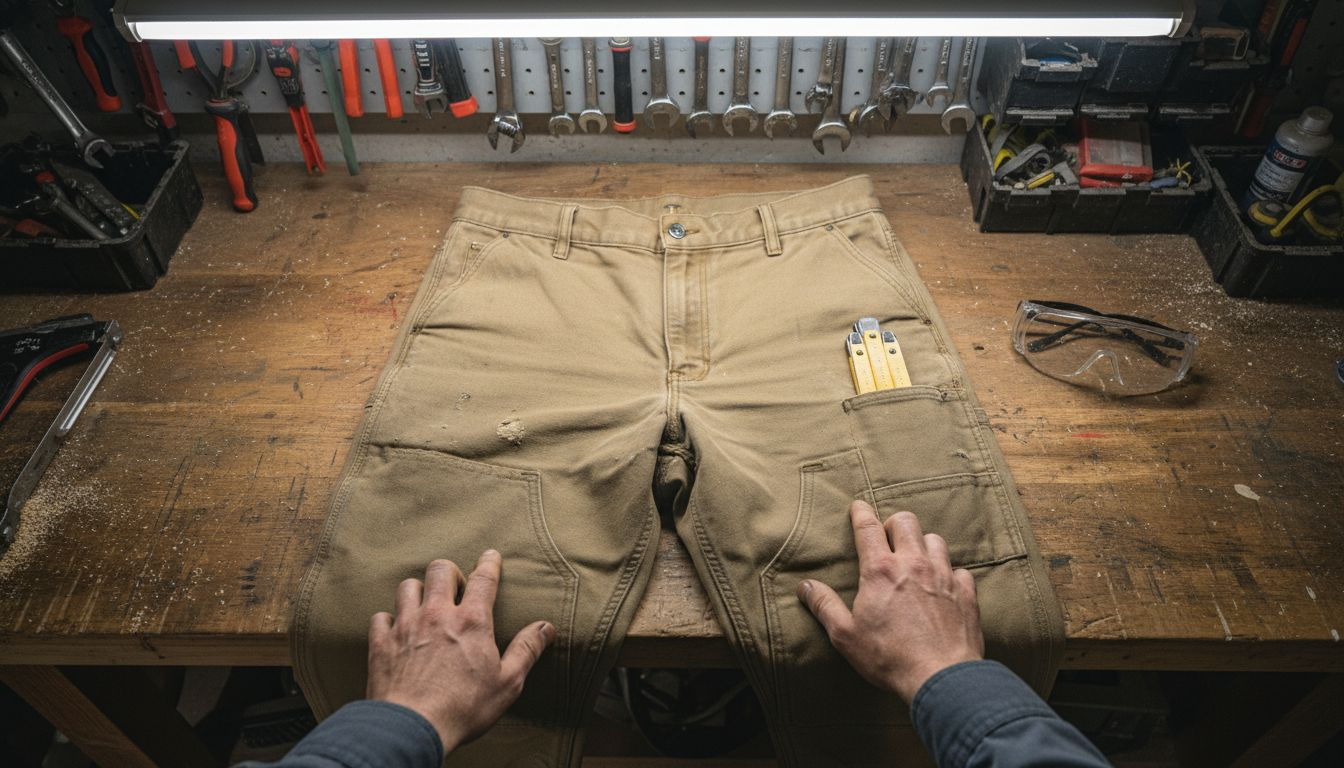
Constructing the ideal work pants requires careful consideration of features that simultaneously protect workers and provide maximum comfort during demanding job site activities. OSHA’s personal protective equipment standards emphasize the critical importance of selecting work pants that offer comprehensive protection without compromising mobility.
Key essential features for work construction pants include:
- Reinforced Knee Areas: Provides extra durability in high-wear zones
- Multiple Utility Pockets: Allows convenient tool storage and access
- Moisture-Wicking Fabric: Helps regulate body temperature and reduce sweat
- Stretch Panels: Enables unrestricted movement during physical tasks
- Adjustable Waistbands: Ensures a personalized, comfortable fit
According to CDC protective clothing guidelines, work construction pants must balance impact resistance with ergonomic design. Professional-grade work pants integrate advanced materials that protect against workplace hazards while maintaining worker comfort and flexibility.
Protection Performance Hierarchy:
- Basic Physical Protection
- Enhanced Mobility
- Thermal Regulation
- Chemical Resistance
- Long-Term Durability
Modern work construction pants represent a sophisticated blend of safety engineering and performance textile design. Manufacturers now develop pants with sophisticated features that address specific workplace challenges, ensuring workers can perform tasks safely and efficiently.
Pro Tip: Invest in work pants that provide a comprehensive balance between protection, comfort, and practical functionality.
Safety and OSHA PPE Requirements for Pants
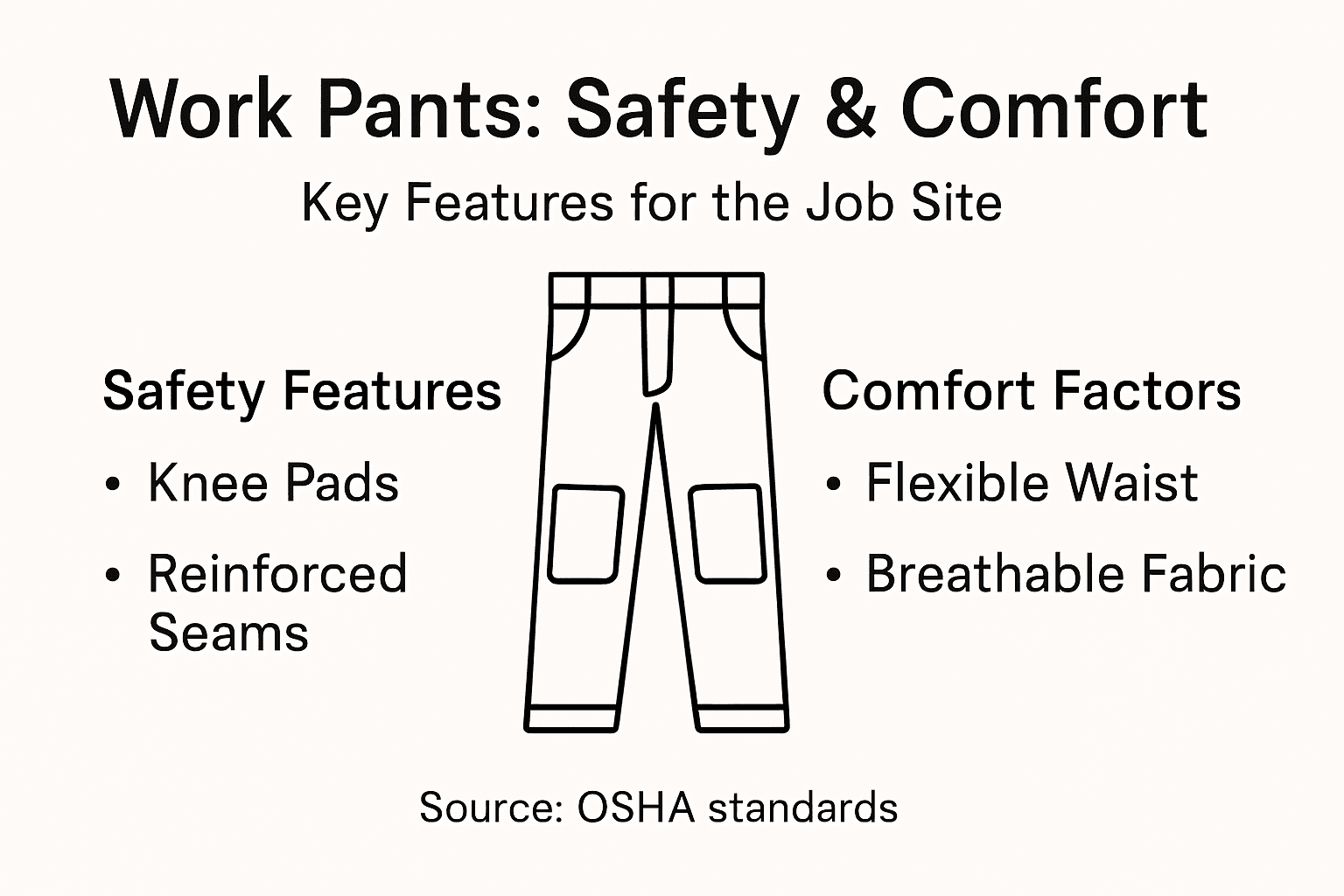
Construction workers face significant risks that demand comprehensive personal protective equipment (PPE), with work pants serving as a critical line of defense against workplace hazards. OSHA PPE regulations mandate strict guidelines for protective clothing that safeguard workers from potential injuries on job sites.
Key OSHA requirements for work construction pants include:
- Hazard-Specific Protection: Pants must address specific workplace risks
- Proper Fit: Garments should allow full range of motion without compromise
- Material Durability: Fabric must withstand mechanical and chemical exposures
- Employer-Provided Coverage: Employers must supply necessary protective pants
- Regular Inspection: PPE must be maintained and replaced when damaged
Under OSHA regulation 29 CFR 1926.95, employers bear the responsibility of providing protective work pants at no cost when workplace hazards exist. This regulation ensures workers have access to appropriate safety gear that shields them from physical, chemical, and thermal risks.
PPE Compliance Hierarchy:
- Hazard Assessment
- Appropriate Equipment Selection
- Proper Fit and Maintenance
- Worker Training
- Continuous Evaluation
Compliance with OSHA standards goes beyond mere clothing—it represents a comprehensive approach to worker safety that prioritizes prevention, protection, and proactive risk management in challenging work environments.
Pro Tip: Always verify your work pants meet current OSHA safety standards before beginning any job.
Comparing Costs and Common Buying Mistakes
Investing in work construction pants requires more than simply comparing price tags—it demands a comprehensive understanding of long-term value and safety considerations. OSHA PPE purchasing guidelines emphasize that selecting protective workwear is a critical decision that directly impacts worker safety and overall workplace efficiency.
Common buying mistakes construction professionals often make include:
- Prioritizing Price Over Protection: Choosing cheapest options that compromise safety
- Ignoring Job-Specific Requirements: Selecting generic pants for specialized work environments
- Overlooking Proper Fit: Buying pants without considering individual body types and movement needs
- Neglecting Material Quality: Focusing on appearance instead of durability and protective features
- Failing to Consider Replacement Costs: Not calculating long-term expenses of frequent replacements
According to workplace safety experts, true cost analysis for work construction pants should include:
Total Cost of Ownership Factors:
- Initial Purchase Price
- Durability and Lifespan
- Protective Capabilities
- Maintenance Expenses
- Potential Injury Prevention Value
True cost-effectiveness goes beyond the initial price tag. Professional-grade work pants represent an investment in worker safety, comfort, and long-term productivity. Spending slightly more on high-quality, job-specific pants can ultimately reduce workplace injury risks and replacement frequency.
The following table summarizes typical buying mistakes and what to do instead for optimal work pant selection:
| Common Mistake | Better Approach |
|---|---|
| Choosing lowest price | Prioritize protection and durability |
| Ignoring specific job hazards | Match pants to actual work risks |
| Buying without fitting | Try on for mobility and comfort |
| Overlooking material quality | Evaluate tested, certified fabrics |
| Not considering replacements | Factor in expected garment lifespan |
Pro Tip: Calculate the total cost of ownership by considering durability, protection level, and potential injury prevention, not just the upfront price.
Discover Work Construction Apparel That Combines Comfort and Safety
Work construction pants must deliver on protection, durability, and comfort to meet the demands of tough job sites. If you are searching for apparel that supports your hard work while adhering to OSHA PPE standards and offers enhanced mobility and long-lasting wear look no further. At WorkWearComfort.com you will find rugged workwear designed specifically for blue-collar professionals who value strength and resilience every day.
Explore our full range of All Hooded Sweatshirts - WorkWear Comfort built with durability and functional features that complement your protective pants. Protect yourself from head to toe with gear that matches your work environment and keeps you comfortable during long hours. Visit WorkWearComfort.com now to upgrade your work closet with apparel engineered for safety and comfort. Don’t wait to experience workwear designed for those who get the job done right. For practical headwear options check out the Snapback and Dad Hats - Blue Collar Collection - WorkWear Comfort to complete your rugged look.
Frequently Asked Questions
What are work construction pants?
Work construction pants are specialized protective garments designed for trade professionals, providing durability, safety, and comfort in challenging work environments. They serve as personal protective equipment (PPE) to safeguard workers from various workplace hazards.
What materials are commonly used in construction work pants?
Construction work pants are typically made from materials such as canvas, denim, ripstop fabrics, Kevlar-reinforced materials, and fire-resistant blends. Each material offers unique benefits, such as durability, cut resistance, and thermal protection, depending on the work environment.
How should I choose the right work construction pants for my job?
When selecting work construction pants, consider factors such as the specific hazards of your trade, the required level of protection, comfort, fit, and the durability of materials. It is crucial to match pants to the unique risks associated with your job.
What are the key features to look for in work construction pants?
Key features include reinforced knee areas for durability, multiple utility pockets for easy tool access, moisture-wicking fabrics for temperature regulation, stretch panels for unrestricted movement, and adjustable waistbands for a comfortable fit.
Recommended
- Men’s Construction Work Pants: Comfort That Lasts – WorkWearComfort
- Construction Safety Wear – Keys to Protection on Site – WorkWearComfort
- Find the Best Construction Workwear Near Me Easily – WorkWearComfort
- Work Wear Construction – Why Quality Matters Most – WorkWearComfort
- Top Custom Clothing Services – Expert Comparison 2026 – Prima Dons & Donnas
- Comfortabele bh: dit zijn de beste materialen voor dagelijks comfort - Philotes
- Complete Guide to Ergonomic Office Furniture - Projector Display
