

Freezing mornings on a Michigan job site or rainy afternoons in Texas demand workwear that matches your grit. For women working outdoors in the United States, choosing a winter work coat goes beyond style—it is about staying safe and comfortable no matter how long or tough your shift gets. This guide breaks down how to recognize your unique work environment, pick the right materials, and find features that deliver both durability and warmth, so you can face harsh American winters with confidence and comfort.
Table of Contents
- Step 1: Assess Your Winter Work Environment
- Step 2: Identify Durable and Insulated Materials
- Step 3: Select Features For Comfort And Utility
- Step 4: Verify Fit And Mobility For Active Work
- Step 5: Confirm Safety And Easy Maintenance
Quick Summary
| Essential Insight | Explanation |
|---|---|
| 1. Assess Your Work Environment | Understand temperature, moisture, wind, and activity levels to inform your coat choice effectively. |
| 2. Choose Appropriate Insulation Materials | Select materials like wool, synthetic fibers, or down based on your specific job conditions for warmth and durability. |
| 3. Prioritize Functional Features | Look for adjustable cuffs, multiple pockets, and ventilation to enhance comfort and utility during work activities. |
| 4. Ensure Proper Fit & Mobility | Try on coats with your work layers, checking movement during typical job tasks to avoid restrictions. |
| 5. Confirm Safety & Maintenance | Verify your coat’s safety features and ease of upkeep to maintain its effectiveness and longevity throughout the winter season. |
Step 1: Assess Your Winter Work Environment
Before you shop for a winter work coat, you need to understand exactly what conditions you’re facing on the job. Your electrician work site in Michigan looks nothing like a plumber’s outdoor calls in Texas. Spend a few days noting temperatures, wind conditions, precipitation, and how much you’re moving around versus standing still.
Start by identifying these environmental factors:
- Temperature range: What’s the coldest it gets where you work? Morning lows? All-day average?
- Moisture exposure: Do you encounter snow, rain, or wet conditions regularly?
- Wind intensity: Are you on rooftops, in open yards, or sheltered between buildings?
- Activity level: How much are you moving and generating body heat versus stationary work?
- Duration: Are you outside for 30 minutes or eight hours straight?
These details matter because thermal insulation and water vapor resistance requirements differ dramatically based on actual working conditions. A coat designed for occasional trips between vehicles won’t cut it for someone working outside all winter.
Check your employer’s safety standards too. Workplace safety assessments for cold exposure often include coat requirements. Your company may have specific guidelines about minimum insulation levels or material standards.
Also consider the physical demands of your trade. Electricians need different mobility than someone doing stationary inspections. Plumbers need pockets and reinforced areas for tools and equipment. Your coat should match how you actually move and work.
Document your specific conditions for at least three days—this data becomes your shopping baseline.
Know your layering situation too. If you’re wearing heavy thermal base layers and a sweater underneath, you need less insulation in the coat itself. If you layer light and minimal, the coat becomes your primary heat source.
You might also review winter workwear essentials to understand how your coat fits into your overall winter work strategy.
Pro tip: Photograph or record your workspace during your coldest, worst-weather days—use your phone to capture wind, moisture, and temperature conditions so you can reference them while shopping, ensuring you don’t underestimate what you’re facing.
Step 2: Identify Durable and Insulated Materials
Now that you know your work environment, you need to understand which materials actually deliver warmth and durability. Not all fabrics are created equal, and what works for a casual winter jacket won’t hold up to the demands of electrical work or plumbing in harsh conditions.
The main insulation options break down into a few categories:
- Wool: Natural fiber that retains heat even when damp, resists moisture naturally, and lasts for years
- Synthetic insulation: Polyester blends and engineered materials that resist water, dry quickly, and maintain loft
- Down: Lightweight insulation that compresses easily, though it loses effectiveness when wet
- Fleece liners: Mid-layer insulation that adds warmth without excessive bulk
Durable textile materials like wool and polyester are specifically chosen for work apparel because they withstand repeated exposure to elements and physical stress. Your coat’s outer shell matters just as much as insulation. Look for water-resistant or waterproof outer fabrics that prevent moisture from penetrating inward.
Understand how thermal insulation properties work in actual coats. Materials trap air pockets to create warmth. Denser insulation keeps you warm in extreme cold but may restrict movement. Lighter insulation allows mobility but suits milder conditions.
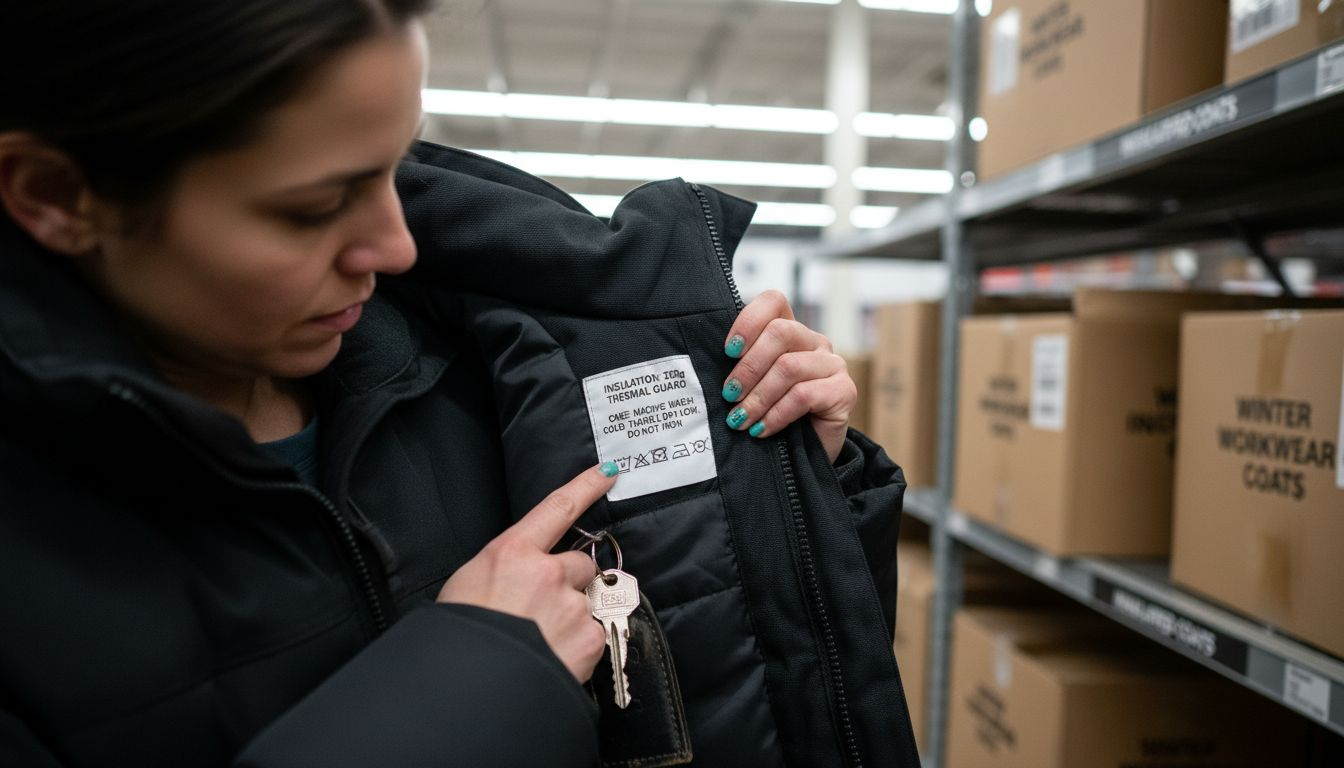
Check the material composition on any coat you consider. Look for labels stating insulation type, weight, and outer shell material. A heavy wool blend with a nylon exterior holds up far better than thin synthetic fabric against tool friction or rough job site surfaces.
Here is a quick comparison of popular insulation materials for winter work coats:
| Material Type | Main Benefit | Limitation | Best For |
|---|---|---|---|
| Wool | Warm when wet | Heavy when saturated | Damp conditions |
| Synthetic (Polyester) | Dries quickly, lightweight | Less warm if very thin | Wet, active jobs |
| Down | High warmth-to-weight ratio | Loses insulation when wet | Dry, extreme cold |
| Fleece Liner | Adds flexible warmth layer | Not weatherproof on its own | Layering under shells |
Real durability means the coat maintains its insulation properties and structural integrity after seasons of actual work, not just looking warm in a store.
Consider blended materials too. Many quality work coats combine wool with synthetic fibers to gain the benefits of both warmth and water resistance. Reinforced seams and treated fabrics add years to your coat’s lifespan.
You’ll want to understand how winter work jacket features impact durability and warmth together in real-world scenarios.
Pro tip: Feel the fabric weight and insulation density in person before buying—heavier doesn’t always mean warmer, but noticeably thin materials are a red flag for coats claiming winter durability.
Step 3: Select Features for Comfort and Utility
A warm coat means nothing if you can’t move, reach your tools, or access your pockets on the job. This step is about finding the features that transform a good coat into one that actually works for your trade.
Start with the essentials that impact comfort during long work days:
- Adjustable cuffs: Keep wind and snow out while allowing you to remove gloves without exposing wrists
- Hood or high collar: Protects your neck and head without requiring a separate hat
- Multiple pockets: Deep pockets that fit tools, hands, and work essentials without shifting
- Underarm vents or pit zips: Allow air circulation when you’re moving or generating heat
- Flexible shoulders and sleeves: Enable full arm movement for reaching, climbing, or overhead work
Winter work apparel with proper layering is designed with features like adjustable cuffs and hoods to optimize protection while maintaining mobility. Your coat needs to work with your body, not against it.
Think about the specific demands of your job. Electricians need pockets positioned to balance weight and prevent tool loss. Plumbers need reinforced areas where you kneel or crawl. Consider seam placement and sealing too. Sealed seams prevent water from seeping through stitching points during rain or snow.
Water resistance matters immensely but shouldn’t come at the cost of breathability. A coat that traps sweat inside feels colder than one allowing moisture to escape. Look for coats with thermal insulation combined with ergonomic design that maintain comfort during active use.
Check the zipper quality and placement. A two-way zipper at the bottom allows ventilation without removing the entire coat. Metal zippers last longer than plastic but can be cold to the touch, so good seams prevent direct contact with skin.
The best work coat features those thoughtful details you’ll use every single shift, not the ones that look impressive hanging in a store.
Consider the hem length too. A coat that’s too short leaves your lower back exposed when bending. Too long and it catches on equipment or gets tangled.
You should also explore comfortable work outfits for women to understand how your coat layers with other apparel for maximum comfort.
Pro tip: Try on your winter work coat while wearing your actual work layers and doing your typical job movements—reach overhead, squat, bend sideways—to ensure features don’t restrict or bind during real work.
This table summarizes how key comfort features impact daily work performance:
| Feature | Comfort Impact | Utility Impact |
|---|---|---|
| Adjustable Cuffs | Prevents wind at wrists | Easy glove changes mid-task |
| Deep, Secure Pockets | Keeps hands warm | Stores tools within reach |
| Flexible Shoulder Design | Allows full arm movement | Reduces fatigue during overhead work |
| Underarm Vents | Reduces overheating | Maintains performance all day |
Step 4: Verify Fit and Mobility for Active Work
A coat that looks good but restricts your movement is worse than no coat at all. This step ensures your winter work coat supports the physical demands of your trade without compromising safety or performance.
Start by testing basic mobility in the fitting room:
- Reach overhead: Simulate climbing a ladder or accessing high electrical panels
- Bend and squat: Mimic plumbing work or crouching on job sites
- Rotate your torso: Test side-to-side movement for twisting work positions
- Swing your arms: Ensure full circular motion without shoulder binding
- Walk and stride: Verify the coat doesn’t ride up or restrict leg movement
Fit and mobility in workwear directly support safe and effective physical activity during work. Clothing that allows unrestricted movement enhances your ability to do your job while preventing injury. A coat that pulls or binds forces you into awkward compensations that strain muscles over time.
Pay attention to how the coat sits when you’re in working positions, not just standing still. Kneel down in the fitting room. Reach into a deep pocket while twisting. Pretend to use a drill or wrench. If the coat rides up your back or pulls at the underarms, it’s the wrong fit.
Layering is critical too. Apparel worn during cold activities should permit full mobility and layering options without becoming bulky or restrictive. Test your coat over your typical work layers, not bare skin.
Check sleeve length carefully. Sleeves should end at your wrist bone, not past it. Too long and they bunch inside gloves or catch on tools. Too short and your wrists freeze. When your arms hang naturally, sleeves should cover the gap between your glove and jacket.
A coat that fits perfectly while standing becomes a different coat when you’re actually working—test it doing what you’ll actually do on the job.
The shoulder seams matter enormously. They should sit right at the edge of your shoulder, not drooping or riding too high. Incorrect shoulder placement creates pressure points and restricts arm movement.
Consider trying the coat in a store that allows active testing. Some retailers understand that work apparel needs a different fitting standard than casual jackets.
Pro tip: Wear your heaviest work layers and thickest gloves when trying on coats, then test every movement you perform during a typical shift to ensure nothing restricts or bunches during actual work conditions.
Step 5: Confirm Safety and Easy Maintenance
Your winter work coat protects you only when it’s in good condition. This step ensures you’re buying a coat with safety features you can actually maintain and that will stay protective throughout the season.
Look for these critical safety features:
- High-visibility elements: Reflective strips or bright colors for visibility near traffic or equipment
- Weather-resistant seams: Sealed or taped seams prevent water from seeping through stitching
- Durable zippers: Metal or heavy-duty plastic that won’t fail in cold temperatures
- Reinforced stress points: Reinforced areas at shoulders, elbows, and cuffs where wear concentrates
- No loose threads or defects: Check for quality construction before purchasing
Safety features in winter work clothing include weather-resistant materials and regular inspection practices to preserve durability and protective qualities. A coat with compromised seams or failing zippers won’t keep you warm or safe when conditions get harsh.
Maintenance ease matters tremendously. Can you wash the coat without destroying it? Does the manufacturer provide clear care instructions? Maintaining winter clothing properly ensures insulation and waterproofing remain effective and prevents cold stress hazards.
Ask yourself these practical questions before buying. Is the coat machine washable or dry-clean only? Dry cleaning gets expensive fast. Does it need special detergent or conditions? A coat requiring hand-washing every time becomes a burden you’ll avoid, leaving it dirty and less effective.
Check if the waterproofing needs regular reapplication. Some coats require periodic treatment to maintain water resistance. Budget both time and money for this ongoing maintenance if you choose such a coat.
Inspect the lining carefully. Ripped or damaged linings reduce insulation effectiveness and trap moisture. Good linings can be replaced if needed, but cheap linings that tear easily signal poor overall construction.
A coat that’s difficult to maintain gets neglected, and a neglected coat fails when you need it most.
Verify that replacement parts are available. Can you buy new zippers, cuffs, or linings if they wear out? Coats designed for durability include accessible repair options.
Read online reviews from other trade professionals about real-world durability and maintenance. People doing actual construction work have honest insights about what holds up and what falls apart.
Pro tip: Before finalizing your purchase, contact the manufacturer directly to confirm washing instructions, waterproofing maintenance schedules, and available replacement parts—this investment ensures you can maintain your coat effectively throughout multiple winters.
Discover Durable Women’s Winter Work Coats Built for Real Work
Choosing the best winter work coat for durability means matching tough materials and smart features with your demanding job conditions. You need a coat that moves with you and stands up to harsh weather without sacrificing comfort or safety. At WorkWearComfort.com, we understand the challenge of finding gear that truly lasts through long shifts outdoors, which is why we offer apparel designed for blue-collar strength and resilience.
Explore our selection of women’s workwear made to withstand rugged environments while keeping you warm and mobile. Whether you need insulated layers, reinforced seams, or flexible designs, you will find coats and gear tailored to your trade. Don’t settle for less than durable protection. Visit WorkWearComfort.com now and upgrade your winter work wardrobe with gear that works as hard as you do. Also check out our Mens Work Hoodies & Sweatshirts for layering solutions and Trucker Caps Snapback - Blue Collar Strong to top your look with practical style.
Frequently Asked Questions
How do I assess my winter work environment before choosing a coat?
Begin by observing the temperature range, moisture exposure, wind intensity, activity level, and duration of your work in cold conditions. Spend at least three days documenting these factors to establish a solid baseline for your coat selection.
What materials should I look for in a durable women’s winter work coat?
Opt for high-quality materials like wool, synthetic insulation, or durable polyester blends. These materials provide warmth, water resistance, and the ability to withstand physical stress, ensuring longevity during harsh winter conditions.
What features enhance comfort and utility in a winter work coat?
Look for adjustable cuffs, deep pockets, underarm vents, and flexible shoulders. These features improve mobility and accessibility while keeping you warm and protected throughout your work day.
How can I ensure a proper fit and mobility for active work?
Test your winter work coat by simulating typical movements like reaching, bending, and squatting in the fitting room. Make sure the coat allows full range of motion without binding or pulling when you perform regular job tasks.
What safety features should be included in a winter work coat?
Ensure the coat has high-visibility elements, weather-resistant seams, and reinforced stress points. These features provide essential protection and visibility, making it safer to work in winter conditions.
How can I maintain my winter work coat effectively?
Follow care instructions carefully to preserve your coat’s insulation and waterproofing. Regularly check for wear and tear, and consider budgeting time and money for maintenance tasks like waterproofing or repairs to ensure your coat remains effective all winter.
Recommended
- Choose the Best Winter Work Jacket for Outdoor Jobs – WorkWearComfort
- Warm Work Jacket Womens: Durability Meets Style – WorkWearComfort
- 7 Essential Tips for Winter Workwear Womens – WorkWearComfort
- Choose and Wear the Best Mens Winter Work Jackets Easily – WorkWearComfort
- Hiking Winter Switzerland: Unique Challenges and Rewards
