

Long shifts in a busy auto shop test the limits of any workwear, yet over 80 percent of American mechanics report that standard pants fail to handle daily grease, stress, and movement. For those constantly bending, reaching, and working around machinery, choosing the right mechanic work pants is about more than style. Discover the key features that truly set apart dependable gear designed to protect, flex, and stay comfortable even in the toughest shop environments.
Table of Contents
- What Defines Mechanic Work Pants
- Types of Work Pants for Mechanics
- Essential Features for Auto Shop Comfort
- Fabric Choices and Flexibility Explained
- Costs, Value, and Why Quality Matters
- Risks of Inadequate or Unsuitable Pants
Key Takeaways
| Point | Details |
|---|---|
| Durability is Crucial | Mechanic work pants should prioritize heavy-duty materials and reinforced seams to withstand rigorous work environments. |
| Comfort Enhances Performance | Selecting pants with moisture-wicking and stretch technology is essential for maintaining comfort during long hours of mechanical work. |
| Choose Quality Over Cost | Investing in higher-quality pants reduces long-term costs through lower replacement frequency and enhanced safety. |
| Inadequate Pants Pose Risks | Wearing unsuitable work pants increases the likelihood of accidents and long-term health issues due to restricted movement and lack of protection. |
What Defines Mechanic Work Pants
Mechanic work pants are specialized garments engineered to withstand the harsh environments of automotive and industrial workspaces. Unlike standard trousers, these pants are designed with specific features that address the unique challenges skilled tradespeople face in mechanical work. They represent more than just clothing - they are essential protective equipment for professionals who work with complex machinery and demanding physical tasks.
The fundamental characteristics of high-quality mechanic work pants include robust material construction, strategic reinforcement, and functional design elements. Workwear specifically engineered for manual labor prioritizes durability and utility. Key defining features include:
- Heavy-duty fabric resistant to tears and abrasions
- Multiple reinforced tool pockets with secure closures
- Articulated knees for enhanced mobility
- Triple-stitched seams to prevent splitting under stress
- Strategically placed cargo pockets for organizing small tools and equipment
- Fabric treatments that resist oil, grease, and chemical stains
Beyond physical construction, mechanic work pants must provide comfort and flexibility. Professionals spend long hours bending, squatting, and moving in challenging positions, so the pants must support dynamic movement without restricting range of motion. Advanced work pants incorporate stretch panels, gusseted crotch designs, and ergonomic cut patterns that allow mechanics to work efficiently and safely.
Pro tip: When selecting mechanic work pants, prioritize durability and comfort over price, as high-quality pants can significantly improve your workplace performance and protection.
Types of Work Pants for Mechanics
Mechanics rely on specialized work pants that offer both functionality and durability in challenging automotive environments. Carpenter jeans represent a classic choice for professionals who need versatile workwear with practical tool-carrying capabilities. These pants are engineered to withstand the rigorous demands of mechanical work, featuring robust design elements that support daily technical tasks.
The most common types of work pants for mechanics include:
- Carpenter Jeans: Designed with multiple tool loops and extra pockets
- Cargo Pants: Featuring multiple large utility pockets for tool storage
- Denim Work Pants: Traditional heavy-duty option with reinforced stitching
- Ripstop Canvas Pants: Extremely durable with resistance to tearing
- Tactical-Style Work Pants: Offering maximum functionality with specialized pocket configurations
Each pant style offers unique advantages tailored to different mechanical environments. Cargo pants, for instance, provide exceptional storage options with large side pockets perfect for wrenches, measuring tools, and small equipment. Carpenter jeans incorporate additional reinforcement in high-stress areas like knees and seat, ensuring longevity under demanding workplace conditions.
Here’s a side-by-side comparison of popular mechanic work pant styles and their ideal use cases:
| Pant Style | Best For | Durability Level | Storage Options |
|---|---|---|---|
| Carpenter Jeans | Heavy tool use, carpentry | Very high | Multiple tool loops |
| Cargo Pants | Automotive, diverse tasks | High | Large utility pockets |
| Denim Work Pants | Classic shop work | Moderate to high | Basic pockets |
| Ripstop Canvas Pants | Extreme environments | Superior | Reinforced pockets |
| Tactical-Style Pants | Advanced mobility, long shifts | Very high | Specialized designs |
Modern mechanic work pants also integrate advanced fabric technologies that enhance performance. Stretch panels, moisture-wicking materials, and stain-resistant treatments transform these garments from simple clothing into sophisticated professional gear designed to support mechanics throughout their challenging workdays.
Pro tip: Always select work pants with double-layered knees and reinforced pockets to maximize durability and protect against daily wear and tear.
Essential Features for Auto Shop Comfort
Comfort in auto shop work pants goes far beyond basic clothing requirements. Fabric performance plays a critical role in ensuring mechanics can work efficiently throughout long and demanding shifts. The right work pants become an essential tool that supports physical performance and reduces workplace fatigue.
Key comfort features for auto shop work pants include:
- Moisture-Wicking Technology: Keeps skin dry during intense physical work
- Stretch Fabric Panels: Allows unrestricted movement in tight spaces
- Breathable Materials: Prevents overheating and excessive sweating
- Ergonomic Design: Reduces muscle strain during repetitive motions
- Strategic Reinforcement: Provides durability in high-stress areas
Breathable fabrics with advanced moisture management are particularly crucial for mechanics working in hot, challenging environments. These specialized materials help regulate body temperature, preventing discomfort and potential heat-related stress. Thermal insulation and quick-drying properties ensure that mechanics remain comfortable whether they’re working under a hot engine or in a climate-controlled shop.
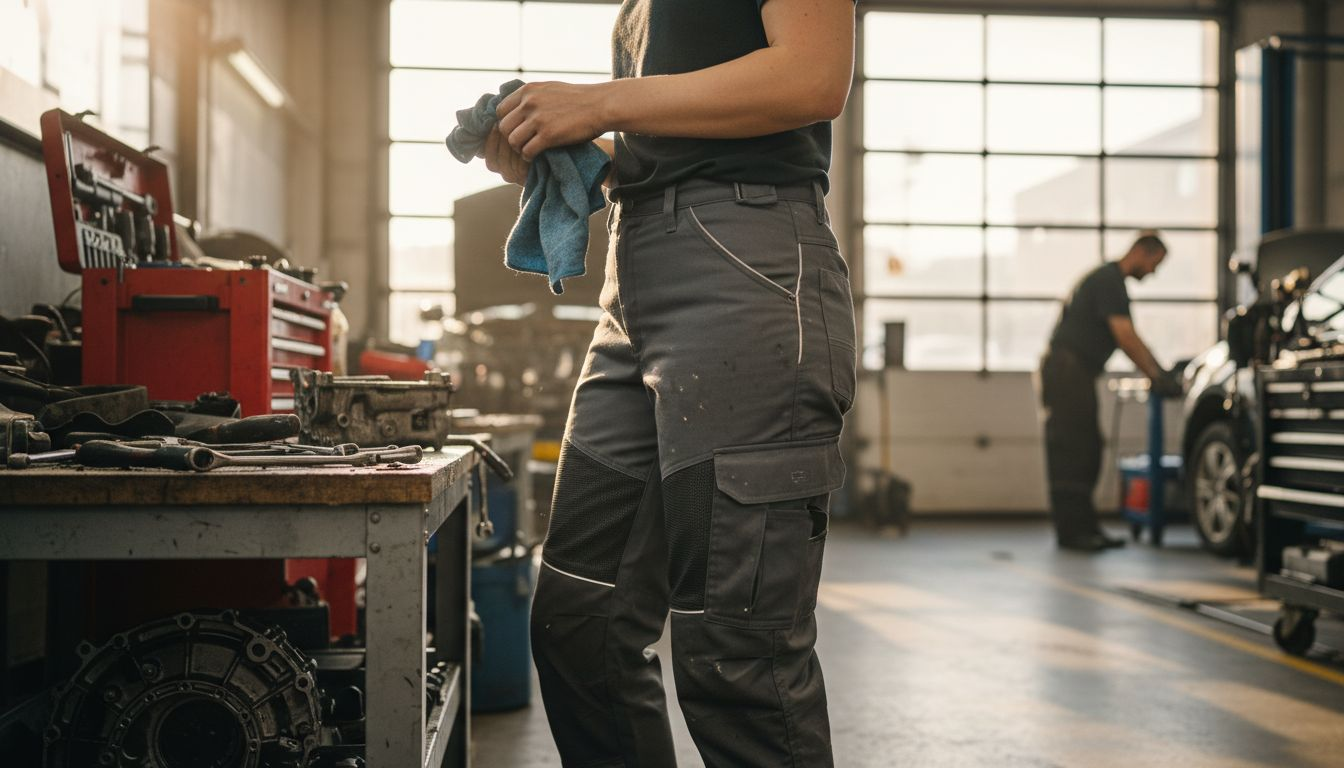
Advanced work pants now incorporate sophisticated textile engineering that addresses the unique challenges of automotive work. Compression zones, articulated knees, and strategically placed stretch panels create a dynamic garment that moves with the mechanic, providing support without restricting movement. This approach transforms work pants from simple clothing into a performance-enhancing piece of professional equipment.
The following table summarizes how fabric technologies influence comfort and safety in mechanic work pants:
| Fabric Technology | Comfort Benefit | Safety Impact |
|---|---|---|
| Moisture-Wicking | Reduces sweat and overheating | Prevents heat stress |
| Stretch Panels | Enhances movement freedom | Lowers injury risk |
| Reinforced Canvas | Shields from wear and tear | Protects against abrasions |
| Breathable Materials | Maintains cooler temperature | Improves long shift stamina |
| Thermal Insulation | Retains warmth in cold areas | Guards against cold burns |
Pro tip: Invest in work pants with multiple fabric technologies that offer both flexibility and durability to maximize comfort and performance throughout your workday.
Fabric Choices and Flexibility Explained
Mechanic work pants represent a sophisticated intersection of textile engineering and practical design. Fabric performance is critical for workplace functionality, determining not just comfort but also the ability to withstand rigorous automotive environments. The right fabric can mean the difference between restrictive clothing and a flexible, supportive work companion.
Key fabric characteristics for mechanic work pants include:
- Denim Blends: Classic durability with modern stretch technologies
- Canvas Materials: Heavyweight protection for intense work conditions
- Cotton-Elastane Combinations: Maximum flexibility and comfort
- Ripstop Fabrics: Enhanced tear resistance
- Synthetic Performance Blends: Advanced moisture management
Technical textile standards ensure optimal performance by balancing durability with movement flexibility. Mechanics require fabrics that can withstand constant bending, stretching, and exposure to harsh chemicals and mechanical stress. Modern work pants integrate elastane and advanced synthetic fibers to create garments that move with the body while providing robust protection.
The evolution of mechanic work pants reflects a deep understanding of workplace biomechanics. Fabric technologies now incorporate compression zones, strategic stretch panels, and moisture-wicking properties that transform work pants from simple protective gear into high-performance equipment. These innovations address the complex physical demands of automotive work, providing mechanics with clothing that supports their professional capabilities.
Pro tip: Choose work pants with at least 3% elastane content to ensure maximum flexibility and comfort during long mechanical work shifts.
Costs, Value, and Why Quality Matters
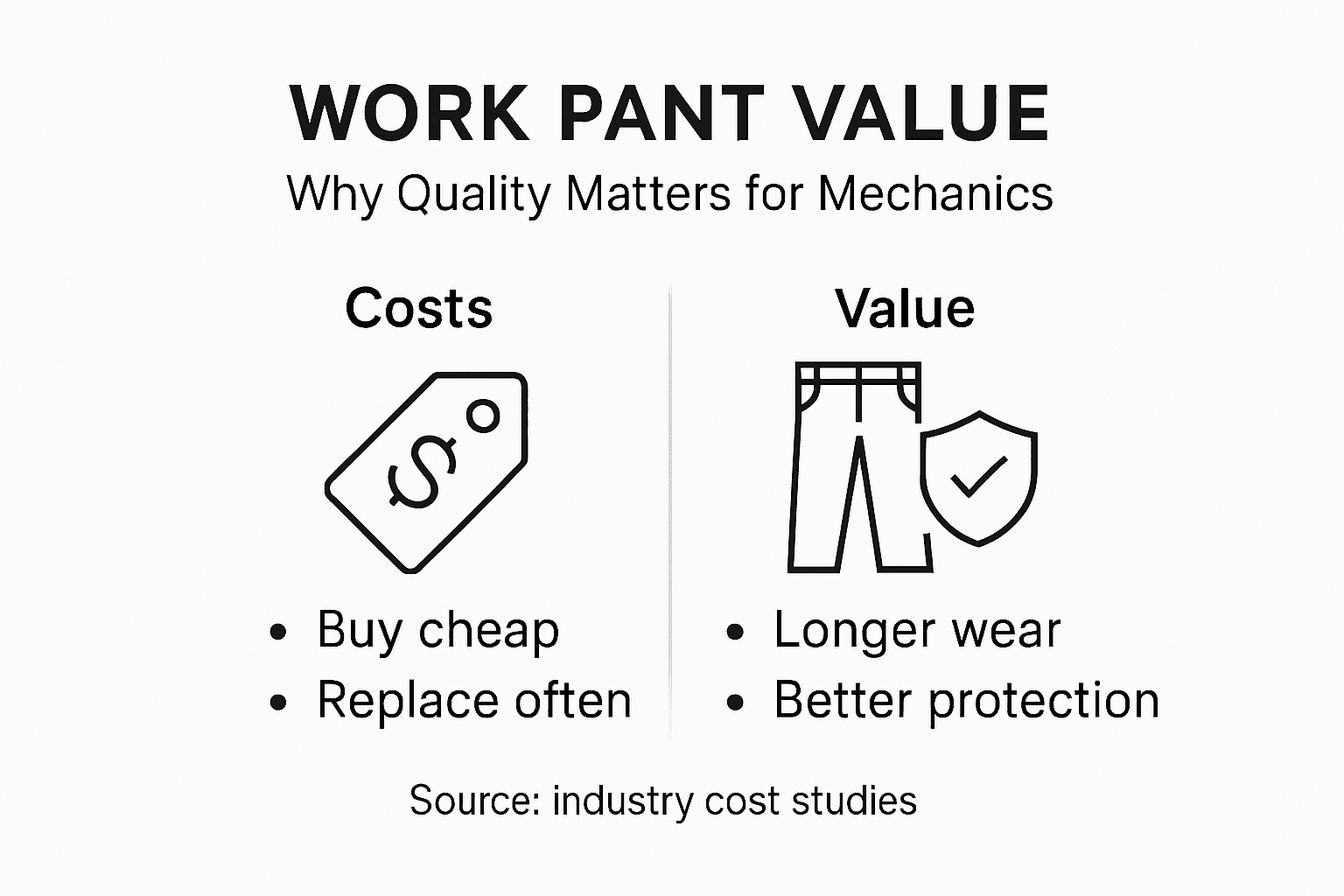
Investing in high-quality mechanic work pants is a strategic decision that extends far beyond initial purchase price. Quality workwear offers substantial long-term value, with superior construction and materials providing significant returns through durability and performance. A slightly higher upfront cost can translate into months or even years of reliable workplace protection.
Key financial considerations for mechanic work pants include:
- Replacement Frequency: Higher quality pants require less frequent replacement
- Durability Performance: Better fabrics withstand more intense work conditions
- Repair Cost Reduction: Superior construction minimizes mid-season repairs
- Workplace Safety: Reduced risk of equipment failure or personal injury
- Professional Image: Enhanced appearance and credibility
Workplace safety regulations emphasize quality protective equipment as a critical investment for professional environments. Mechanics who choose well-constructed work pants not only protect themselves from potential hazards but also demonstrate a commitment to professional standards. These pants represent more than clothing - they are an essential piece of personal protective equipment that can prevent workplace injuries and associated financial risks.
Economic analysis reveals that mechanics who invest in premium work pants typically spend less over time. Advanced fabric technologies, reinforced stress points, and ergonomic design create pants that maintain integrity through hundreds of work cycles. The marginal price difference between budget and high-quality work pants becomes insignificant when compared to the long-term benefits of reduced replacement costs and enhanced workplace performance.
Pro tip: Calculate the total cost of ownership by dividing the pants’ price by expected wear cycles, not just comparing initial purchase prices.
Risks of Inadequate or Unsuitable Pants
Mechanics face significant workplace dangers when wearing inappropriate work pants, transforming clothing from a simple garment into a potential safety liability. Workplace safety regulations highlight critical protective equipment standards that directly impact worker protection and injury prevention. Unsuitable pants can exponentially increase the risk of workplace accidents and long-term health complications.
Potential risks of inadequate mechanic work pants include:
- Chemical Exposure: Fabric that doesn’t resist spills or chemical splashes
- Physical Injury: Lack of reinforcement in high-stress areas
- Restricted Movement: Pants limiting range of motion during critical tasks
- Thermal Hazards: Insufficient protection against heat and friction
- Ergonomic Strain: Poor design causing unnecessary physical stress
Ergonomic hazards significantly impact worker health and productivity, with poorly designed work pants contributing to musculoskeletal disorders. Mechanics operating in tight spaces or complex machinery environments need pants that support natural body mechanics, prevent awkward postures, and reduce the potential for strain-related injuries.
The consequences of inadequate work pants extend beyond immediate physical risks. Mechanics wearing unsuitable clothing may experience reduced work efficiency, increased fatigue, and higher long-term health care costs. Substandard pants can compromise not just personal safety, but also workplace performance, potentially leading to decreased productivity and increased insurance risks.
Pro tip: Conduct a monthly personal protective equipment audit to ensure your work pants meet current safety standards and remain in good condition.
Gear Up with Durable Comfort for Every Mechanic
Mechanic work pants face constant demands for durability, flexibility, and protection against tough workplace hazards. If you are looking to combat risks like restricted movement, chemical exposure, and ergonomic strain, the right workwear makes all the difference. Prioritizing pants with reinforced pockets, stretch panels, and moisture-wicking fabric protects you on the job while enhancing your comfort and performance.
Don’t settle for anything less than workwear designed to withstand the rigors of blue-collar trades. Explore our collection at WorkWear Comfort where quality meets rugged style. For added versatility on and off the job, check out our Snapback and Dad Hats - Blue Collar Collection - WorkWear Comfort and stay confident and comfortable throughout your workday. Your next durable work pant is ready to outperform and outlast. Visit us today and experience gear made for real work and real comfort.
Frequently Asked Questions
What are the key features of mechanic work pants?
Mechanic work pants are designed with heavy-duty fabric, multiple reinforced tool pockets, articulated knees, triple-stitched seams, and oil and grease-resistant treatments to provide durability and functionality in automotive environments.
How do I choose the right mechanic work pants for my needs?
When selecting mechanic work pants, prioritize comfort, flexibility, and durability. Look for features like moisture-wicking technology, reinforced knees, and stretch fabric that support various movements during long hours of physical work.
What types of fabric should I look for in mechanic work pants?
High-quality mechanic work pants often use denim blends, ripstop fabric, canvas, or cotton-elastane combinations, all designed to offer durability and flexibility for the unique demands of automotive work.
What are the potential risks of wearing inadequate mechanic work pants?
Wearing unsuitable work pants can lead to risks such as chemical exposure, physical injuries from lack of reinforcement, restricted movement that can hinder performance, thermal hazards from insufficient protection, and ergonomic strain due to poor design.
Recommended
- What Is Workwear? A 2025 Guide for Hardworking Professionals - WorkWear Comfort
- Complete Guide to Mechanic Work Wear Essentials – WorkWearComfort
- Understanding Workwear for Mechanics: Durability and Function – WorkWearComfort
- Work Wear Construction – Why Quality Matters Most – WorkWearComfort
- DPI di III categoria per lavori in quota - Sikuro
