

Bold choices define the new wave of American women entering trades, with over 23 percent of construction jobs now held by women nationwide. Professional workwear matters more than ever because traditional gear rarely fits or functions for women on the job. This guide breaks down how modern trade wear redefines durability and style, spotlighting solutions that empower you to work safely, feel comfortable, and express your identity without compromise.
Table of Contents
- Defining Women’s Trade Wear In The U.S.
- Popular Styles And Specialized Categories
- Essential Features: Durability, Fit, Protection
- Safety Regulations And Workplace Standards
- Common Buying Mistakes And Smart Solutions
Key Takeaways
| Point | Details |
|---|---|
| Women’s Trade Wear Focuses on Safety and Functionality | The clothing is designed to meet the specific needs of women in physically demanding jobs, prioritizing safety features and modern style. |
| Ergonomics and Fit are Essential | Proper sizing and ergonomic design are crucial for comfort and safety, with garments tailored to women’s body shapes. |
| Knowledge of Regulations is Key | Understanding OSHA and ASTM standards ensures that trade wear meets legal safety requirements and provides adequate protection. |
| Avoid Common Buying Mistakes | Focus on quality over price and ensure proper fit to maximize protection and professional performance. |
Defining women’s trade wear in the U.S.
Women’s trade wear represents specialized clothing designed for professional women working in physically demanding industries like construction, manufacturing, and skilled trades. These garments go beyond standard workwear by integrating critical safety features, durability requirements, and contemporary style elements that respect both functional necessity and personal expression. Federal Trade Commission guidelines provide essential regulatory frameworks that define the standards and expectations for such specialized apparel.
Unique to women’s trade wear is its intentional approach to addressing gender-specific workplace challenges. Unlike traditional male-oriented workwear, these clothing lines are engineered with precise measurements, ergonomic design, and tailored fits that accommodate women’s body shapes while maintaining professional safety standards. The clothing typically incorporates reinforced fabric, strategic protective elements like knee patches and impact zones, and adjustable features that allow for personalized comfort and mobility across various trade environments.
The market for women’s trade wear has evolved significantly, driven by increasing female participation in traditionally male-dominated industries. International Trade Centre research highlights the complex definitional challenges in categorizing and understanding this specialized clothing segment. Modern trade wear for women now integrates advanced materials, moisture-wicking technologies, and design elements that prioritize both protection and personal style, reflecting a profound shift from previous one-size-fits-all workplace clothing approaches.
Pro tip: When selecting trade wear, prioritize garments that offer both ASTM safety certifications and personal comfort, ensuring you never compromise between professional protection and individual expression.
Popular styles and specialized categories
Women’s trade wear encompasses a diverse range of specialized clothing categories designed to meet the unique demands of different professional environments. The primary styles include heavy-duty construction wear, precision manufacturing attire, electrical trade uniforms, and automotive industry workwear. Each category prioritizes specific functional requirements while maintaining a commitment to safety, durability, and professional aesthetics. Women’s Trade Clothing Essentials highlights the intricate design considerations that differentiate these specialized clothing segments.
Constructive design elements define the core distinctions between trade wear styles. Heavy-duty construction clothing typically features reinforced fabric with high tensile strength, multiple tool pockets, and enhanced abrasion resistance. Precision manufacturing attire focuses on lightweight, breathable materials that allow maximum mobility while preventing contaminant introduction. Electrical trade uniforms incorporate specialized flame-resistant fabrics and arc-rated protective layers, ensuring comprehensive safety against potential electrical hazards. Automotive industry workwear emphasizes flexible movements, grease-resistant treatments, and color-coded segments that enable quick identification of specialized roles.

Beyond functional classifications, contemporary women’s trade wear also integrates style variations that reflect individual professional identities. Modern designs offer color options beyond traditional neutral tones, incorporating strategic color blocking, subtle feminine cuts, and performance-driven design elements. Manufacturers now recognize that professional workwear can simultaneously communicate competence, personal style, and technical functionality. Adjustable features like articulated knees, gusseted crotches, and stretch panels have transformed trade wear from purely utilitarian garments to sophisticated professional attire that celebrates women’s professional achievements.
Here is a comparison of specialized women’s trade wear categories and their key engineering priorities:
| Category | Core Focus | Essential Material Feature |
|---|---|---|
| Heavy-Duty Construction | Abrasion resistance | Reinforced high-tensile fabric |
| Precision Manufacturing | Mobility and hygiene | Lightweight, breathable fabric |
| Electrical Trades | Electrical hazard safety | Flame-resistant, arc-rated layers |
| Automotive Workwear | Stain resistance | Grease-resistant, stretch panels |
Pro tip: Select trade wear that offers modular design features, allowing you to adapt your clothing to changing workplace requirements and personal comfort preferences.
Essential features: durability, fit, protection
Modern women’s trade wear represents a sophisticated fusion of technical engineering and ergonomic design, where durability, fit, and protection emerge as the cornerstone features of high-performance workwear. Occupational Health & Safety research reveals that contemporary garment design goes far beyond simple fabric selection, incorporating advanced anatomical considerations that directly impact workplace safety and professional performance. These essential features are not just aesthetic choices but critical components that determine a tradeswoman’s comfort, mobility, and protection in challenging work environments.
Durability in women’s trade wear manifests through strategic material selection and sophisticated construction techniques. Advanced fabrics now incorporate reinforced stress points, high-tensile strength fibers, and specialized weaving patterns that resist abrasion, tearing, and repeated industrial wear. Comprehensive workwear analysis highlights the importance of ergonomic fit, emphasizing that proper garment construction involves more than just sizing. Manufacturers now develop clothing with articulated joints, stretch panels in high-movement areas, and specialized gussets that allow unrestricted motion while maintaining structural integrity. These design innovations ensure that protective clothing moves with the body, reducing fatigue and enhancing overall workplace efficiency.
Protection extends beyond physical durability to include specialized safety features tailored to specific industrial environments. Modern trade wear integrates advanced protective technologies such as flame-resistant materials, arc-rated fabrics, chemical-resistant treatments, and strategic padding in high-impact zones. The clothing is engineered to provide comprehensive protection while maintaining breathability and thermal regulation. Innovative design approaches now recognize that women’s body structures require different protective considerations compared to traditional male-oriented workwear, resulting in garments that offer superior safety without compromising personal comfort or professional aesthetic.
Pro tip: Invest in trade wear that offers modular protective elements, allowing you to customize your safety gear based on specific workplace hazards and personal comfort requirements.
Safety regulations and workplace standards
Workplace safety regulations for women’s trade wear represent a complex intersection of legal requirements, industry standards, and protective technology. Comprehensive OSHA standards outline precise guidelines that govern every aspect of protective workwear, ensuring that clothing not only meets aesthetic and functional requirements but also provides critical safety protection for women in industrial environments. These regulations address fundamental concerns such as proper fit, material durability, protective capabilities, and specific hazard mitigation strategies across various professional sectors.
The regulatory landscape for women’s trade wear involves multiple interconnected standards from different governing bodies. Key regulatory frameworks include OSHA safety rules (29 CFR 1910, 1926), ASTM fabric and personal protective equipment (PPE) standards, flammability requirements (16 CFR 1610), and labeling regulations (16 CFR 423). Detailed compliance guidelines demonstrate how these various standards work together to create a comprehensive safety ecosystem that protects workers while ensuring manufacturers produce high-quality, reliable protective clothing. These regulations specifically address critical elements like flame resistance, visibility, ergonomic design, and material performance under challenging workplace conditions.
Unique to modern safety standards is the recognition of gender-specific protective needs. Workplace regulations now mandate that protective equipment and clothing must be designed to accommodate diverse body types, acknowledging that traditional male-oriented designs are inadequate for women’s safety and comfort. This evolving approach means manufacturers must create trade wear that provides equivalent protection while addressing anatomical differences, ensuring that safety is not compromised by ill-fitting or inappropriately designed clothing. The standards emphasize not just protection from external hazards, but also the importance of clothing that allows full range of motion, reduces fatigue, and supports professional performance across various industrial environments.
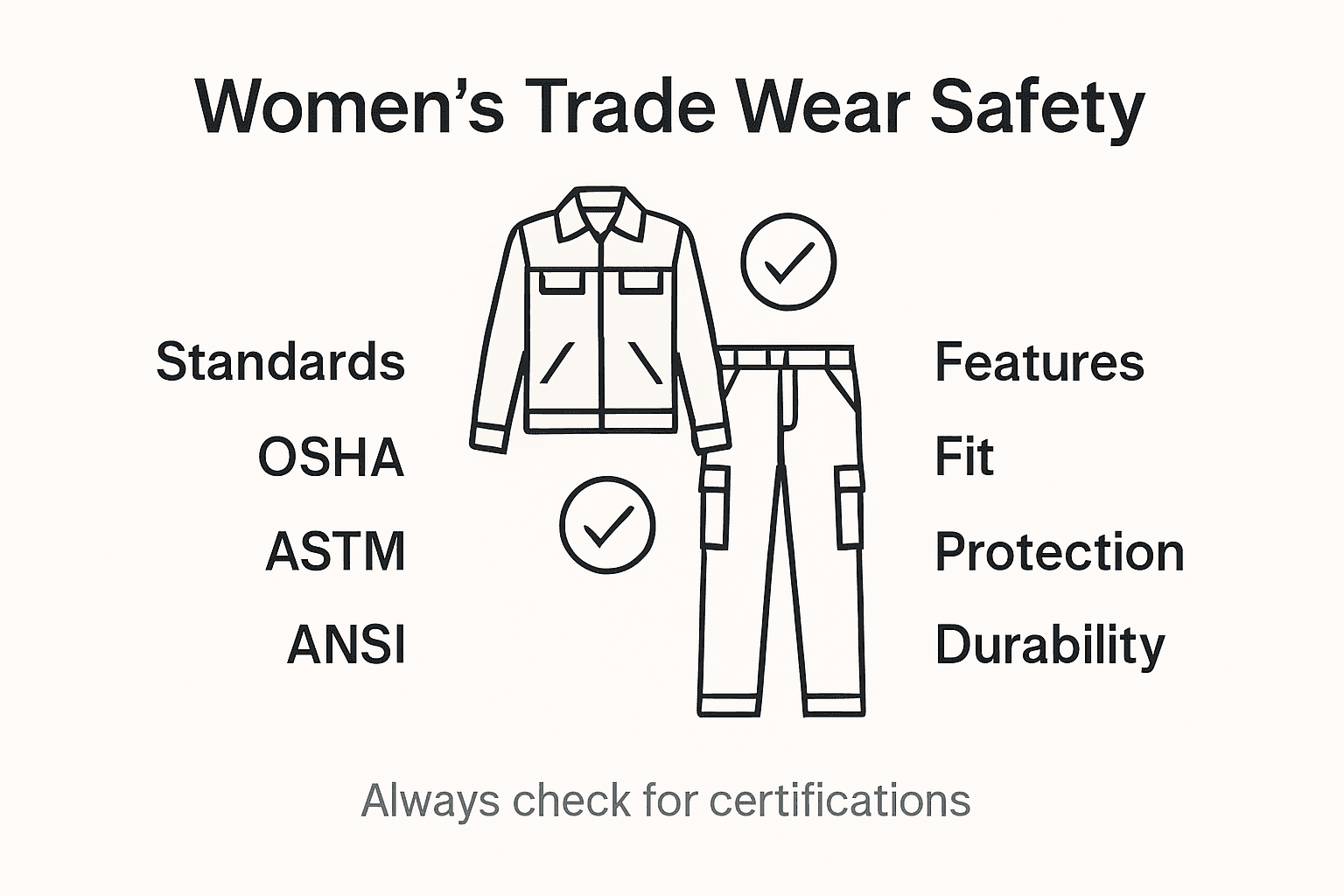
Pro tip: Always verify that your trade wear meets current OSHA and ASTM safety certifications, and request documentation from manufacturers that demonstrates compliance with the latest workplace safety standards.
Common buying mistakes and smart solutions
Navigating the complex landscape of women’s trade wear requires understanding the most frequent purchasing pitfalls that can compromise both safety and professional performance. Sizing misconceptions represent the most critical error women encounter, with many mistakenly selecting workwear designed using traditional male measurements. Understanding Safety Regulations in Construction emphasizes that ill-fitting protective gear significantly reduces its effectiveness, potentially exposing workers to unnecessary workplace risks.
Another prevalent buying mistake involves prioritizing price over comprehensive protection and functionality. Tradewomen often make the error of selecting cheaper alternatives that lack critical safety features, ergonomic design, and durable construction. Smart solutions involve a holistic evaluation of workwear that considers long-term performance, including fabric durability, protective ratings, mobility features, and specialized design elements tailored to specific industrial environments. Investing in high-quality trade wear means considering factors beyond initial cost, such as longevity, comfort, and genuine protective capabilities that support professional performance and workplace safety.
Technical understanding of material properties and safety standards represents another area where purchasing mistakes frequently occur. Many buyers lack comprehensive knowledge about advanced fabric technologies, protective ratings, and industry-specific requirements. Successful trade wear selection demands careful research into specialized features like moisture-wicking capabilities, flame-resistant treatments, reinforced stress points, and ergonomic design elements that accommodate women’s specific body mechanics. Smart shoppers develop a nuanced approach that evaluates workwear through multiple lenses: safety compliance, professional functionality, personal comfort, and long-term durability.
This table summarizes common buying mistakes and how to make smarter trade wear choices:
| Mistake | Risk | Smart Solution |
|---|---|---|
| Choosing wrong size | Reduced protection | Use women-specific sizing and fit |
| Focusing on low price | Lack of key safety features | Invest in certified, durable designs |
| Ignoring material specs | Poor comfort, less safety | Review technical sheets and compliance |
Pro tip: Always request detailed specification sheets from manufacturers, comparing protective ratings, material composition, and specific safety certifications before making a final trade wear purchase.
Experience Women’s Trade Wear That Matches Your Strength and Style
Finding durable trade wear that truly fits a woman’s needs can be a challenge. The article highlights key issues like poor sizing, lack of ergonomic design, and missing safety features that reduce both comfort and protection in demanding work environments. At WorkWearComfort.com, we understand your need for clothing that combines technical durability with confidence-boosting style. Our Female Hoodie Sweatshirts 2 WorkWearComfort offer thoughtful fits designed especially for women in trades who refuse to compromise on function or form.
Take charge of your workday with trade wear that meets safety standards while reflecting your personal identity. Shop now at WorkWearComfort.com and explore our collection including the innovative UPF 50+ Sun Protection Hoodie 2 WorkWear Comfort. Don�99t wait to invest in gear that works as hard as you do. Browse today and secure apparel tailored to your professional demands and style preferences.
Frequently Asked Questions
What features should I look for in women’s trade wear?
When selecting women’s trade wear, prioritize features like durability, fit, and protection. Look for reinforced fabrics, ergonomic designs, and essential safety certifications such as ASTM standards to ensure that the clothing can withstand physically demanding tasks while providing comfort and mobility.
How does women’s trade wear differ from traditional workwear?
Women’s trade wear is specifically designed to address the unique body shapes and workplace challenges faced by women in various industries. It features tailored fits, ergonomic designs, and specialized safety elements that are often absent in traditional workwear, ensuring both functionality and style.
Why is proper fit important in women’s trade wear?
A proper fit is crucial in women’s trade wear because ill-fitting clothing can hinder mobility, reduce the effectiveness of protective features, and lead to discomfort during work. Ergonomic designs that accommodate women’s body mechanics enhance overall workplace efficiency and safety.
What safety regulations apply to women’s trade wear?
Women’s trade wear must adhere to multiple safety regulations, including OSHA safety rules, ASTM standards for protective equipment, and flammability requirements. These guidelines ensure that the clothing not only meets functional demands but also provides adequate safety for women in various industrial environments.
