

Most American construction sites face demanding conditions where a single work jacket can determine all-day comfort and safety. Over 60 percent of trade professionals admit their outerwear takes a beating from weather and workplace hazards. With risks ranging from abrasion to impact, picking the right builders work jacket matters for lasting protection. This guide helps you identify which jacket features deliver durability, performance, and style so you stay secure and comfortable throughout every shift.
Table of Contents
- Defining Builders Work Jackets For Trades
- Essential Features And Construction Materials
- Major Styles And Their Best Uses
- Weather Resistance And Safety Standards
- Choosing The Right Jacket For Your Job
Key Takeaways
| Point | Details |
|---|---|
| Builders work jackets provide specialized protection. | Designed for construction and trade professionals, these jackets offer protection against physical, chemical, and mechanical hazards. |
| Key features enhance performance and safety. | Look for jackets with reinforced panels, multiple pockets, and ergonomic designs for improved mobility and functionality. |
| Material composition is critical. | Choose jackets made from durable synthetic blends that offer abrasion resistance and climate adaptability. |
| Select based on specific job requirements. | Tailor your choice of jacket to the demands of your trade, considering safety standards, climate, and necessary features. |
Defining Builders Work Jackets for Trades
Builders work jackets are specialized protective garments designed specifically for professionals working in challenging construction and trade environments. These jackets go beyond standard outerwear by providing critical protection against workplace hazards while supporting workers’ performance and comfort. Personal protective equipment guidelines emphasize the importance of workwear that shields workers from physical, chemical, and mechanical risks.
Trade professionals require jackets that can withstand intense physical demands and varied environmental conditions. These garments are engineered with robust materials that offer durability, flexibility, and strategic protection for specific tasks. Unlike typical casual jackets, builders work jackets incorporate reinforced panels, multiple utility pockets, and specialized fabric technologies that enhance worker safety and productivity. Construction trades demand specialized workwear that adapts to diverse job site requirements.
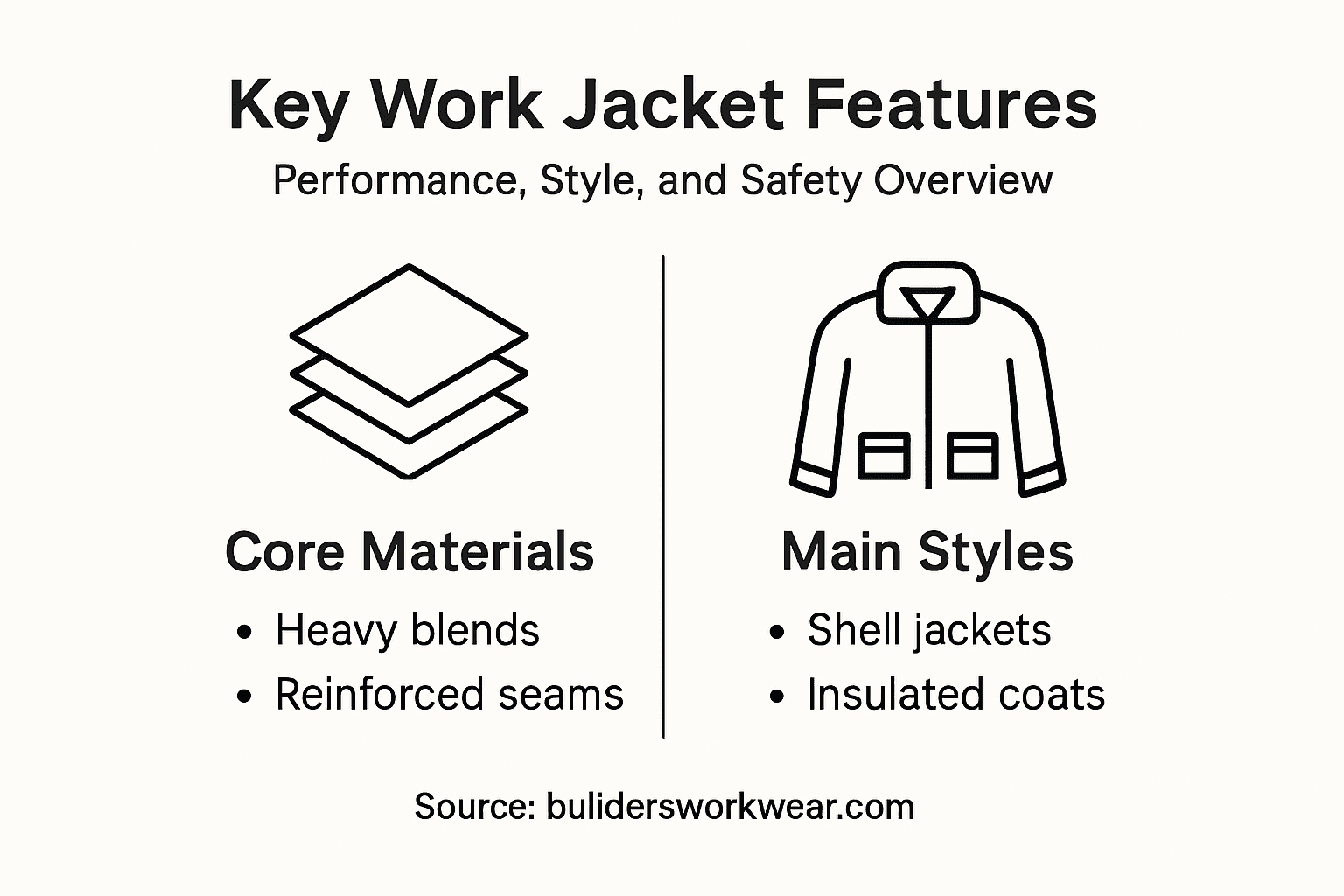
The key components of an exceptional builders work jacket typically include heavyweight fabric construction, strategic reinforcement in high-wear areas like shoulders and elbows, weather-resistant outer shells, and thermal insulation for temperature regulation. Modern work jackets also integrate ergonomic design principles, allowing unrestricted movement while providing comprehensive protection against workplace hazards such as abrasion, impact, and environmental exposure.
Pro tip: When selecting a builders work jacket, prioritize jackets with multiple reinforced pockets, articulated sleeves for mobility, and materials that balance durability with breathability.
Essential Features and Construction Materials
Builders work jackets are engineered with sophisticated materials and design elements that transform them from simple outerwear into critical protective equipment. Personal protective equipment standards emphasize the importance of selecting jackets that provide comprehensive protection while ensuring worker comfort and mobility.
The core construction materials for high-performance builders work jackets typically include heavyweight synthetic blends like ripstop polyester, canvas-weighted cotton, and advanced technical fabrics that combine durability with flexibility. These materials are strategically selected to resist abrasion, repel water, and provide thermal regulation. Key features often include reinforced panels at stress points, such as shoulders and elbows, which are prone to wear and tear in demanding work environments.
Modern builders work jackets integrate multiple functional design elements beyond basic material composition. Advanced jackets incorporate moisture-wicking interior linings, articulated sleeve designs for enhanced range of motion, and multiple utility pockets with specialized compartments for tools and personal protective equipment. Some premium jackets also feature reflective safety elements, integrated ventilation systems, and adjustable cuff and waist closures to create a customizable fit that adapts to various working conditions.
Pro tip: When evaluating builders work jackets, inspect the stitching quality, fabric weight, and reinforcement details to ensure long-term durability and consistent performance in challenging work environments.
Major Styles and Their Best Uses
Builders work jackets represent a diverse range of specialized designs, each engineered to address specific workplace demands and environmental conditions. Construction site safety guidelines emphasize the critical importance of selecting the right jacket style for different work scenarios, ensuring both protection and functionality.
The primary jacket styles for builders and trade professionals can be categorized into several key types. Lightweight shell jackets are ideal for mild weather and moderate activity levels, offering basic wind and water resistance without excessive bulk. Insulated work jackets become essential in colder climates, featuring thermal lining and heavy-duty materials that trap heat while maintaining mobility. High-visibility jackets, typically in bright orange or yellow with reflective strips, are crucial for workers in low-light environments or areas with significant equipment traffic, providing enhanced safety through increased visibility.
Advanced work jacket styles go beyond basic protection, incorporating specialized features for specific trade requirements. Welding jackets feature flame-resistant materials and extra protective panels, while electricians might prefer jackets with non-conductive properties. Carpentry and heavy construction jackets often include multiple reinforced tool pockets, articulated sleeves for increased range of motion, and rugged exterior fabrics that resist punctures and abrasions. Some modern designs even integrate smart technology features like built-in heating elements or specialized ventilation systems that adapt to changing work conditions.
Here’s a summary of the major types of builders work jackets and their best workplace uses:
| Jacket Style | Ideal Workplace | Key Advantage | Typical Materials |
|---|---|---|---|
| Lightweight Shell | Mild climates | Wind and water resistance | Ripstop polyester, soft shell |
| Insulated Work Jacket | Cold outdoor sites | Retains body heat | Canvas, thermal lining |
| High-Visibility Jacket | Low-light areas | Improved safety | Bright polyester, reflective tape |
| Welding Jacket | Metal working zones | Flame resistance | Treated cotton, leather |
| Electrician’s Jacket | Electrical installs | Non-conductive safety | Synthetic blends, insulated layers |
Pro tip: Select a work jacket that matches your specific trade requirements, considering factors like climate, safety regulations, and the physical demands of your particular job site.
Weather Resistance and Safety Standards
Builders work jackets represent a critical intersection of protection, performance, and compliance with rigorous safety regulations. Personal protective equipment standards mandate comprehensive requirements that go beyond basic clothing, ensuring workers remain safe and functional in challenging environmental conditions.

Weather resistance in professional work jackets involves sophisticated material engineering that balances multiple protective characteristics. Advanced fabrics incorporate waterproof membranes, breathable technologies, and durable water-repellent coatings that shield workers from rain, wind, and moisture while preventing overheating. Jackets designed for extreme conditions feature multi-layered constructions with thermal insulation, wind-blocking outer shells, and moisture-wicking interior linings that maintain consistent body temperature across diverse work environments.
Safety standards for builders work jackets are comprehensively defined by organizations like OSHA and ANSI, which establish specific guidelines for visibility, flame resistance, and protective capabilities. These standards require jackets to meet minimum performance criteria, including high-visibility color requirements, tear resistance, and the ability to maintain protective properties after repeated industrial washing. Specialized jackets for specific trades may require additional certifications, such as flame-resistant materials for welding professionals or electrical-hazard resistant fabrics for electricians.
Pro tip: Regularly inspect your work jacket for wear and damage, as compromised protective features can significantly reduce its safety effectiveness and compliance with industry standards.
Choosing the Right Jacket for Your Job
Selecting the ideal builders work jacket requires a strategic approach that considers the unique demands of your specific trade and work environment. Personal protective equipment guidelines emphasize the critical importance of choosing jackets that provide targeted protection, comfort, and functionality for individual job requirements.
The selection process involves a comprehensive evaluation of several key factors. Trade-specific needs play a crucial role in jacket selection. Electricians require non-conductive materials, welders need flame-resistant fabrics, and heavy construction workers benefit from rugged, abrasion-resistant jackets with reinforced panels. Climate considerations are equally important, with workers in cold regions needing insulated jackets featuring thermal lining and wind-blocking technologies, while those in warmer environments require lightweight, breathable options with moisture-wicking capabilities.
Beyond trade-specific requirements, builders should assess additional critical jacket features. Mobility is paramount, so jackets must allow full range of motion without restricting movement. Practical elements like multiple tool pockets, reinforced stress points, and adjustable closures can significantly enhance workplace efficiency. Safety features such as high-visibility colors, reflective strips, and compliance with industry safety standards should never be overlooked. Professional trades demand jackets that are not just protective gear, but essential work tools that support performance and safety.
This table compares core jacket features and their impact on worksite performance:
| Feature | Performance Impact | Example Benefit |
|---|---|---|
| Reinforced Panels | Enhanced durability | Resists repeated abrasions |
| Multiple Pockets | Improved tool access | Faster workflow |
| Breathable Fabric | Comfort in warm climates | Reduces overheating |
| Reflective Details | Increased visibility | Supports safety compliance |
Pro tip: Always try on work jackets with your typical work layers and perform range-of-motion tests to ensure complete comfort and unrestricted movement before making a final selection.
Gear Up with Durable and Functional Workwear for Builders
Choosing the right builders work jacket means prioritizing durability, protection, and comfort to meet the tough demands of your trade. This article highlights how reinforced panels, weather resistance, and specialized features help you stay safe and productive on the job. But real comfort and style go hand-in-hand with performance. At WorkwearComfort.com, we understand the challenges you face daily and offer apparel designed for hardworking professionals who need gear that lasts and feels right.
Explore our collection of Blue-Collar Working Man Sweatshirt Hoodies – WorkWearComfort that blend rugged construction with style. Whether layered under your work jacket or worn on cooler days, these sweatshirts deliver lasting comfort and durability supporting your demanding work environment.
Don’t settle for less when your work requires the best. Invest in clothing that matches your commitment to quality and resilience. Visit WorkwearComfort.com now and discover gear built around your hard work and blue-collar values. Feel the confidence and protection every day as you get the job done. Check out all options in All Hooded Sweatshirts - WorkWear Comfort to find your perfect fit.
Frequently Asked Questions
What are builders work jackets?
Builders work jackets are specialized protective garments designed for trade professionals, providing essential protection against workplace hazards while supporting comfort and performance in challenging environments.
What should I look for when choosing a builders work jacket?
When selecting a builders work jacket, prioritize durability, mobility, the number of reinforced pockets, weather resistance, and compliance with safety standards based on your specific trade requirements.
What are the main styles of builders work jackets?
The main styles of builders work jackets include lightweight shell jackets for mild climates, insulated jackets for cold weather, high-visibility jackets for low-light conditions, and specialized jackets like welding or electrician jackets for specific trades.
How important are safety standards for builders work jackets?
Safety standards are crucial for builders work jackets to ensure they provide adequate protection against hazards, such as visibility, flame resistance, and overall durability. Compliance with guidelines from organizations like OSHA and ANSI is essential for worker safety.
Recommended
- Builders Workwear: Elevating Comfort and Durability – WorkWearComfort
- What Is Workwear? A 2025 Guide for Hardworking Professionals - WorkWear Comfort
- Warm Work Jackets: Comfort, Attitude, Grit – WorkWearComfort
- Work Wear Construction – Why Quality Matters Most – WorkWearComfort
- Camping Gear Layering Explained: Comfort And Safety - Tent Explorer
