

You might think lightweight work trousers can’t handle the punishment of a real workday. That’s what most tradespeople believed until fabric engineering caught up with job site demands. Modern materials now deliver breathability and flexibility without sacrificing the toughness you need for crawling under equipment, climbing ladders, or kneeling on concrete. This guide breaks down the fabric science, construction techniques, and practical selection strategies that help you find trousers combining comfort with genuine durability for your specific trade.
Table of Contents
- Understanding Fabric Blends: Nylon-Spandex Vs. Cotton-Spandex
- How Fabric Weight And Construction Affect Breathability And Durability
- Design Features That Boost Durability In Lightweight Work Trousers
- Matching Work Trousers To Your Job: Fit, Features, And Fabric Choices
- Explore Lightweight Breathable Workwear At WorkwearComfort
Key takeaways
| Point | Details |
|---|---|
| Fabric blends determine stretch | Nylon-Spandex offers 50-80% stretch while Cotton-Spandex provides 30-50% for different comfort needs |
| Weight affects breathability | Lower GSM fabrics with open weaves increase airflow up to 40% compared to standard construction |
| Construction beats weight | Reinforced stitching and strategic fabric placement extend lifespan by 25% over basic construction |
| Match trousers to trade | Job-specific hazards dictate whether you need flame resistance, abrasion protection, or maximum flexibility |
Understanding fabric blends: Nylon-Spandex vs. Cotton-Spandex
The blend you choose determines how your trousers move with you through a shift. Nylon-Spandex blends offer superior stretch and recovery compared to Cotton-Spandex, delivering 50-80% stretch that snaps back to shape after you stand up from a crouch. Cotton-Spandex gives you 30-50% stretch with a softer hand feel that some workers prefer against skin.
Higher spandex content directly correlates with flexibility under stress. A 15% spandex blend maintains shape better than 5% when you’re repeatedly bending, squatting, or reaching overhead. Nylon’s molecular structure resists abrasion from rough surfaces, tool belts, and repeated friction better than cotton fibers.
Pro Tip: Test fabric recovery by stretching a section of the trouser leg and releasing it. Quality blends return to original shape within two seconds.
Consider these blend characteristics when choosing blue collar apparel for your work environment:
- Nylon-Spandex excels in wet conditions and resists mildew growth
- Cotton-Spandex breathes better in static positions but holds moisture longer
- Nylon blends dry 60% faster than cotton after exposure to rain or sweat
- Cotton provides natural UV protection while nylon requires treatment
- Spandex percentages above 10% offer diminishing returns on stretch versus durability
Your body generates heat differently depending on activity level. Electricians working in panels need different airflow than framers swinging hammers. Cotton-Spandex wicks moisture away from skin through capillary action but holds that moisture in the fabric. Nylon-Spandex moves moisture to the surface where it evaporates quickly.
Fabric memory matters for maintaining a professional appearance through the day. Nylon-Spandex resists bagging at knees and seat areas better than cotton blends. This recovery property keeps trousers looking crisp even after eight hours of constant movement.
How fabric weight and construction affect breathability and durability
Fabric weight measured in GSM (grams per square meter) tells only part of the performance story. Higher GSM in Nylon-Spandex provides compression but reduces breathability, creating a tradeoff between support and cooling. Nylon-Spandex typically ranges 160-280 GSM while Cotton-Spandex sits at 180-240 GSM.
Weave structure impacts airflow more dramatically than weight alone. Open weave fabrics increase breathability by up to 40% compared to standard twill construction. Ripstop nylon incorporates reinforcement threads in a crosshatch pattern that stops tears while maintaining air channels between fibers.
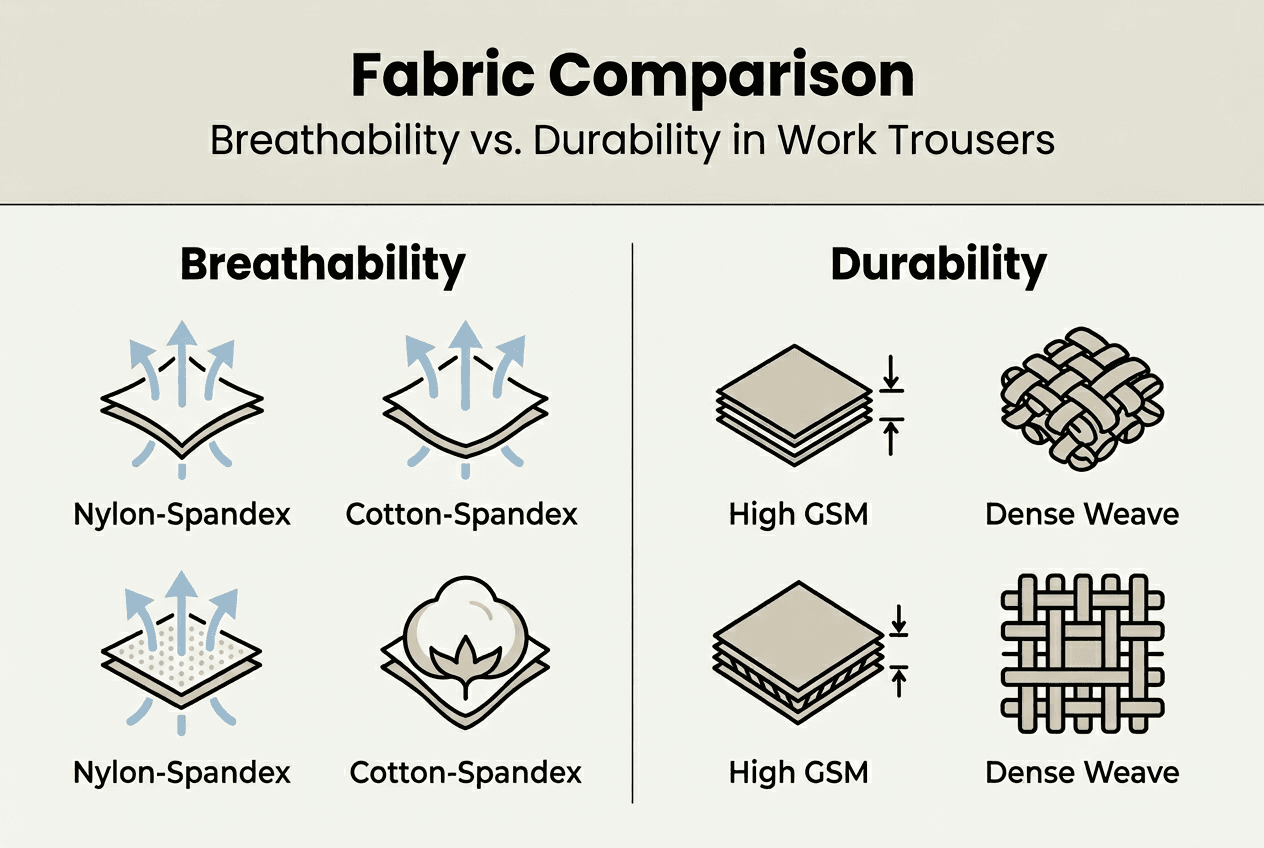
| Fabric Type | GSM Range | Breathability | Durability Rating |
|---|---|---|---|
| Nylon-Spandex | 160-280 | Moderate to Low | High |
| Cotton-Spandex | 180-240 | High to Moderate | Moderate |
| Ripstop Nylon | 140-200 | High | Very High |
| Engineered Mesh Panels | 100-150 | Very High | Low |
Engineered fabrics incorporate micro-perforations or textured surfaces that create turbulent airflow against skin. This turbulence pulls heat away from your body more effectively than smooth fabric surfaces. Some manufacturers place these engineered zones strategically at the lower back, inner thighs, and behind knees where heat accumulates.
Pro Tip: Look for trousers with mesh-lined pockets that double as ventilation channels without compromising pocket strength.
Fabric construction techniques directly impact how long your trousers survive job site abuse. A 200 GSM fabric with poor weave quality fails faster than a 160 GSM fabric with tight, consistent thread spacing. Thread count per square inch matters as much as individual thread thickness.
Consider how different breathable workwear tips apply to your daily tasks:
- Morning shifts in cool weather benefit from moderate GSM (200-220) for warmth
- Afternoon sun exposure requires maximum breathability below 180 GSM
- Indoor climate-controlled environments allow heavier fabrics for durability
- Outdoor summer work demands engineered cooling features over raw fabric weight
Durability comes from fiber density and weave tightness working together. A loose weave in heavy fabric snags easily on sharp edges. A tight weave in lightweight fabric distributes stress across more contact points, preventing single-point failures that start tears.
Design features that boost durability in lightweight work trousers
Construction quality separates trousers that last six months from those surviving three years of hard use. Double-needle stitching can extend lifespan by up to 25% over single stitching by distributing stress across parallel seam lines. Bar tacks at pocket corners and belt loops prevent the catastrophic failures that end most work trousers prematurely.
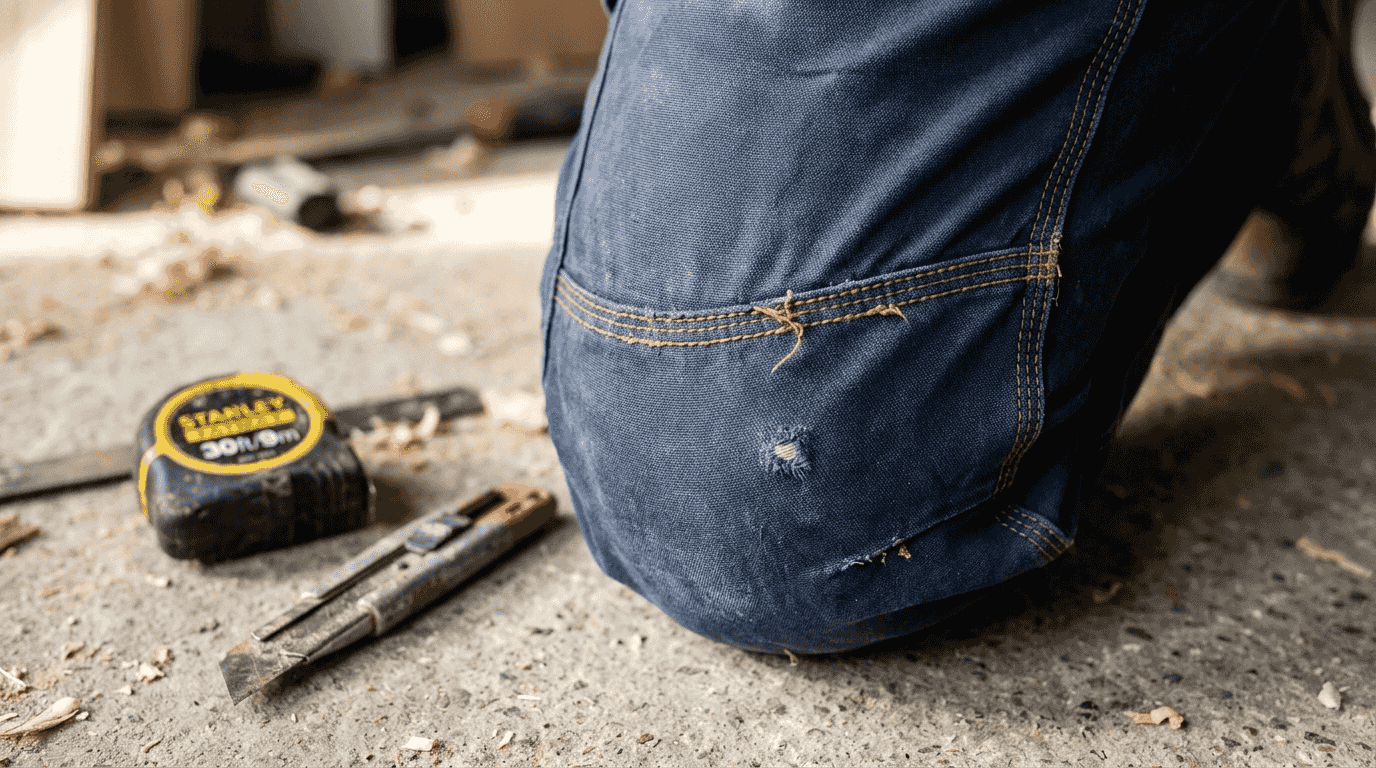
Manufacturers reinforce high-stress zones with additional fabric layers or denser weave patterns. Knees take the most abuse from kneeling on concrete, gravel, and metal grating. Quality trousers incorporate double-layer fabric or abrasion-resistant patches at knee zones without adding bulk that restricts movement.
Pro Tip: Check if knee reinforcements extend three inches above and below the kneecap to cover your full range of motion when crouching.
Strategic reinforcement placement matters more than overall fabric weight:
- Pocket bags need independent stitching from pocket openings to prevent tearing through
- Crotch gussets distribute stress from leg movement across a wider fabric area
- Waistband backing prevents stretching and maintains fit through repeated wear
- Hem reinforcements stop fraying from boot contact and ground abrasion
- Zipper plackets require bar tacks at both ends to handle daily stress
Seam construction reveals manufacturing quality instantly. Flat-felled seams enclose raw fabric edges within the seam itself, preventing unraveling and creating a smooth interior surface. French seams accomplish similar protection but add slight bulk that some workers find uncomfortable.
You can assess construction quality before purchase by examining stress points. Pull gently on pocket corners to test if stitching gives or holds firm. Check if belt loops connect to both waistband and body fabric, not just surface-stitched onto the waistband. Quality manufacturers use chain stitching on hems because it provides stretch that prevents thread breakage when fabric flexes.
Reinforced tool pockets and hammer loops need rivets or bar tacks at attachment points. Stitching alone fails when you repeatedly load and unload heavy tools. Metal rivets distribute weight across a larger fabric area than thread can manage.
Matching work trousers to your job: fit, features, and fabric choices
Your specific trade determines which trouser features matter most for daily comfort and safety. Consider job tasks when selecting trousers; electricians need flame resistance while carpenters require abrasion protection and flexibility for constant movement.
Assess your work environment systematically to identify must-have features:
- Evaluate fabric properties relevant to your environment like flame resistance, chemical resistance, or water repellency
- Identify functional features you use daily including pocket configurations, tool loops, and closure systems
- Consider durability requirements against specific hazards like sparks, sharp edges, or chemical splashes
- Test comfort aspects including stretch zones, waistband design, and inseam gussets for your movement patterns
Electricians working near live circuits require FR-rated fabrics that self-extinguish if exposed to flash or flame. HVAC technicians crawling through attics need lightweight fabrics that breathe in hot environments while resisting insulation fibers. Plumbers require water-resistant treatments and reinforced knees for constant kneeling on wet surfaces.
Pro Tip: Always match trousers to your most demanding daily tasks rather than average conditions to ensure adequate protection when you need it most.
Fit style impacts both safety and comfort throughout your shift. Relaxed fits provide maximum mobility but excess fabric can catch on equipment or ladder rungs. Slim fits reduce snag hazards but may restrict range of motion for overhead reaching or deep squatting. Athletic fits split the difference with tapered legs that stay close to your body without binding.
Pocket placement and quantity vary by trade requirements:
- Carpenters benefit from dedicated hammer loops and nail pocket configurations
- Electricians need secure phone pockets away from tool storage to prevent screen damage
- Welders require pockets without external flaps where sparks can lodge and smolder
- General laborers prioritize cargo pockets for carrying supplies between work areas
Waistband design affects all-day comfort more than most workers realize. Elastic side panels accommodate natural waist expansion after meals without requiring belt adjustments. Gusseted crotches eliminate the binding sensation when transitioning from standing to kneeling positions.
Consider trying trousers from choosing best work apparel options that specifically address your trade’s unique demands. Generic work pants rarely optimize for the specific movements, hazards, and environmental conditions you face daily.
Explore lightweight breathable workwear at WorkwearComfort
Applying these fabric and construction insights becomes easier when you shop from specialists who understand blue-collar work demands. WorkwearComfort offers carefully selected lightweight, breathable trousers engineered for professionals who refuse to choose between comfort and durability.
Complement your trousers with performance gear designed for the same demanding standards. Our lightweight sun work hoodie delivers UPF 50+ protection in breathable fabric that works as hard as you do. The blue collar brotherhood hoodie combines durability with style that represents your trade pride. Electricians appreciate specialized gear like our electrician high voltage hoodie built specifically for the unique challenges of working with electrical systems. Every piece balances professional performance with the comfort you need for long shifts on demanding job sites.
FAQ
What makes work trousers breathable and lightweight?
Breathability comes from fabric construction that allows air circulation through the material. Open weave patterns, engineered perforations, and moisture-wicking fibers move heat and sweat away from your body. Lightweight properties result from lower GSM ratings and synthetic fibers that provide strength without bulk.
Are lightweight work trousers as durable as heavier ones?
Lightweight trousers achieve durability through reinforced stitching and smart fabric blends, not just weight. Double-needle seams, bar tacks at stress points, and strategic reinforcement placement extend lifespan significantly. A well-constructed 180 GSM trouser outlasts a poorly made 240 GSM option every time.
How do I choose work trousers for different trades?
Choose trousers matching job needs for flame resistance, abrasion protection, and flexibility based on your specific trade hazards. Electricians prioritize FR ratings and secure pockets, carpenters need reinforced knees and tool loops, while HVAC technicians require maximum breathability. Evaluate your most demanding daily tasks first, then select features that address those specific challenges.
What GSM rating should I look for in work trousers?
Target 160-200 GSM for maximum breathability in hot environments or active work. Choose 200-240 GSM for balanced durability and comfort in moderate conditions. Consider fabric construction and reinforcement quality more important than GSM alone, since a well-engineered lightweight fabric outperforms heavy fabric with poor construction.
How often should I replace work trousers?
Replace trousers when you notice thinning fabric at stress points, seam separation, or compromised protective features like water resistance. Quality lightweight trousers with proper care typically last 12-18 months under daily hard use. Rotating between two pairs extends individual trouser lifespan by reducing wear frequency and allowing proper drying between shifts.
Recommended
- 7 Tips for Choosing Breathable Work T Shirts for Comfort – WorkWearComfort
- Lightweight Work Hoodie Don’t Tread On The Trades – WorkWearComfort
- 7 Essential Tips for Choosing Breathable Workwear – WorkWearComfort
- Breathable work shirts for comfort and durability – WorkWearComfort
- Pantaloni Nike Tech Woven Oversized Trousers (HM7158-010) - PROSPORT MD
