

Many workers assume all flame-resistant clothing offers the same protection, but FR garments vary widely in arc ratings, fabric types, and safety standards. Understanding these differences is critical for preventing serious injuries from flash fires and arc flashes. This guide breaks down FR clothing types, certifications, and selection criteria to help you choose gear that balances protection, comfort, and compliance with 2026 safety regulations.
Table of Contents
- What Is FR Clothing And How Does It Protect You?
- Understanding Arc Ratings And Protective Categories
- Fabric Types, Weight, And Their Impact On Safety And Comfort
- Selecting And Maintaining FR Clothing For Your Job
- Choose The Right FR Gear With Us
- What Is FR Clothing? Frequently Asked Questions
Key takeaways
| Point | Details |
|---|---|
| FR clothing shields against flame and arc flash hazards with specific arc ratings measured in cal/cm². | |
| Selecting the right garment requires matching its arc rating to your task’s incident energy level. | |
| Fabric weight influences both protection capacity and comfort, requiring careful balance for daily wear. | |
| Standards like NFPA 70E and ASTM F1506 establish performance benchmarks and testing protocols. | |
| Proper maintenance and risk assessment preserve garment effectiveness and ensure ongoing safety. |
What is FR clothing and how does it protect you?
Flame-resistant clothing prevents ignition and limits flame spread when exposed to fire or intense heat. Unlike regular workwear that can ignite and continue burning, FR clothing self-extinguishes once the heat source is removed, reducing burn severity.
Two primary hazards drive FR clothing requirements:
- Flash fire: sudden, intense flames from ignited flammable liquids or gases that engulf workers briefly but catastrophically
- Electric arc flash: explosive electrical discharge releasing extreme heat and energy that can cause severe burns in milliseconds
NFPA 2112 and NFPA 70E establish distinct protection standards, with NFPA 2112 addressing flash fire risks in industries handling flammable materials and NFPA 70E focusing on electrical work environments. These standards mandate specific performance thresholds that FR garments must meet through rigorous testing.
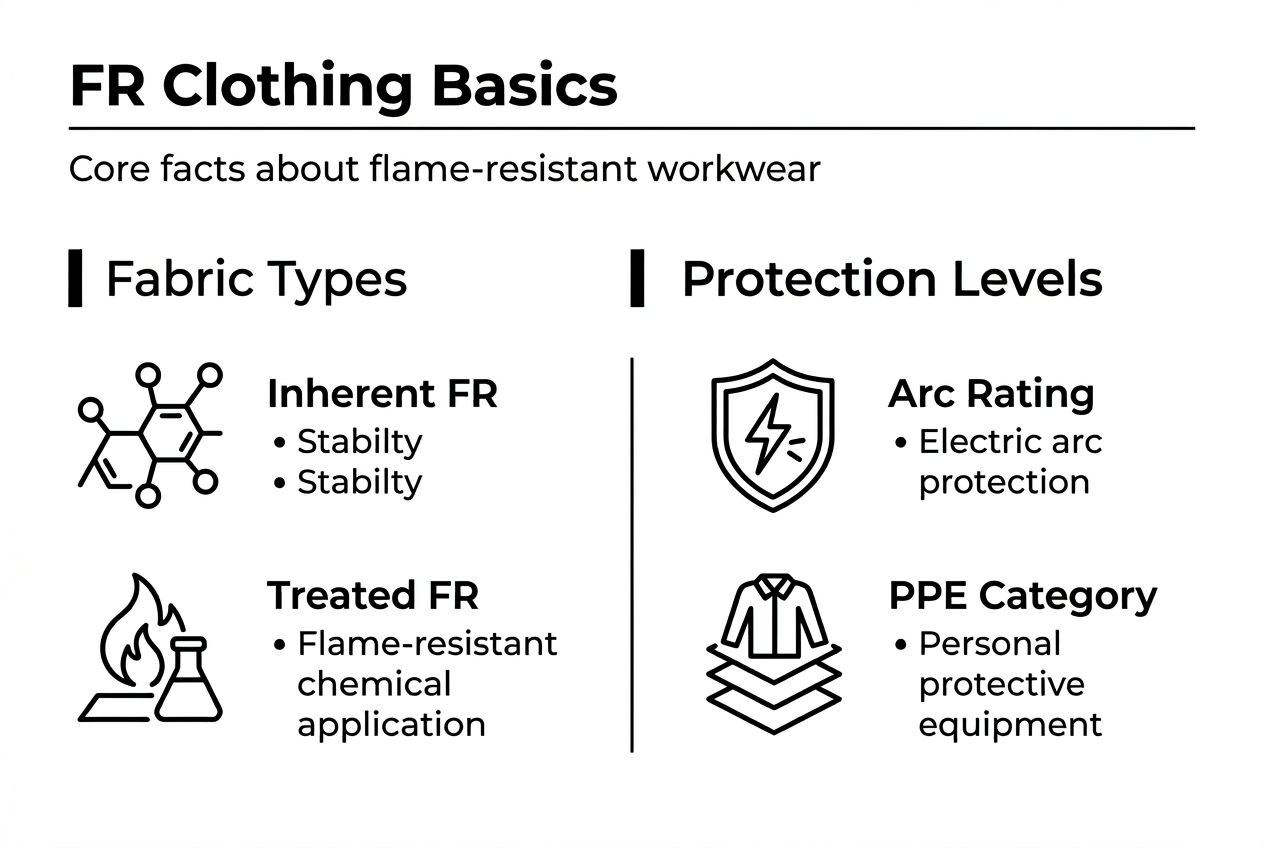
FR protection comes in two forms: inherent flame resistance built into fiber structure, or chemical treatments applied to fabrics. Inherent fabrics like Nomex and Kevlar maintain FR properties permanently, while treated materials require proper care to preserve their protective qualities. Both types must demonstrate their ability to resist ignition, self-extinguish, and prevent melting under controlled laboratory conditions.
Pro Tip: Inherent FR fabrics typically outlast treated options through repeated wash cycles, making them more cost effective for long-term daily use despite higher initial prices.
Understanding arc ratings and protective categories
Arc rating measures the maximum thermal energy a garment can withstand before a worker sustains second-degree burns, expressed in calories per square centimeter (cal/cm²). This rating becomes the foundation for matching protective clothing to specific electrical hazards.
NFPA 70E establishes PPE Categories (1 through 4) that specify minimum arc ratings required for different electrical tasks. Each category corresponds to increasing levels of incident energy exposure:
| PPE Category | Minimum Arc Rating | Typical Tasks |
|---|---|---|
| Category 1 | 4 cal/cm² | Panel work under 50V, basic maintenance |
| Category 2 | 8 cal/cm² | Low voltage switching, troubleshooting |
| Category 3 | 25 cal/cm² | High voltage equipment work, energized parts |
| Category 4 | 40 cal/cm² | Major electrical installations, high-risk tasks |
Selecting appropriate FR clothing requires three critical steps:
- Conduct a formal arc flash risk assessment to determine incident energy levels for specific job tasks.
- Identify the corresponding PPE Category based on calculated incident energy exposure.
- Choose garments with arc ratings that meet or exceed the category minimum.
For example, if your electrical work involves troubleshooting 480V panels with an incident energy calculation of 6 cal/cm², PPE Category 2 applies, requiring garments rated at minimum 8 cal/cm². Selecting a 4 cal/cm² garment would provide insufficient protection, potentially resulting in severe burns during an arc flash event.
Arc Thermal Performance Value (ATPV) represents the most common rating system, indicating the maximum incident energy where a worker has a 50% probability of receiving a just-barely second-degree burn. Higher ATPV values indicate greater protection.
Pro Tip: Always select garments with ATPV ratings exceeding your calculated incident energy by at least 2 cal/cm² to account for equipment wear, measurement uncertainties, and unexpected exposure scenarios.
Understanding how your daily tasks translate to PPE Categories empowers you to make informed decisions about arc-rated protection rather than relying on guesswork. Your employer should provide this hazard analysis, but knowing the categories helps you verify you’re wearing appropriate gear.
Fabric types, weight, and their impact on safety and comfort
FR fabrics fall into two fundamental categories with distinct performance characteristics. Inherent FR materials like Nomex, Kevlar, and modacrylic possess flame resistance as an intrinsic fiber property that cannot wash out or wear away. Chemical treatments applied to cotton or cotton-blend fabrics create FR properties but require strict care protocols to maintain effectiveness.
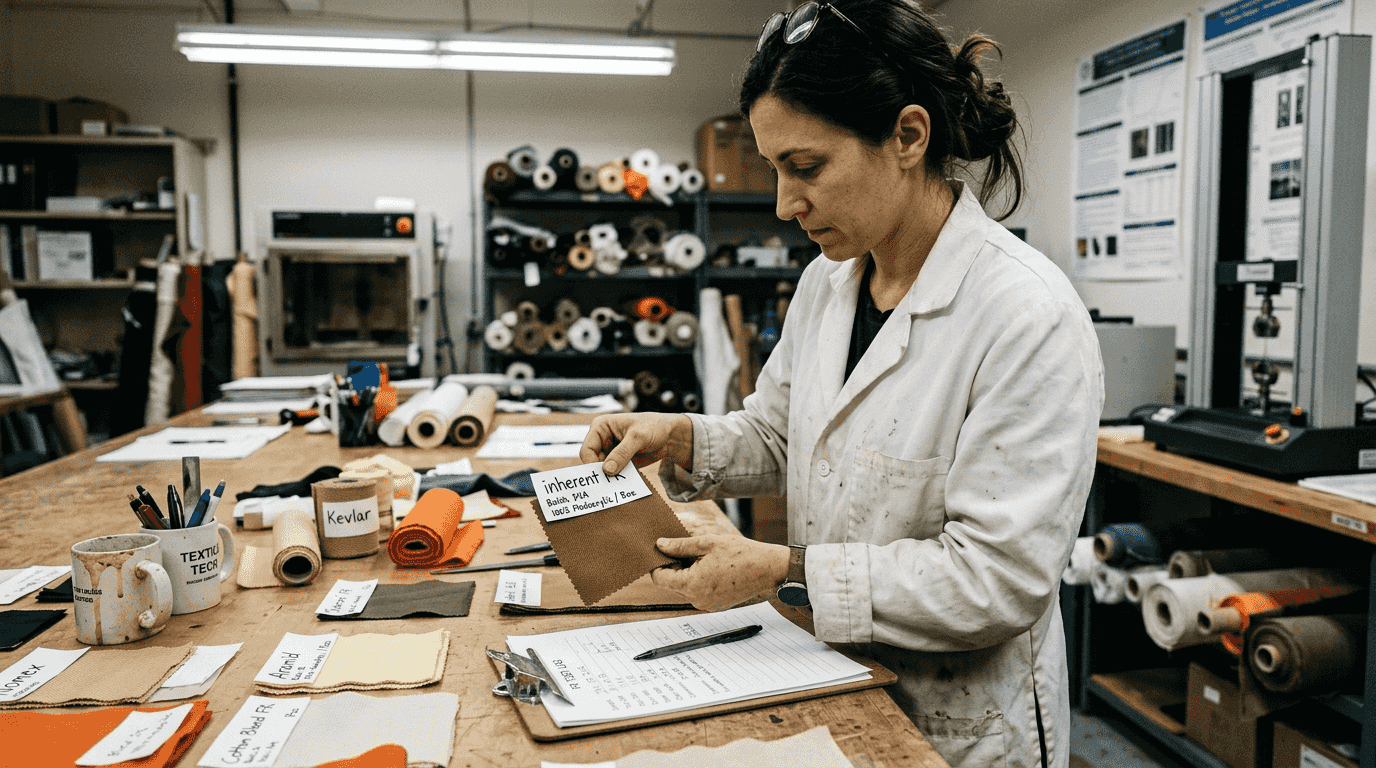
Fabric weight, measured in ounces per square yard, directly influences both protection level and wearability. Heavier fabrics typically provide higher arc ratings and better thermal insulation, but they reduce breathability and increase heat stress during physical work.
Common FR fabric options include:
- Nomex: inherent aramid fiber offering excellent flame resistance and durability, typically 4.5 to 7.5 oz weight
- FR cotton blends: treated natural fibers providing comfort and breathability, usually 7 to 9 oz weight
- Modacrylic blends: synthetic inherent FR materials balancing protection with moisture management, 5 to 8 oz weight
- Kevlar: inherent aramid with superior abrasion resistance, often blended for specific applications
Lighter fabrics (4 to 6 oz) improve comfort in warm environments but may only achieve Category 1 or 2 ratings. Mid-weight options (7 to 9 oz) balance protection and comfort for Category 2 or 3 requirements. Heavy fabrics (9+ oz) deliver Category 3 or 4 protection but can cause heat exhaustion during strenuous work.
Proper laundering maintains FR effectiveness regardless of fabric type. Inherent FR materials tolerate standard industrial washing, while treated fabrics require specific detergents and procedures outlined by manufacturers. Contamination from oils, greases, or flammable chemicals degrades FR properties and creates ignition hazards even on rated garments.
Pro Tip: Balance your required arc rating with daily comfort needs by selecting the lightest fabric weight that still meets your PPE Category, then prioritize breathable designs with moisture-wicking properties for all-day wearability.
Avoid using fabric softeners or bleach on FR clothing, as these chemicals can coat fibers and compromise flame resistance. When visible wear, tears, or permanent stains appear, retire garments immediately since damage reduces protective capacity unpredictably.
Selecting and maintaining FR clothing for your job
Effective FR clothing programs start with comprehensive workplace hazard assessment. Employers must analyze specific arc flash risks for every electrical task, calculate incident energy levels, and document appropriate PPE requirements before workers begin potentially hazardous assignments.
Follow these steps to ensure proper FR garment selection:
- Review your employer’s arc flash hazard analysis to identify incident energy levels for your regular tasks.
- Determine the corresponding PPE Category and minimum arc rating required.
- Select garments with arc ratings exceeding calculated incident energy by a safety margin.
- Verify garments meet ASTM F1506 standards and display proper labeling with arc ratings.
- Ensure proper fit, as loose clothing can trap heat and tight garments may restrict movement during emergencies.
Risk assessment and garment selection must account for layering when multiple garments are worn together. Arc ratings are not simply additive. A 4 cal/cm² shirt worn under an 8 cal/cm² jacket does not provide 12 cal/cm² protection. Instead, manufacturers test specific garment systems together to determine combined ratings.
Maintenance best practices preserve FR properties throughout garment lifecycle:
- Inspect garments before each use for tears, burns, excessive wear, or contamination
- Follow manufacturer washing instructions precisely, including water temperature, detergent type, and drying methods
- Remove FR clothing immediately when contaminated with flammable materials and clean according to specifications
- Store garments in clean, dry locations away from chemicals or contaminants
- Replace garments when damage appears or after the manufacturer’s recommended service life
Common mistakes that compromise FR protection include:
- Washing FR and non-FR clothing together, which can transfer flammable residues
- Using unauthorized alterations or repairs that introduce non-FR materials
- Wearing damaged garments “just one more day” instead of immediate replacement
- Ignoring contamination from oils or solvents that create ignition risks
Regular training on proper garment use and maintenance procedures ensures your entire team understands why FR clothing matters and how to keep it effective. Your safety depends not just on wearing FR gear, but on wearing properly maintained, appropriately rated garments matched to your specific electrical hazards.
Pro Tip: Create a simple inspection checklist you review every morning before work, checking for tears, burns, missing labels, and contamination, then document garment condition monthly to track when replacement becomes necessary.
Choose the right FR gear with us
Understanding FR ratings and standards empowers you to make informed decisions, but finding quality gear that delivers both protection and comfort can still prove challenging. WorkWearComfort specializes in durable, functional apparel designed specifically for blue-collar professionals who demand reliable performance in tough work environments.
Our Blue Collar Brotherhood hooded sweatshirt combines rugged construction with features tradespeople actually need on the job. While we focus on workwear that stands up to demanding conditions, we also understand that protection goes beyond FR ratings. Browse our complete selection at WorkWearComfort.com to discover apparel built for professionals who work hard and expect their gear to keep up, with designs that reflect the pride and resilience of the trades.
What is FR clothing? Frequently asked questions
What does ATPV mean and why is it important?
Arc Thermal Performance Value (ATPV) measures the maximum incident energy level at which FR fabric has a 50% probability of preventing second-degree burns. This rating, expressed in cal/cm², helps you match garment protection to specific arc flash hazards. Higher ATPV values indicate greater thermal protection during electrical incidents.
How do I know which PPE Category my job tasks fall under?
Your employer must conduct an arc flash risk assessment that calculates incident energy for every electrical task you perform. This analysis determines the appropriate PPE Category (1 through 4) based on voltage levels, available fault current, and working distances. Request this documentation from your safety manager to verify you’re wearing correctly rated protection.
Can FR clothing lose its protective properties over time?
Yes, FR clothing degrades through normal wear, contamination, and improper care. Treated fabrics lose effectiveness if washed with wrong detergents or exposed to fabric softeners. Even inherent FR materials can fail when torn, burned, or heavily soiled with flammable substances. Regular inspection and proper maintenance according to manufacturer specifications preserve protective qualities throughout garment life.
Is heavier fabric always better for protection?
Heavier fabrics generally provide higher arc ratings, but weight alone doesn’t determine protection level. A well-designed 7 oz inherent FR fabric may outperform a poorly constructed 9 oz treated material. Consider your specific arc rating requirements, work environment temperature, and physical activity level. The best choice balances adequate protection with comfort you’ll actually wear consistently.
Does FR clothing protect against all types of burns?
FR clothing primarily protects against thermal burns from flames and electric arcs by preventing ignition and limiting heat transfer. It does not protect against chemical burns, molten metal splashes, or direct contact with extremely hot surfaces. Use appropriate specialized PPE for these specific hazards. FR garments also require proper fit and coverage, wearing short sleeves or leaving gaps exposes skin to burn injuries.
