

Long hours on unpredictable job sites in the United States demand more from your work pants than ordinary clothing can offer. Comfortable jeans or basic cargo pants simply cannot protect against falling debris, harsh weather, or the daily grind of demanding trades. If you value safety, productivity, and reliability, durable construction work pants crafted from tear-resistant fabrics and thoughtful design features are a smart investment. This guide breaks down what separates specialized work pants from standard gear, helping American foremen and tradespeople choose options built for real-world conditions.
Table of Contents
- What Defines Construction Work Pants
- Fabric Types and Key Design Features
- Popular Styles and Specialized Variations
- Essential Safety and Compliance Considerations
- Cost, Longevity, and Repair Tips
- Common Mistakes When Buying Work Pants
Key Takeaways
| Point | Details |
|---|---|
| Durability and Materials | Construction work pants are designed with heavy-duty, tear-resistant fabrics, ensuring they withstand harsh environments. Selecting high-quality materials is crucial for longevity and protection. |
| Safety and Compliance | These pants incorporate safety features like flame resistance and high-visibility elements, meeting strict workplace regulations. Proper design integration with other personal protective equipment enhances overall safety. |
| Functionality and Comfort | Features like articulated knees and multiple tool pockets provide necessary mobility and storage, allowing for efficient work in demanding conditions. Prioritizing functionality over aesthetics is essential for worker performance. |
| Common Purchasing Mistakes | Avoid mistakes such as incorrect sizing and overlooking safety requirements, which can impact performance and comfort. Always consider specific job demands when selecting work pants. |
What Defines Construction Work Pants
Construction work pants represent more than just clothing - they’re critical protective equipment designed for professionals working in challenging environments. Unlike standard pants, these specialized garments are engineered to withstand extreme conditions while providing essential protection and functionality for skilled construction workers.
At their core, construction work pants are defined by several key characteristics that distinguish them from regular workwear:
- Durability: Made from heavyweight, tear-resistant fabrics like canvas, denim, or specialized synthetic blends
- Reinforced Areas: Extra fabric layers at knees, seat, and tool pockets to prevent wear
- Safety Features: Integrated protective elements like metal clip points, utility loops, and deep cargo pockets
- Movement Flexibility: Articulated knees and gusseted crotch areas allowing full range of motion
- Hazard Protection: Designed to meet occupational safety standards for workplace environments
The primary function of construction work pants goes beyond mere clothing - they serve as a critical layer of personal protective equipment. These pants must simultaneously protect against environmental hazards, provide storage for essential tools, and allow workers to move freely and comfortably throughout demanding workdays.
Materials Matter: High-quality construction work pants are typically crafted from materials that offer superior abrasion resistance, moisture management, and durability. Ripstop fabrics, reinforced cotton blends, and synthetic performance materials are commonly used to create pants that can withstand daily wear in challenging jobsite conditions.
Construction work pants are not just clothing - they’re a worker’s first line of defense against workplace hazards.
Pro tip: When selecting construction work pants, prioritize functional design and durability over pure aesthetic appeal - your safety and comfort depend on choosing the right protective workwear.
Fabric Types and Key Design Features
Construction work pants are engineered with specialized fabrics and design features that go far beyond standard clothing, meeting the rigorous demands of high-intensity work environments. Fabric selection plays a critical role in creating work pants that can withstand daily challenges while providing maximum comfort and protection.
Key fabric types commonly used in construction work pants include:
- Cotton Duck: Heavy-weight, tightly woven fabric known for exceptional durability
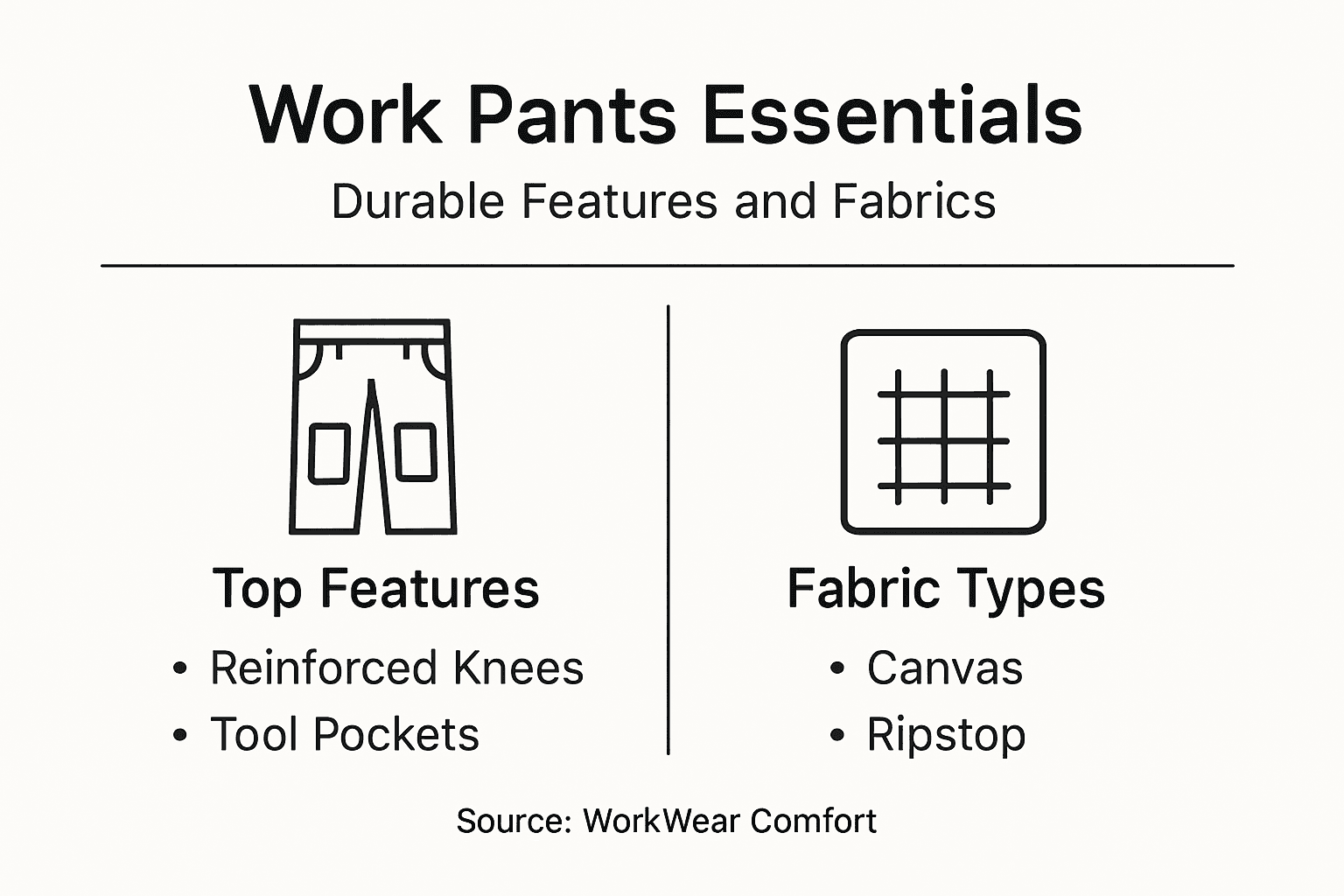
- Canvas: Sturdy plain-woven fabric with excellent tear resistance
- Denim Blends: Reinforced with synthetic fibers for increased flexibility
- Ripstop Synthetic Fabrics: Engineered to prevent tears and resist abrasions
- Spandex-Blend Materials: Provide stretch and enhanced mobility
Design features are equally crucial in creating high-performance work pants. Safety regulations mandate specific protective elements that transform these garments from simple clothing into essential personal protective equipment. These features typically include reinforced knee areas, triple-stitched seams, multiple tool pockets, and strategic fabric overlays that enhance durability and functionality.
Performance Characteristics: Modern construction work pants integrate advanced textile technologies that balance protection, comfort, and practicality. Moisture-wicking properties, quick-drying materials, and breathable fabrics ensure workers remain comfortable during long, physically demanding workdays.
High-quality work pants are a construction professional’s most important wearable tool - combining protection, functionality, and durability.
Pro tip: Always inspect your work pants’ fabric composition and design features before purchasing, ensuring they match the specific demands of your job site and safety requirements.
Popular Styles and Specialized Variations
Construction work pants have evolved far beyond basic utility, offering specialized styles for diverse work environments. Professional tradespeople now have an extensive range of options designed to meet specific job site requirements and personal comfort preferences.
Popular construction work pant styles include:
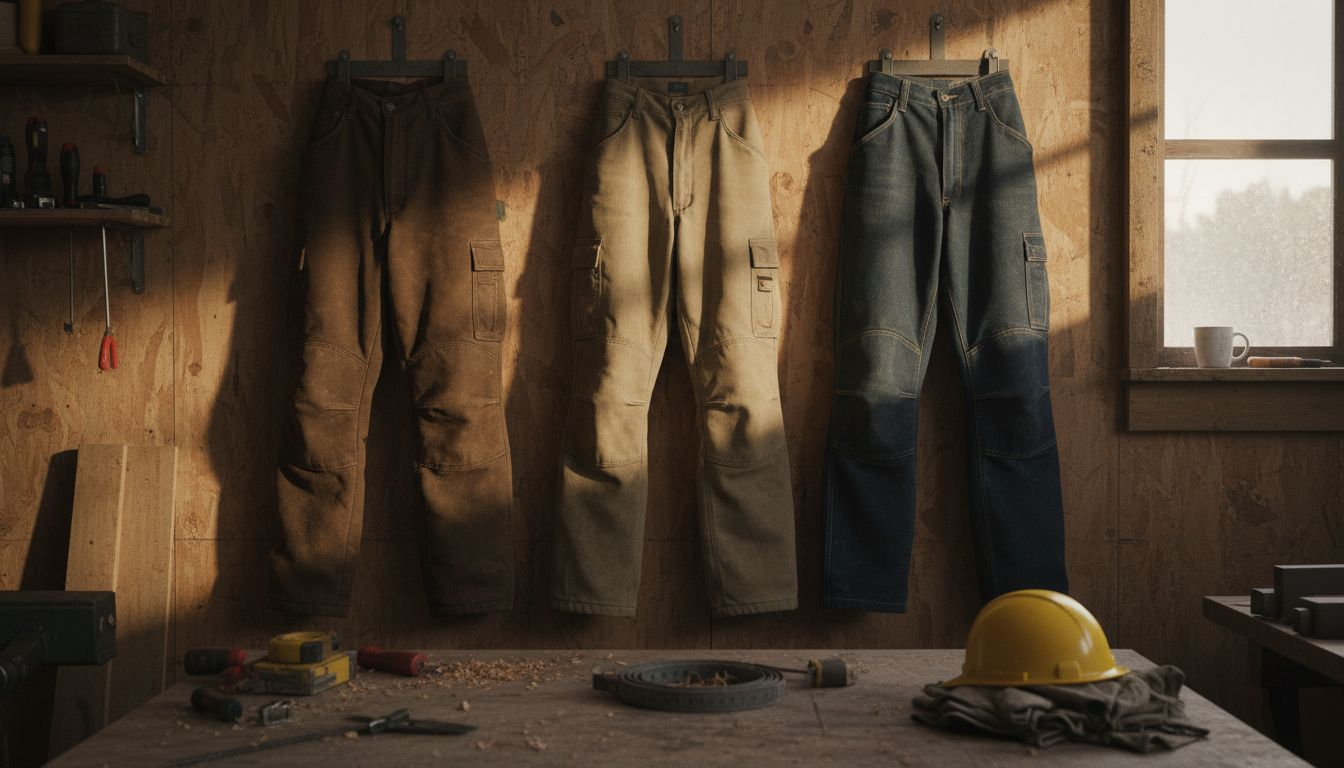
- Traditional Cargo Pants: Multiple deep pockets for maximum tool storage
- Relaxed-Fit Work Pants: Providing comfort during long workdays
- Double-Front Reinforced Pants: Extra durability for heavy-duty tasks
- Tactical Cargo Pants: Advanced storage solutions with strategic pocket placement
- Stretch-Fabric Pants: Enhanced mobility and flexibility for active work
Specialized variations address unique trade requirements and environmental challenges. These include insulated pants for cold weather, waterproof options for wet conditions, and high-visibility designs that enhance worker safety on dynamic construction sites. Each variation is engineered to provide specific performance benefits that standard work pants cannot match.
Performance-Driven Design: Modern construction work pants are no longer one-size-fits-all garments. Innovative designs now incorporate advanced features like moisture-wicking fabrics, temperature-regulating materials, and ergonomic cuts that adapt to the wearer’s movements and job demands.
Here’s how popular construction work pant styles differ in their key advantages:
| Pant Style | Storage Capacity | Mobility Features | Ideal Use Case |
|---|---|---|---|
| Traditional Cargo Pants | Multiple deep pockets | Basic fit | General construction tasks |
| Relaxed-Fit Work Pants | Standard pocket space | Extra comfort and roominess | Long shifts, indoor work |
| Double-Front Reinforced | Moderate tool storage | Extra knee durability | Heavy-duty work, kneeling |
| Tactical Cargo Pants | Specialized pocket layouts | Enhanced articulation | High-security jobs, field work |
| Stretch-Fabric Pants | Limited storage | Maximum flexibility | Active or ladder work |
Construction work pants are more than clothing - they’re specialized tools that enhance worker performance and safety.
Pro tip: Select work pants that match your specific trade requirements, considering factors like climate, job site conditions, and the physical demands of your daily tasks.
Essential Safety and Compliance Considerations
Construction work pants are more than just clothing - they are critical personal protective equipment designed to meet rigorous safety standards and workplace regulations. Understanding these compliance requirements is essential for protecting workers and maintaining a safe work environment.
Key safety and compliance considerations include:
- Flame Resistance: Critical for workers in high-heat environments
- Cut and Tear Resistance: Protecting against sharp objects and machinery
- High-Visibility Elements: Enhancing worker visibility on dynamic job sites
- Compatibility with PPE: Ensuring seamless integration with other safety equipment
- Ergonomic Design: Reducing physical strain and potential workplace injuries
International labor organizations recommend comprehensive safety strategies that go beyond simple clothing requirements. This holistic approach includes not just the technical specifications of work pants, but also proper training on their use, maintenance, and the critical role they play in overall workplace safety.
Performance Standards: Compliance isn’t just about meeting minimum requirements. Modern construction work pants must balance safety regulations with worker comfort, incorporating advanced materials and design features that provide maximum protection without compromising mobility or breathability.
Below is a summary of essential safety attributes, their workplace value, and compliance requirements:
| Safety Attribute | Workplace Value | Compliance Impact |
|---|---|---|
| Flame Resistance | Prevents burns in high-heat areas | Required for welding/furnace jobs |
| Cut/Tear Resistance | Reduces injury from sharp objects | Meets OSHA protective standards |
| High-Visibility Elements | Keeps workers visible on site | Mandatory for night work zones |
| PPE Compatibility | Enables integration with gear | Ensures full body protection |
Safety is not an option - it’s a fundamental requirement in construction work wear.
Pro tip: Regularly inspect your work pants for signs of wear, damage, or reduced protective capabilities, and replace them immediately if they no longer meet safety standards.
Cost, Longevity, and Repair Tips
Construction work pants are a strategic investment that requires careful consideration of long-term cost and performance factors. Professional tradespeople understand that the initial purchase price represents only a fraction of the total cost of ownership for their work apparel.
Key strategies for maximizing work pant longevity include:
- Quality Material Selection: Investing in high-durability fabrics
- Routine Maintenance: Regular cleaning and careful storage
- Timely Repairs: Addressing wear and tear before critical failure
- Proper Storage: Protecting pants from unnecessary environmental damage
- Strategic Rotation: Using multiple pairs to distribute wear
Construction apparel cost estimation involves more than just the upfront expense. Experienced workers calculate total cost by considering fabric durability, repair potential, and replacement frequency. High-quality work pants might cost more initially but often prove more economical over time due to extended service life.
Repair and Maintenance Techniques: Effective work pant preservation involves proactive care. This includes reinforcing stress points, carefully patching worn areas, and following manufacturer-recommended cleaning protocols. Professional-grade sewing techniques can dramatically extend the functional life of work pants, turning a potential replacement into a simple repair.
Smart investment in work pants is about durability, not just the price tag.
Pro tip: Invest in professional repair skills or maintain a relationship with a skilled tailor who understands the specific repair needs of heavy-duty work pants.
Common Mistakes When Buying Work Pants
Purchasing construction work pants isn’t as straightforward as many professionals assume. Selecting the wrong work pants can significantly impact job performance, safety, and long-term comfort. Understanding the most common purchasing mistakes helps workers make more informed decisions.
Key mistakes to avoid include:
- Incorrect Size Selection: Buying pants that are too loose or too tight
- Ignoring Job-Specific Requirements: Overlooking specialized design features
- Prioritizing Price Over Quality: Choosing cheap pants that wear out quickly
- Neglecting Safety Standards: Skipping essential protective elements
- Disregarding Material Suitability: Using inappropriate fabrics for specific work environments
Construction workers frequently make critical errors when selecting work pants by failing to consider the unique demands of their specific job sites. These mistakes can range from choosing pants with insufficient pocket space to selecting materials that don’t provide adequate protection against environmental hazards.
Performance Impact: The consequences of poor work pant selection extend beyond mere discomfort. Ill-fitting or inappropriate pants can restrict movement, compromise safety, and ultimately reduce overall job efficiency. Professional tradespeople understand that work pants are an essential tool, not just a clothing item.
The right work pants are an investment in your safety, comfort, and professional performance.
Pro tip: Always try on work pants and perform a full range of motion test before purchasing, ensuring they meet both your comfort and job-specific requirements.
Gear Up With Workwear That Works as Hard as You Do
Finding construction work pants that combine durability, comfort, and safety can feel like a challenge. This article highlights the critical need for work pants engineered with reinforced fabrics, functional pockets, and safety features that stand up to the toughest jobs and keep you moving freely throughout your workday. If you want gear that supports your hard work, resists wear and tear, and meets your safety needs, look no further.
Discover the rugged reliability you deserve with All Hooded Sweatshirts - WorkWear Comfort plus durable headwear options like Blue-Collar Dad Hats - WorkWear Comfort and Trucker Caps Snapback - Blue Collar Strong - WorkWear Comfort. Each piece is crafted to embody the strength and resilience of hardworking professionals.
Don’t let your workwear slow you down or compromise safety. Visit https://workwearcomfort.com today to shop durable, comfortable apparel built to deliver on quality and function. Gear up now and experience the true meaning of workwear that works for you.
Frequently Asked Questions
What are the key features of construction work pants?
Construction work pants are characterized by durability, reinforced areas, safety features, movement flexibility, and hazard protection. They are designed to withstand harsh conditions while providing essential functionality for skilled workers.
What materials are commonly used in construction work pants?
Common materials include cotton duck, canvas, denim blends, ripstop synthetic fabrics, and spandex-blend materials. These fabrics offer durability, flexibility, and resistance to wear and tear.
How do I choose the right construction work pants for my job?
To choose the right construction work pants, consider the specific demands of your job, such as the environment, required safety features, and the need for mobility. Look for pants with appropriate reinforcements and functional design that aligns with your work activities.
Why is it important to follow safety and compliance standards with work pants?
Following safety and compliance standards is essential to protect workers from potential hazards. Features like flame resistance, cut and tear resistance, and high-visibility elements help prevent injuries and ensure a safe work environment.
