

Finding tough, comfortable clothing can feel like a job in itself when you spend long hours tackling greasy car parts and awkward repairs. American mechanics and auto technicians need workwear that does more than just fit; it must stand up to stains, resist wear, and let you move easily through demanding tasks. This guide breaks down the features, fabrics, and materials that matter most for grease-resistant pants and shirts built to thrive on the job.
Table of Contents
- Mechanic Pants And Shirts Explained
- Major Material And Fabric Differences
- Essential Features For Comfort And Function
- Risks Of Poor-Quality Workwear
- Picking The Best Options For Your Needs
Key Takeaways
| Point | Details |
|---|---|
| Durability and Protection | Mechanic workwear must offer high durability and protection against chemicals and workplace hazards. |
| Material Composition | Choose workwear made from advanced fabrics that blend natural and synthetic fibers for optimal comfort and functionality. |
| Essential Features | Look for articulated designs, reinforced stress points, and moisture-wicking properties to enhance mobility and safety. |
| Regular Maintenance | Inspect workwear regularly for wear and tear to ensure ongoing protection and functionality during use. |
Mechanic pants and shirts explained
Mechanics face unique workplace challenges that demand specialized apparel designed to withstand harsh working environments. Automotive service technicians require clothing that provides durability, comfort, and protection while handling greasy parts and working in challenging positions.
Mechanic workwear must address several critical performance requirements:
- Resistance to grease and oil stains
- Durability under repeated stress and movement
- Flexibility for complex physical tasks
- Protection against workplace hazards
- Comfort during long work shifts
The best mechanic pants and shirts combine multiple functional features to support professionals who spend hours in physically demanding environments. High-quality work apparel uses reinforced materials like canvas, denim, and specialized synthetic blends that can withstand constant wear and tear.
Performance Fabrics play a crucial role in modern mechanic clothing. Advanced textiles offer moisture-wicking properties, enhanced breathability, and improved resistance to chemicals and abrasions. These specialized materials ensure that mechanics remain comfortable while maintaining professional appearance and safety standards.
Pro tip: Invest in multiple sets of work clothes and rotate them regularly to extend their overall lifespan and maintain consistent professional appearance.
Major material and fabric differences
Mechanic workwear fabrics represent a sophisticated blend of materials engineered to meet the demanding requirements of automotive professionals. Technical textiles have revolutionized workwear by introducing advanced performance characteristics that go far beyond traditional clothing materials.
The most common fabric materials used in mechanic pants and shirts include:
- Cotton: Natural fiber offering breathability and basic comfort
- Polyester: Synthetic material providing durability and wrinkle resistance
- Canvas: Heavy-duty fabric with exceptional tear strength
- Denim: Thick, robust material with excellent abrasion resistance
- Ripstop nylon: Lightweight synthetic fabric with reinforced weave
Fiber Composition plays a critical role in determining workwear performance. Global fiber production demonstrates that modern mechanic clothing often uses hybrid materials combining natural and synthetic fibers to maximize functionality.
Advanced fabric technologies now incorporate specialized treatments that enhance workplace protection. These treatments can provide additional benefits like moisture-wicking, stain resistance, flame retardancy, and improved chemical resistance. Mechanics can now choose clothing that not only withstands tough working conditions but also provides enhanced comfort and safety.
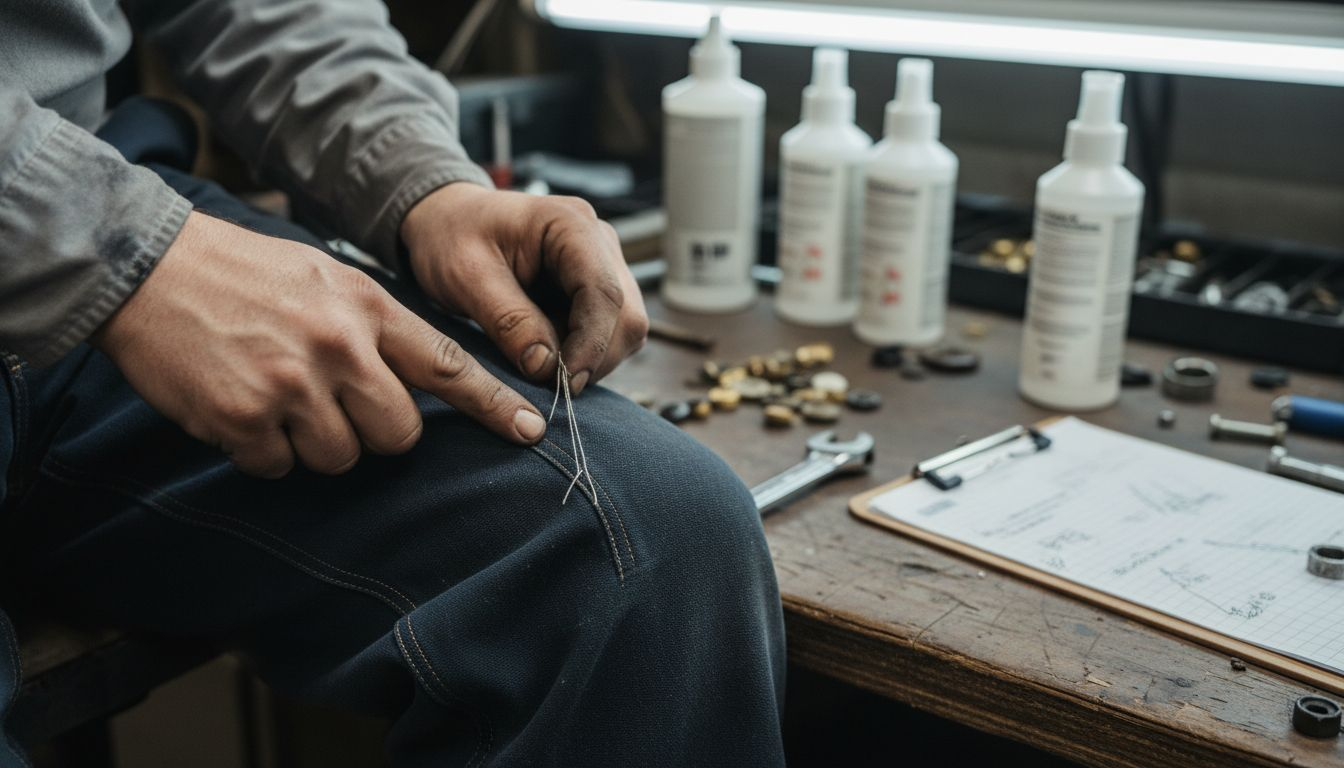
Here’s a concise comparison of mechanic workwear materials and their functional advantages:
| Material Type | Strengths | Common Uses |
|---|---|---|
| Cotton | Breathable, soft comfort | Shirts, lining |
| Polyester | High durability, resists wrinkles | Pants, blends |
| Canvas | Tear-resistant, sturdy | Outer pants, jackets |
| Ripstop Nylon | Lightweight, resists quick damage | Utility pockets, panels |
| Denim | Abrasion resistance, robust | Pants, reinforced areas |
Pro tip: Select mechanic workwear with blend percentages that offer the best balance between durability, comfort, and flexibility for your specific work environment.
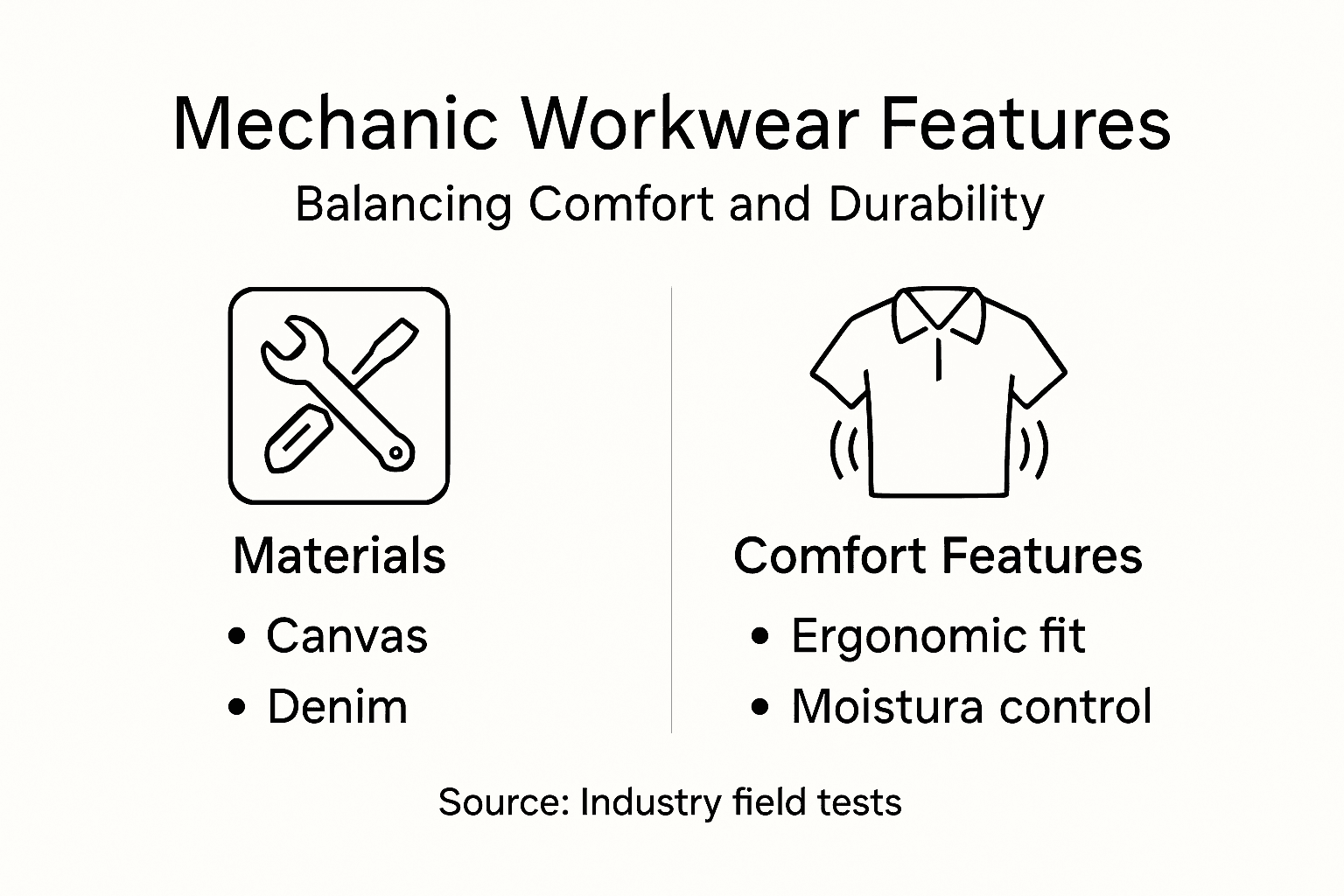
Essential features for comfort and function
Mechanic workwear must balance protection, durability, and comfort in challenging workplace environments. Workwear selection criteria emphasize the critical importance of understanding job-specific requirements when choosing professional apparel.
Key essential features for mechanic pants and shirts include:
- Mobility Range: Articulated knees and gusseted design for maximum movement
- Reinforced Stress Points: Extra fabric layers at high-wear areas like knees and elbows
- Temperature Regulation: Breathable fabrics that manage moisture and heat
- Protective Elements: Integrated knee pads, multiple tool pockets, and reinforced seams
- Chemical Resistance: Treatments that repel oil, grease, and automotive fluids
Thermoregulation is a critical component of workplace comfort. Textile performance testing reveals that proper moisture management prevents heat stress and maintains worker productivity throughout long shifts.
Modern mechanic workwear integrates advanced ergonomic design principles that go beyond traditional clothing construction. Strategically placed stretch panels, moisture-wicking technologies, and precision fit patterns ensure that mechanics can move freely while maintaining a professional appearance and maximum protection.
This table summarizes how key apparel features impact mechanic performance:
| Apparel Feature | Workplace Benefit | Productivity Impact |
|---|---|---|
| Articulated knees | Enhanced flexibility | Reduces fatigue |
| Moisture-wicking fabric | Better heat management | Minimizes discomfort |
| Reinforced stress points | Increased garment lifespan | Cuts replacement costs |
| Integrated tool pockets | Easier access to equipment | Improves efficiency |
| Chemical-resistant treatment | Improved safety for skin | Lowers accident risk |
Pro tip: Always try on workwear and perform mock work movements to assess true comfort and functional range of motion before making a final purchase.
Risks of poor-quality workwear
Mechanics face significant workplace hazards that require comprehensive protection through high-quality workwear. OSHA safety standards mandate strict requirements for personal protective equipment to prevent potential injuries and long-term health complications.
Potential risks associated with inferior mechanic clothing include:
- Chemical Exposure: Thin or porous fabrics allowing direct skin contact with harmful substances
- Mechanical Injury: Lack of reinforcement leading to tears during high-stress activities
- Reduced Mobility: Restrictive designs that limit movement and increase worker fatigue
- Inadequate Heat Protection: Poor thermal regulation causing overheating or insufficient insulation
- Compromised Safety: Insufficient protective elements like reinforced seams or integrated padding
Workplace Injuries represent a critical concern for automotive technicians. Auto repair safety protocols emphasize the importance of wearing durable, well-constructed workwear that provides comprehensive protection against multiple workplace hazards.
Improper workwear can transform routine maintenance tasks into potential danger zones. Substandard clothing increases the likelihood of accidents, chemical burns, cuts, and long-term health issues that can significantly impact a mechanic’s professional capabilities and personal well-being.
Pro tip: Regularly inspect your workwear for signs of wear, chemical damage, or structural weakness, and replace items that no longer provide adequate protection.
Picking the best options for your needs
Selecting the right mechanic workwear requires a strategic approach that goes beyond simple aesthetic preferences. Workwear testing methodology demonstrates the importance of comprehensive evaluation to ensure optimal performance and protection.
Key considerations when choosing mechanic pants and shirts include:
- Fit and Mobility: Ensuring full range of motion without restrictive elements
- Fabric Durability: Assessing material strength and resistance to workplace stressors
- Protection Level: Evaluating integrated safety features and reinforcement
- Comfort Factors: Checking breathability and moisture-management capabilities
- Functional Design: Analyzing pocket placement, tool accessibility, and ergonomic features
Performance Criteria are critical in making an informed selection. Work pants selection guidelines highlight the importance of examining specific features that directly impact workplace effectiveness and personal comfort.
Mechanics should approach workwear selection like choosing professional tools - with careful consideration and attention to technical specifications. Each garment represents an investment in personal safety, comfort, and professional performance. Prioritize items that offer comprehensive protection, durability, and the flexibility to handle diverse workplace challenges.
Pro tip: Always perform a full range of motion test when trying on workwear, mimicking actual work movements to ensure true comfort and functionality.
Discover Mechanic Workwear That Works as Hard as You Do
Mechanic pants and shirts demand the perfect blend of durability, comfort, and protection to handle long shifts and tough conditions. If you struggle with clothing that wears out quickly or restricts your movement, it is time to upgrade to gear crafted specifically with blue-collar professionals in mind. From reinforced stress points to moisture-wicking fabrics, the right workwear supports your mobility, reduces fatigue, and keeps you safe from workplace hazards.
Explore the Heavy Equipment Operator Hoodie Sweatshirt for durable layering options and check out stylish accessories like our Snapback and Dad Hats - Blue Collar Collection to complete your workday outfit. Visit WorkWearComfort.com now to find work apparel that matches your rugged lifestyle with unmatched quality and functionality. Don’t compromise on comfort or protection — gear up today and experience the difference that workwear designed for mechanics can make.
Frequently Asked Questions
What features should I look for in mechanic pants and shirts?
Look for features such as articulated knees for mobility, reinforced stress points for durability, breathable fabrics for temperature regulation, and integrated pockets for tool accessibility.
Why is the choice of fabric important for mechanic workwear?
The fabric choice is crucial because it affects durability, comfort, and protection. Fabrics like canvas and denim offer abrasion resistance, while moisture-wicking synthetics help manage heat and sweat.
How do advanced fabrics enhance mechanic clothing performance?
Advanced fabrics offer properties like moisture-wicking, chemical resistance, and improved breathability, ensuring mechanics remain comfortable and protected during long and demanding shifts.
What are the risks of wearing poor-quality workwear as a mechanic?
Wearing poor-quality workwear can lead to chemical exposure, mechanical injury due to lack of reinforcement, limited mobility, inadequate heat protection, and compromised safety, increasing the likelihood of workplace accidents.
Recommended
- Mechanic Work Shirts for Men – Why Quality Matters – WorkWearComfort
- Mechanic Work Pants: Comfort, Durability, and Safety – WorkWearComfort
- Auto Mechanic Work Clothes: Comfort Meets Durability – WorkWearComfort
- Mechanic Work Overalls: Comfort, Safety, and Durability – WorkWearComfort
- Παντελόνια τζιν ανδρικά: Ξεκλειδώστε στυλ και άνεση
- Impact of Climate on Workwear Choices in the UK – More Sports
- BreatheFlex™ Pro Men’s Performance Long-Sleeve Athletic Shirt Active – Real Healthy Haven
