

For decades, women in trades have made do with workwear designed for men’s bodies, leading to poor fit, safety risks, and constant adjustments on the job. The industry is finally catching up with purpose-built designs for women, addressing unique needs for fit, movement, and durability. This guide explains what defines true women’s workwear, the features that matter most, and how to choose gear that enhances both performance and confidence on the job site.
Table of Contents
- What defines women’s workwear?
- Critical features: What matters most for performance
- Choosing the right workwear: Climate and body type considerations
- Workwear choices: Heavy canvas vs stretch blends
- Style, safety, and confidence: Beyond just clothes
- Find your perfect workwear: Shop women-led designs
- Frequently asked questions
Key Takeaways
| Point | Details |
|---|---|
| Purpose-built for women | Women’s workwear is designed from the ground up for female fit, movement, and jobsite demands. |
| Feature-driven design | Functional details like reinforced seams, pockets, and flexible fabrics set women’s workwear apart. |
| Climate and fit matter | Choosing the right gear for your environment and body shape ensures long-lasting comfort and safety. |
| Modern options empower | Today’s workwear gives women confidence and style while reducing risks on the job. |
What defines women’s workwear?
Women’s workwear isn’t just smaller versions of men’s gear. It’s purpose-built for women’s bodies, with adjusted proportions that account for waist-to-hip ratios, shoulder width, and torso length. These differences matter when you’re bending, lifting, or reaching throughout a shift.
The focus extends beyond fit to function. Properly designed women’s workwear includes tool pockets positioned where you actually need them, gussets that allow full range of motion, stretch panels in high-movement areas, and reinforced stress points that prevent blowouts. These features eliminate the constant tugging, bunching, and readjusting that waste time and create hazards.
When workwear fits correctly, it reduces injury risk. Pants that gap at the waist create trip hazards. Sleeves that are too long catch on equipment. Shirts that ride up expose skin to sparks or chemicals. Purpose-built designs solve these problems while boosting confidence, letting you focus on the work instead of your clothes.
Key differences in women’s workwear:
- Adjusted rise and inseam proportions for proper coverage
- Contoured waistbands that prevent gapping
- Strategically placed pockets for tools and devices
- Reinforced inner thighs and knees for durability
- Articulated joints for natural movement patterns
“The right workwear transforms how you move through your day. When gear fits properly, you stop thinking about it and start performing better.”
For more guidance on selecting appropriate gear, check out our women’s construction workwear guide for trade-specific recommendations.
Critical features: What matters most for performance
The difference between workwear that lasts a season and gear that performs for years comes down to specific design elements. Field research with tradeswomen has identified features that solve real problems, from restrictive fit to premature fabric failure.
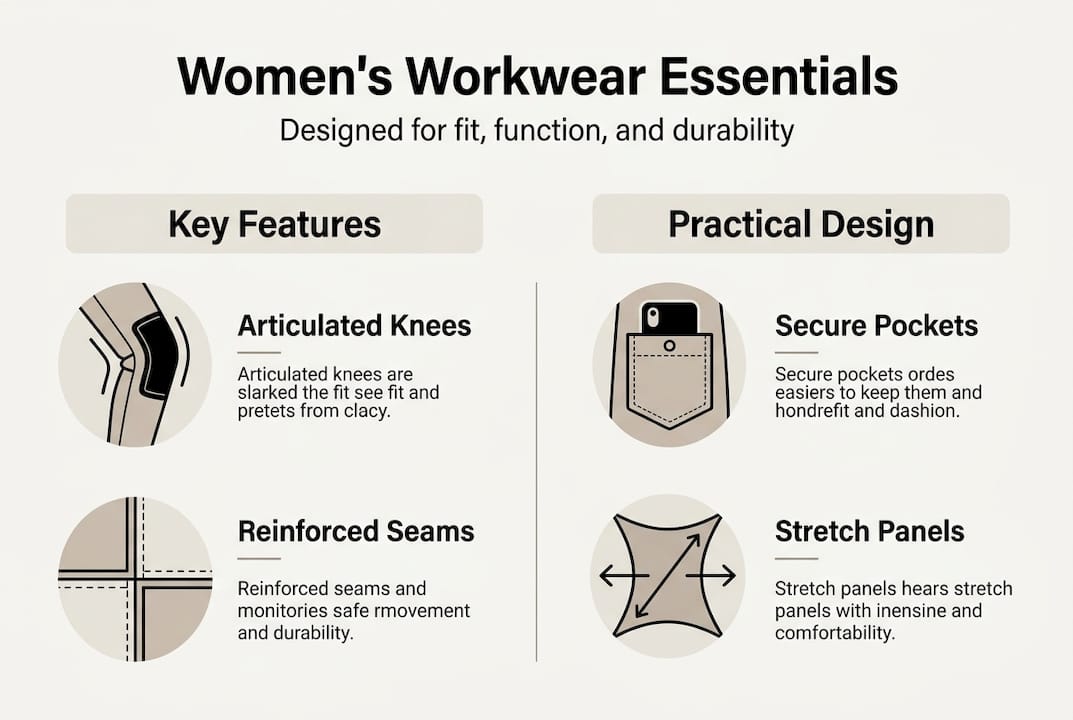
Articulated knees and crotch gussets allow you to squat, climb, and kneel without restriction. Stretch panels in the right locations provide flexibility without sacrificing durability. These movement-focused features prevent the binding and tearing that plague adapted men’s workwear.
Reinforced zones matter most on knees, inner thighs, and seat areas where friction causes rapid wear. Quality workwear uses fabrics rated for 50,000 abrasion cycles and breathability of 5,000 g/m²/24h, ensuring they withstand daily abuse while keeping you comfortable.
Performance feature comparison:
| Feature | Benefit | Why It Matters |
|---|---|---|
| Articulated knees | Natural bend without restriction | Prevents fabric stress and improves mobility |
| Crotch gusset | Full range of motion | Eliminates blowouts during squatting or climbing |
| Reinforced stress points | Extended durability | Protects high-wear areas from premature failure |
| Functional pockets | Tool accessibility | Keeps essentials secure and within reach |
| Stretch panels | Flexibility with structure | Allows movement without losing shape |
Pocket design deserves special attention. You need secure storage for phones, tools, and small parts without bulk or interference. Look for cargo pockets with flaps or zippers, reinforced tool loops, and phone pockets positioned where they won’t dig into your hip when sitting.
Pro Tip: Test pocket placement before buying. Squat down and reach across your body. If pockets shift, gape, or restrict movement, they’ll frustrate you on the job.
Our understanding workwear for construction article covers additional features for specific trades, while carpentry work pants for women explores specialized requirements for woodworking professionals.
Choosing the right workwear: Climate and body type considerations
Your environment and body shape determine which features matter most. A welder in Arizona needs different gear than a carpenter in Minnesota, and a petite electrician has different fit requirements than someone who’s six feet tall.
For hot climates, prioritize ultralight ripstop with sun protection. Breathable fabrics with UPF ratings prevent heat exhaustion while protecting skin from UV damage. Vented designs and moisture-wicking properties keep you cooler during long shifts outdoors.
Cold or wet environments demand waterproof bibs, insulated layers, and adjustable details that seal out weather. Look for reinforced knees that accommodate kneepads, adjustable suspenders for layering, and storm flaps that prevent water intrusion.
Climate-specific workwear guide:
- Hot and dry: Lightweight ripstop, UPF 50+ protection, vented panels, light colors
- Cold and dry: Insulated layers, wind-resistant shells, adjustable cuffs, thermal linings
- Wet conditions: Waterproof membranes, sealed seams, quick-dry fabrics, storm flaps
- Variable weather: Layering systems, removable liners, convertible features, packable shells
Body type considerations extend beyond standard sizing. Tall women need extended inseams and longer torsos to prevent constant exposure. Petite builds require shorter rises and adjusted proportions to avoid excess fabric bunching. Curvy figures benefit from contoured waistbands and stretch panels that accommodate shape without gapping.
Fit considerations by body type:
| Body Type | Key Features | What to Avoid |
|---|---|---|
| Tall | Extended inseams, longer torsos, adjustable straps | Standard lengths that expose ankles or midriff |
| Petite | Shorter rises, adjusted proportions, hemming options | Excess fabric that bunches or creates trip hazards |
| Curvy | Contoured waistbands, stretch panels, shaped cuts | Straight cuts that gap at waist or bind at hips |
| Athletic | Structured fits, reinforced seams, durable fabrics | Overly loose cuts that catch on equipment |
Trade-specific needs also influence choices. Mechanics need coveralls with easy access and stain resistance. Construction workers require reinforced knees and multiple tool pockets. Electricians benefit from flame-resistant fabrics and secure closures.
For cold weather options, explore our guide on construction site jackets for layering strategies and insulation recommendations.
Workwear choices: Heavy canvas vs stretch blends
Fabric technology has evolved beyond traditional heavy canvas, offering options that balance durability with comfort. Understanding the trade-offs helps you choose materials that match your work demands.
Heavy canvas excels at abrasion resistance, often exceeding 60,000 cycles in testing. It shrugs off sparks, resists tears, and maintains structure through years of hard use. The downside? Stiffness, weight, and heat retention that can be uncomfortable in warm weather or during high-movement tasks.
Stretch blends incorporate elastane or spandex for flexibility and comfort. They move with your body, reduce fatigue, and often include moisture-wicking properties. The compromise comes in durability, as stretch fabrics may wear faster under extreme abrasion, though quality blends still meet professional standards.
Material comparison:
- Heavy canvas (10-12 oz): Maximum abrasion resistance, spark protection, long lifespan, but stiff and hot
- Mid-weight canvas (8-10 oz): Balanced durability and comfort, good for general construction
- Stretch blends (6-8 oz with elastane): Superior comfort and movement, faster drying, may wear faster
- Technical fabrics (ripstop, nylon blends): Lightweight, quick-dry, excellent for hot climates, less abrasion resistant
Purpose-built women’s designs avoid the “pink tax” by pricing equitably and focusing on functional improvements rather than cosmetic changes. Women-led brands prioritize features that matter, eliminating unnecessary costs while delivering genuine performance benefits.
Pro Tip: Match fabric weight to your primary hazards. Welders need heavy canvas for spark resistance. Landscapers benefit from lighter, breathable blends. Electricians should prioritize flame-resistant ratings over weight.
For detailed comparisons of specific brands and styles, see our women’s apparel comparison covering popular options across price points and performance categories.
Style, safety, and confidence: Beyond just clothes
Workwear affects more than physical comfort. The right gear influences how you feel on the job, impacting confidence, safety, and professional identity. Modern options recognize that women want functional gear that also reflects personal style.
Purpose-built women’s workwear reduces injury risks associated with poor fit while boosting confidence through proper coverage and professional appearance. When you’re not constantly adjusting ill-fitting clothes, you maintain better focus and situational awareness.
The industry is responding to demand. Women now comprise 11% of the construction workforce, driving design innovation through direct feedback. Manufacturers collaborate with tradeswomen to develop products that solve real problems rather than simply shrinking men’s designs.
“Workwear that fits properly isn’t a luxury. It’s a safety requirement that also happens to make you feel capable and professional.”
Style options have expanded beyond basic colors and cuts. You can find workwear in various fits, colors, and designs that meet safety standards while expressing personality. This matters for professional identity and workplace satisfaction, especially in male-dominated fields.
How proper workwear enhances job performance:
- Reduces distraction from constant adjustments
- Minimizes injury risk from trips, catches, or exposure
- Improves professional appearance and confidence
- Enhances mobility for complex tasks
- Provides reliable protection from job-specific hazards
Safety features integrate seamlessly with style. Reflective trim, reinforced seams, and protective fabrics come in designs that look professional and feel comfortable. You shouldn’t have to choose between safety and confidence.
For additional insights on selecting gear that balances function with personal style, visit our best construction gear tips for women for practical advice from experienced tradeswomen.
Find your perfect workwear: Shop women-led designs
Now that you understand what makes workwear truly functional for women, finding the right gear becomes straightforward. Purpose-built options from specialist retailers focus on the features that matter most, backed by real-user feedback and trade-specific testing.
Choosing workwear is easier when you have access to detailed guides and honest reviews. Product pages that include fit information, durability ratings, and user experiences help you make informed decisions without trial and error.
At WorkwearComfort.com, we understand that hardworking women need gear that performs without compromise. Our collections feature designs developed with input from tradeswomen, ensuring every piece delivers on fit, safety, and style. From our Blue Collar Brotherhood hoodie that celebrates trade pride to our UPF 50 sun work hoodie offering all-day protection, we provide workwear that supports your toughest days. Explore our full range of workwear options for women designed to keep you comfortable, protected, and confident on any job site.
Frequently asked questions
How is women’s workwear different from men’s?
Women’s workwear is specifically designed for female bodies, with adjustments in proportions, pocket placement, and movement patterns that improve both comfort and safety on the job.
What should women look for in durable workwear?
Look for wear ratings over 50,000 abrasion cycles, reinforced stress points on knees and thighs, breathable fabrics, and functional pockets positioned for actual tool use.
Is workwear for women available in extended sizes?
Yes, many brands now offer extended inseams and adjustable features based on feedback from tradeswomen, accommodating tall, petite, and curvy body types with proper proportions.
Are there workwear options for hot and cold weather?
Absolutely. Lightweight ripstop with UPF protection works best for heat, while waterproof bibs and insulated layers suit cold or wet environments.
Does women’s workwear tend to cost more than men’s?
Purpose-built brands eliminate the pink tax through women-led design that focuses on functional improvements rather than cosmetic changes, pricing gear equitably across genders.
