

Most blue-collar workers assume any heavy fabric will hold up on the job, but that’s a costly mistake. The difference between workwear that lasts three months versus three years comes down to precise fit, engineered materials, and understanding your trade’s specific hazards. This guide reveals how modern workwear technology delivers real durability and mobility for mechanics, electricians, and outdoor laborers. You’ll discover which fabrics resist abrasion, how proper fit affects thermal comfort, and which safety certifications actually matter when your livelihood depends on staying protected.
Table of Contents
- Understanding Durable Materials And Fit For Blue-Collar Workers
- Best Work Pants For Mechanics: Durability And Flexibility With Rugged Flex Technology
- Electricians’ Workwear Essentials: Eh-Rated Boots And Flame-Resistant Clothing
- Choosing The Right Workwear Brand: Comparing Durability, Mobility, And Budget
- Shop Durable And Comfortable Blue-Collar Workwear At Workwearcomfort
Key takeaways
| Point | Details |
|---|---|
| Fit affects insulation | Optimal air gaps under 15mm maximize warmth without convection loss during work. |
| Mechanics need stretch | Double-front pants with spandex blends provide abrasion resistance plus mobility for kneeling tasks. |
| Electricians require certifications | EH-rated boots and NFPA 70E flame-resistant clothing prevent serious electrical and arc flash injuries. |
| Brand strengths vary | Carhartt excels in abrasion resistance, Dickies offers budget options, Truewerk and 1620 prioritize mobility. |
| Training enhances safety | Proper PPE use combined with capability training significantly reduces workplace incidents. |
Understanding durable materials and fit for blue-collar workers
Durability in workwear isn’t just about thickness. The fabric’s weave structure, fiber composition, and weight determine how well it resists tears, punctures, and daily abrasion. A 12-ounce denim with tight weave outperforms loose 14-ounce canvas in most trade applications. Cotton duck canvas ranks among the toughest options, but modern blends add stretch without sacrificing strength.
Fit matters more than most workers realize. Research shows workwear fit critically affects thermal insulation, with optimal air gaps under 10 to 15mm maximizing warmth retention. Too loose, and convection steals your body heat. Too tight, and you compress insulation while restricting movement. 3D body scanning studies reveal that garments maintaining these precise gaps keep workers comfortable across temperature ranges without adding bulk.
Material innovation has transformed what’s possible in durable work clothing. Manufacturers now blend two to four percent spandex into heavy cotton or polyester, creating fabrics that flex during squats and reaches but snap back to shape. This elasticity prevents the baggy knees and elbows that signal worn-out pants. The stretch zones typically appear at stress points like the crotch, knees, and lower back where mobility matters most.
Pro Tip: Check the fabric weight and blend ratio on the tag. For mechanics and construction workers, aim for 10 to 13-ounce fabrics with at least 98 percent cotton or poly and up to four percent stretch fiber.
Poor fit accelerates wear in predictable patterns. Excess fabric bunches and rubs, creating friction points that thin the material. Tight spots strain seams and tear at stress points. Both scenarios reduce the protective properties you’re paying for. When workwear fits correctly from day one, it maintains its protective barrier and lasts significantly longer.
Key durability factors to evaluate:
- Fabric weight measured in ounces per square yard
- Weave tightness and thread count in high-wear zones
- Reinforcement patches at knees, seat, and tool pockets
- Stretch percentage and recovery properties after repeated flexing
- Seam construction using bar tacks and double stitching
Best work pants for mechanics: durability and flexibility with rugged flex technology
Mechanics spend hours kneeling on concrete, sliding under vehicles, and reaching into tight engine compartments. Standard jeans fail within weeks under these conditions. Purpose-built work pants feature double-front construction that adds an extra fabric layer from waist to hem, protecting knees from abrasion and providing reinforced pockets for tools.
The best mechanics’ pants balance toughness with mobility. Carhartt’s Relaxed Straight Rugged Flex Double-Front Denim uses 12-ounce cotton/poly/spandex that holds up to daily shop abuse while stretching during bends and squats. This specific blend resists automotive fluids and maintains shape after repeated washing. The relaxed fit through the thigh and straight leg opening accommodates work boots without excess fabric dragging on shop floors.
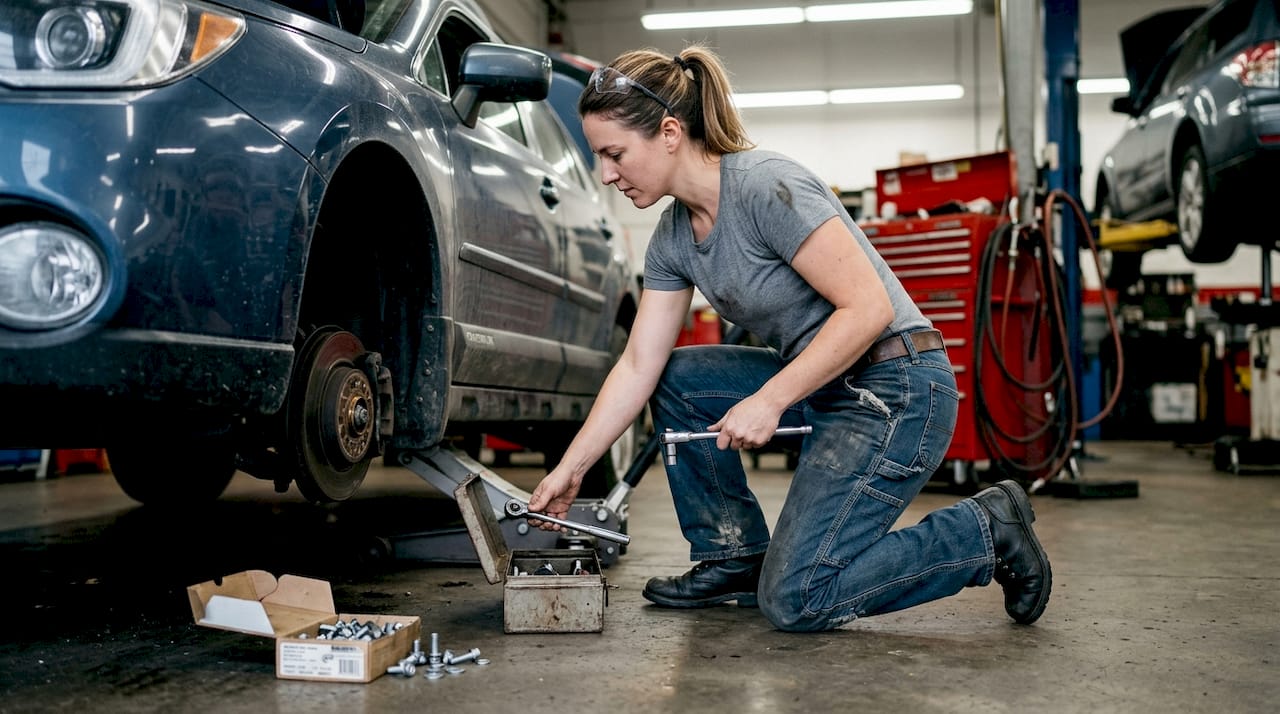
GearJunkie’s comprehensive testing ranked the 1620 Workwear Double Knee Utility Pant 2.0 as the top versatile option for mechanics. These pants incorporate stretch panels in the waistband and crotch, reducing fatigue during long shifts. The utility pockets sit positioned for easy access to wrenches and sockets without interfering with kneeling. Reinforced hem guards prevent fraying from constant contact with boots and floor surfaces.
Pro Tip: Look for pants with articulated knees, a feature that pre-shapes the fabric to match your leg’s natural bend. This design element reduces fabric stress and improves comfort during extended kneeling.
Rugged flex technology represents a significant advancement over traditional work denim. Standard heavy denim restricts movement, forcing workers to size up for mobility and accept poor fit everywhere else. Flex fabrics eliminate this compromise by incorporating mechanical stretch that moves with your body. The result is pants that fit properly at the waist while still allowing full range of motion.
| Feature | Standard Denim | Rugged Flex Technology | Benefit for Mechanics |
|---|---|---|---|
| Fabric blend | 100% cotton | 97% cotton, 2-3% spandex | Maintains shape while stretching |
| Knee reinforcement | Single layer | Double-front construction | Prevents wear-through from kneeling |
| Mobility | Limited, requires loose fit | Full range in fitted garment | Reduces snag hazards |
| Recovery | Bags out permanently | Returns to original shape | Extends usable life |
Durability testing matters when comparing brands. Quality manufacturers subject their work pants for construction to abrasion cycles that simulate months of hard use. Carhartt, Duluth, and 1620 all publish their testing standards, while budget brands often skip this verification. The price difference reflects these quality controls and material investments.
Electricians’ workwear essentials: EH-rated boots and flame-resistant clothing
Electricians face unique hazards that demand specialized protective gear. Electrical hazard rated boots form the foundation of safe electrical work, providing insulation against accidental contact with live circuits. These boots must meet ASTM F2413-11 standards, which require withstanding 18,000 volts for one minute with minimal current leakage. White’s Lineman Pro boots exceed this standard with steel toe protection, Vibram outsoles for traction, and full-grain leather construction that lasts years.
Flame-resistant clothing isn’t optional for electricians working on energized equipment. Arc flash incidents release intense heat that ignites standard cotton or synthetic fabrics in milliseconds. NFPA 70E compliant garments use specially treated fabrics that self-extinguish and provide a critical barrier. Carhartt FR Duck Bibs meet these standards with heavyweight flame-resistant cotton that protects without restricting movement.
Arc rating levels communicate a garment’s protective capability. The rating indicates how much thermal energy the fabric blocks before a second-degree burn occurs. Higher numbers mean better protection. Most industrial electrical work requires a minimum rating of 8 calories per square centimeter, while high-voltage applications demand 40 or more. These ratings appear on garment labels alongside NFPA certification marks.
Pro Tip: Replace FR clothing when it shows signs of wear, contamination, or damage. Oils, solvents, and repeated washing degrade flame-resistant treatments, reducing protection even if the fabric looks intact.
Electrical hazard boot features electricians should verify:
- ASTM F2413-11 certification clearly marked
- EH rating for 18,000-volt protection
- Steel or composite toe meeting impact standards
- Non-conductive sole and heel construction
- Leather or synthetic upper without metal eyelets in shock zones
| Safety Standard | Purpose | Application | Verification |
|---|---|---|---|
| NFPA 70E | Arc flash protection | FR clothing for energized work | Label shows compliance and arc rating |
| ASTM F2413-11 | Impact and compression | Steel toe boots | Stamped on boot tongue or inside |
| EH Rating | Electrical insulation | Boots for live circuit work | Certified to 18,000V for 1 minute |
Compliance training significantly improves safety outcomes when combined with proper PPE. Workers who understand why specific gear matters and how to inspect it before each use report fewer incidents. Capability-based training that includes hands-on practice with equipment creates habits that persist under pressure. The investment in quality workwear for electricians pays for itself by preventing a single serious injury.
Electricians working in confined spaces or at heights need additional considerations. Moisture-wicking base layers under FR clothing prevent overheating without compromising protection. Properly fitted FR garments allow harness straps to sit correctly for fall protection. Every layer in the system must work together without creating new hazards.
Choosing the right workwear brand: comparing durability, mobility, and budget
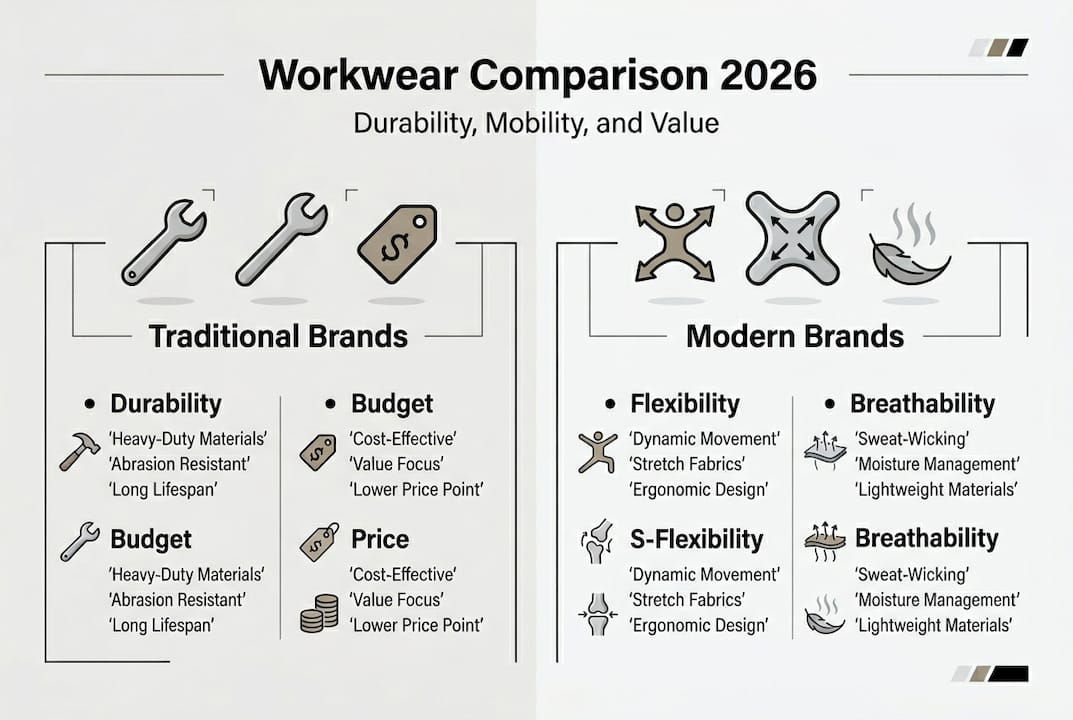
Brand selection depends on your specific trade requirements, climate, and budget constraints. Carhartt and Duluth excel in abrasion resistance using fire hose canvas and reinforced cotton duck that withstands the roughest job sites. These brands target workers who prioritize longevity over initial cost, with garments often lasting three to five years under daily abuse. Their traditional cuts favor durability but sacrifice some mobility.
Dickies offers the most accessible entry point for workers on tight budgets. Their core line uses lighter-weight fabrics and simpler construction than premium brands, resulting in lower prices and shorter lifespans. For occasional use or workers just starting out, Dickies provides adequate protection without major investment. The trade-off becomes apparent after six to twelve months when seams fail and fabric thins at stress points.
Truewerk and 1620 represent the new generation of workwear engineered for mobility and breathability. These brands incorporate athletic wear technology into work-ready garments, using four-way stretch fabrics and articulated patterns. Workers in hot climates or jobs requiring constant movement appreciate the ventilation and flexibility. The modern fits run closer to the body than traditional workwear, reducing snag hazards around machinery.
Pro Tip: Match your brand choice to your primary work environment. Outdoor construction in cold climates demands Carhartt or Duluth’s insulation and wind resistance. Indoor mechanical work in climate-controlled shops benefits from Truewerk’s breathability and stretch.
Custom workwear programs offer advantages beyond individual purchases. Companies can define custom workwear construction that meets specific safety requirements while building team identity. Embroidered logos and consistent colors enhance professional appearance and help identify crew members on multi-contractor sites. Volume ordering typically reduces per-garment costs compared to retail pricing.
| Brand | Strength | Ideal User | Price Range | Climate Suitability |
|---|---|---|---|---|
| Carhartt | Abrasion resistance | Heavy construction, outdoor work | $60-$120 | Cold to moderate |
| Duluth | Reinforced durability | Contractors, landscapers | $70-$130 | All climates |
| Dickies | Budget-friendly | Entry-level, light duty | $30-$60 | Moderate to warm |
| Truewerk | Mobility and breathability | HVAC, electrical, warm climates | $90-$150 | Warm to hot |
| 1620 | Stretch and versatility | Multi-trade, active work | $85-$140 | Moderate to hot |
Prioritizing features helps narrow brand choices:
- Maximum durability: Carhartt, Duluth, or Dickies Tough Max line
- Best mobility: Truewerk, 1620, or Carhartt Rugged Flex
- Lowest cost: Dickies core line or store brands
- Hot weather: Truewerk or 1620 with moisture-wicking
- Specialized trades: Brand-specific lines for welding, electrical, or carpentry
Comparing workwear for construction workers across brands reveals that no single manufacturer dominates every category. Your decision should weigh immediate needs against long-term cost of ownership. A $120 pair of pants that lasts three years costs less per wear than $40 pants replaced every six months. Factor in the downtime and inconvenience of frequent replacements when calculating true value.
Some workers maintain a two-tier system with premium garments for demanding tasks and budget options for light-duty days. This approach maximizes the life of expensive gear while keeping backup options available. Rotating between multiple pairs also extends overall lifespan by allowing fabrics to fully dry and recover between wears. The strategy works especially well for comfortable workout clothes blue collar workers need after shifts.
Shop durable and comfortable blue-collar workwear at WorkWearComfort
Now that you understand what separates quality workwear from cheap imitations, it’s time to upgrade your gear. WorkWearComfort specializes in rugged, functional apparel built specifically for trade professionals who demand both durability and comfort. Our curated selection focuses on garments that deliver real value on actual job sites, not fashion statements.
The Blue Collar Brotherhood hoodie combines heavyweight fleece with reinforced stitching for warmth that lasts through tough conditions. When outdoor work demands sun protection, our UPF 50 lightweight sun work hoodie blocks harmful rays while keeping you cool. Every piece in our collection reflects the values of hard work and resilience that define blue-collar professionals. Visit WorkWearComfort to browse our full range of workwear engineered for mechanics, electricians, and laborers who refuse to compromise on quality.
FAQ
What is the most durable fabric for blue-collar work clothing?
Heavy cotton duck canvas and 12-ounce denim with reinforced knees provide the best durability for most trades. These fabrics resist abrasion, tears, and punctures while maintaining breathability. Modern blends add two to four percent spandex for flexibility without sacrificing toughness, making them ideal for active work requiring both protection and mobility.
How does proper fit improve workwear performance?
Proper fit creates optimal air gaps of 10 to 15mm that maintain thermal insulation and prevent convection heat loss during work. Too loose allows cold air circulation that drains body heat. Too tight compresses insulation and restricts movement, accelerating fatigue. Correctly fitted workwear also reduces friction points that cause premature wear and maintains protective properties longer.
Which safety certifications should electricians look for in workwear?
Electricians need NFPA 70E compliance for flame-resistant clothing that protects against arc flash. Boots must carry ASTM F2413-11 certification with EH rating for electrical hazard protection up to 18,000 volts. Arc rating levels on garments indicate thermal protection, with higher numbers providing better defense. Steel toe boots should also meet impact and compression resistance standards marked I/75 and C/75.
Why do mechanics prefer double-front work pants?
Double-front construction adds an extra fabric layer from waist to hem, protecting knees from abrasion during constant kneeling on concrete and rough surfaces. This reinforcement extends pant life significantly while providing deeper, stronger pockets for tools. The dual layer also resists punctures from sharp metal edges and automotive fluids that quickly damage standard denim.
How do stretch fabrics maintain durability in workwear?
Modern stretch workwear blends 96 to 98 percent cotton or polyester with two to four percent spandex, creating mechanical stretch that flexes during movement. The elastic fibers allow fabric to extend up to 20 percent then recover to original shape, preventing the permanent bagging that signals wear. This technology maintains durability by reducing stress on seams and fabric at flex points like knees and elbows.
Recommended
- Men’s cold weather work clothes: stay warm in 2026 – WorkWearComfort
- Comfy WFH clothes for blue-collar workers in 2026 – WorkWearComfort
- Comfortable workout clothes built tough for blue collar – WorkWearComfort
- Warmest outdoor work clothes: 2026 guide for trades – WorkWearComfort
- Apparel Trends for Businesses 2026: Workplace Impact
