

Many electricians assume any pair of durable shorts will get the job done, but this misconception can cost them comfort, safety, and productivity throughout long workdays. The right electricians work shorts deliver specialized features that regular shorts simply cannot match, from reinforced stitching to strategic pocket placement designed specifically for electrical tools and equipment. This guide walks you through everything you need to know about selecting work shorts that enhance your performance on demanding job sites while keeping you comfortable from morning to night.
Table of Contents
- Why Specialized Electricians Work Shorts Outperform Regular Shorts
- Key Features To Look For In Electricians Work Shorts
- Choosing The Right Fit And Style For Maximum Worksite Comfort
- Maintaining And Caring For Your Electricians Work Shorts
- Explore Durable And Comfortable Workwear At Workwearcomfort
Key takeaways
| Point | Details |
|---|---|
| Specialized shorts boost performance | Purpose-built work shorts deliver superior comfort and functionality compared to standard casual shorts. |
| Durability matters most | Reinforced fabrics and stitching withstand harsh jobsite conditions that quickly destroy regular shorts. |
| Fit affects safety | Proper sizing and style prevent restriction while accommodating tool belts and movement demands. |
| Material choice impacts comfort | Breathable, flexible fabrics regulate temperature and allow full range of motion throughout the workday. |
| Maintenance extends lifespan | Following proper care practices keeps work shorts functional and safe for years of demanding use. |
Why specialized electricians work shorts outperform regular shorts
Electricians face unique challenges that regular shorts cannot address effectively. Your typical casual shorts lack the durability to withstand constant contact with rough surfaces, sharp tools, and abrasive materials common on construction sites. Electricians require durable, comfortable workwear tailored to active, demanding jobsite conditions. Standard shorts wear through quickly at stress points, leaving you exposed to hazards and forcing frequent replacements that drain your budget.
The physical demands of electrical work require shorts that move with you rather than against you. You spend hours climbing ladders, crouching in tight spaces, bending to access panels, and reaching overhead to route wiring. Regular shorts restrict these movements, binding at the waist or riding up uncomfortably. Specialized work shorts incorporate stretch panels and ergonomic cuts that maintain full mobility without sacrificing coverage or protection.
Tooling requirements set electrician work apart from most other trades. You carry voltage testers, wire strippers, screwdrivers, pliers, and measurement devices that need secure, accessible storage. Regular shorts offer basic pockets sized for phones and wallets, not the array of tools electricians use daily. Purpose-built work shorts feature:
- Reinforced tool pockets sized for electrical equipment
- Dedicated loops for tape measures and utility knives
- Secure zippered compartments for small components
- Phone pockets positioned to prevent interference with movement
Pro Tip: Look for shorts with tool pockets positioned on the sides rather than back to prevent sitting on hard objects during breaks.
“The difference between regular shorts and proper work shorts becomes obvious after your first full week on a demanding site. Specialized shorts reduce fatigue, prevent chafing, and keep your tools exactly where you need them.”
Safety considerations make specialized shorts essential rather than optional. Electrical work involves exposure to sharp metal edges, hot surfaces, and potential arc flash hazards. Quality electrician work clothes incorporate flame-resistant treatments, reinforced fabric at high-wear points, and construction that prevents snagging on equipment. Regular shorts provide none of these protections, increasing your injury risk throughout the workday.
Key features to look for in electricians work shorts
Fabric selection forms the foundation of quality work shorts. Ripstop cotton blends combine natural breathability with synthetic strength, resisting tears while allowing air circulation that prevents overheating during summer months. Diverse fabrics like ripstop cotton blends enhance durability and comfort for electricians on site. Canvas duck cloth offers maximum abrasion resistance for extremely rough conditions, though it sacrifices some flexibility. Polyester-cotton blends dry quickly after exposure to moisture and maintain their shape through repeated washing cycles.
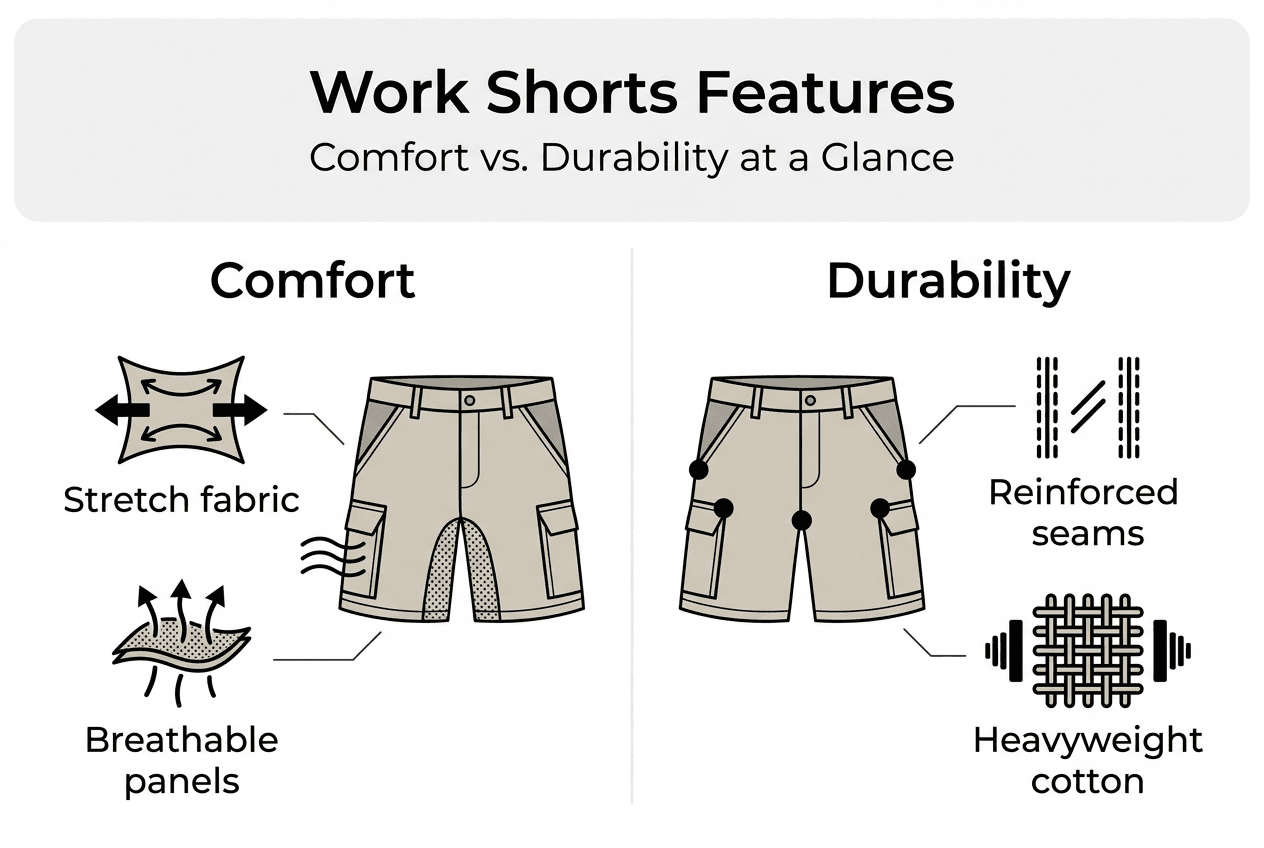
Stretch technology transforms comfort levels during active work. Modern work shorts incorporate elastane or spandex fibers that allow 10 to 15 percent stretch in key areas without compromising durability. This flexibility matters most at the waist, seat, and thighs where electrical work demands constant bending and reaching. Gusseted crotches prevent binding during ladder climbs and overhead tasks. Four-way stretch fabrics move in all directions, though they typically cost more than standard two-way stretch materials.
| Feature | Standard Shorts | Specialized Work Shorts | | — | — | | Fabric Weight | 4-6 oz per square yard | 8-12 oz per square yard | | Pocket Count | 2-4 basic pockets | 6-10 specialized pockets | | Reinforcement | Minimal or none | Triple-stitched stress points | | Tool Loops | None | 3-6 dedicated loops | | Stretch Panels | Rarely included | Strategic placement |
Pocket configuration directly impacts your efficiency throughout the workday. Quality electrician shorts feature cargo pockets sized to accommodate multimeters and voltage testers without excessive bulk. Internal dividers separate small components like wire nuts and connectors from larger tools. Flap closures or zipper security prevents items from falling out during ladder work or overhead tasks. Understanding electrician work shorts comfort helps you identify pocket layouts that match your specific tool requirements.
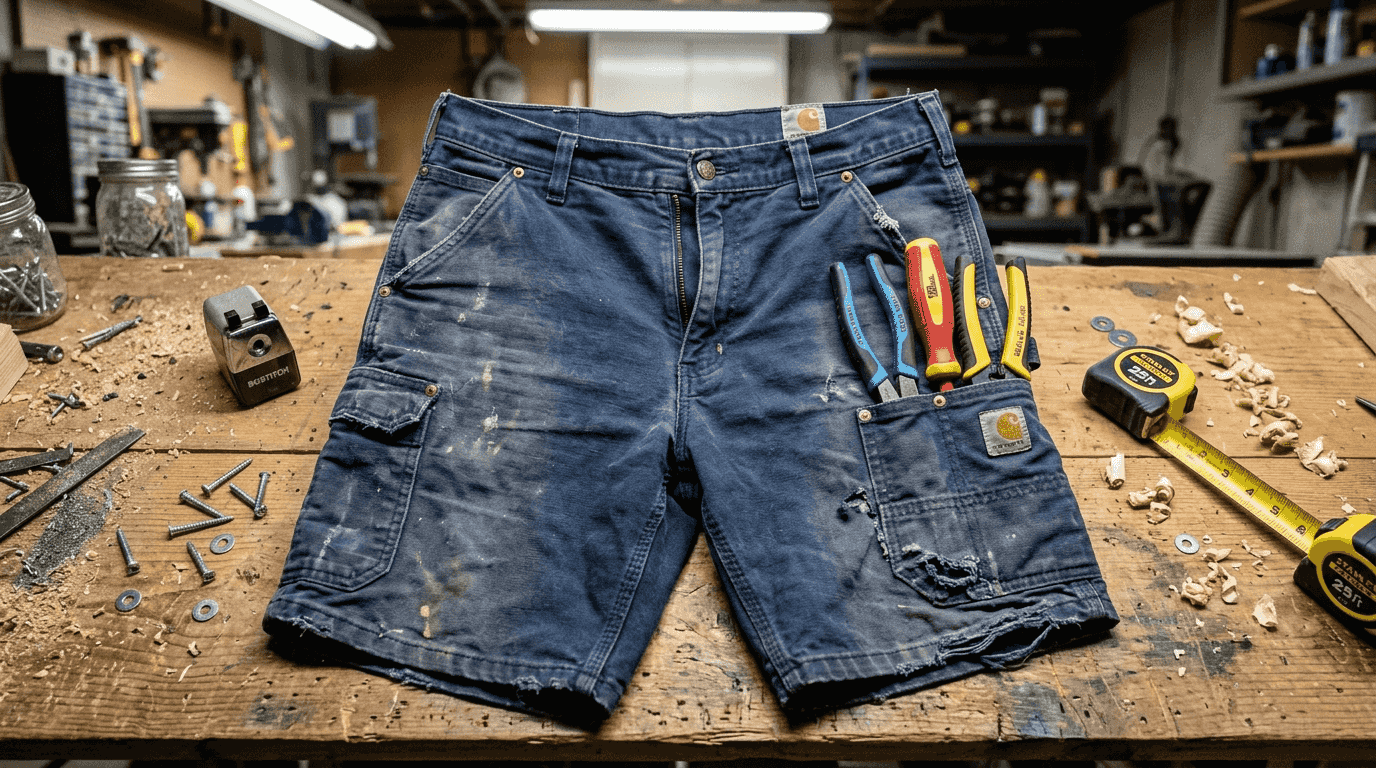
Reinforcement details separate professional-grade shorts from budget alternatives. Double or triple stitching at stress points like pocket corners, belt loops, and inseams prevents premature failure under heavy use. Bar tacking at pocket openings distributes load across wider areas, preventing tear-through when pockets carry weight. Riveted stress points add another layer of durability at critical junctures. Some manufacturers incorporate Cordura patches at high-wear zones like the seat and knees for extended lifespan.
Safety enhancements protect you from common jobsite hazards:
- Reflective trim increases visibility in low-light conditions
- High-visibility color options meet safety requirements on some sites
- Flame-resistant treatments reduce arc flash injury risk
- Reinforced belt loops support the weight of loaded tool belts
Pro Tip: Choose shorts with at least seven belt loops spaced evenly around the waist to distribute tool belt weight and prevent sagging or rotation during movement.
Learning from understanding electrician overalls reveals how integrated design elements work together to enhance functionality. The same principles apply to shorts, where each feature should complement others rather than existing in isolation.
Choosing the right fit and style for maximum worksite comfort
Waist sizing requires more precision for work shorts than casual wear. You need enough room to move freely and accommodate layers during cooler mornings, but excess fabric bunches uncomfortably under tool belts and creates a sloppy appearance. Measure your waist at the point where you actually wear your shorts, typically at or slightly below your natural waistline. Most electricians find that ordering their true measured size rather than vanity sizing delivers the best fit. Adjustable waistbands with internal drawstrings or elastic panels help fine-tune fit throughout the day as your body temperature and activity level change.
Length selection balances coverage, ventilation, and mobility needs. Shorts that end just above the knee provide maximum protection from scrapes and sun exposure while maintaining airflow. Longer styles that reach mid-knee offer additional coverage but can restrict movement during crouching or kneeling tasks. Shorter cuts improve ventilation during hot weather but expose more skin to potential hazards. Proper fit significantly enhances wearability and reduces chafing or restriction during electrical work.
Tool belt compatibility demands careful attention during selection. Your shorts need extra room through the hips and thighs to accommodate the bulk of a loaded tool belt without binding or restricting circulation. Rise height affects how shorts sit relative to your tool belt, with mid-rise styles typically providing the best balance. Low-rise shorts slide down under tool belt weight, while high-rise options bunch uncomfortably. Test the fit by simulating tool belt wear, ensuring the waistband sits comfortably without digging in or sliding.
Seasonal considerations influence material weight and style choices:
- Lightweight fabrics (6-8 oz) work best for summer heat
- Medium-weight options (8-10 oz) suit spring and fall conditions
- Heavier materials (10-12 oz) provide warmth during cool mornings
- Darker colors absorb heat while lighter shades reflect sunlight
Pro Tip: Buy shorts slightly looser than your casual preference to allow for the natural shrinkage that occurs during the first few wash cycles, even with pre-shrunk fabrics.
Body type affects how different styles perform during actual work. Athletic builds with larger thighs benefit from shorts with stretch panels or relaxed fits through the leg openings. Straighter body types can wear more tailored cuts without restriction. Consider how shorts look when you bend, crouch, and reach rather than just standing straight. The best workwear for electricians top choices 2025 emphasizes fit testing under realistic work conditions before committing to multiple pairs.
Avoid extremes in either direction. Overly tight shorts restrict blood flow during prolonged kneeling and bind during overhead reaching tasks. Excessively baggy styles snag on equipment, look unprofessional, and create safety hazards by catching on protrusions. The ideal fit allows you to move through your full range of motion without thinking about your shorts.
Maintaining and caring for your electricians work shorts
Washing frequency and technique directly impact how long your work shorts remain functional and comfortable. Most electrician work shorts benefit from washing after every two to three days of wear, balancing cleanliness with fabric preservation. Excessive washing accelerates wear, while infrequent cleaning allows dirt and oils to break down fibers prematurely. Turn shorts inside out before washing to protect outer surfaces and reduce fading. Use cold or warm water rather than hot, which can shrink fabrics and damage elastic components over time.
Detergent selection matters more than most electricians realize. Heavy-duty detergents designed for work clothes effectively remove oil, grease, and embedded dirt without requiring harsh scrubbing. Avoid fabric softeners, which coat fibers and reduce breathability while potentially degrading water-resistant treatments. Add a cup of white vinegar to the rinse cycle periodically to remove detergent buildup and refresh fabrics naturally. Proper maintenance of workwear extends durability and maintains safety features over time.
Stain removal requires prompt action for best results:
- Treat fresh stains immediately by blotting rather than rubbing to prevent spreading
- Apply appropriate stain remover based on the substance (grease, oil, dirt, or other contaminants)
- Allow treatment to penetrate for 10 to 15 minutes before washing
- Check stains before drying, as heat sets remaining residue permanently
- Repeat treatment if necessary rather than applying heat to set-in stains
Drying methods affect both longevity and fit retention. Air drying preserves fabric integrity and prevents shrinkage, though it requires more time and planning. Machine drying on low or medium heat offers convenience while minimizing damage. Remove shorts promptly when the cycle completes to prevent wrinkles and reduce the need for ironing. High heat settings accelerate wear on elastic waistbands, drawstrings, and stretch panels. Never over-dry work shorts, as excessive heat makes fabrics brittle and prone to tearing.
Pro Tip: Keep a rotation of at least three pairs of work shorts to allow each pair adequate recovery time between wears, significantly extending the overall lifespan of your investment.
Inspection routines catch small problems before they become major failures. Check stress points weekly for loose threads, weakening seams, or developing holes. Reinforce problem areas immediately with bar tacks or patches rather than waiting for complete failure. Examine pocket integrity, especially at corners where tools create concentrated stress. Replace shorts when damage affects safety or functionality rather than attempting repairs that compromise protection.
Storage practices preserve shape and extend usability between seasons. Hang shorts by the waistband or fold them neatly rather than wadding them into drawers. Store clean, completely dry shorts in a cool, dark location away from direct sunlight that can fade colors and weaken fibers. Avoid storing damp or soiled shorts, which promotes mildew growth and fabric deterioration. The best workwear for construction workers comparison shows how proper storage multiplies the return on your workwear investment.
Explore durable and comfortable workwear at WorkwearComfort
Finding work shorts that truly deliver on comfort and durability transforms your daily experience on the job site. WorkwearComfort specializes in apparel designed specifically for electricians and skilled tradespeople who demand performance from their workwear. Our selection focuses on the features that matter most: reinforced construction, strategic pocket placement, and fabrics that breathe while protecting you from jobsite hazards.

Beyond work shorts, complete your professional wardrobe with quality pieces that showcase your pride in the trade. The Blue Collar Brotherhood Hooded Sweatshirt Hoodie delivers warmth and durability for cooler months while making a statement about your values. For a lighter touch, the Genuinely Blue Collar Parody Hoodie combines humor with quality construction. The Workwear Dude Tide Parody Hoodie offers another option that celebrates the blue collar lifestyle with style and comfort. Every piece in our collection reflects our commitment to serving hardworking professionals who deserve apparel as tough as they are.
FAQ
What are electricians work shorts made of?
Most electrician work shorts use ripstop cotton blends or cotton-polyester blends that balance strength with breathability for all-day comfort. Some incorporate stretch materials like elastane or spandex to enhance flexibility during active work. Canvas duck cloth appears in heavy-duty options designed for maximum abrasion resistance.
How do electricians work shorts differ from regular shorts?
Specialized work shorts feature reinforced stitching at stress points, multiple tool pockets sized for electrical equipment, and safety enhancements like reflective trim. They use tougher fabrics that withstand jobsite wear and tear far longer than casual shorts. Purpose-built designs accommodate tool belts and provide mobility features that regular shorts lack entirely.
Can electricians wear work shorts in colder weather?
Work shorts perform best in warm weather or mild conditions where their breathability prevents overheating during physical activity. Some electricians layer them over compression leggings or base layers during cooler temperatures for added warmth. Choosing breathable fabrics helps with temperature regulation, though switching to full-length pants makes more sense when temperatures drop significantly. For hot conditions, check out guidance on appropriate work clothes for hot weather to optimize comfort.
How to care for electricians work shorts to extend their life?
Follow washing instructions on the garment label, typically using cold or warm water with heavy-duty detergent designed for work clothes. Remove stains promptly using appropriate treatments before washing, and avoid harsh chemicals that damage fabrics or safety features. Rotate use between multiple pairs when possible, allowing each pair recovery time between wears to maximize overall lifespan.
