

Blue collar jobs account for over half of the American workforce, yet many people overlook just how vital these roles are to daily life. From building roads to keeping power flowing, these professions rely on skill, stamina, and the right gear to get the job done. Understanding what defines blue collar work and what sets specialized workwear apart can help workers and employers make smarter choices about safety, comfort, and long-term success.
Table of Contents
- Understanding Blue Collar Work Definitions
- Types of Blue Collar Jobs and Fields
- Key Features of Construction Workwear
- Finding Construction Clothes Near You
- Limits of Traditional Local Apparel Options
- Advantages of Choosing WorkwearComfort.com
Key Takeaways
| Point | Details |
|---|---|
| Understanding Blue Collar Work | Blue collar work encompasses manual labor roles essential to infrastructure across various sectors. Modern blue collar workers need technical expertise combined with physical skills. |
| Job Diversity and Skills | Blue collar jobs include construction, manufacturing, transportation, and agriculture, requiring specialized training and technical knowledge. Continuous learning is crucial for career advancement. |
| Importance of Specialized Workwear | Proper workwear is vital for safety and performance in demanding environments. Specialized clothing should prioritize durability, functionality, and protection. |
| Shopping for Workwear | Local apparel often fails to meet specialized needs; explore both local and online options for high-quality workwear tailored to trades. Always consider sizing and protective features before purchase. |
Understanding Blue Collar Work Definitions
Blue collar work represents a critical segment of the American workforce characterized by manual labor, skilled trades, and physically demanding occupations. According to Merriam-Webster, blue collar describes “the class of wage earners whose duties call for the wearing of work clothes or protective clothing, typically involving manual labor”. These professionals form the backbone of industrial and service sectors, performing essential tasks that keep our infrastructure, manufacturing, construction, and service industries functioning smoothly.
Traditionally, blue collar workers have been defined by their practical work attire - often wearing durable clothing like work pants, steel-toed boots, and hardy shirts designed to withstand challenging environments. Their roles span numerous critical industries including construction, manufacturing, agriculture, transportation, maintenance, and skilled trades like electricians, plumbers, welders, and mechanics. Unlike white collar jobs primarily performed in office settings, blue collar work requires physical skill, technical knowledge, and hands-on problem solving in often unpredictable and demanding workplace conditions.
The definition of blue collar work has evolved significantly in recent decades. Modern blue collar professionals are highly skilled technical workers who combine physical labor with advanced technological expertise. Many blue collar roles now require specialized training, certifications, and sophisticated technical understanding of complex machinery and systems. These workers increasingly use advanced technologies, computer-controlled equipment, and sophisticated tools that demand both physical capability and intellectual precision.
Pro Tip for Aspiring Blue Collar Professionals: Invest in continuous skills training and technical certifications. The most successful blue collar workers remain adaptable, continuously learn new technologies, and develop expertise across multiple disciplines to remain competitive in a rapidly changing job market.
Understanding Blue Collar Worker Definition in Today’s World provides additional insights into the evolving landscape of blue collar employment and opportunities.
Types of Blue Collar Jobs and Fields
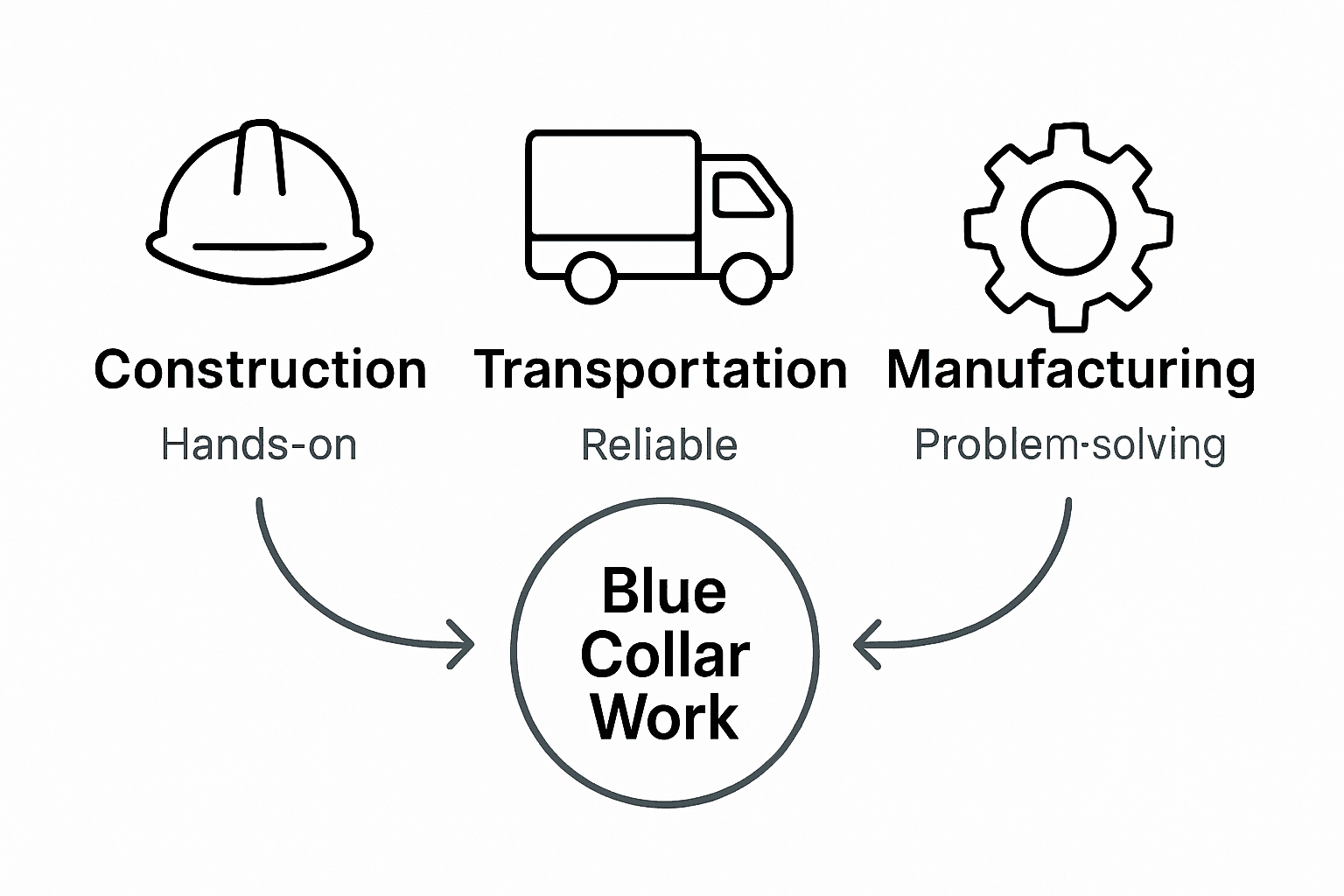
Blue collar jobs encompass an incredibly diverse range of critical professions that form the foundation of American economic productivity. Understanding blue collar work dynamics reveals a complex landscape of skilled trades and essential occupations across multiple industries. These roles span numerous sectors, including construction, manufacturing, transportation, agriculture, maintenance, and specialized technical fields that require hands-on expertise and technical proficiency.
Constructive fields represent a significant segment of blue collar employment. Construction workers include carpenters, electricians, plumbers, welders, heavy equipment operators, masons, and HVAC technicians. These professionals build and maintain critical infrastructure, from residential homes and commercial buildings to bridges, roads, and complex industrial facilities. Manufacturing sectors employ blue collar workers in assembly lines, machine operation, quality control, equipment maintenance, and production management. Skilled manufacturing roles demand precision, technical understanding, and the ability to operate sophisticated computer-controlled machinery.

Transportation and logistics represent another massive domain for blue collar professionals. Truck drivers, railroad workers, warehouse personnel, shipping and receiving specialists, and logistics coordinators form the backbone of America’s supply chain. Agricultural blue collar workers include farmers, ranch hands, agricultural equipment operators, and field workers who produce food and manage complex agricultural systems. Maintenance professionals like mechanics, industrial repair technicians, and equipment specialists ensure that critical machinery and infrastructure remain operational across various industries.
Pro Tip for Blue Collar Career Exploration: Research local trade schools and community college programs that offer specialized certifications in high-demand technical fields. Many blue collar careers provide excellent earning potential and opportunities for advancement with targeted professional development.
The Understanding Blue Collar Work and Its Impact resource offers deeper insights into the evolving landscape of these essential professional roles.
Here’s a quick comparison of blue collar job sectors and the specific roles they offer:
| Sector | Example Roles | Unique Skills Required |
|---|---|---|
| Construction | Electrician, Carpenter, Welder | Technical equipment operation |
| Manufacturing | Assembly Line Worker, Machinist | Machine troubleshooting skills |
| Transportation | Truck Driver, Rail Worker | Logistics and time management |
| Agriculture | Farmer, Ranch Hand, Field Worker | Equipment maintenance, stamina |
| Maintenance & Repair | Mechanic, HVAC Technician | Diagnostic and repair expertise |
Key Features of Construction Workwear
Construction workwear represents far more than simple clothing - it’s a critical safety system designed to protect workers in challenging and potentially dangerous environments. Personal protective equipment standards mandate specific requirements for workwear that goes beyond traditional clothing, focusing on durability, protection, and functionality. These specialized garments must withstand extreme conditions while providing workers with essential protection against physical hazards, environmental challenges, and workplace risks.
Key protective features of construction workwear include robust materials engineered for durability and safety. High-visibility clothing is fundamental, typically featuring bright colors like fluorescent yellow or orange to ensure workers remain visible on busy job sites. Reinforced work pants with multiple pockets, heavyweight fabrics, and double-stitched seams provide both practicality and longevity. Protective gear often incorporates advanced materials like ripstop fabrics, water-resistant coatings, and flame-retardant treatments to shield workers from potential workplace hazards. Work wear construction quality plays a crucial role in determining the effectiveness of these protective garments.
Beyond physical protection, modern construction workwear integrates technological innovations to enhance worker comfort and performance. Breathable fabrics with moisture-wicking properties help regulate body temperature during long shifts, while strategic ventilation panels prevent overheating. Ergonomic design elements like articulated knees, flexible joint zones, and stretch panels allow maximum mobility, enabling workers to move freely and perform demanding physical tasks with reduced fatigue. Some advanced workwear now includes integrated safety features like reinforced impact zones, built-in knee pad pockets, and reflective trim for enhanced nighttime visibility.
Pro Tip for Workwear Selection: Invest in multi-purpose, high-quality workwear that combines safety features with comfort. Prioritize garments that offer layering capabilities, allowing you to adapt to changing weather conditions while maintaining full protective functionality.
The Construction Safety Wear – Keys to Protection on Site resource provides additional insights into selecting optimal protective clothing for construction professionals.
Finding Construction Clothes Near You
Finding reliable construction clothing requires strategic research and understanding of local and online shopping options. How to find construction wear near me reveals multiple approaches for locating high-quality workwear that meets professional standards. Construction professionals have several primary purchasing channels, each with unique advantages and potential limitations that impact their clothing acquisition strategy.
Local retail options represent the most immediate solution for construction workers seeking immediate workwear. Hardware stores like Home Depot, Lowe’s, and local workwear retailers typically stock basic construction clothing and safety gear. Specialty workwear stores offer more comprehensive selections, featuring brands specifically designed for trade professionals. These brick-and-mortar locations allow workers to physically inspect clothing, try on different sizes, and immediately assess fabric quality and durability. Big-box stores often provide budget-friendly options, while specialized retailers focus on professional-grade apparel with enhanced performance features.
Online shopping platforms have revolutionized how construction professionals purchase workwear, offering unprecedented convenience and broader selection. Digital marketplaces provide access to specialized brands, extensive size ranges, and detailed product specifications that local stores might not carry. Find construction workwear near me easily highlights the growing trend of online workwear purchasing. Advanced filtering options, customer reviews, and comprehensive sizing guides help workers make informed decisions without leaving their home or job site. Many online retailers now offer free shipping, hassle-free return policies, and direct-to-consumer pricing that can significantly reduce overall clothing costs.
Pro Tip for Smart Workwear Shopping: Compare online and local prices, read professional reviews, and prioritize durability over initial cost. Always check return policies and consider purchasing from retailers specializing in trade professional clothing.
The Construction Clothes Men Need guide provides additional insights into selecting optimal workwear for trade professionals.
Limits of Traditional Local Apparel Options
Traditional local apparel options often fall short of meeting the complex requirements of blue collar workers, presenting significant challenges for professionals who require specialized clothing. Safety standards for workplace protective equipment highlight critical gaps between generic clothing and true occupational workwear. Local retail stores typically stock generic clothing that lacks the essential features required for demanding trade environments, creating potential safety and performance risks for workers.
The primary limitations of traditional local apparel include inadequate durability, limited functional design, and insufficient protective capabilities. Most local stores offer one-size-fits-all clothing that fails to account for the nuanced needs of different trades. Construction workers, welders, mechanics, and agricultural professionals require specialized garments with reinforced fabric, strategic ventilation, moisture-wicking properties, and specific safety features like impact resistance and high-visibility elements. OSHA regulations emphasize the critical importance of employers providing appropriate protective clothing, which generic local options frequently cannot guarantee.
Size inclusivity and gender-specific design represent another significant weakness in traditional local apparel selections. Many local retailers provide limited sizing ranges and generic designs that do not accommodate the diverse body types and specific functional requirements of trade professionals. Women in trades, in particular, often struggle to find workwear that offers both professional performance and proper fit. These limitations can impact worker comfort, mobility, and ultimately, job performance. Advanced workwear manufacturers now recognize the need for specialized clothing that considers ergonomic design, technical fabric innovations, and comprehensive safety standards.
Pro Tip for Workwear Selection: Research specialized workwear brands that prioritize trade-specific design and safety standards, rather than relying solely on local retail options. Consider online retailers that offer comprehensive sizing, detailed product specifications, and trade-specific clothing lines.
The Blue Collar Apparel Guide provides additional insights into selecting optimal workwear for professional trades.
This table summarizes critical differences between traditional local apparel and specialized workwear platforms:
| Feature | Traditional Local Apparel | Specialized Workwear Platforms |
|---|---|---|
| Size Range | Limited and generic | Expanded, inclusive options |
| Protection Standards | Basic, not trade-specific | OSHA-compliant, trade-focused |
| Fabric Technology | Minimal innovation | Advanced, moisture-wicking |
| Gender Inclusivity | Rarely addressed | Designed for all professionals |
Advantages of Choosing WorkwearComfort.com
WorkwearComfort.com stands out as a specialized platform designed specifically for blue-collar professionals, offering far more than standard clothing retailers. Comfy work wear gives blue-collar pros a significant competitive edge by understanding the unique needs of trade professionals. Unlike generic clothing stores, this platform recognizes that workwear is not just about clothing, but about performance, protection, and professional identity.
The platform’s approach to workwear goes beyond traditional retail models by offering meticulously designed clothing that addresses specific trade requirements. Each garment is engineered with advanced technical features like moisture-wicking fabrics, reinforced stress points, strategic ventilation, and ergonomic design elements that enhance worker comfort and productivity. Workmans wear combines tough gear with competitive pricing, ensuring that professionals can access high-quality workwear without excessive financial burden. The site’s commitment to understanding trade professionals means each product is developed with input from actual workers, creating clothing that genuinely meets workplace demands.
WorkwearComfort.com demonstrates exceptional commitment to inclusivity and diversity within blue-collar apparel. Their product lines acknowledge the varied body types, work environments, and functional requirements across different trades. Women in traditionally male-dominated fields will find specially designed workwear that offers proper fit, professional styling, and full functional performance. The platform’s sizing options, detailed product descriptions, and transparent sizing guides eliminate the frustrations many trade professionals experience when shopping for specialized clothing. Advanced fabric technologies, thoughtful design elements, and a deep understanding of workplace dynamics set this platform apart from conventional clothing retailers.
Pro Tip for Workwear Shopping: Always review the detailed sizing charts and fabric technology descriptions before purchasing. Take advantage of customer reviews from professionals in similar trades to make the most informed selection.
The 7 Essential Tips for Choosing Breathable Workwear provides additional guidance for selecting optimal professional clothing.
Gear Up with Workwear That Honors Blue Collar Strength
Understanding what it means to be part of the blue collar workforce reveals the true value of durability and functionality in your everyday apparel. The challenges faced by trade professionals—from demanding physical labor to exposure to the elements—require more than just ordinary clothing. You deserve workwear designed with reinforced fabrics, ergonomic fits, and authentic style that matches your hard work and resilience.
Discover the difference with All Hooded Sweatshirts - WorkWear Comfort, crafted specifically for blue collar workers who need dependable gear that keeps up with the job.
Don’t settle for less when your livelihood depends on performance and protection. Visit WorkWearComfort.com today to browse specialized apparel including trusted hoodies and practical hats from our Snapback and Dad Hats - Blue Collar Collection - WorkWear Comfort. Embrace your trade with gear tailored for your lifestyle and seize the advantage of workwear that works as hard as you do.
Frequently Asked Questions
What defines blue collar work?
Blue collar work refers to occupations that involve manual labor, skilled trades, and physical tasks. Workers typically wear protective or durable clothing suitable for challenging environments, operating in industries such as construction, manufacturing, agriculture, and transportation.
How has the definition of blue collar work evolved?
The definition of blue collar work has evolved to include highly skilled technical roles that blend physical labor with advanced technology and specialized training. Modern blue collar workers often require certifications and possess technical knowledge to operate sophisticated machinery and systems.
What are some common types of blue collar jobs?
Common blue collar jobs include electricians, plumbers, welders, truck drivers, construction workers, and various maintenance and repair roles. These professions are essential for maintaining infrastructure and services in different sectors, including construction, manufacturing, and agriculture.
What are the key features of construction workwear?
Construction workwear is designed for safety and durability, featuring high-visibility materials, reinforced fabrics, and protective elements. Key features include moisture-wicking properties, breathability, ergonomic designs, and advanced materials that ensure both comfort and protection from workplace hazards.
