

Buying cheap workwear feels like a deal until you’re replacing it every few months. Seams split, zippers fail, and knees blow out right when you need them most. Cheap workwear fails fast at seams and zippers, while quality gear can double its lifespan in blue-collar use. This guide breaks down exactly what makes workwear last, which fabrics and construction details to look for, and how to match your gear to your trade so you stop wasting money and start working smarter.
Table of Contents
- What makes workwear truly durable?
- Fabric materials explained: Canvas, ripstop, synthetics, and cotton
- Workwear construction: Why stitching and reinforcements matter
- Industry benchmarks: How is durability actually measured?
- Matching durability to your profession: Real-world trade-offs
- Maintaining durability: Simple habits to double your gear’s life
- Get the most durable workwear for your job
- Frequently asked questions
Key Takeaways
| Point | Details |
|---|---|
| Fabric matters most | Choosing the right material—like canvas for abrasion or ripstop for tears—makes a huge durability difference. |
| Construction quality impacts lifespan | Triple-stitched seams and reinforcements cut the risk of fast failure and extend gear life. |
| Industry tests reveal true toughness | ASTM lab ratings (abrasion, tear, tensile) are the gold standard for honest durability claims. |
| Match gear to your trade | The most durable gear for one job may be wrong for another—tailor your choice to your daily hazards. |
| Maintenance doubles value | Basic care and repairs can easily double the lifespan of your workwear. |
What makes workwear truly durable?
Durability in workwear means your gear holds up through repeated stress, exposure, and hard use without failing at critical points. It’s not just about thick fabric. It’s about how every part of the garment works together under real job conditions. Understanding workwear durability means looking at the full picture, from the thread count in the seams to how the pattern allows you to move.
According to workwear durability research, the key factors that determine how long your gear lasts include:
- Fabric material: The base fiber determines abrasion resistance, breathability, and heat tolerance
- Seam and construction quality: How the pieces are stitched together is where most failures start
- Fit and patterning: Gear cut too tight tears faster; proper articulation reduces stress on seams
- Maintenance habits: How you wash, dry, and store your gear directly affects how long it performs
“Cheap workwear typically fails first at seams and zippers. Investing in quality construction can effectively double the lifespan of gear used in heavy blue-collar work.”
Think about the real-world cost. If a $40 pair of pants lasts six months and a $90 pair lasts two years, the math is obvious. Better gear also means fewer safety risks from blown-out knees or failed closures on the job.
Fabric materials explained: Canvas, ripstop, synthetics, and cotton
With a clear idea of what makes workwear last, let’s drill down into the fabric choices that set the foundation. There is no universal best fabric for every trade. The right choice depends on your specific job hazards, movement needs, and environment.
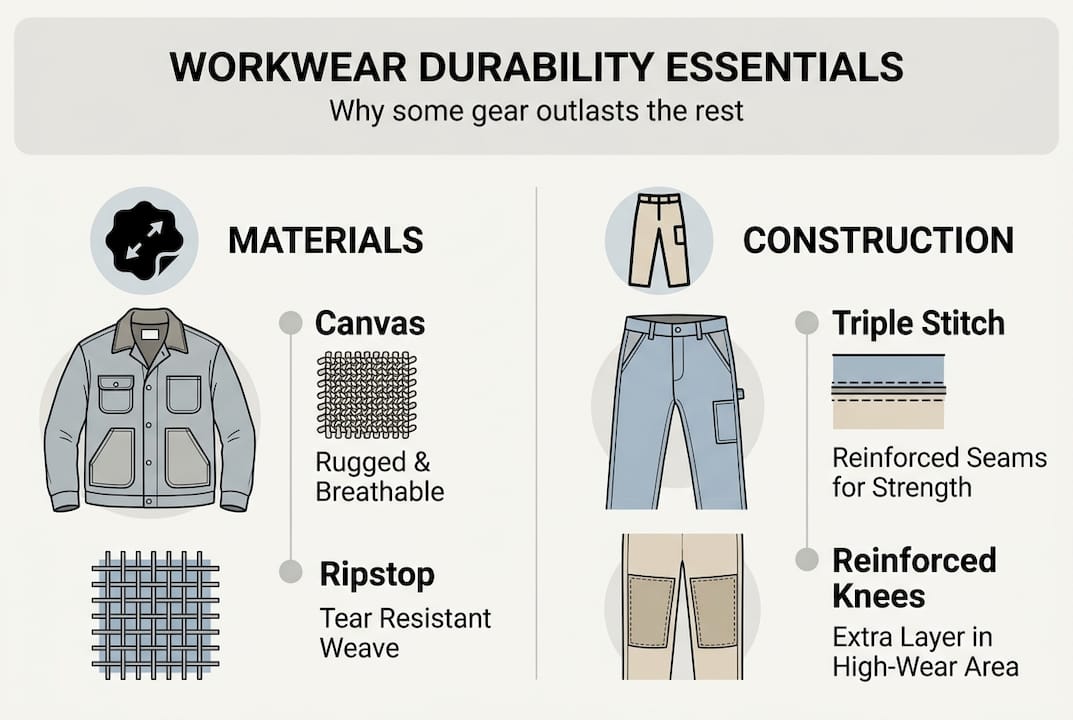
| Fabric | Best trades | Strengths | Weaknesses | Special caution |
|---|---|---|---|---|
| Canvas/duck | Welding, concrete, framing | High abrasion resistance, tough | Heavy, less breathable | Fine near heat |
| Ripstop | Roofing, landscaping | Tear resistant, lightweight | Less abrasion resistant | None major |
| Cordura | Utility, electrical | Excellent tear and abrasion | Stiffer feel | None major |
| Cotton | General labor, welding | Breathable, chars not melts | Wears faster | Safe near flame |
| Synthetics | Light duty, indoor | Lightweight, moisture wicking | Melts near heat/flame | Avoid open flame |
A welder needs cotton or canvas because synthetics melt onto skin when exposed to sparks. A roofer crawling across rough shingles needs ripstop or Cordura to stop a small snag from becoming a full tear. These are not interchangeable choices.
Pro Tip: Always check the fabric composition label before buying. If your job involves any open flame, sparks, or hot surfaces, skip any garment with a high synthetic content. A melted fabric is a burn hazard, not just a wardrobe problem.
When choosing durable materials, think about the primary stress your gear faces every day. A ripstop and canvas comparison shows that canvas wins on abrasion while ripstop wins on stopping tears from spreading. For workwear fabric selection, matching the fabric to the task is the single most important decision you can make.
Workwear construction: Why stitching and reinforcements matter
Fabric is just half the equation. How your gear is put together is just as important. You can have the toughest canvas on the market, but if it’s held together with single-stitch seams, it will fail faster than you expect.
Here’s what separates quality construction from cheap assembly:
- Triple-stitched seams: Three rows of thread at stress points instead of one. Far harder to pull apart under load.
- Bar tacking: Small, dense stitching at high-stress points like pocket corners and belt loops. This is where cheap gear fails first.
- Reinforced knees and elbows: Extra layers of fabric or padding at the spots that take the most punishment.
- Heavy-duty zippers and hardware: YKK zippers and metal hardware outlast plastic alternatives by a wide margin.
- Gussets: Diamond-shaped fabric inserts at the crotch and underarm that allow movement without tearing seams.
The difference in lifespan is significant. Quality construction doubles lifespan compared to budget gear in heavy daily use. Brands with triple-stitch construction regularly outlast single-stitch alternatives by 12 months or more in demanding trades. Check out brand durability results to see how specific brands stack up.
When you’re shopping, flip the garment inside out. Look at the seam lines. If you can see loose threads, uneven stitching, or single rows at stress points, put it back. That garment will not survive a full season of hard work.
Industry benchmarks: How is durability actually measured?
To make smart purchases, it helps to know how manufacturers and safety experts measure the toughness of your workwear. Marketing words like “heavy duty” and “ultra tough” mean nothing without data behind them. ASTM standards give you real numbers to compare.
| Test name | ASTM code | What it measures |
|---|---|---|
| Abrasion resistance | D3885 / Martindale | How well fabric resists surface wear from rubbing |
| Tear strength (tongue) | D2261 | Force needed to continue a tear in fabric |
| Tear strength (Elmendorf) | D1424 | Resistance to tearing from a pre-cut slit |
| Tensile strength (grab) | D5034 | Force needed to break fabric by pulling |
| Tensile strength (strip) | D5035 | Measured breaking force across a fabric strip |
| Bursting strength | D3786 | Resistance to fabric rupturing from pressure |
ASTM durability standards provide empirical benchmarks that go far beyond what any product description can tell you. Canvas scores high on abrasion tests like D3885, making it ideal for stationary trades with constant surface contact. Ripstop fabrics score high on tear propagation tests like D1424, which is why they’re trusted for roofing and utility work.
You can find these ratings on product spec sheets, technical data pages, or by contacting the manufacturer directly. If a brand can’t provide test data, that tells you something. Check workwear lab test results to see how tested gear compares across trades.
Lab data is always more reliable than a tagline. A garment rated at 50,000 Martindale rub cycles has been proven. “Rugged construction” printed on a hang tag has not.
Matching durability to your profession: Real-world trade-offs
So, what does all this mean for you and your unique job? Here’s how durability priorities look in the real world. Different trades put different stresses on gear, and buying the wrong type wastes money even if the quality is high.
- Welder: Prioritize flame resistance and abrasion protection. Canvas and duck fabrics score highest on ASTM abrasion tests and char safely near heat. Never wear synthetics.
- Roofer: Tear resistance is critical. Ripstop and Cordura stop small snags from becoming full rips when crawling across rough surfaces. Lightweight options help in summer heat.
- Electrician: Balance mobility and durability. Cordura offers excellent tear and abrasion resistance without the bulk of heavy canvas. Look for articulated knees.
- Concrete worker: High abrasion contact with rough surfaces demands canvas or duck with reinforced knees. Gusseted crotch panels are essential for bending and kneeling.
- Landscaper: Tear resistance and breathability matter most. Ripstop in a lighter weight keeps you mobile and protected from snags on brush and equipment.
Pro Tip: Don’t overbuy. If you work in a climate-controlled warehouse or do light assembly, heavy 14oz canvas will just make you hot and uncomfortable. Match the weight and protection level to your actual job conditions, not the toughest possible scenario.
For a deeper look at how these trade-offs play out across different jobs, the workwear for various trades guide breaks down specific recommendations by profession.
Maintaining durability: Simple habits to double your gear’s life
Finally, with the right workwear in hand, here’s how to make sure it keeps performing season after season. Maintenance practices are a key factor in maximizing gear lifespan, and most of the habits that matter are simple.
- Shake out dirt and debris after every shift. Grit and particles act like sandpaper inside fabric fibers, accelerating wear from the inside out.
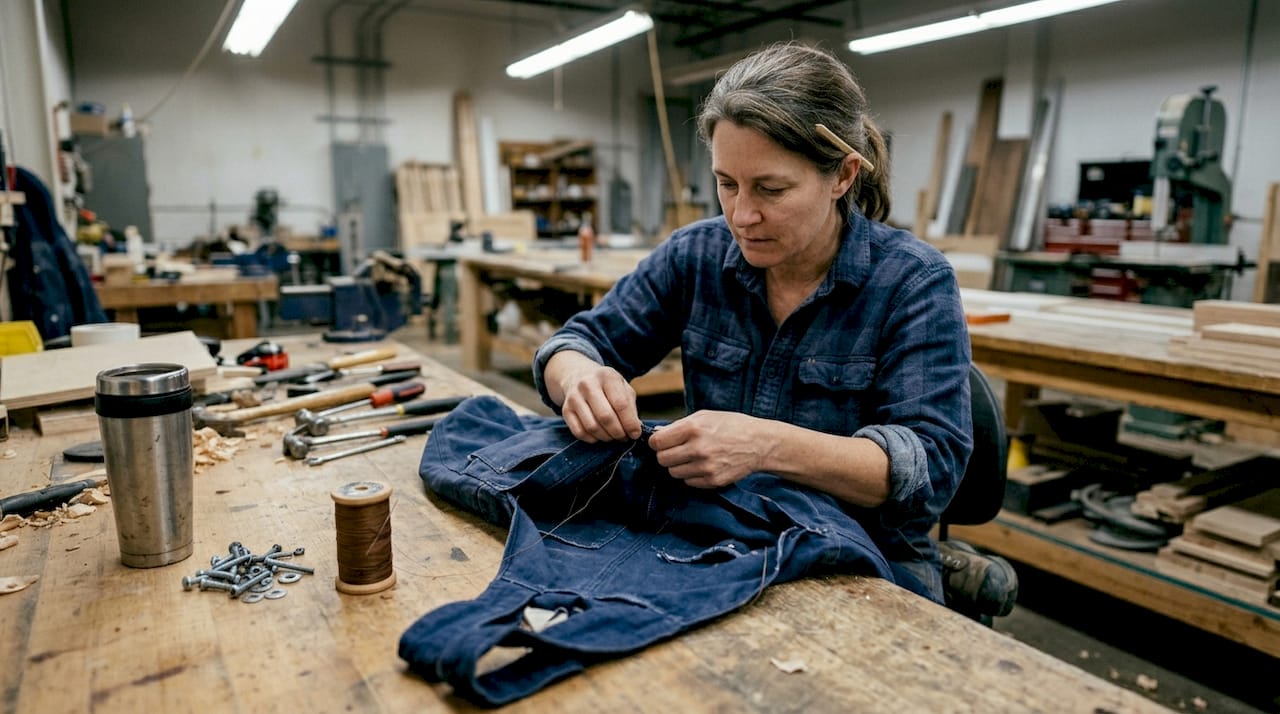
- Mend small tears immediately. A 1-inch rip repaired today costs nothing. Left alone for a week of hard use, it becomes a 6-inch tear that can’t be fixed.
- Avoid high-heat drying. Excessive dryer heat breaks down fibers and weakens seams over time. Air dry when possible, or use low heat.
- Rotate between two sets of gear. Giving each set a rest day extends both sets significantly. Constant daily wear without rotation accelerates breakdown.
- Store gear flat or hung, not crumpled. Leaving gear balled up on the truck floor stresses seams and creases fabric in ways that weaken it over time.
- Treat stains promptly. Oil, concrete, and chemical stains that sit in fabric break down fibers. Cold water and a stiff brush right after the shift saves the garment.
For tips on keeping your gear comfortable in hot conditions, the keeping workwear breathable guide covers airflow and moisture management alongside durability.
The cost benefit is real. Two sets of quality gear maintained properly will outlast four sets of cheap gear replaced constantly. That’s money back in your pocket every single year.
Get the most durable workwear for your job
You now know what separates gear that lasts from gear that fails. You know which fabrics match which trades, how to read construction quality, and how to maintain what you buy. The next step is putting that knowledge to work with gear that’s actually built to these standards.
At WorkwearComfort.com, every product is selected with blue-collar durability in mind. Whether you need something tough enough for the job site or comfortable enough for the long drive home, the collection is built around the values you work by. The Blue Collar Brotherhood hooded sweatshirt is a solid example of gear that combines construction quality with a style that represents who you are. Browse the full workwear comfort collection and find gear that earns its place in your rotation.
Frequently asked questions
What is the most durable workwear material for tough jobs?
Canvas and duck fabrics lead in abrasion resistance, making them ideal for welding and concrete work, while ripstop and Cordura are best for trades where tear resistance matters most, like roofing. Canvas excels in abrasion for stationary trades, while ripstop controls tear propagation.
How do I tell if workwear is well-constructed?
Flip the garment inside out and look for triple-stitched seams, bar tacks at pocket corners and belt loops, and reinforced panels at the knees and elbows. Quality construction doubles lifespan compared to single-stitch budget gear in daily heavy use.
Are laboratory durability ratings like ASTM important?
Yes, ASTM test results give you real, measurable proof of how fabric performs under stress, which is far more reliable than marketing language. ASTM standards cover abrasion, tear strength, tensile strength, and bursting resistance across standardized test methods.
How can I make my workwear last twice as long?
Shake out debris after every shift, repair small tears immediately, avoid high-heat drying, and rotate between two sets of gear. Maintenance practices are one of the most impactful factors in extending gear lifespan.
