

Many blue-collar workers assume that any lightweight shirt or thin fabric automatically qualifies as breathable workwear. That assumption can get you into serious trouble fast. When you’re swinging a hammer or running conduit in 95-degree heat, the wrong clothing choice doesn’t just make you uncomfortable. It can push your body toward heat exhaustion before you even realize what’s happening. This guide breaks down the real science behind breathable work clothing, walks you through the best fabric choices, explains how fit and design affect airflow, and gives you practical steps to keep your gear performing all season long.
Table of Contents
- Why breathable work clothing matters in trades
- Choosing the right materials: Cotton, synthetics, and blends
- Fit, layering, and design: How to maximize airflow
- Practical tips for choosing and caring for breathable workwear
- Find top breathable workwear solutions
- Frequently asked questions
Key Takeaways
| Point | Details |
|---|---|
| Choose breathable fabrics | Cotton or moisture-wicking materials maximize airflow and comfort during work. |
| Fit and design impact safety | Loose-fitting and vented clothing helps prevent heat stress and supports performance. |
| Proper maintenance matters | Taking care of your workwear preserves breathability and extends garment life. |
| Guidelines support safer choices | Following OSHA/NIOSH recommendations reduces risks from heat in construction and trades. |
Why breathable work clothing matters in trades
Breathable clothing does one critical job: it lets heat and moisture escape from your body instead of trapping it against your skin. When you’re doing physical labor, your body generates a massive amount of heat. Sweat is your cooling system. If your clothing blocks that process, your core temperature climbs fast.
Heat stress is not just discomfort. It’s a documented occupational hazard that sends thousands of workers to the hospital every year. Construction workers, electricians, roofers, and plumbers face some of the highest exposure risks because they often work outdoors or in poorly ventilated spaces. Choosing the right work clothes for extreme heat is one of the simplest ways to protect yourself.
The heat safety guidelines from OSHA and NIOSH are clear on this point. Here’s what they recommend:
- Wear loose-fitting, light-colored clothing to reflect heat
- Choose moisture-wicking or natural breathable fabrics
- Avoid dark colors that absorb radiant heat
- Replace soaked clothing during breaks when possible
- Layer strategically to manage both sun exposure and sweat
“OSHA and NIOSH recommend breathable fabrics for heat safety, specifically calling out moisture-wicking materials and loose, light-colored garments as key protective measures for workers in high-heat environments.”
This isn’t optional guidance. In high-heat conditions, your clothing is part of your personal protective equipment. Treat it that way.
Choosing the right materials: Cotton, synthetics, and blends
Not all fabrics perform the same when you’re working hard in the heat. Understanding what each material does helps you make smarter choices at the store and on the job site.
Cotton is a classic for a reason. It’s soft, breathable, and absorbs moisture well. The downside is that once cotton gets saturated with sweat, it stays wet and heavy. That can actually increase your risk of chafing and heat retention over a long shift.
Polyester and standard synthetics are durable and hold their shape, but many non-breathable versions trap heat against your skin. OSHA and NIOSH fabric recommendations specifically discourage non-breathable synthetics in hot work environments.

Moisture-wicking synthetics are engineered differently. They pull sweat away from your skin and push it to the outer surface of the fabric where it evaporates. These are excellent for high-output work.
Cotton-polyester blends often hit the sweet spot. You get the softness and breathability of cotton combined with the durability and shape retention of polyester. For most trade workers, a quality blend is the most practical everyday choice.
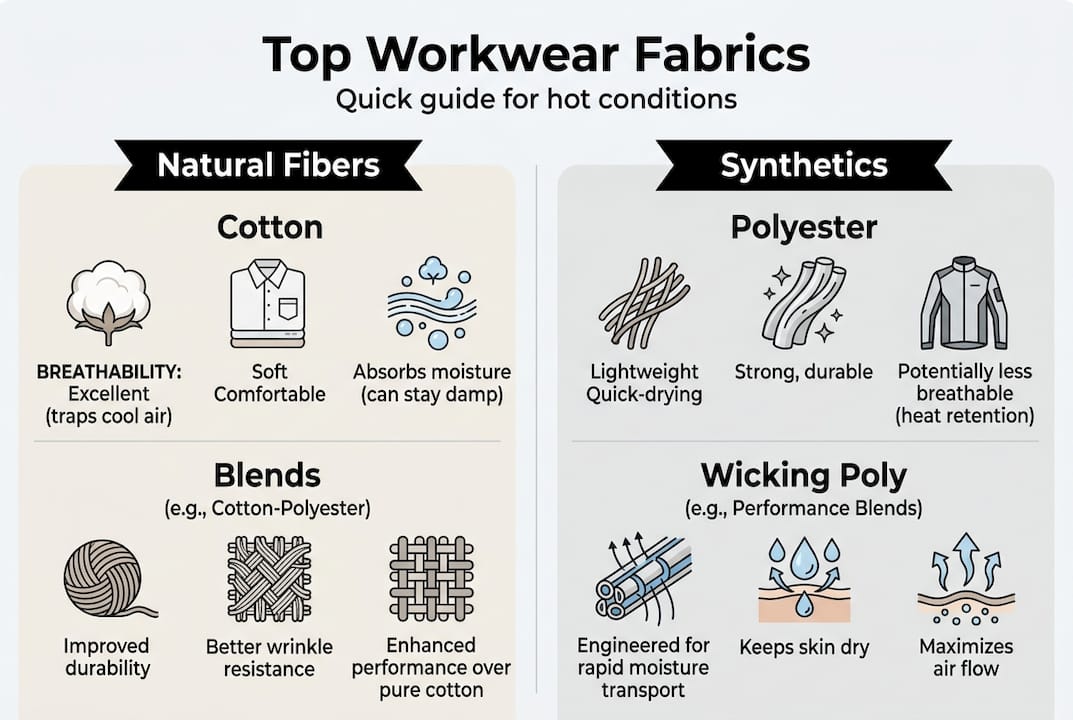
Here’s a quick comparison to help you decide:
| Fabric | Breathability | Durability | Moisture management | Best for |
|---|---|---|---|---|
| 100% cotton | High | Moderate | Absorbs but holds moisture | Mild heat, short shifts |
| Standard polyester | Low | High | Traps heat and sweat | Cooler environments |
| Moisture-wicking synthetic | High | High | Pulls sweat away fast | High-output, hot conditions |
| Cotton-poly blend | High | High | Balanced absorption and wicking | All-day trade work |
| Linen | Very high | Low | Absorbs and dries quickly | Light-duty, extreme heat |
For more guidance on picking the right gear, check out tips on breathable clothing for hot climates and breathable work t-shirts tips to narrow down your options.
Pro Tip: If you’re doing heavy labor in summer heat, look for blends with at least 40% moisture-wicking synthetic fiber. You get the durability you need without sacrificing the airflow your body demands.
Fit, layering, and design: How to maximize airflow
You can buy the most breathable fabric on the market and still overheat if the fit is wrong. Fit is the delivery system for breathability. A shirt that’s too tight presses fabric against your skin and blocks airflow. A shirt that’s too baggy can catch on equipment and create safety hazards.
The goal is a fit that’s relaxed but controlled. Think one size up from your athletic fit, not two sizes up. That extra room creates a small air gap between the fabric and your skin, which is where the cooling actually happens. Loose-fitting, light-colored clothing is consistently cited as one of the most effective ways to reduce heat stress on the job.
For appropriate work clothes for hot weather, here are the design features worth looking for:
- Mesh panels under the arms or across the back for passive ventilation
- Vented back yokes that open when you move
- Wicking collars that manage sweat around your neck
- Raglan sleeves that reduce bunching at the shoulder
- Light colors like white, tan, or gray to reflect radiant heat
Layering also plays a bigger role than most workers realize. A lightweight moisture-wicking base layer pulls sweat off your skin. A loose outer layer provides sun protection and a second evaporation surface. This two-layer system works better than a single heavy shirt in most hot-weather conditions.
For more tips for workwear in hot weather, especially when you’re dealing with PPE requirements on top of your regular clothing, layering strategy becomes even more important.
Pro Tip: If your job requires a hard hat, safety vest, or other PPE, factor in the extra thermal burden those items add. Wearing a lighter base layer underneath your PPE can offset the heat those items trap.
Practical tips for choosing and caring for breathable workwear
Buying the right gear is step one. Keeping it performing over months of hard use is step two. Breathability degrades over time if you don’t maintain your clothing properly.
Here’s how different clothing setups perform in real-world conditions:
| Scenario | Clothing choice | Comfort level | Heat risk |
|---|---|---|---|
| Roofing in July | Dark cotton tee, tight fit | Low | High |
| Roofing in July | Light-colored moisture-wicking blend, relaxed fit | High | Low |
| Indoor electrical work | Standard polyester shirt | Moderate | Moderate |
| Indoor electrical work | Cotton-poly blend, loose fit | High | Low |
| Concrete work, mixed sun | Heavy denim shirt | Low | High |
| Concrete work, mixed sun | Lightweight blend with vents | High | Low |
The workwear care guidelines from NIOSH emphasize that regular clothing maintenance is part of a complete heat safety plan. Here’s a numbered routine to follow:
- Wash workwear after every shift in hot conditions. Salt from sweat clogs fabric fibers and reduces breathability over time.
- Avoid fabric softeners on moisture-wicking garments. They coat the fibers and block wicking performance.
- Check for worn-out areas around the collar, underarms, and back. These spots lose breathability first.
- Replace heavily worn pieces before the season peaks. Don’t wait until a shirt is falling apart.
- Rotate between two or three sets of workwear so each piece gets proper drying time between uses.
For more cool comfort tips and tips for warm weather work clothes, building a small rotation of quality pieces beats owning a pile of cheap shirts that wear out fast.
When you’re selecting new gear, think about your specific job site. Outdoor roofing and framing demand maximum UV protection and moisture management. Indoor trades like plumbing or electrical still generate serious heat, especially in tight spaces. Match your fabric and fit choices to the actual conditions you face every day.
Find top breathable workwear solutions
If you’re ready to upgrade your workwear, WorkWearComfort has options built specifically around the needs covered in this guide. Breathable fabrics, smart fits, and designs that hold up through long shifts on demanding job sites.
The Sun Work Hoodie is a standout option for outdoor workers. It features UPF 50+ sun protection in a lightweight, breathable build that manages heat without sacrificing coverage. For workers who want something that represents the trade lifestyle while staying comfortable, the Blue Collar Brotherhood hoodie delivers durability and identity in one piece. Every item is designed with the blue-collar worker in mind, not just the look but the actual performance you need when the job gets tough.
Frequently asked questions
What is the most breathable work clothing material?
Cotton and moisture-wicking fabrics are the top recommendations for breathability and heat management in physically demanding work environments. Cotton-poly blends offer a strong balance of both breathability and durability for all-day use.
Should I choose loose or tight-fitting work clothes for better airflow?
Loose-fitting clothing allows air to circulate between the fabric and your skin, which is the primary mechanism for cooling during physical labor. Tight clothing presses against your skin and blocks that airflow entirely.
Is it okay to wear synthetic work clothing in hot weather?
Standard non-breathable synthetics should be avoided in hot conditions because they trap heat and moisture against your skin. Opt for moisture-wicking synthetics or cotton blends that are specifically engineered for breathability.
How do I keep my workwear breathable over time?
Wash after every hot-weather shift, skip fabric softener on wicking garments, and replace worn pieces before they lose their performance. Rotating between multiple sets also extends the life and effectiveness of each garment.
Recommended
- 7 Tips for Choosing Breathable Work T Shirts for Comfort – WorkWearComfort
- Breathable work shirts for comfort and durability – WorkWearComfort
- Understanding Breathable Long Sleeve Work Shirts for Professionals – WorkWearComfort
- Breathable Work Jacket: Comfort for Hot Jobsites – WorkWearComfort
- Custom apparel design tips to boost quality in 2026 – DIYPRINTZ
