

You’ve probably heard that cheap construction work pants fall apart after a few weeks on the job. That’s not always true. The reality is that affordable doesn’t have to mean flimsy if you know what to look for. This guide breaks down how to find durable, comfortable work pants that fit your budget without sacrificing the toughness you need for long days on site. You’ll learn which features matter most, how different brands stack up, and where to find the best deals on pants built to last.
Table of Contents
- What Makes Construction Work Pants Affordable Yet Durable?
- Comparing Popular Brands: Truewerk Vs. 1620 Workwear Pants
- How To Choose The Right Cheap Construction Work Pants For Your Trade
- Tips For Buying Cheap Construction Work Pants Without Sacrificing Quality
- Explore Durable Workwear From WorkWearComfort
- Frequently Asked Questions
Key takeaways
| Point | Details |
|---|---|
| Durability depends on construction | Reinforced stress points and quality stitching extend lifespan significantly |
| Modern fabrics offer comfort | Lightweight technical materials provide flexibility without sacrificing toughness |
| Traditional heavy-duty remains relevant | Heavier fabrics deliver old-school ruggedness for demanding trades |
| Price doesn’t dictate quality | Affordable options can balance durability, comfort, and cost effectively |
| Smart shopping matters | Seasonal sales and reputable retailers help you find quality pants within budget |
What makes construction work pants affordable yet durable?
The difference between pants that last and pants that tear after a month comes down to a few critical factors. Fabric weight plays a huge role. Heavier canvas or duck cloth resists abrasion better than thin cotton blends, but modern synthetic blends can match durability at lighter weights. You’ll find pants ranging from 8 ounce lightweight options to 14 ounce heavy-duty materials. Heavier doesn’t always mean better, especially if you’re working in hot climates or need flexibility for climbing and kneeling.
Reinforcements make the real difference. Reinforced stress points like knees, crotch, and pockets prevent the most common failure points. Double-stitched seams hold up under tension better than single stitching. Bar-tacked stress points, where extra stitching reinforces high-stress areas, can add years to your pants’ lifespan. Check the knees and back pockets especially, those areas take the most punishment on construction sites.
Stitching quality separates budget pants from cheap junk. Look for tight, even stitches with no loose threads or skipped sections. Quality stitching uses polyester or nylon thread that resists UV damage and moisture better than cotton thread. The thread thickness matters too, thicker thread handles more stress before breaking. You can spot quality stitching by examining the seams closely, they should look uniform without gaps or bunching.
Pro Tip: Turn pants inside out to inspect seam quality before buying. Quality construction shows clean, flat seams with no fraying edges.
Affordable doesn’t automatically mean low quality if the right specs are in place. Many budget brands use the same manufacturing facilities as premium brands, just with simpler designs and less marketing overhead. Focus on the technical details rather than the brand name. A $40 pair with reinforced knees and quality stitching will outlast a $30 pair with neither, even if both claim to be “heavy-duty.”
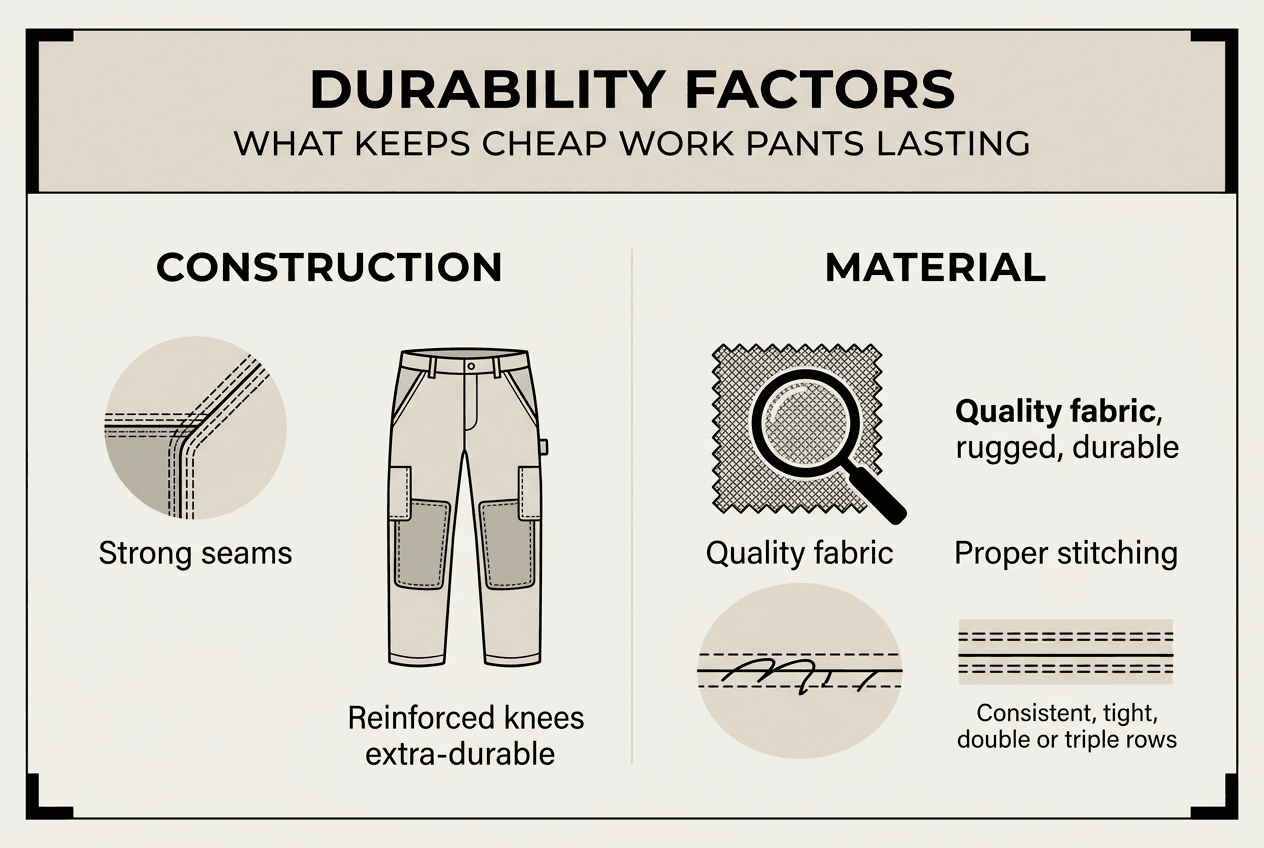
Some manufacturers follow durability standards or certifications, though these aren’t universal in work pants for construction. Look for mentions of ASTM standards for abrasion resistance or tear strength. These certifications mean the fabric has been tested against specific benchmarks. Even without formal certifications, detailed product specs about fabric weight, reinforcement locations, and stitch counts tell you what you need to know.
Comparing popular brands: Truewerk vs. 1620 workwear pants
Two brands illustrate different approaches to balancing affordability with durability. Truewerk pants are lightweight and stretchy, offering a modern athletic feel that works well for active job sites. They use technical fabrics that move with you, making them ideal if you spend time climbing ladders, crawling under equipment, or working in tight spaces. The stretch doesn’t compromise durability, reinforced panels in high-wear areas keep these pants tough despite their lighter weight.
1620 Workwear pants feature heavier-duty construction with a premium, made-in-USA approach. These pants feel more traditional, thick fabric that stands up to rough surfaces and sharp edges. If you’re dragging materials, kneeling on concrete, or working around metal edges all day, that extra weight provides peace of mind. The trade-off is less flexibility and more heat retention in warm weather.
Both brands use reinforced stitching, but the execution differs. Truewerk focuses on strategic reinforcement at stress points while keeping overall weight down. 1620 reinforces broadly, creating pants that feel almost indestructible but might be overkill for less demanding trades. Your choice depends on your specific work environment and personal preference for comfort versus traditional toughness.
| Feature | Truewerk | 1620 Workwear |
|---|---|---|
| Fabric weight | Lightweight technical blends | Heavy-duty traditional canvas |
| Stretch | High flexibility | Minimal stretch |
| Reinforcement | Strategic stress points | Broad coverage |
| Best for | Active trades, warm climates | Heavy construction, cold weather |
| Price range | Mid-range | Premium |
Truewerk suits electricians, HVAC techs, and other trades where mobility matters most. The athletic cut and stretch fabric won’t bind when you’re reaching overhead or squatting repeatedly. These pants also dry faster if you get caught in rain or work in humid conditions. The modern styling appeals to younger workers who want best workwear for construction that doesn’t look dated.
1620 appeals to old-school tradespeople who prioritize ruggedness above all. Concrete workers, heavy equipment operators, and demolition crews benefit from the extra protection. The thicker fabric resists sparks better too, making these pants safer around welding or cutting operations. You’ll pay more upfront, but the extended lifespan can justify the investment if your work is particularly hard on clothing.
Pro Tip: Consider buying one pair of each style to test in your actual work conditions. What works for someone else might not suit your specific trade or climate.
The construction work pants durability comfort balance shifts based on personal priorities. Some workers swear by lightweight modern designs, others refuse to give up traditional heavy canvas. Neither approach is wrong, it’s about matching the pants to your needs rather than following trends or brand loyalty.
How to choose the right cheap construction work pants for your trade
Start by assessing your trade-specific requirements. Plumbers need pants that handle moisture and allow deep squatting. Electricians benefit from non-conductive fabrics and plenty of pockets for tools and testing equipment. Framers require maximum mobility and abrasion resistance on the knees. Your daily tasks dictate which features matter most, don’t pay for capabilities you won’t use.
Follow these steps to narrow down your options:
- List your three most common work positions (kneeling, climbing, lifting)
- Identify your primary wear points (knees, seat, thighs)
- Count how many pockets you actually use daily
- Consider your climate and typical work environment
- Set a realistic budget based on replacement frequency
Reinforced stress points matter most for tasks involving repeated kneeling or heavy lifting. Check that mens construction work pants have extra fabric layers or padding at the knees if you spend significant time on the ground. Reinforced seat and crotch areas prevent blow-outs from squatting and climbing. Tool pocket reinforcements stop tears from heavy items like hammers or measuring tapes.
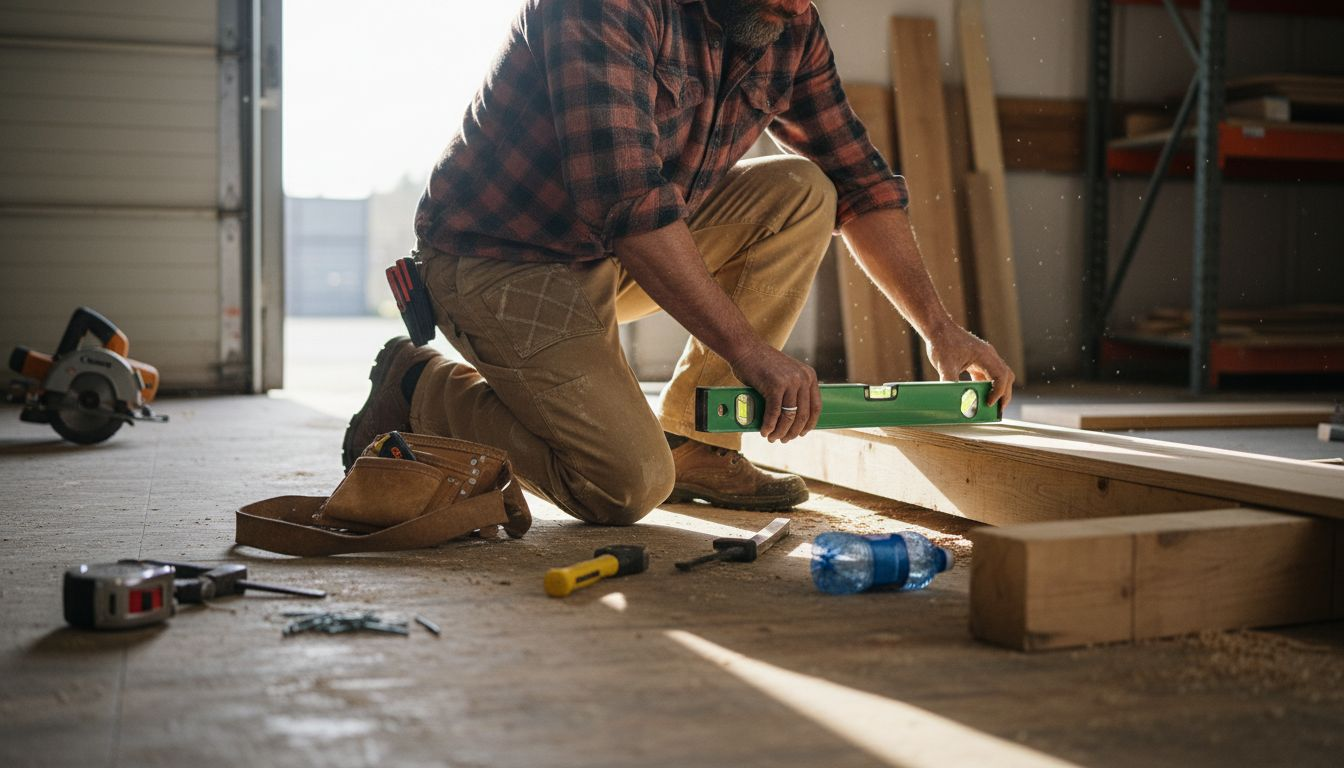
Climate considerations affect comfort dramatically. Lightweight breathable fabrics work better in southern states or summer months. Heavier pants provide warmth in northern winters but can cause overheating indoors. Some modern technical fabrics wick moisture while maintaining durability, offering the best of both worlds. Consider buying different weights for different seasons rather than suffering through summer in winter-weight pants.
Cost versus lifespan calculations reveal the true value. A $35 pair lasting six months costs more over time than a $60 pair lasting eighteen months. Track how long your current pants last and calculate the monthly cost. Factor in your washing frequency too, pants worn and washed daily wear out faster than those rotated with other pairs. Buying two or three pairs and rotating them extends total lifespan significantly.
Pro Tip: Buy from sellers offering easy returns or exchanges. Fit varies dramatically between brands, and you can’t judge comfort until you’ve worked a full day in new pants.
Blue collar work pants benefits extend beyond just durability. The right pants reduce fatigue by allowing natural movement. Poor-fitting or restrictive pants force you to compensate with awkward postures, leading to back pain and reduced productivity. Comfort directly impacts how you feel at the end of a long shift.
Consider trying pants before committing to multiple pairs. Some construction work pants near me retailers allow in-store trials or have generous return windows. Wear test pants around the house for an evening, squat, bend, and move through typical work motions. Seams that chafe slightly in the store will be unbearable after eight hours on site.
Truewerk leans towards modern technical performance and an athletic vibe, while 1620 emphasizes old-school durability and USA-made quality. Understanding these differences helps you choose based on values and practical needs rather than marketing hype. Both approaches deliver quality, just with different priorities.
Tips for buying cheap construction work pants without sacrificing quality
Timing your purchases saves significant money without compromising quality. Retailers discount work pants heavily during off-season periods. Buy winter-weight pants in spring, lightweight options in fall. Holiday sales around Labor Day, Black Friday, and New Year offer deep discounts on quality brands. Sign up for email lists from workwear retailers to catch flash sales and clearance events.
Reputable retailers matter more than you might think. Established workwear suppliers stand behind their products with real customer service. Read reviews focusing on durability and fit rather than just star ratings. Look for detailed feedback from people in your trade, their experience predicts yours better than generic praise. Avoid retailers with no return policy or poor customer service ratings.
Key shopping strategies include:
- Compare prices across multiple retailers before buying
- Check manufacturer websites for direct sales and bundles
- Look for “seconds” or “irregulars” with minor cosmetic flaws
- Buy end-of-season clearance for next year’s needs
- Join loyalty programs for additional discounts
Ultra-cheap pants from unknown brands rarely deliver value. That $20 pair might seem like a deal until it tears after two weeks. Calculate the real cost per wear rather than just the sticker price. Quality $50 pants lasting a year cost less per day than $20 pants lasting a month. Resist the temptation to save a few dollars upfront if it means replacing pants constantly.
Look for reinforced stress points like knees, crotch, and pockets along with quality stitching. These features separate pants that last from pants that fail quickly. Double-stitched seams and bar-tacked stress points significantly extend lifespan, making them worth seeking out even in budget options. Don’t compromise on these fundamentals to save a few dollars.
Warranties and satisfaction guarantees provide insurance against defects. Some manufacturers replace pants that fail prematurely due to construction defects rather than normal wear. This guarantee costs nothing extra but protects your investment. Read the fine print to understand what’s covered, most warranties exclude damage from accidents or improper care.
Pro Tip: Maintain pants properly to maximize lifespan. Wash in cold water, avoid harsh detergents, and air dry when possible. Heat from dryers breaks down elastic and weakens stitching over time.
The 7 best work pants 2025 comparisons help identify which brands consistently deliver quality at various price points. These roundups test pants in real work conditions, revealing which marketing claims hold up and which don’t. Use them as a starting point for research rather than making decisions based solely on brand reputation.
Work construction pants essentials include more than just the pants themselves. Consider the total cost of outfitting yourself properly. Quality pants paired with cheap boots or inadequate safety gear creates an unbalanced approach. Budget for complete workwear that protects you comprehensively rather than overspending on one item while skimping on others.
Explore durable workwear from WorkWearComfort
Finding affordable, durable construction pants is just the start of building a complete workwear setup. WorkWearComfort offers quality gear designed specifically for tradespeople who need clothing that works as hard as they do. Our selection focuses on durability and comfort without the premium pricing of boutique brands.
Beyond pants, consider complementing your workwear with our Blue Collar Brotherhood hooded sweatshirt for cooler mornings or the Hard Work Matters workwear hoodie that celebrates the trade lifestyle. These pieces combine function with style that resonates with blue-collar values. Browse the full selection at WorkWearComfort to outfit yourself completely with gear built for real work conditions.
Frequently asked questions
Are cheap construction work pants durable enough for daily use?
Yes, if you choose pants with reinforced seams and quality stitching. Durability depends on materials and construction details, not just the price tag. Many affordable brands use the same manufacturing processes as premium options, just with simpler designs and less marketing overhead. Focus on technical specifications like fabric weight, reinforcement locations, and stitch quality rather than brand names when evaluating budget options.
What features should I look for in affordable work pants?
Look for reinforced knees, crotch, and pockets as your top priorities. Choose durable fabric with a comfortable fit that allows natural movement throughout your workday. Consider utility features like tool pockets, hammer loops, and knife clips based on your specific trade needs. Double-stitched seams and bar-tacked stress points add years to lifespan without significantly increasing cost.
Can modern lightweight work pants be as durable as heavy-duty options?
Yes, modern designs use technical fabrics that deliver both comfort and functionality. Advanced synthetic blends and strategic reinforcement placement provide durability without excessive weight. Traditional heavy fabrics still offer ruggedness and superior protection against abrasion, but they sacrifice mobility and breathability. Truewerk leans towards modern technical performance and an athletic vibe, while 1620 emphasizes old-school durability and USA-made quality, showing both approaches work for different priorities.
Where can I find the best deals on cheap construction work pants?
Look for reputable online retailers with detailed customer reviews and transparent product specifications. Check for seasonal sales during off-peak periods when retailers discount inventory heavily. Consider sellers with flexible return and exchange policies that let you test pants risk-free. Manufacturer websites often run direct sales that cut out middleman markups, and signing up for email lists alerts you to flash sales and clearance events before items sell out.
