

Most construction pros assume that if a shirt is thick and pants look tough, the gear will hold up. That assumption costs real money and, sometimes, real injuries. The truth is that fabric choice, fit, and how you maintain your clothing have a bigger impact on your safety, comfort, and budget than most workers ever realize. Choosing the best construction workwear is not about grabbing the heaviest-looking item off the shelf. It is about understanding what each garment does, what it is made of, and how long it will actually last under the demands of your specific trade.
Table of Contents
- The real essentials: What every construction pro needs
- Material matters: Comparing fabrics and construction
- Worksite safety: The role of PPE and compliance
- Style, comfort, and long-term value: Getting it all without compromise
- Why most construction pros miss out on real value (and how to fix it)
- Upgrade your gear with workwear designed for pros
- Frequently asked questions
Key Takeaways
| Point | Details |
|---|---|
| Choose the right materials | Opt for abrasion-resistant and reinforced fabrics that fit your daily site challenges. |
| Prioritize PPE and maintenance | Consistent use and regular replacement of safety gear directly reduce injuries. |
| Value over price | Investing in premium brands saves money over time and boosts comfort and style. |
| Layer for conditions | Adapt with smart layering and proper blends to stay comfortable in any weather. |
The real essentials: What every construction pro needs
Let’s clear something up fast. Not every piece of clothing marketed as “workwear” belongs on a jobsite. The core categories you actually need are work pants, base layer shirts, mid-layer fleeces or hoodies, outer jackets, and boots. Each one plays a specific role, and skipping or skimping on any of them creates a weak link in your daily setup.
Fit and layering are where most pros go wrong. Clothing that is too loose catches on equipment. Clothing that is too tight restricts movement and tears at the seams during a full range of motion. Weather adaptability matters just as much. A jacket that works in October might be useless in February if it lacks proper insulation or wind resistance.
Here is what to look for in your core gear:
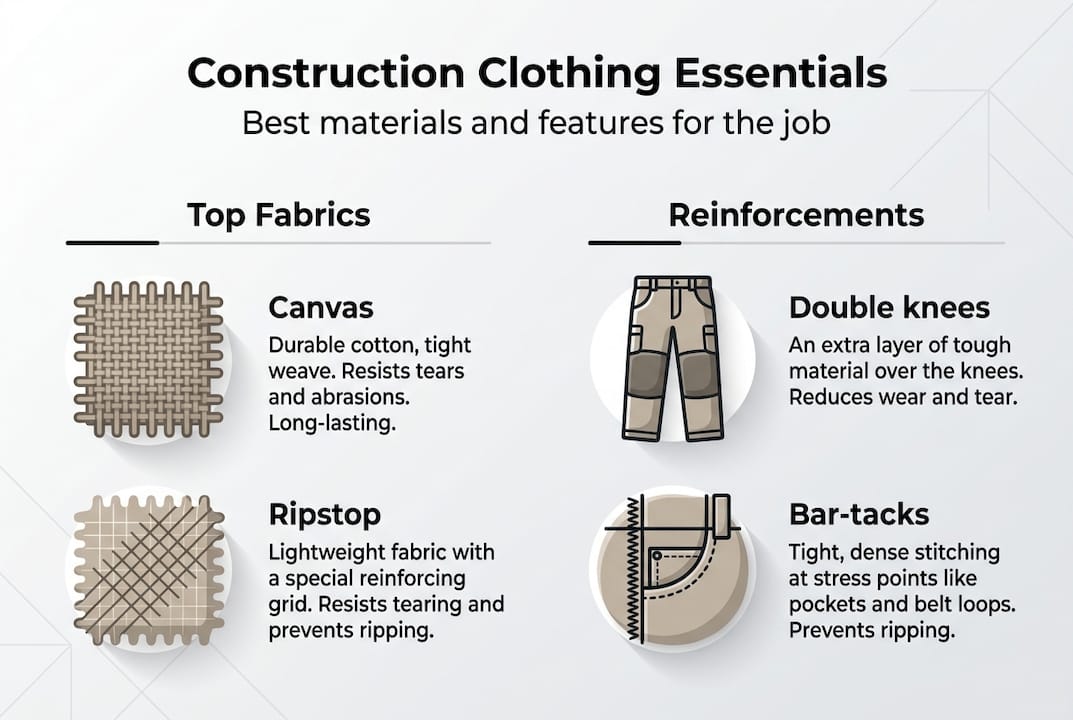
- Work pants: Reinforced knees and ripstop or canvas fabrics, ideally a 65/35 cotton-poly blend with tool pockets, can last 12 or more months with proper care.
- Base layer shirts: Moisture-wicking synthetic or merino wool blends keep sweat off your skin and regulate temperature.
- Mid layers: Fleece or insulated hoodies trap heat without bulk and allow full arm movement.
- Outer jackets: Wind and water resistance are non-negotiable for outdoor trades.
- Boots: Steel or composite toe, slip-resistant soles, and ankle support are the minimum standard.
Pro Tip: Avoid 100% cotton for anything you wear close to the skin or in high-movement areas. Cotton holds moisture, loses insulation when wet, and tears faster under abrasion. Opt for reinforced panels and moisture-wicking blends wherever possible. For a deeper look at what separates good gear from great gear, check out this guide on choosing durable construction clothing and these key workwear insights that break down what the labels do not tell you.
Material matters: Comparing fabrics and construction
Once you know the must-have gear, the next step is understanding what makes one garment outlast another. The fabric is everything. Two pairs of pants can look identical on a rack and perform completely differently after three months on a concrete slab.
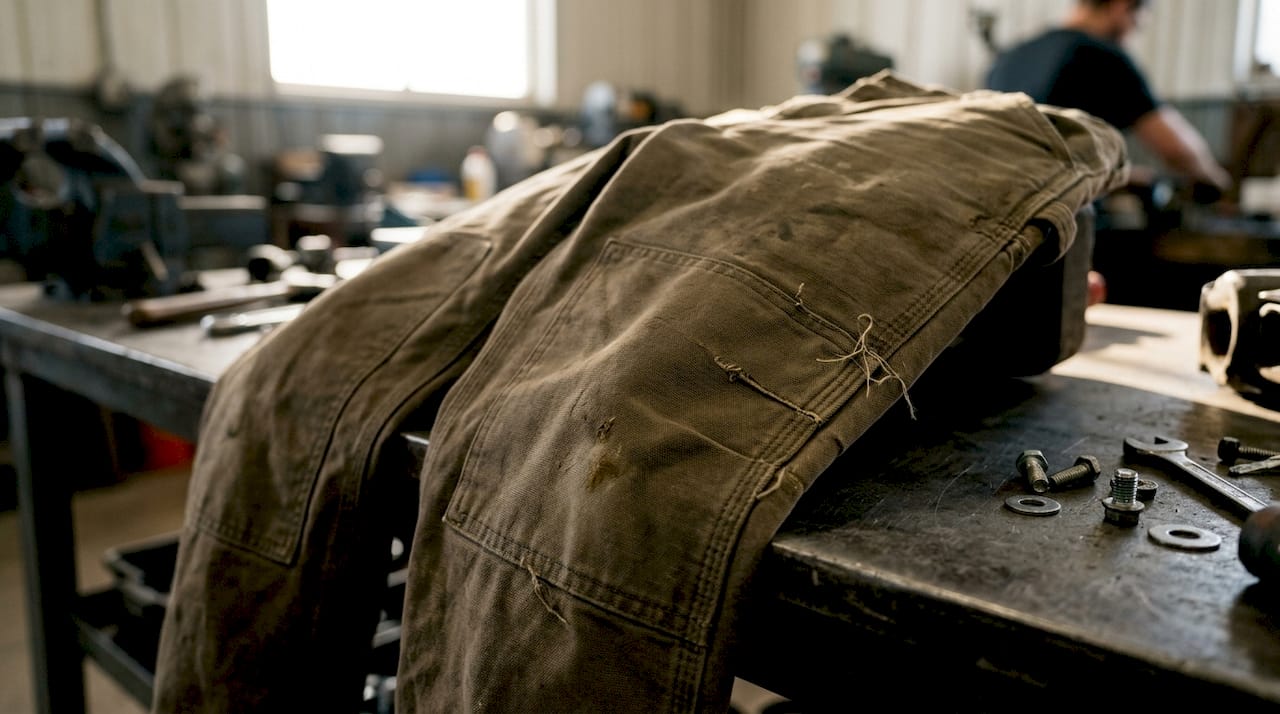
Canvas is the go-to for trades involving abrasion, like concrete work and welding. It is dense, heavy, and holds up against rough surfaces. Canvas exceeds 20,000 abrasion cycles in standardized testing, making it a clear winner for ground-level and high-contact work. Ripstop, on the other hand, is woven with a reinforced grid pattern that resists tearing, making it ideal for roofing and trades requiring constant movement. Cotton-poly blends sit in the middle, offering a balance of comfort and moderate durability.
| Fabric | Abrasion resistance | Comfort and mobility | Best for |
|---|---|---|---|
| Canvas | Very high | Lower, stiffer | Concrete, welding, heavy labor |
| Ripstop | Moderate | High, flexible | Roofing, carpentry, climbing |
| 65/35 cotton-poly | Moderate | High, breathable | General trades, warm weather |
| Merino wool | Low | Very high | Base layers, cold weather |
“The right fabric for the job is not the heaviest one. It is the one that matches your specific jobsite risks. A roofer in ripstop moves better and stays safer than one fighting stiff canvas all day.” This principle from workwear durability factors holds true across every trade.
Reinforced areas matter as much as base fabric. Double-layered knees, bar-tacked stress points, and triple-stitched seams are the details that separate gear that lasts from gear that falls apart. When shopping, turn the garment inside out and check the stitching before you buy. You can also explore options specifically built for longevity in this breakdown of durable work pants for construction environments.
Worksite safety: The role of PPE and compliance
Material and cut are not the only essentials. Every pro also needs to pay close attention to safety and compliance. PPE, which stands for personal protective equipment, includes helmets, gloves, high-visibility vests, and boots. These items are not optional extras. They are part of your daily clothing system.
The data on PPE use is sobering. A meta-analysis of 18 studies covering 7,612 construction workers found only a 51% consistent usage rate. The top barriers were lack of supply (reported by 72% of workers) and discomfort. Workers who received proper training and supervision showed significantly higher compliance rates.
| PPE item | Average usage rate | Key barrier | Injury odds reduction |
|---|---|---|---|
| Hard hat | 68% | Discomfort in heat | Significant |
| High-vis vest | 61% | Fit and mobility | Moderate |
| Gloves | 54% | Reduced dexterity | Significant |
| Safety boots | 79% | Cost | High |
Maintenance is where most workers fall short. PPE does not last forever, and worn-out gear gives a false sense of security. Here is a simple rotation and maintenance approach:
- Inspect gloves and vests weekly for tears, fading, or compromised reflectivity.
- Check boot soles monthly for wear that reduces slip resistance.
- Replace hard hats every five years at minimum, or immediately after any impact.
- Rotate between two sets of gloves to extend lifespan and reduce skin irritation.
- Wash high-vis vests according to manufacturer instructions to preserve reflectivity.
Pro Tip: If PPE feels uncomfortable, that is a fit problem, not a design flaw. Try different brands and sizes before writing off a category of protection. Comfort drives compliance, and compliance is what actually protects you on site.
Style, comfort, and long-term value: Getting it all without compromise
A safer, more durable outfit does not mean you sacrifice comfort or style. Modern construction clothing has come a long way. You can find gear that looks sharp, moves well, and holds up for years without paying luxury prices.
The concept of cost-per-wear changes how you think about buying gear. A pair of pants that costs $120 and lasts 18 months costs about $0.22 per day. A $40 pair that falls apart in four months costs $0.33 per day and leaves you shopping again mid-season. Premium brands like Carhartt and 1620 consistently outperform budget alternatives because their seams and reinforced knees hold up where cheap gear fails first.
Here is what to prioritize when choosing gear that delivers on comfort and style:
- Articulated knees: Pre-shaped panels that follow your natural movement without pulling.
- Gusseted crotch: Prevents tearing at the highest stress point during bending and climbing.
- Stretch panels: Side or back inserts that allow full range of motion.
- Neutral colorways: Dark grays, navy, and olive hold up visually through heavy use and washing.
- Minimal branding: Clean designs that look professional on and off the jobsite.
Brands like Red Wing and Thorogood bring the same philosophy to footwear. Their boots are built to last multiple seasons and are resoleable, which extends the life and lowers your long-term cost. For the latest workwear trends in 2026, comfort-forward design is leading the way. And if budget is a real concern right now, there are solid options covered in this guide to budget work pants that still meet the durability bar.
Why most construction pros miss out on real value (and how to fix it)
Here is the uncomfortable truth most gear articles skip. The biggest waste in workwear is not buying the wrong brand. It is buying without a plan. Most workers grab whatever is on sale, wear it until it fails, then repeat the cycle. That pattern costs more money and creates more risk than almost any other jobsite habit.
Cheap gear is a disguised expense. Faster wear means more frequent replacement, more time shopping, and more days working in compromised clothing. The math never works out in favor of the bargain bin.
What actually works is treating your workwear like a system. Rotate gear, inspect and replace damaged PPE, and follow the five-year rule on helmets. Layer for weather instead of just grabbing a heavier jacket. Avoid 100% cotton in high-stress areas, and prioritize reinforced knees and pockets if your trade involves kneeling. These habits take about ten minutes a week and save hundreds of dollars a year.
The contrarian view worth considering: spending an hour researching and testing fit before you buy pays off more than any discount. Most pros skip this step because it feels like extra work. But the workers who do it end up with gear that lasts, fits right, and actually gets worn consistently. That is where real value lives. For cold-season work, understanding layering for cold weather is one of the highest-return investments you can make in your daily comfort and safety.
Upgrade your gear with workwear designed for pros
Ready to put this knowledge to work? At WorkwearComfort.com, we build apparel around the same principles covered in this guide: durability, comfort, and a look that holds up on and off the jobsite.
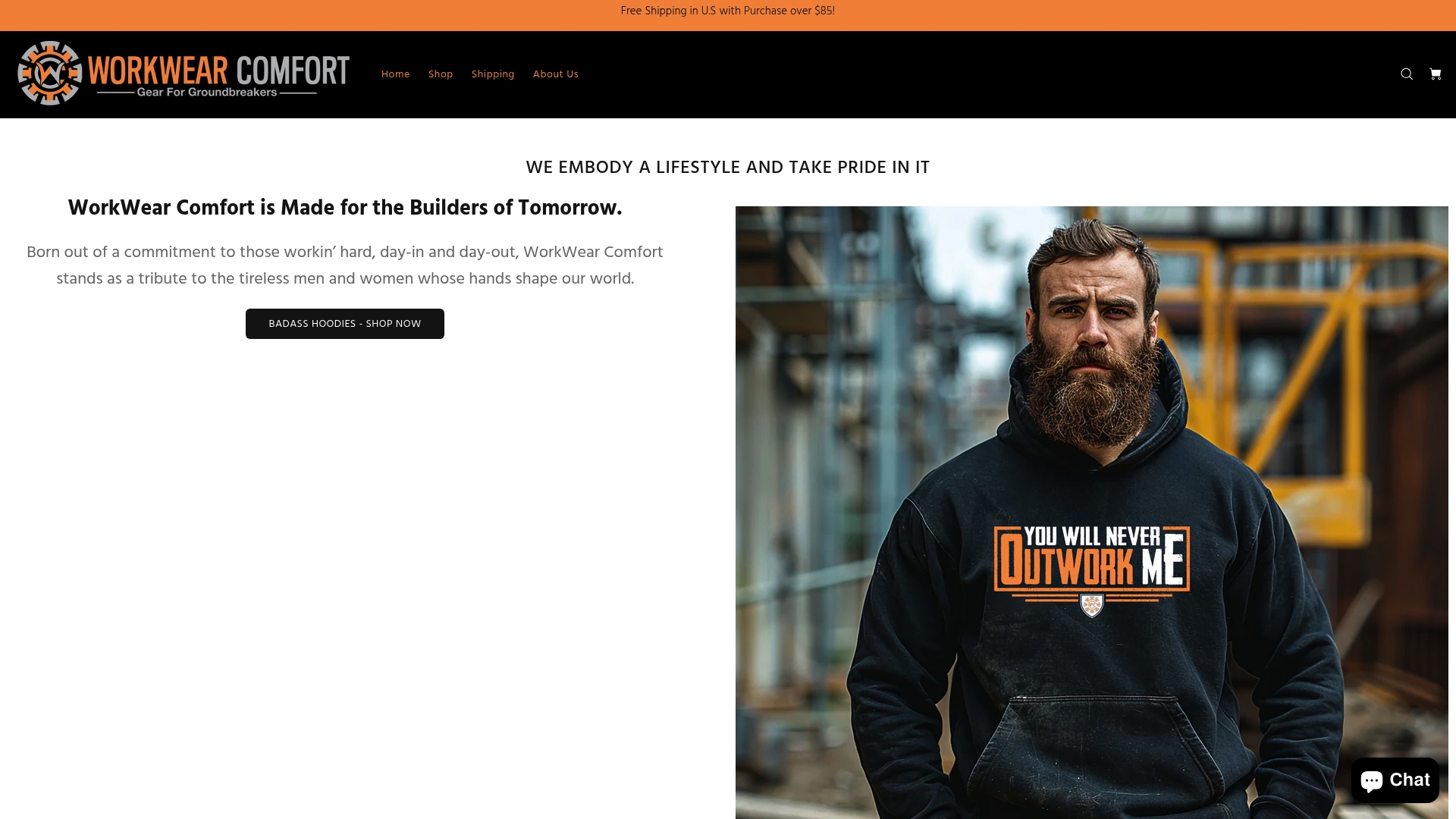
Our rugged hoodie is built for real work, with reinforced construction and a fit that moves with you through long shifts. Pair it with our work t-shirt for a layering setup that handles heat and cold without slowing you down. Every piece we carry is chosen with the blue-collar professional in mind. Head over to WorkwearComfort.com to browse the full lineup and find gear that actually earns its place in your rotation.
Frequently asked questions
How long should durable work pants last on site?
With proper care and regular inspection, reinforced work pants built from ripstop or canvas fabrics should hold up for at least 12 months under heavy daily use.
Are premium work brands really worth the investment?
Yes. Premium brands like Carhartt and 1620 deliver better cost-per-wear value because their reinforced seams and knees outlast budget alternatives that fail within a few months.
How often should I replace my safety helmet?
Replace your hard hat every five years at minimum, and immediately after any significant impact, as outlined in standard PPE replacement guidelines.
What’s the best way to layer clothing for changing weather?
Start with a moisture-wicking base layer to manage sweat, add an insulating mid-layer like a fleece hoodie, and finish with a wind and water-resistant outer shell you can remove as temperatures rise during the day.
