

Your work clothes take a beating every single shift. Grease, oil, metal shavings, and chemical residue grind into fabric fibers day after day, and without the right care routine, even the toughest workwear breaks down fast. Most mechanics replace clothing far sooner than they should, not because the gear failed, but because the laundry routine did. This guide walks you through every step of proper mechanic clothing maintenance, from sorting and stain treatment to washing, drying, and smarter gear choices, so you get every last mile out of your investment.
Table of Contents
- Why mechanic clothing care matters
- Preparation: Sorting and assessing your workwear
- Step-by-step: Removing tough mechanic stains
- Washing mechanic workwear: The right way
- Drying and finishing for maximum lifespan
- Pro tips for upgrading your mechanic wardrobe
- Find workwear that lasts and support your pro routine
- Frequently asked questions
Key Takeaways
| Point | Details |
|---|---|
| Sort before you wash | Always separate workwear by fabric, hazard level, and color to maximize safety and cleanliness. |
| Treat stains fast | Oil and grease stains respond best to immediate treatment with dish soap or enzyme detergent. |
| Wash with care | Use non-bleach, enzyme-based detergent and follow garment labels to avoid damaging special coatings. |
| Prefer air drying | Skip high heat and air dry workwear to prevent shrinkage, residue, and heat-set stains. |
| Choose easy-care fabrics | Invest in oil-release and stain-resistant clothing for simpler maintenance and longer wear. |
Why mechanic clothing care matters
Your workwear is not just clothing. It is a layer of protection between you and the job. When you skip proper care or wash everything together in hot water with whatever detergent is on sale, you are not just fading colors. You are breaking down the fabric structure itself.
Dirt and grease act like sandpaper inside fabric fibers. Every wash cycle grinds those particles deeper unless you pre-treat and remove them correctly. Over time, this weakens the weave, causes tearing, and shortens the life of even the most rugged gear. Understanding workwear durability and function starts with understanding how fabric degrades.
The stakes get higher with specialty gear. Flame-resistant (FR) clothing and high-visibility (hi-vis) garments have protective properties built into the fabric or applied as a finish. Washing them with the wrong products strips those properties. As protective clothing maintenance research confirms, proper maintenance extends durability and ensures protective features perform as designed. That is not a minor detail when you are working near heat, sparks, or moving traffic.
Here is what poor clothing care actually costs you:
- Shortened garment lifespan, meaning more frequent replacement costs
- Compromised FR or hi-vis protection that could put you at risk
- Stiff, uncomfortable fabric that slows you down on the job
- Persistent odors that no amount of rewashing seems to fix
- Faded colors and weakened seams on gear you paid good money for
Investing in quality jacket durability and comfort only pays off when you back it up with the right care routine. The gear is only as good as the maintenance behind it.
Preparation: Sorting and assessing your workwear
Before a single item goes into the wash, you need to sort. This step takes two minutes and saves your gear from serious damage.
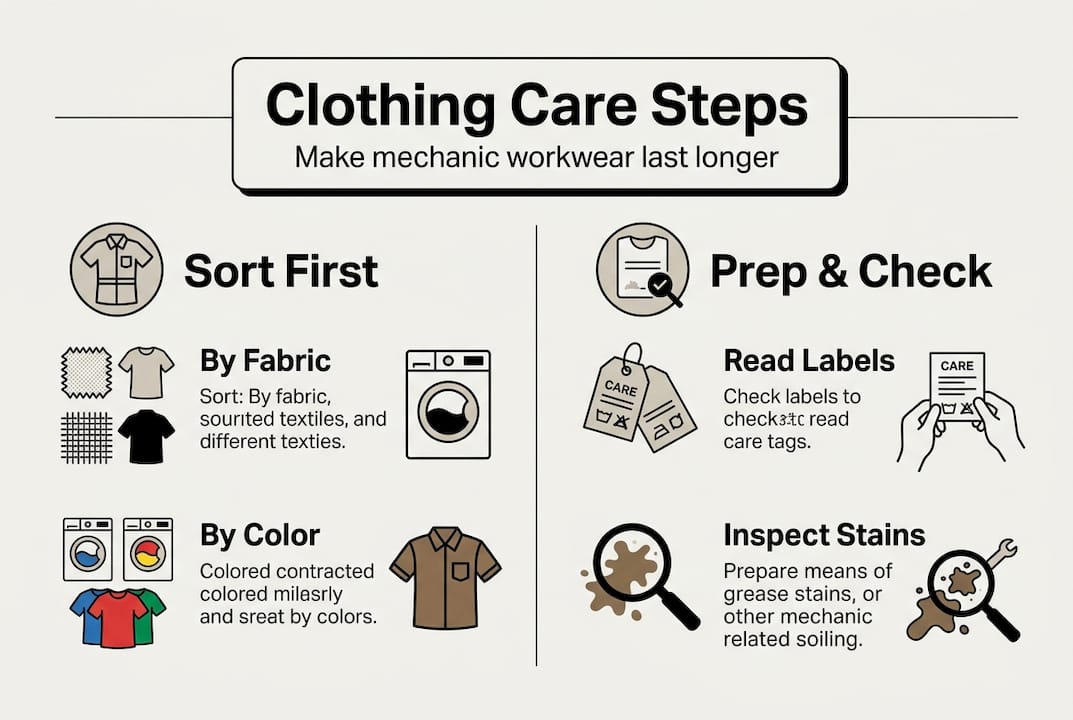
The most important rule: never wash FR or hi-vis clothing with regular laundry. Residue from standard detergents, fabric softeners, or even grease from other garments can coat FR fibers and reduce their fire resistance. Sorting by fabric type, color, and hazard level keeps specialty gear performing the way it was built to.
Here is a simple sorting checklist before every wash:
- Separate FR and hi-vis items into their own load
- Group by color: darks, lights, and whites
- Sort by soil level: lightly soiled versus heavily greased items
- Check fabric type: stretch fabrics, cotton, and poly blends each need different settings
- Read every care label before washing anything new
Care labels are your cheat sheet. Look for maximum wash temperature, whether tumble drying is allowed, and any warnings about bleach or softeners. For work overalls essentials, the label often specifies industrial washing requirements that home machines cannot fully replicate.
| Garment type | Wash separately? | Special notes |
|---|---|---|
| FR clothing | Yes | No softeners, no bleach |
| Hi-vis gear | Yes | Avoid residue from other items |
| Oil-soaked items | Yes | Pre-treat before washing |
| Standard work pants | No | Group by color and soil level |
| Stretch or flex fabric | No | Use gentle cycle, cold water |
If you are unsure whether a garment qualifies as FR, check where to find FR clothing for guidance on identifying and sourcing certified protective gear.
Step-by-step: Removing tough mechanic stains
Every mechanic knows the feeling of pulling a shirt out of the wash and finding that oil stain is still there, maybe darker than before. The problem is almost always timing and technique.
Speed is everything with grease and oil. The longer a stain sits, the deeper it bonds with the fabric fibers. Treat it within minutes if you can, or at least before it goes through a wash cycle. Heat from the dryer will permanently set any stain that was not fully removed first.
Follow these steps for tough mechanic stains:
- Blot the stain immediately with a clean cloth or paper towel. Do not rub. Rubbing spreads the stain and pushes it deeper into the fabric.
- Apply dish soap, an enzyme-based laundry detergent, or a specialty degreaser directly to the stain.
- Work the product gently into the fabric with your fingers or a soft brush.
- Let it sit for at least 10 to 15 minutes. For heavy grease, 30 minutes is better.
- Rinse the spot with cool water, not hot. Hot water can set the stain before it is fully lifted.
- Air dry the spot and check before putting the garment in the machine.
As stain pre-treatment research confirms, pre-treating stains immediately with dish soap, enzyme detergent, or a specialty cleaner and blotting rather than rubbing gives you the best shot at full removal. For more options, check out tips on how to clean tough stains naturally without harsh chemicals.
“Never put a stained garment in the dryer until you are certain the stain is gone. Heat is permanent.”
Pro Tip: Keep a small bottle of dish soap in your locker or shop bag. Treating a grease stain at the end of your shift, before it dries overnight, makes a massive difference in how well it comes out.
For a broader look at how to protect your gear from day one, the auto mechanic workwear tips guide covers fabric choices and daily habits that reduce staining in the first place.
Washing mechanic workwear: The right way
With stains treated, it is time to wash. The wrong settings can undo all your pre-treatment work and damage the fabric at the same time.
Follow these steps for every wash:
- Turn garments inside out to protect outer surfaces and any printed or reflective elements.
- Close all zippers, snaps, and velcro to prevent snagging.
- Select a normal or gentle cycle depending on the fabric.
- Use cold to warm water. Check the care label for the maximum temperature.
- Add a heavy-duty, enzyme-based detergent. Skip the fabric softener entirely.
- For odor, add half a cup of white vinegar to the rinse cycle or a quarter cup of baking soda to the wash.
| Clothing type | Water temp | Cycle | Detergent | Avoid |
|---|---|---|---|---|
| Standard work pants | Warm | Normal | Heavy-duty enzyme | Softener |
| FR clothing | Cold to warm | Gentle | FR-safe, no bleach | Softener, bleach, starch |
| Hi-vis gear | Cold | Gentle | Color-safe, no bleach | Softener, bleach |
| Stretch/flex fabric | Cold | Gentle | Mild enzyme | Hot water, high spin |
Using color-safe, heavy-duty detergents without bleach or softeners is especially critical for FR and hi-vis gear. Dryer sheets leave a combustible residue on FR fabric that can reduce its fire resistance over time. For a deeper look at how fabric choice affects care requirements, the pants and shirt durability guide breaks it down by garment type.
Pro Tip: If your FR gear sees heavy industrial use, consider a professional uniform laundering service. Home machines may not fully remove chemical residues that compromise protection. The FR clothing guide explains exactly what to look for in certified FR care.
Drying and finishing for maximum lifespan
Heat is the enemy of most mechanic workwear. High dryer temperatures shrink fabric, weaken elastic, degrade FR coatings, and cause colors to fade faster than almost anything else.
Here is how to dry your gear the right way:
- Air dry whenever possible. Hang items on a line or drying rack away from direct sunlight, which can fade hi-vis colors.
- If you use a dryer, select the lowest heat setting or a no-heat tumble cycle.
- Shake garments out before hanging or placing in the dryer to reduce wrinkles and help them dry evenly.
- Remove items from the dryer while still slightly damp and hang to finish drying. This reduces shrinkage and keeps fabric softer.
- Never dry FR or hi-vis gear on high heat. Ever.
As air drying guidance recommends, air drying prevents heat damage, and if you do tumble dry, use low or no heat and shake gear out often during the cycle. For a full breakdown of what to look for in long-lasting gear, workwear essentials covers the complete picture.
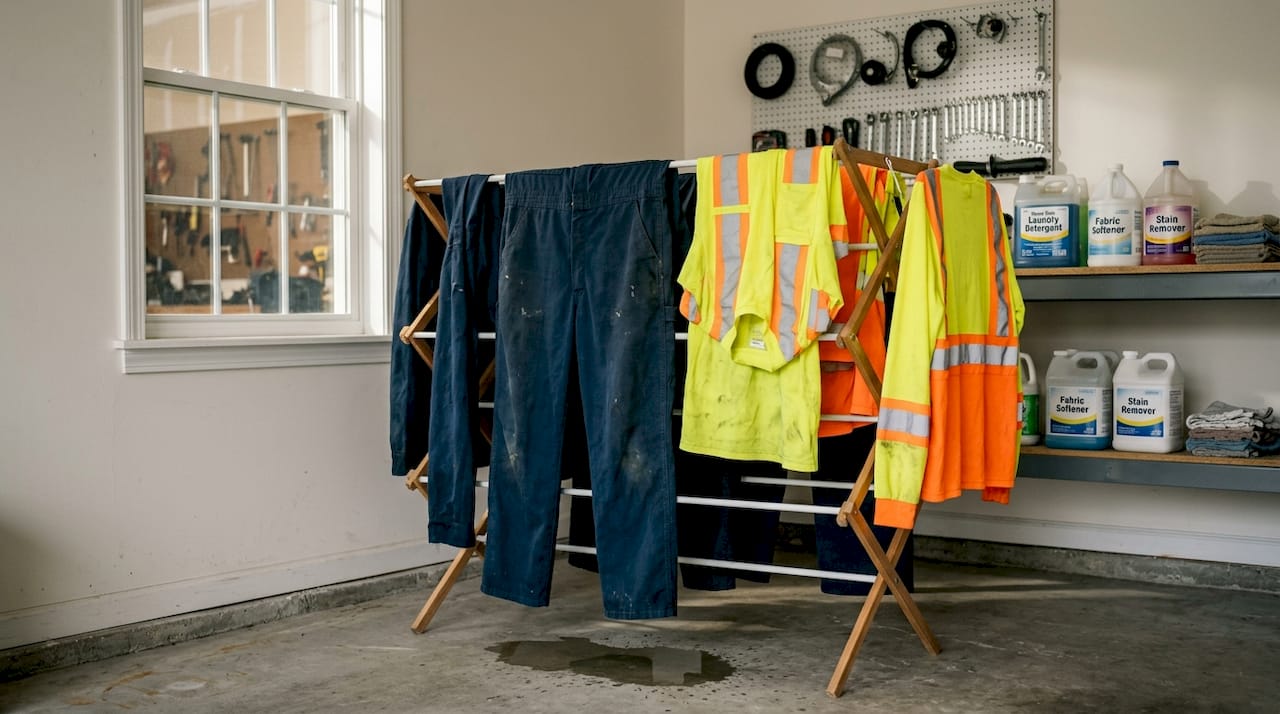
Pro Tip: Store clean workwear folded or hung in a dry area away from direct sunlight. Leaving gear crumpled in a bag or locker accelerates fabric breakdown and keeps odors locked in.
Pro tips for upgrading your mechanic wardrobe
The easiest way to reduce laundry headaches is to start with gear that is built for it. Not all workwear fabrics are equal when it comes to maintenance.
Here is what to look for when choosing your next set of work clothes:
- 65/35 polyester/cotton blends resist wrinkles, dry faster, and hold up better through repeated washing than 100% cotton.
- Oil-release fabrics are treated to repel grease and release stains more easily during washing, cutting your pre-treatment time significantly.
- Stain-resistant finishes add a layer of protection that keeps surface grime from bonding with the fabric.
- Reinforced seams and stress points mean the garment survives the wash cycle as well as the workday.
As choosing mechanic uniforms guidance confirms, opting for oil-release or stain-resistant fabrics makes cleaning easier, and uniform services handle industrial laundering for heavy-duty situations. If your shop provides uniforms, ask whether a professional laundering service is available. It is worth it for FR and hi-vis gear especially.
Always read the care label before you buy, not just after. A garment that requires dry cleaning or industrial washing only is a maintenance burden before you even wear it. For more on choosing workwear for durability, look for fabrics and construction details that match your actual workload.
Pro Tip: Buy two or three sets of your core workwear items so you can rotate them. Rotating gear reduces the wash frequency per garment, which directly extends its lifespan.
Find workwear that lasts and support your pro routine
Following these maintenance steps will stretch the life of your current gear significantly. But the right starting point matters just as much as the right care routine. Gear built for mechanics, with durable fabrics, reinforced construction, and easy-care properties, makes every step of this process easier.
At WorkwearComfort.com, we build apparel for people who actually work in it. The Blue Collar Brotherhood hoodie is built tough and designed to hold up through real shifts and real washes. If you spend time working outdoors, the Lightweight UPF 50+ work hoodie adds sun protection without sacrificing comfort or durability. Both are made with the kind of quality that rewards a solid care routine. Explore the full range and find gear that works as hard as you do.
Frequently asked questions
What’s the best way to remove oil and grease from mechanic clothing?
Pre-treat stains fast with dish soap or enzyme laundry detergent, blot gently without rubbing, let the spot air dry, then run the full wash cycle. Acting within minutes of the stain happening gives you the best results.
Can I wash flame-resistant (FR) and hi-vis workwear at home?
Yes, if the care label allows it, but you must avoid bleach, fabric softeners, and high heat at every step. For heavily soiled gear or frequent industrial use, professional laundering is the safer choice to preserve protective properties.
How do I keep mechanic clothes from smelling bad after washing?
Add half a cup of white vinegar to the rinse cycle or a quarter cup of baking soda to the wash to neutralize odors. Always air dry thoroughly since damp fabric stored in a closed space is the main cause of persistent smell.
Why do I need to sort mechanic workwear separately from other laundry?
Sorting by fabric type, hazard level, and soil amount prevents grease and chemical transfer between garments, protects specialty coatings on FR and hi-vis gear, and keeps your everyday clothes free from industrial residue.
What are the safest detergents for cleaning mechanic workwear?
Choose a heavy-duty, color-safe detergent with enzymes and skip bleach, fabric softeners, starch, and dryer sheets entirely. For FR gear specifically, any product that leaves a combustible residue on the fabric is a safety risk, not just a care issue.
Recommended
- Blue-collar work clothing: durable, functional gear for 2026 – WorkWearComfort
- Choosing construction clothing for durability in 2026 – WorkWearComfort
- Mechanic Pants and Shirt: Comfort Meets Durability – WorkWearComfort
- Understanding Workwear for Mechanics: Durability and Function – WorkWearComfort
- Kakovosten tisk na oblačila za trajnost 2026
